Seated Single Leg Calf Raise On A Chair
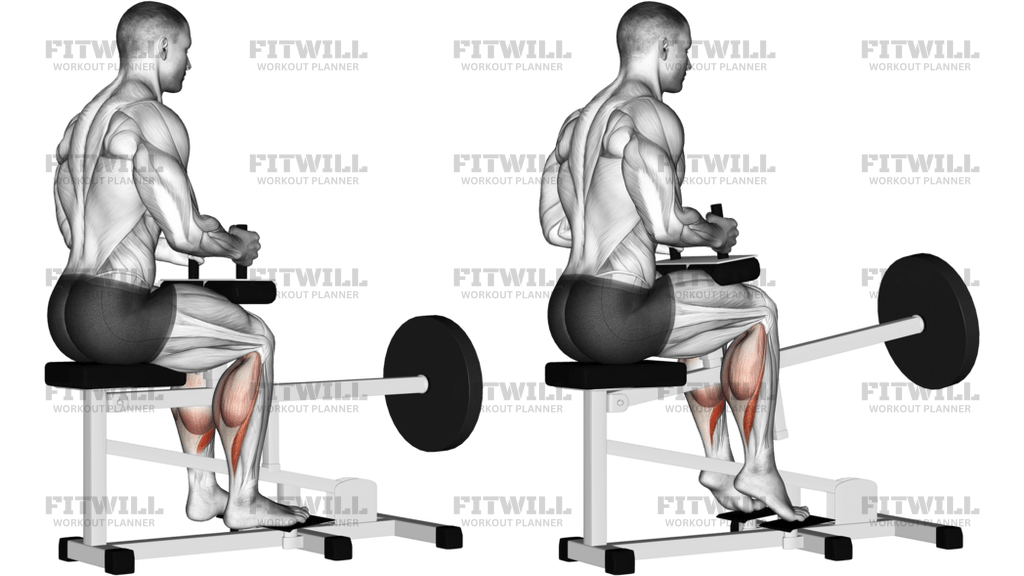
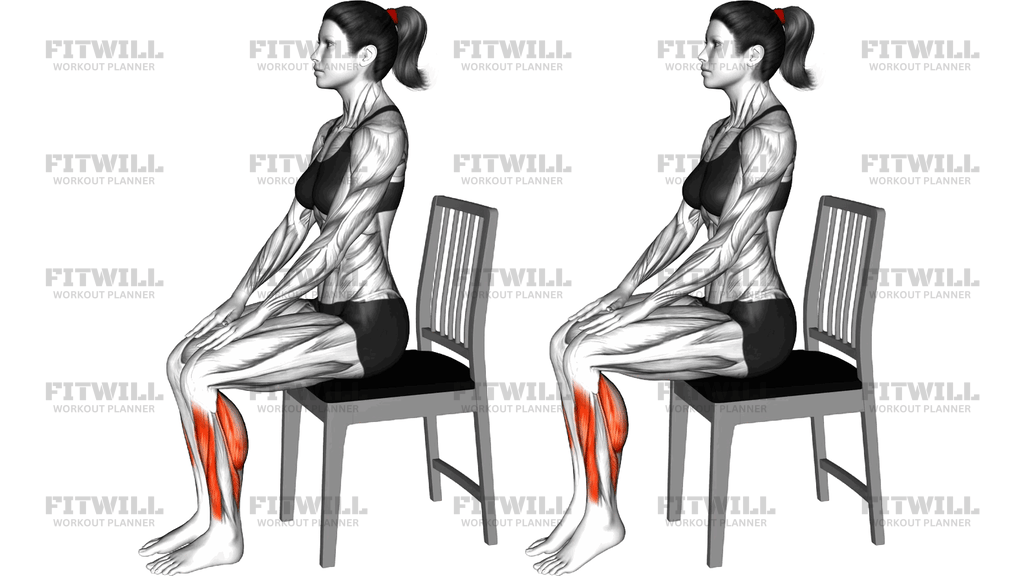
The Seated Single Leg Calf Raise On A Chair is a simple bodyweight movement where you sit upright on a chair with both feet flat on the floor, then lift the heel of one foot as high as possible while the forefoot stays planted. Your hands can rest lightly on the chair seat beside your hips for balance, and the other foot stays flat on the floor to keep you steady. Because you are seated with the knee bent to roughly ninety degrees, the gastrocnemius is placed in a shortened position at the knee, which shifts most of the work to the soleus, the deeper calf muscle that sits beneath it.
This exercise is useful for almost anyone. Beginners can use it to learn what a proper calf contraction feels like without fighting for balance, and more experienced lifters can use it as a high-repetition finisher or as a way to train one leg at a time to address a strength difference between left and right. It is also a practical option for people training at home, in an office, or while traveling, since all you need is a sturdy chair and a few square feet of floor.
Working one leg at a time matters here. When both calves push together, the stronger side quietly takes over a share of the load. Isolating each side forces the working calf to do all of the work through the full range, from a deep, controlled heel drop near the floor to a strong lift onto the ball of the foot. The bent-knee position also lets you focus on the soleus, which is highly active in everyday tasks like walking, standing, and climbing stairs, and which responds well to slower, higher-repetition work.
Setup makes a bigger difference than most people expect. Sit tall on the chair with your feet about hip-width apart and your knees stacked over your ankles. If your foot is too far forward, your heel has room to drop but you lose drive; too far back and your toes carry pressure awkwardly. A moderate placement, with the ball of the foot firmly grounded and the heel free to travel, gives the cleanest path.
To perform it well, press the ball of the working foot into the floor and lift the heel as high as it will go, feeling the calf bunch up under the knee. Pause briefly at the top, then lower the heel under control until it is just above or lightly touching the floor before starting the next rep. Avoid bouncing, and keep your torso upright rather than leaning forward to help the leg. Complete all reps on one side, then switch legs and match the repetition count so both calves receive the same volume.
Because the load is only your bodyweight, the main safety considerations are control and range. If you feel a stretch-strain at the back of the ankle at the bottom, shorten the range slightly and build up over time. Anyone recovering from an ankle or Achilles issue should get clearance from a qualified professional before adding concentrated calf work like this to their routine.
[ Workout Log & Planner ]
Put your next workout in Fitwill
Keep your plan and training log ready when you are.


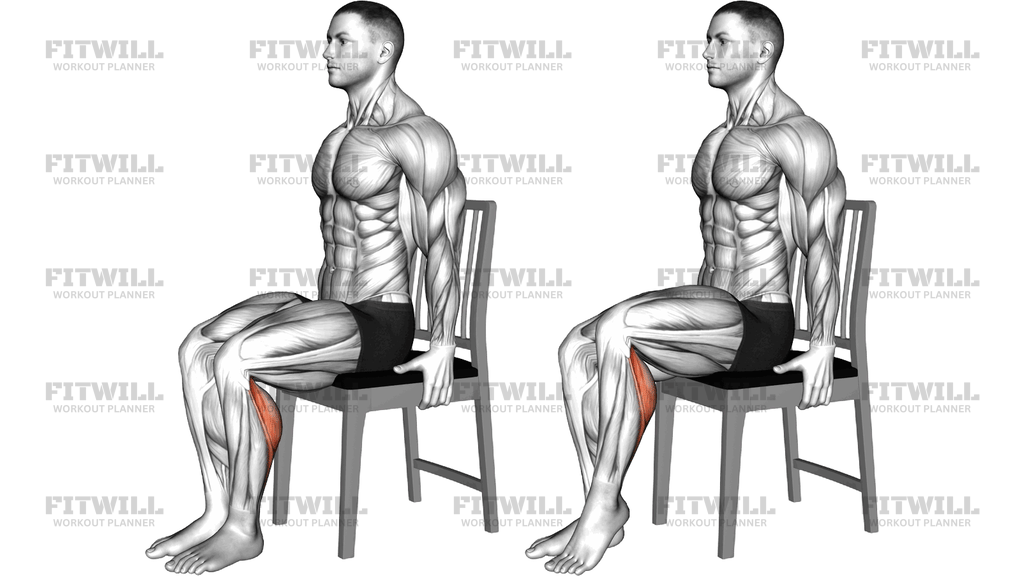
Instructions
- Sit on a sturdy chair with your back upright, feet flat on the floor about hip-width apart, and knees bent roughly ninety degrees.
- Rest your hands lightly on the chair seat beside your hips for balance, without pushing down through them.
- Keep the non-working foot flat on the floor for stability and position the working knee directly over that ankle.
- Brace your core lightly and keep your torso tall so the movement comes from the ankle, not from rocking your upper body.
- Press the ball of the working foot into the floor and raise the heel as high as possible, rolling up onto the toes.
- Squeeze the calf at the top for a one-second pause, with the heel at its highest point.
- Lower the heel slowly and under control until it is just above the floor, stopping short of a hard slam or bounce.
- Exhale as you press up, inhale as you lower the heel.
- Complete all reps on one leg, then switch to the other leg and match the repetitions.
- Reset your posture and foot placement between sets so each set starts from the same solid position.
Tips & Tricks
- A common mistake is pushing down through your hands to lift the heel higher, which turns it into a full-body grind. Keep hand pressure light and let the calf do the lifting.
- Do not let the heel bounce off the floor at the bottom. The stretch reflex makes reps easier but robs the soleus of the time under tension that makes this exercise worthwhile.
- If your foot slides forward during the set, your weight is drifting onto the toes. Keep the ball of the foot planted and the toes relaxed rather than clawing the floor.
- The seated, bent-knee position deliberately favors the soleus over the gastrocnemius, so use higher repetitions, around fifteen to twenty-five per side, rather than chasing low-rep strength.
- Leaning forward to press the heel up is a sign the calf is fatiguing. Sit back tall or end the set rather than turning it into a torso-driven movement.
- Work your weaker leg first and match the rep count on the stronger side to even out any left-right difference over time.
- If the chair seat is too high and your feet barely reach the floor, slide your hips forward or place a stable, flat surface under the working foot so the ankle can move through a full range.
- Slow the lowering phase to two or three seconds if the exercise feels too easy; the eccentric portion is where most of the muscle-building stimulus comes from in a bodyweight set.
Frequently Asked Questions
Which muscles does the Seated Single Leg Calf Raise On A Chair work?
The primary muscle is the soleus, since the bent knee shortens the gastrocnemius and reduces its contribution. The gastrocnemius and the small stabilizing muscles around the ankle assist throughout the movement.
Why is this exercise done seated instead of standing?
Sitting bends the knee to about ninety degrees, which slackens the gastrocnemius because it crosses the knee joint. That bias shifts the workload toward the soleus, which standing raises target less directly.
Is the Seated Single Leg Calf Raise On A Chair good for beginners?
Yes. It is one of the easiest calf exercises to learn because the chair supports your balance and the resistance is only your bodyweight, so you can focus entirely on feeling the calf contract through a full range.
Why should I train one leg at a time instead of raising both heels together?
Doing one side at a time prevents your stronger calf from compensating for the weaker one and lets you spot and correct left-right strength differences. It also doubles the concentration on each calf during its set.
How many repetitions should I do of the Seated Single Leg Calf Raise On A Chair?
Because the resistance is light and the soleus is a fatigue-resistant muscle, sets of fifteen to twenty-five reps per leg work well. If you easily exceed twenty-five, slow the lowering phase or add pauses at the top.
My heel cannot drop very low in this position. Is that a problem?
Not necessarily. Ankle mobility varies between people, and a stiff soleus or Achilles can limit the bottom range. Work within a comfortable range and gradually lower deeper over weeks as flexibility improves, without forcing a painful stretch.
Can I use this exercise if I have ankle or Achilles discomfort?
Mild, pain-free movement is generally fine, but if you have a current or recent ankle or Achilles injury, check with a healthcare professional first. Stop if you feel sharp pain, and avoid pushing into a painful stretch at the bottom.
What can I use instead of a chair for the Seated Single Leg Calf Raise On A Chair?
Any stable seated surface works, such as a bench, box, or sturdy stool, as long as your knees bend about ninety degrees and both feet rest flat on the floor. Avoid soft couches or chairs with wheels.
How do I make the Seated Single Leg Calf Raise On A Chair harder without equipment?
Slow the lowering phase to three or four seconds, add a two-second hold at the top of each rep, or pause for two seconds in the stretched position at the bottom. These tempo changes add challenge without needing added weight.
How does this exercise differ from a standing calf raise?
A standing calf raise keeps the knee straight, which puts the gastrocnemius under full stretch and makes it the main mover. The seated version bends the knee and shifts the emphasis to the soleus, so the two complement each other rather than replace one another.