Dumbbell Deadlift From Deficit
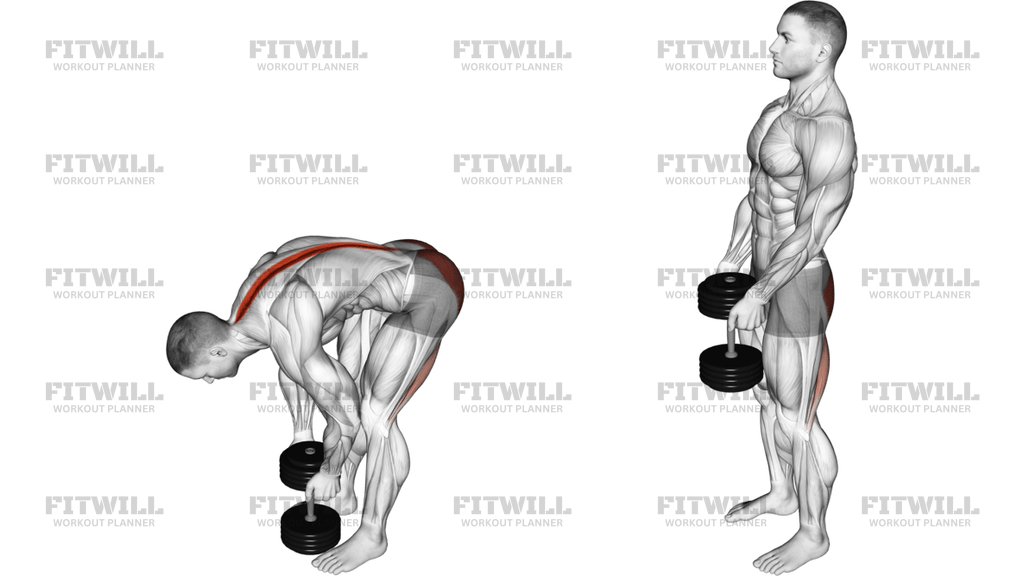
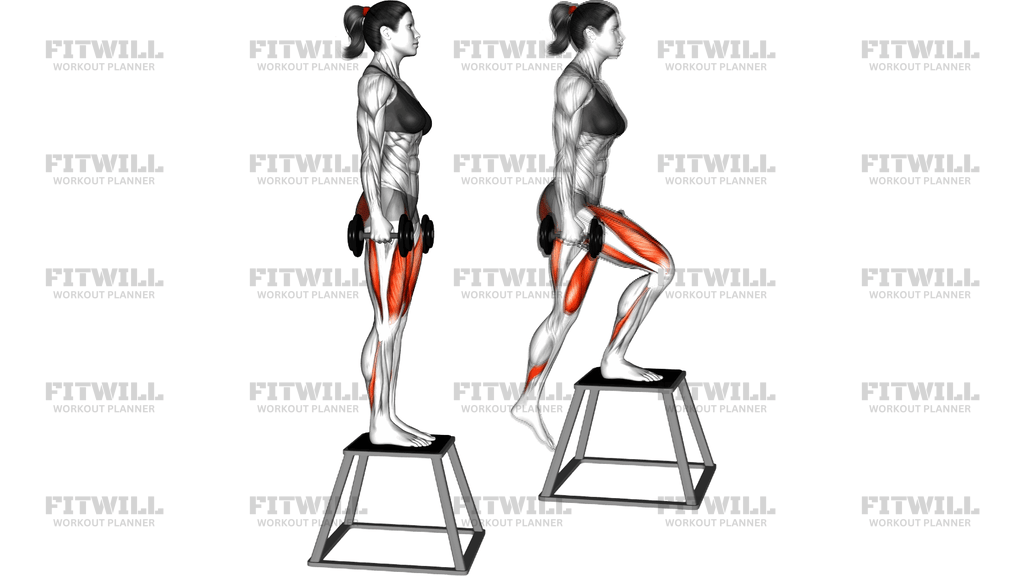
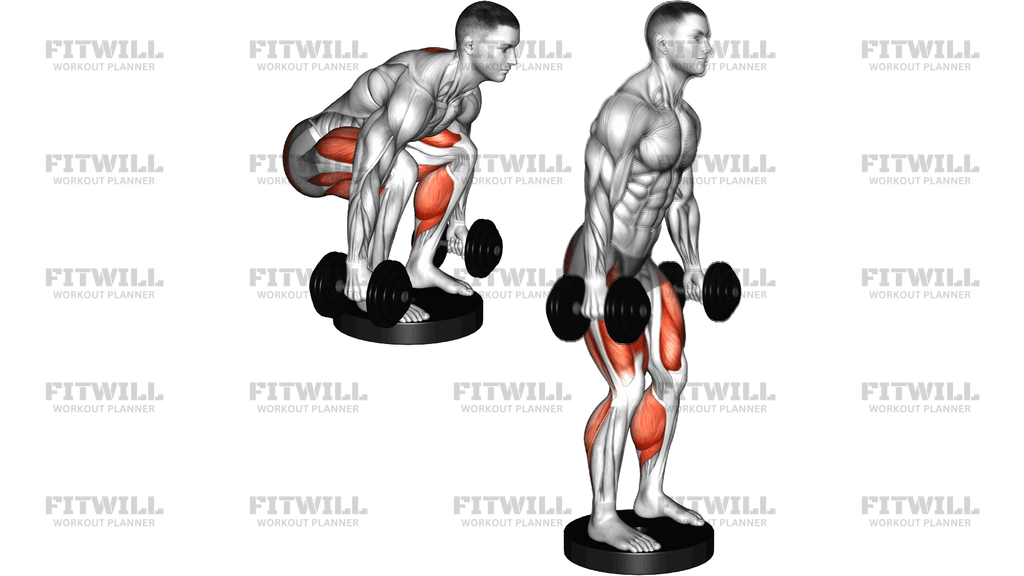
The Dumbbell Deadlift From Deficit is a conventional deadlift performed while standing on a raised surface such as a step platform or low box, with a dumbbell held in each hand. Elevating your feet creates a deeper starting position, which forces your knees and hips to travel through a larger range of motion than a floor-based deadlift. The result is a hinge pattern that leans harder into the glutes and hamstrings while still demanding serious work from the quads, since they must straighten the knees from a much more flexed position.
This variation suits lifters who already own a solid conventional deadlift and want to address a weak point off the floor, or those who train at home with dumbbells and want to make the pattern more demanding without adding load. Because the deficit increases the range, most people will need to reduce the weight compared to a standard dumbbell deadlift, sometimes noticeably. Treat it as a technique-first accessory lift rather than a max-effort pull.
The setup matters more here than in almost any other dumbbell hinge. A deficit amplifies every setup flaw: if your back rounds at the bottom or your hips shoot up early, the added depth will punish it. Your feet should be fully on the platform, dumbbells positioned against the front of your shins or just in front of them, and your torso angled low enough that your shoulders sit slightly ahead of the weights before you break the floor.
Execution is a push, not a pull. Drive your feet into the platform, extend your knees and hips together, and let the dumbbells track straight up along your legs until you are standing tall with your shoulders back. Lower the weights by pushing your hips back first and bending your knees only as the dumbbells pass them, keeping your lats engaged so the dumbbells stay close to your body the entire way down. Exhale at the top, reset your brace, and take a breath before each rep.
A few practical points will keep this lift productive. Keep the deficit modest, roughly one to three inches, so your spine stays neutral and the plates clear the edge of the platform. Barefoot or flat-soled shoes help you feel the platform and keep your balance. If you feel the work shifting entirely into your lower back, the weight is probably too heavy or your hinge is turning into a squat-and-round pattern, so strip the load back and rebuild the groove.
[ Workout Log & Planner ]
Put your next workout in Fitwill
Keep your plan and training log ready when you are.


Instructions
- Place a step platform or low, stable box on the floor and stand on it with your feet about hip-width apart, toes pointing slightly out, with your whole foot supported.
- Set a dumbbell on the platform outside each foot, with the handles lined up over the middle of your feet.
- Hinge at the hips and bend your knees until you can grip each dumbbell with a neutral grip, palms facing your legs, shoulders slightly ahead of the weights.
- Pull your shoulder blades down and back, lift your chest, and brace your core as if bracing for a light punch before you take tension on the weights.
- Drive your feet through the platform to stand up, extending your knees and hips at the same rate so the dumbbells travel straight up and stay in contact with your legs.
- Finish standing tall with your hips fully extended, shoulders back, and the dumbbells hanging at your sides, without leaning backward or shrugging.
- Reverse the movement by pushing your hips back first, letting the dumbbells slide down your thighs until they pass your knees, then bending your knees to lower them to the platform.
- Inhale and brace at the bottom of each rep, exhale as you lock out at the top.
- Set the dumbbells fully down on the platform between reps or sets, release your grip, and reset your stance and brace before the next pull.
Tips & Tricks
- Start with a deficit of one to three inches. Going deeper than your hips and hamstrings can handle turns the bottom position into a rounded-back pull, which is the most common failure point in this variation.
- Check that your entire foot is on the platform. A heel hanging off the edge shifts your balance forward and makes the dumbbells drift away from your legs.
- If your hips rise before the dumbbells leave the platform, you are starting with your chest too low or your weight too far forward. Sit back a touch and let your shoulders lead the pull.
- Keep the dumbbells brushing your shins and thighs throughout. Because deficit pulls give the weights more room to swing, a loose path is more likely here than in a standard dumbbell deadlift.
- Cut your usual dumbbell deadlift load by roughly 20 to 30 percent for your first few sessions. The longer range means the same weight is a much harder pull off the platform.
- Squeeze the dumbbell handles hard. Grip tends to fail early in this variation because you are lowering the weights through a deeper range, and a slipping handle throws off the whole rep.
- Film yourself from the side once in a while. From a side view you can see whether your spine stays long at the bottom or whether your lower back rounds as the dumbbells drop below knee level.
- If balance feels shaky at the bottom, widen your stance slightly and point your toes out a bit more rather than narrowing your grip or looking up.
- Use this lift early in a workout when your brace and hinge are fresh, and save higher-rep floor deadlifts for later if you are training both in the same session.
Frequently Asked Questions
What muscles does the Dumbbell Deadlift From Deficit work?
It targets the glutes and hamstrings as the primary movers, with strong contributions from the quads because the deeper starting position requires more knee extension. Your lower back, upper back, and grip work isometrically to hold your position and control the dumbbells.
How high should the deficit be for the Dumbbell Deadlift From Deficit?
One to three inches is enough for most lifters. Choose the lowest height that lets you reach the dumbbells with a flat back and your heels fully planted; if your spine rounds at the bottom, the deficit is too deep.
Is the Dumbbell Deadlift From Deficit suitable for beginners?
It is better suited to lifters who already understand the hip hinge and can perform a standard dumbbell deadlift with a neutral spine. Beginners should build the pattern from the floor first, since the added depth makes form errors easier to make and harder to feel.
Why do the dumbbells need to stay close to my legs during this exercise?
The deeper range of a deficit pull gives the weights more opportunity to drift forward, which lengthens the lever arm on your lower back and pulls you onto your toes. Keeping the dumbbells in contact with your shins and thighs keeps the load stacked over your mid-foot.
What is the most common mistake in the Dumbbell Deadlift From Deficit?
Rounding the lower back at the bottom of the pull. The fix is usually a combination of a smaller deficit, lighter dumbbells, and bending the knees more so the hips can sit lower without the spine giving up its position.
Should I use one dumbbell or two?
Two dumbbells, one in each hand, keep the load balanced side to side and let your arms hang naturally at your sides. A single dumbbell changes the demands of the lift and turns it into a different exercise.
Can I do the Dumbbell Deadlift From Deficit if I have lower back discomfort?
The extended range puts extra demand on the bottom position, so if your lower back is irritated, a floor-level dumbbell deadlift or a hip-dominant variation like the dumbbell Romanian deadlift is usually the safer choice. Clear any return to deficit work with a qualified professional.
How is the Dumbbell Deadlift From Deficit different from a standard dumbbell deadlift?
Standing on a platform lengthens the range of motion, so you start in a deeper knee and hip bend and must generate more force to break the weights off the surface. It is harder off the bottom, more demanding on the quads and grip, and generally performed with lighter loads.
What can I substitute if I do not have a step platform?
Any stable, low surface that will not shift under load works, such as a stacked mat or a low box. Avoid soft or rounded surfaces, and make sure the dumbbells can rest fully on the edge without tipping when you set them down.