Dumbbell Step Down
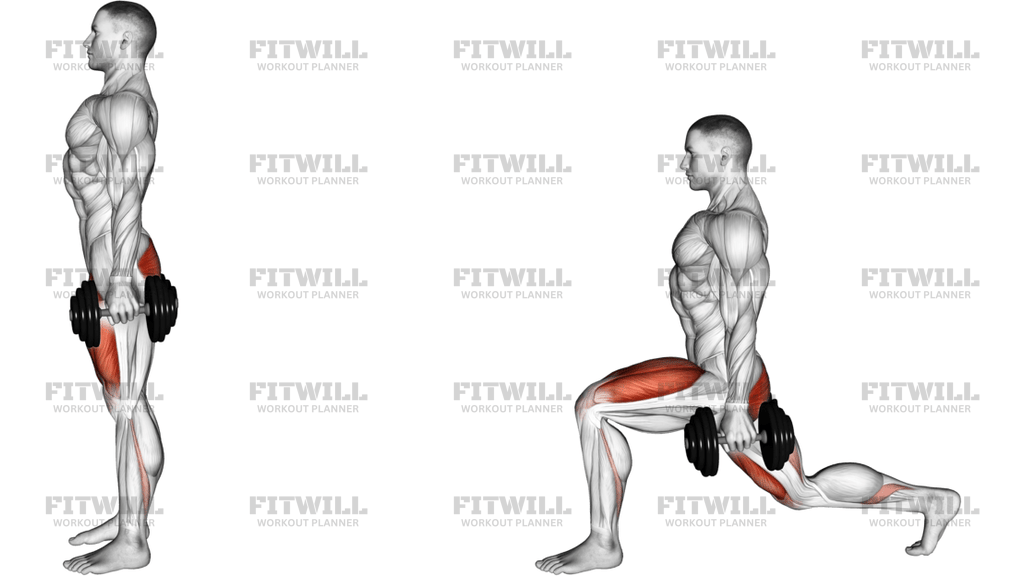
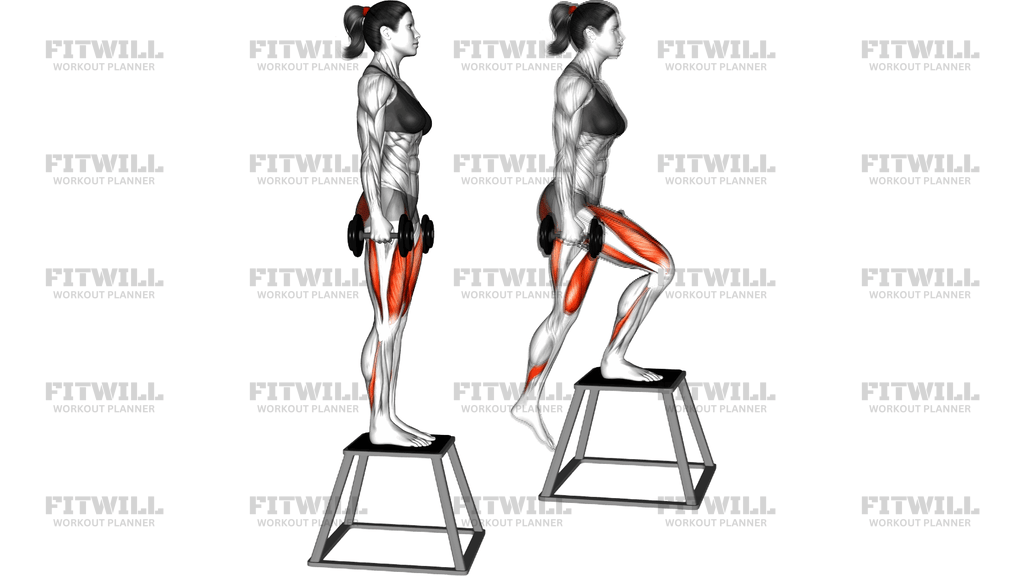
The Dumbbell Step Down is a single-leg strength exercise performed from an elevated position. You stand on top of a step platform or sturdy box with a dumbbell held in each hand at your sides, then slowly lower one foot toward the floor, control your body weight on the standing leg, and drive back up to a full stand. Unlike a step-up, where you push yourself onto the box, the step down emphasizes the lowering phase, which makes it exceptionally demanding on the quadriceps even with light weights.
This movement is one of the best tools for building single-leg strength in a way that carries over to stairs, hiking, running, and everyday walking. Because one foot is always in contact with the box, the knee and hip are loaded through a long, controlled range, which is exactly the demand your quads face when descending stairs or a mountain trail. The standing leg's glutes and hamstrings work hard to keep your pelvis level, and the ankle stabilizers are constantly correcting small shifts as you hover the free foot above the ground.
Setup matters more here than in most leg exercises. The box height determines the range of motion: a lower platform lets you keep the movement clean and pain-free, while a higher one increases knee and hip flexion and the strength demand. Hold the dumbbells with a relaxed, neutral grip at arm's length by your sides so they hang vertically and do not pull your torso forward or to one side. Keep your entire standing foot flat on the platform, with your weight distributed through the midfoot and heel rather than shifted onto the toes.
To execute it well, think of lowering yourself rather than reaching down. Hinge very slightly at the hips, keep your torso tall, and let the free foot tap or hover just above the floor without loading it. The descent should take two to three seconds, with the front knee tracking over or slightly behind the toes and staying aligned with the second toe. Press through the standing leg to return to the top, standing fully upright with the hips extended before starting the next repetition.
The Dumbbell Step Down fits well as an accessory movement after your main squats or lunges, as a rehabilitation-friendly alternative for lifters who struggle with heavy loaded knee flexion, or as a main strength builder for hikers and runners preparing for downhill terrain. Start with a box height that lets your thigh reach roughly parallel and dumbbells light enough to keep the descent smooth. If your knee drifts inward, your torso collapses forward, or you have to stomp the working foot down to finish the rep, reduce the height or load before adding more.
[ Workout Log & Planner ]
Put your next workout in Fitwill
Keep your plan and training log ready when you are.


Instructions
- Stand on top of a step platform or sturdy box with both feet fully on the surface, a dumbbell in each hand hanging at arm's length by your sides with a neutral grip.
- Shift your weight onto one leg, keeping that foot flat and centered on the platform, and let the other foot hang just off the front edge of the box.
- Brace your abdominal muscles, keep your chest tall, and look straight ahead so your torso stays upright throughout the set.
- Inhale, then slowly bend the standing knee and hip to lower your free foot toward the floor, taking two to three seconds on the way down.
- Let the lowering foot lightly touch or hover just above the floor without placing any body weight on it, keeping the knee of the standing leg aligned over your second toe.
- Exhale and press through the heel and midfoot of the working leg to straighten the knee and drive your body back to a full stand on the box.
- Stand completely tall at the top with your hips extended and both dumbbells hanging at your sides before starting the next repetition.
- Complete all repetitions on one leg, then step both feet back onto the platform, re-grip the dumbbells, and perform the same number on the other leg.
- Keep the dumbbells from swinging by maintaining a relaxed but firm grip and steady arm position throughout the set.
Tips & Tricks
- Choose a box height where your thigh reaches about parallel to the floor at the bottom; a box that is too tall forces the heel to lift and dumps stress onto the kneecap.
- The most common mistake is pushing off the floor with the lowering foot — this turns the step down into a bounce and removes the eccentric loading that makes the exercise valuable. Hover or tap the floor with no weight transfer.
- If your knee caves inward as you descend, consciously spread the floor with your standing foot and think about tracking the knee over your second toe.
- Do not lean your torso forward to reach the floor with the free foot. The distance is covered by lengthening the standing leg, not by bending at the waist.
- Slow the lowering phase down before you add weight. A three-second descent with light dumbbells builds more useful strength than a fast drop with heavy ones.
- Keep your weight over the whole standing foot, not the toes. If your heel lifts at the bottom, the box is too high or you are rushing the descent.
- Hold the dumbbells evenly at your sides; letting one hang lower or drift forward shifts your center of mass and makes the hips rotate.
- If you lose balance, step the free foot fully onto the floor, reset your stance on the box, and restart rather than fighting through a sloppy rep.
- For a harder version without heavier dumbbells, pause for two seconds in the lowered position before pressing back up.
Frequently Asked Questions
Which muscles does the Dumbbell Step Down work the most?
The quadriceps of the standing leg do the bulk of the work because they control the long lowering phase. The glutes and hamstrings stabilize the hip and help you stand back up, while the calves and ankle stabilizers keep you balanced on the box.
How is the Dumbbell Step Down different from a Dumbbell Step-Up?
A step-up emphasizes pushing up onto the box, while the step down emphasizes slowly lowering from it. The lowering focus places greater eccentric demand on the quadriceps, which is why it feels harder than the height and weight suggest.
How high should the box or step platform be?
Start with a height that lets your lowering foot reach the floor when your standing thigh is roughly parallel to it, commonly 12 to 16 inches. Lower is better if you are new to the movement or feel knee discomfort.
Can beginners do the Dumbbell Step Down?
Yes, and it is a smart early exercise for single-leg control. Beginners should start with body weight or very light dumbbells and a lower platform, mastering a slow, quiet descent before adding load.
Why does my knee drift inward when I step down?
This usually comes from weak hip stabilizers, particularly the gluteus medius, or from descending too fast. Slow the tempo, lighten the load, and focus on keeping the knee stacked over the second toe; add dedicated hip abduction work if the pattern persists.
Should the lowering foot touch the floor?
A light toe tap is fine for balance as long as you do not transfer weight onto it. If you find yourself pushing off the floor to stand back up, hover the foot slightly higher or lower the box so the tap becomes unnecessary.
What can I use if I do not have dumbbells or a step platform?
Any stable, non-slippery elevated surface such as a low bench, stair, or plyo box works, and you can hold a single dumbbell or kettlebell at your chest instead. With no weight at all, the body-weight step down is still an effective quadriceps exercise.
Is the Dumbbell Step Down safe for people with knee pain?
Many people with cranky knees tolerate step downs well because the load is controlled and adjustable, but sensitivity varies. Use a lower box, keep the descent slow, stay within a pain-free range, and consult a professional if discomfort continues.
How many sets and repetitions should I do?
Two to four sets of 8 to 12 controlled reps per leg works well for strength and control. Because the lowering phase is demanding, stop the set when your form slows or your knee alignment changes rather than pushing to failure.