Climbing Stairs
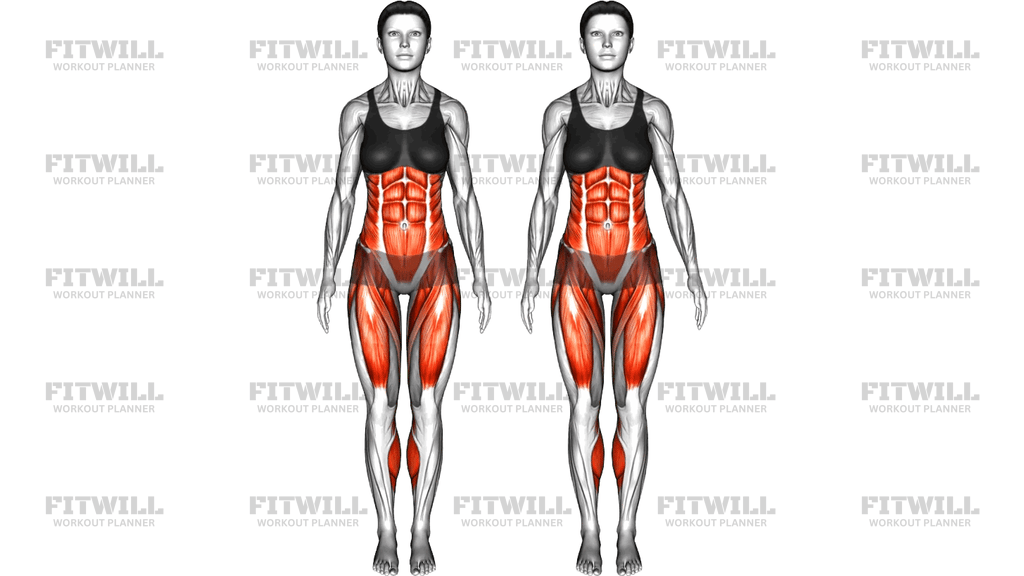
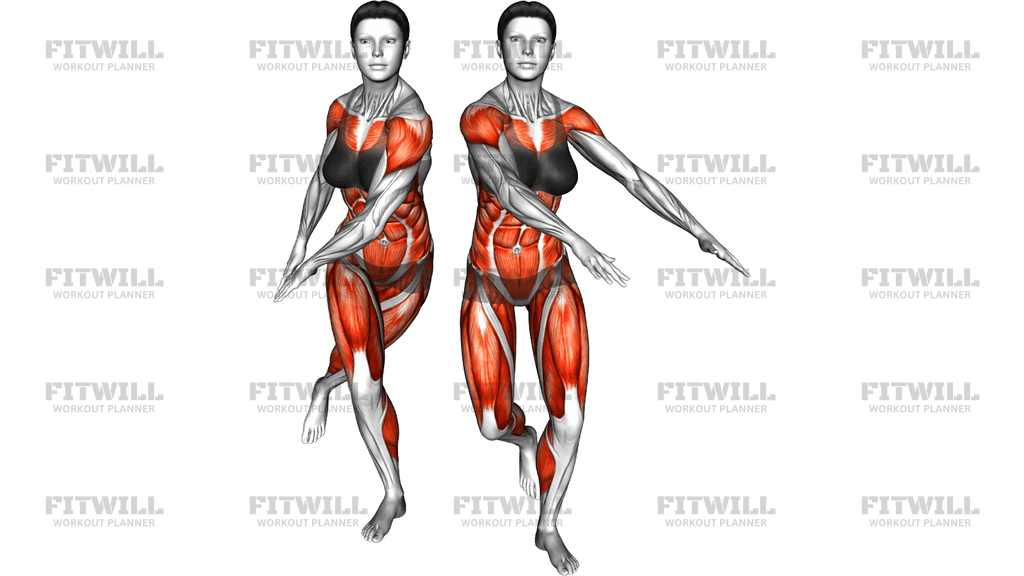
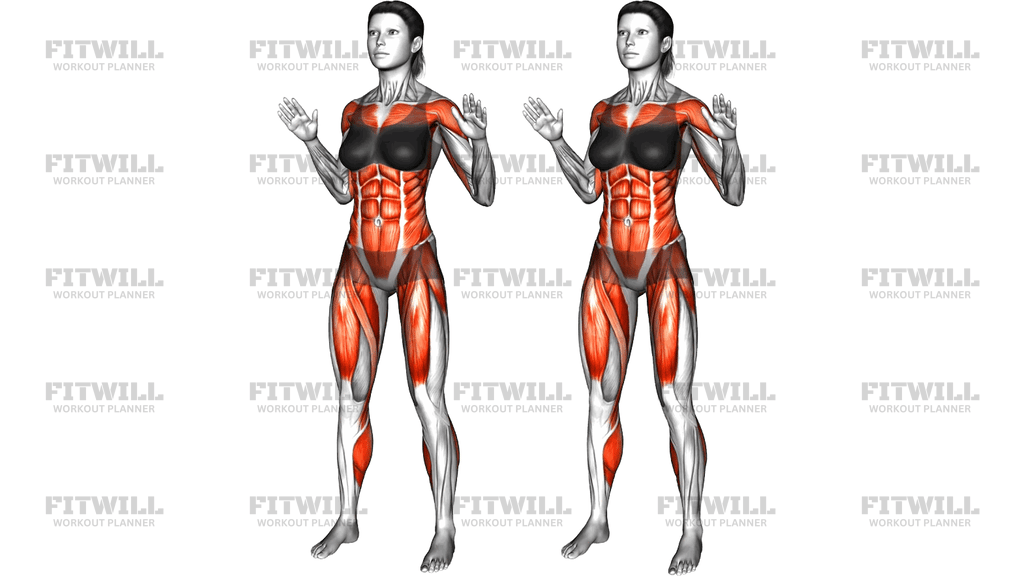
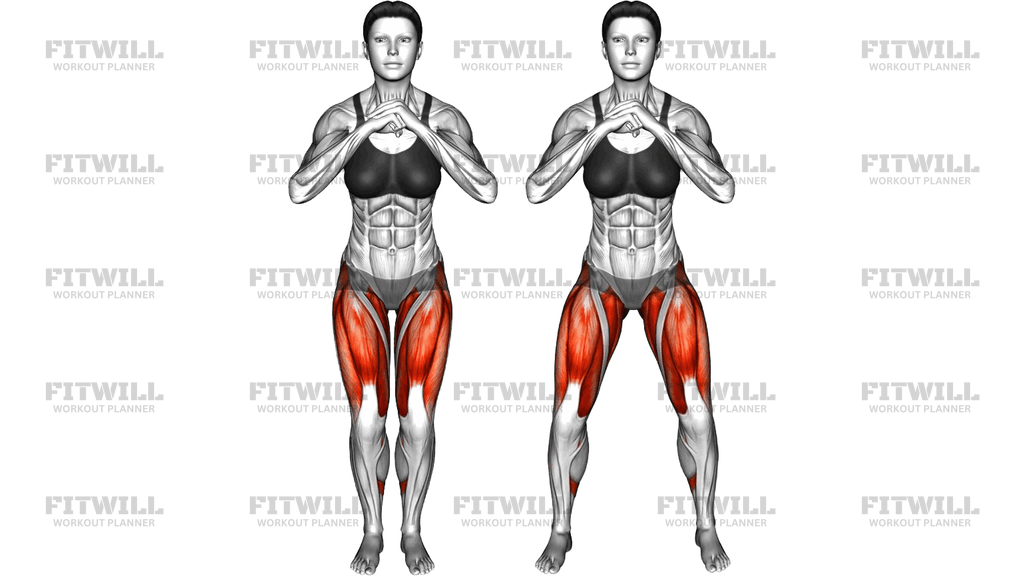
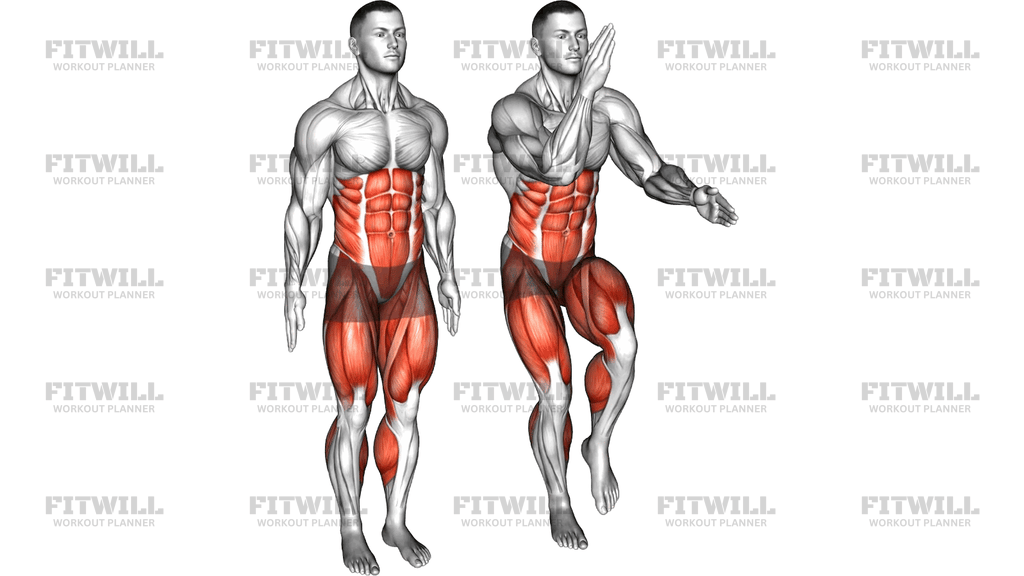
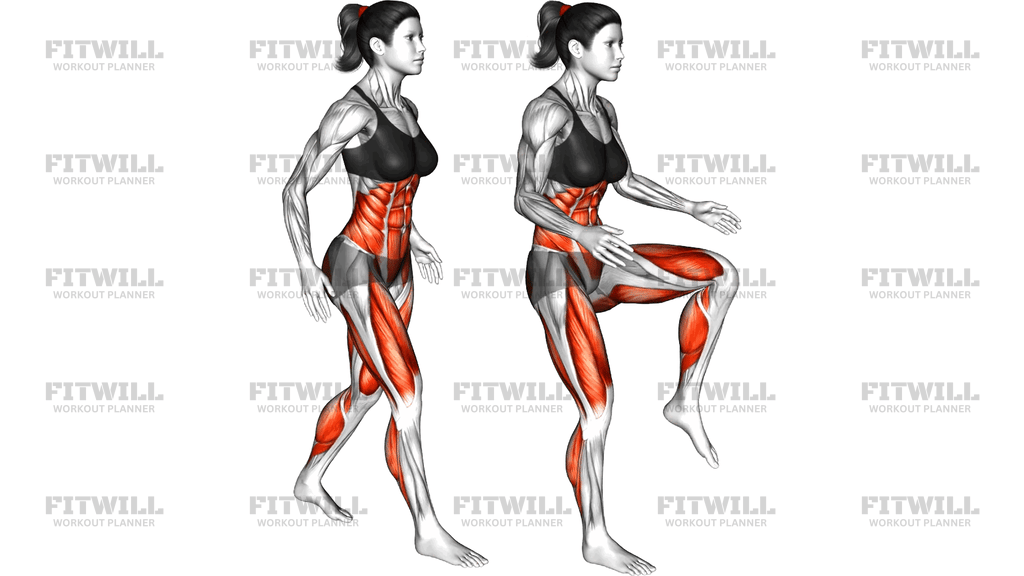
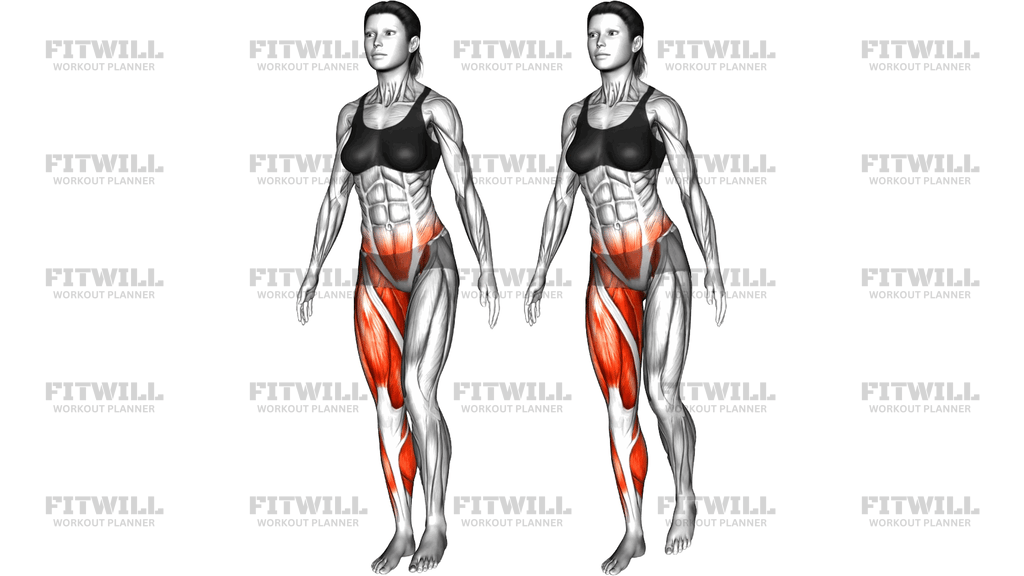
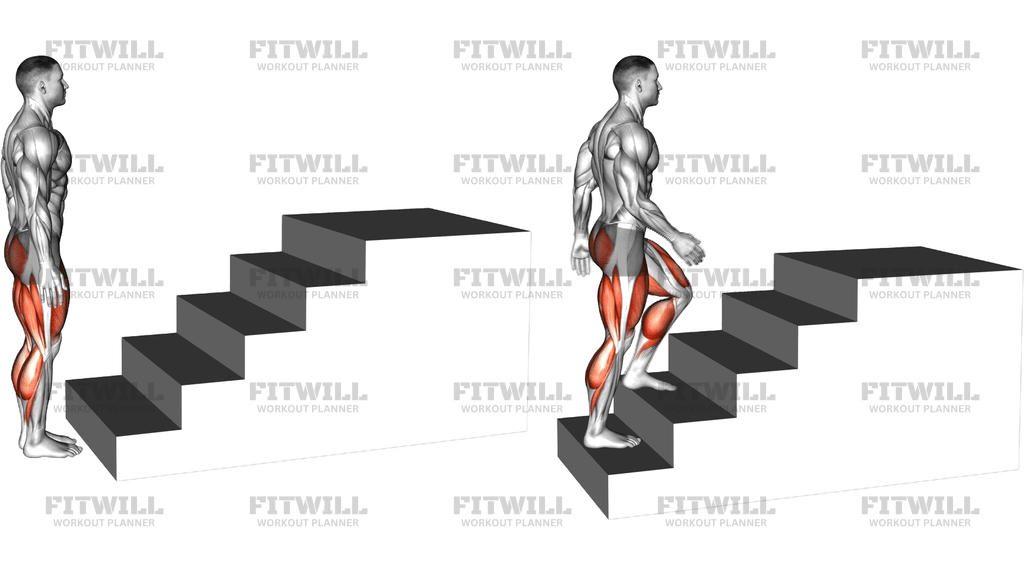
Climbing Stairs is exactly what it sounds like: walking or stepping up a flight of stairs using your own body weight as the load. The figure on the left shows the starting position standing tall at the base of the steps, and the second figure shows the working position — one foot placed on a higher step, knee bent, body driving upward. The highlighted areas are the front of the thighs and the glutes, which is precisely where the work happens: every step is essentially a single-leg squat performed against gravity.
This movement is one of the most practical strength exercises you can do, because it trains a pattern you use every single day. The lead leg does most of the work as it extends the knee and hip to lift your body, while the calves push off from the ankle. Your core stays engaged to keep your torso upright, and the stabilizers around the hip and ankle work continuously to keep you balanced on a narrow surface. Because each step loads one leg at a time, it also exposes and helps correct side-to-side strength differences.
Climbing Stairs suits a wide range of people. Beginners can use it as a gentle introduction to lower-body strength without any equipment, and it is often used in rehab-adjacent settings to rebuild leg strength after time off. More advanced trainees can climb faster, take stairs two at a time, carry weight, or use repeated climbs as conditioning. It is also a staple for athletes in sports that demand strong single-leg drive, such as running, hiking, basketball, and football.
Setup matters more than most people expect. Foot placement on each step should be full and deliberate — the whole foot on the step, not just the toes or the outer edge — because that lets the glutes and quads produce force safely. Posture is the other key piece: a tall torso with a slight forward lean from the hips, not a rounded or collapsed upper body. Pushing through the whole foot rather than launching off the toes keeps the load on the big leg muscles instead of straining the calf and Achilles.
To execute it well, step up with control rather than momentum. Drive through the lead leg, bring the trailing foot up to meet it, and keep the rhythm steady. Descending is where many people lose form — the knee absorbs the landing on every step down, so staying smooth and controlled on the way down protects the knees far more than people realize. If you have knee discomfort, a shallower step, slower tempo, or using a handrail for light support makes the pattern much more forgiving.
A practical session can be as simple as five to ten minutes of continuous climbing for conditioning, or a set number of flights with rest between them for strength. Keep each climb deliberate and stop when your form starts to break down rather than when your legs simply feel tired.
[ Workout Log & Planner ]
Put your next workout in Fitwill
Keep your plan and training log ready when you are.


Instructions
- Stand at the bottom of the stairs with feet hip-width apart, arms relaxed at your sides, and your weight balanced evenly between both feet.
- Tighten your abs lightly and lengthen your spine so your torso is tall with a small, natural forward lean from the hips.
- Place one foot fully on the first step, with the entire sole of the foot on the surface rather than just the toes or the heel hanging off the edge.
- Press through the whole foot of the lead leg and extend the knee and hip to lift your body upward, keeping the torso upright as you rise.
- Bring the trailing foot up onto the same step so both feet are side by side before starting the next step.
- Continue stepping one stair at a time, keeping the rhythm steady and letting the lead leg do the lifting rather than swinging the body forward.
- Breathe in a natural rhythm — inhale on the way up or as you settle between steps, and never hold your breath during long climbs.
- When descending, place the whole foot on each step and lower yourself smoothly so the knee and hip absorb the landing gradually instead of dropping hard.
- Pause at the top or bottom to reset your posture before the next climb, and stop the set if you begin grabbing the handrail for balance on every step.
Tips & Tricks
- The most common mistake is pushing off the toes of the bottom leg instead of driving through the lead leg — this turns a strength exercise into a calf hop and reduces the work on the quads and glutes.
- If your knee caves inward as you step up, think about spreading the floor with your lead foot and keeping the knee tracking over the middle of the foot.
- Leaning far forward with hands on your thighs is a sign the legs are fatigued; reduce the number of steps per set or slow the pace instead of muscling through with poor posture.
- Taking stairs two at a time increases the demand on the glutes and hamstrings, but only do this once you can control single-step climbs without using the handrail.
- On the way down, resist the urge to drop quickly — controlled lowering trains the quads eccentrically and is much kinder to the knees.
- Barefoot or slippery-socked climbing is risky on hard stair surfaces; wear shoes with grip so the whole foot stays planted on each step.
- If balance is a challenge, hover a hand lightly on the handrail for reassurance, but avoid pulling yourself up with it, which takes load off the legs.
- For conditioning, aim for a consistent pace you can hold for the full climb; for strength, take each step slower and pause briefly with both feet together.
- If one leg consistently feels weaker, lead with that leg on the first few climbs so it gets the harder work before fatigue sets in.
Frequently Asked Questions
What muscles does Climbing Stairs work?
The quads and glutes do the main work of lifting your body with each step, while the hamstrings assist at the hip and the calves push off at the ankle. Your core and hip stabilizers stay active to keep you balanced on each narrow step.
Is Climbing Stairs good exercise for beginners?
Yes, it is one of the most accessible lower-body exercises because it requires no equipment and the intensity scales with pace and number of flights. Beginners should start with a slow, controlled climb of a few flights and build up gradually.
Should my whole foot be on the step or just the toes?
Place the whole foot on the step. Landing on just the toes shifts the load to the calf and Achilles and makes the step unstable, while a full-foot placement lets the quads and glutes produce force properly.
Is going down the stairs as useful as going up?
Going up builds strength through a pushing action, while going down loads the quads eccentrically as they control the lowering. Descending is harder on the knees, so it is worth doing slowly and smoothly rather than dropping from step to step.
Why does one leg feel more tired than the other when I climb stairs?
Each step is a single-leg effort, so any strength difference between legs becomes obvious. Lead with the weaker leg on your first climbs so both sides do comparable work, and the gap usually narrows with consistent practice.
Can I use Climbing Stairs as cardio instead of strength work?
Yes. A continuous, steady climb for several minutes is an effective conditioning workout, while slower climbs with pauses between flights shift the focus more toward leg strength. The same movement serves both purposes depending on pace and rest.
Is it safe for Climbing Stairs if I have knee pain?
Stair climbing is generally knee-friendly when done with control, but discomfort during descent is common. Try slower steps, using the handrail for light support, and shorter flights, and stop if sharp pain occurs rather than pushing through it.
How can I make Climbing Stairs harder?
Take two steps at a time, climb at a faster pace for more flights, pause with both feet on each landing, or carry a modest load such as a backpack. Increase one variable at a time so your form holds up.
What can I substitute if I don't have access to stairs?
Step-ups on a sturdy step platform or low bench train the same single-leg drive, and walking uphill or on an inclined treadmill is a close alternative. Choose a step height that lets you keep your whole foot planted and your knee tracking over your toes.