Climbing Stairs
Climbing Stairs is exactly what it sounds like: walking up a flight of steps one stair at a time, using your own body weight as the load. It looks ordinary because you do it every day, but when you treat it as exercise — steady pace, deliberate foot placement, upright posture — it becomes one of the most accessible conditioning tools available. Every step asks your front thigh to straighten the knee against gravity, your glutes to drive the hip up, and your calves to finish the push through the ball of the foot.
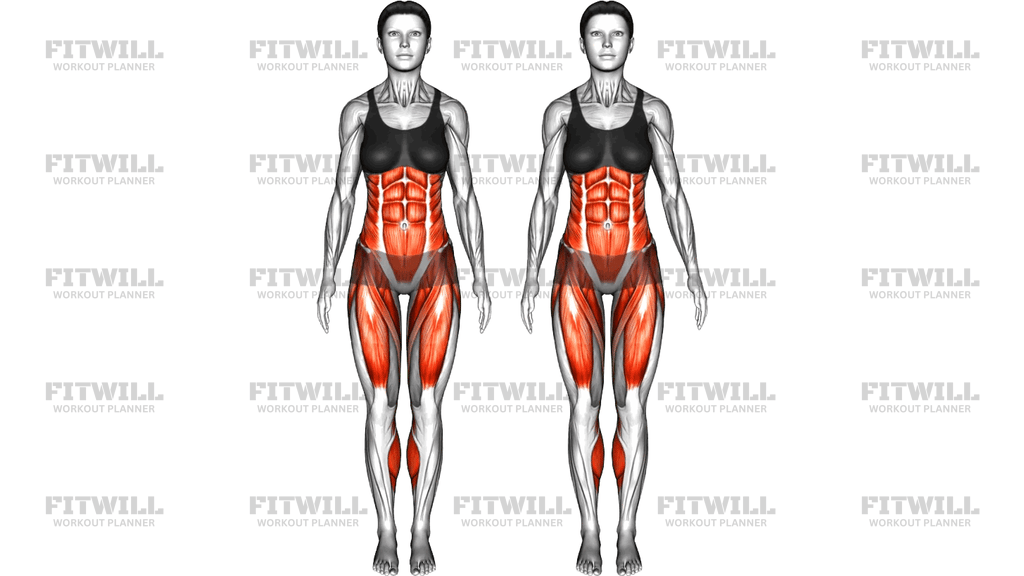
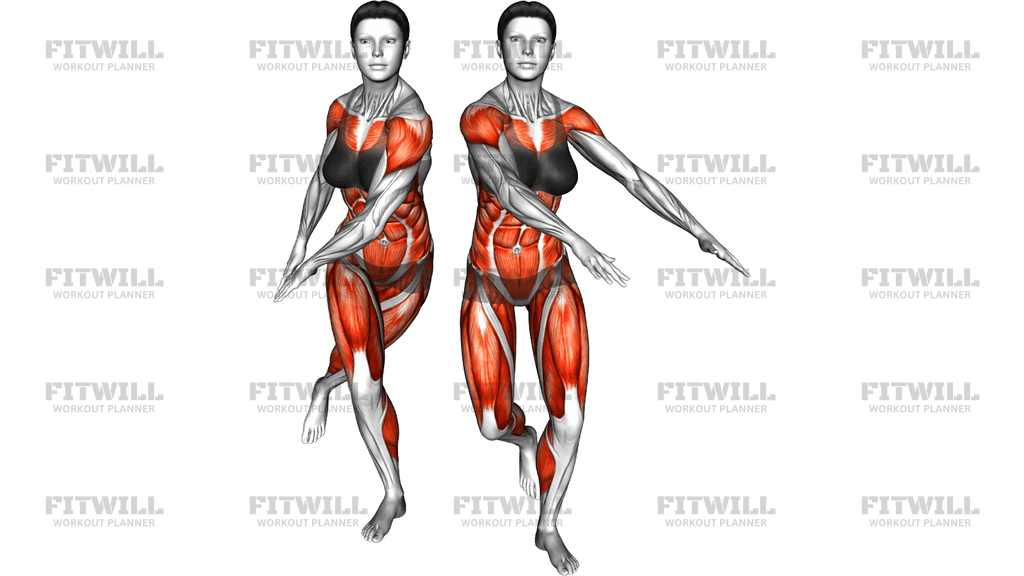
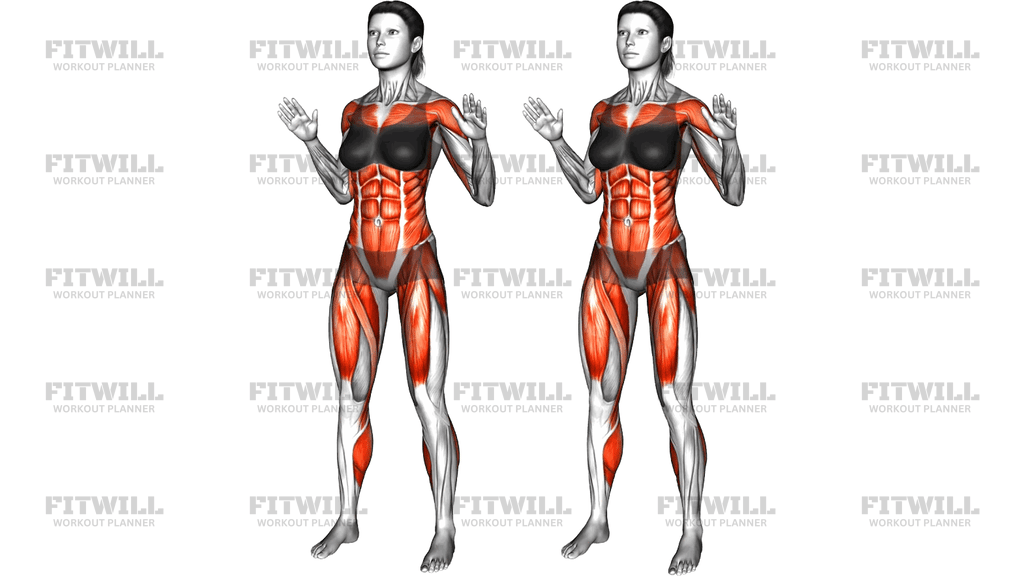
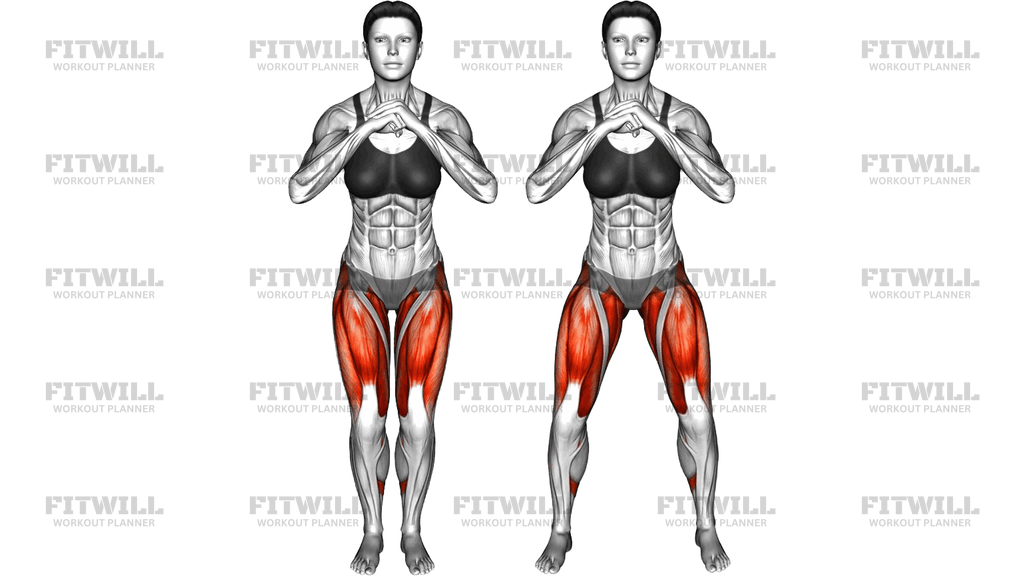
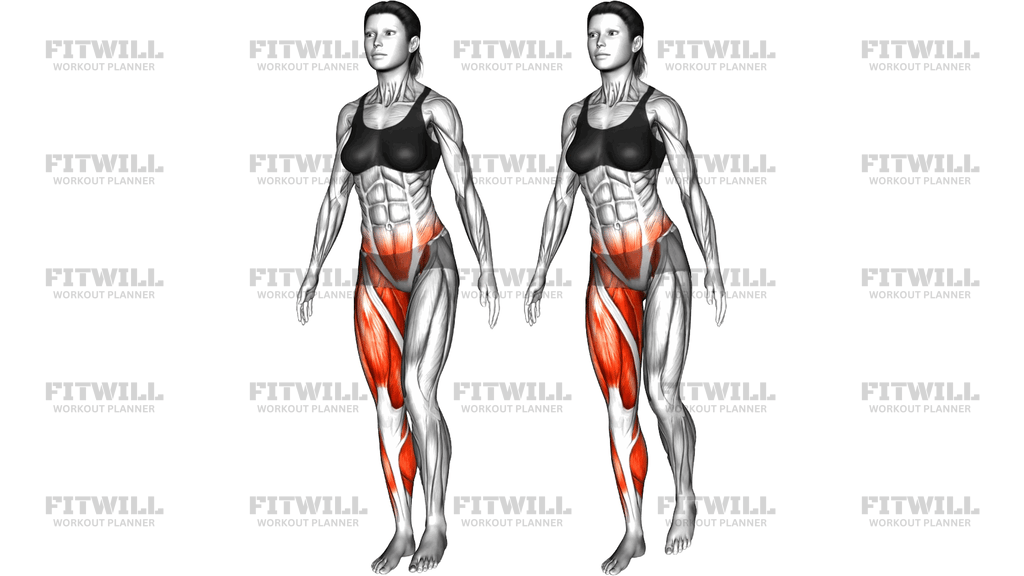
The movement highlights the quads, glutes, and calves, with the hamstrings and hip flexors assisting on each lift. Because you are repeatedly rising onto one leg, it also trains single-leg strength and balance in a way flat-ground walking never does. Your heart and lungs work hard throughout, so stair climbing doubles as aerobic training — even a few flights at a brisk pace will noticeably raise your breathing rate.
This is an ideal option for beginners, people getting back into training, and anyone who wants lower-body conditioning without equipment or a gym. It is also widely used as a low-impact warm-up, as active recovery between harder lifting sets, and as a practical fat-loss tool since it burns substantially more energy per minute than walking on level ground. Office workers and anyone with a staircase at home can accumulate meaningful work in short bursts across the day.
Setup matters more than most people expect. Place your whole foot on each step rather than letting the heel hang off the edge, keep your torso tall instead of folding forward, and use the handrail lightly for balance if you need it — not to pull yourself up. Foot placement determines whether the work goes through your muscles or strains your knees and Achilles.
To execute it well, lead each step by driving through the heel and mid-foot of the working leg, fully extend the hip and knee at the top of each step, and let the trailing leg lift with control rather than swinging up lazily. Descend slowly and deliberately; going down is harder on the knees than going up, so treat it as part of the exercise rather than an afterthought. Breathe steadily instead of holding your breath, especially as the pace increases.
The main safety points are simple: start at a pace you could hold for several minutes, keep your eyes on the stairs without staring at your feet, and use the rail on descents if the steps are steep or your legs are fatigued. If a flight is long, there is no shame in pausing at a landing to reset your posture before continuing.
[ Workout Log & Planner ]
Put your next workout in Fitwill
Keep your plan and training log ready when you are.


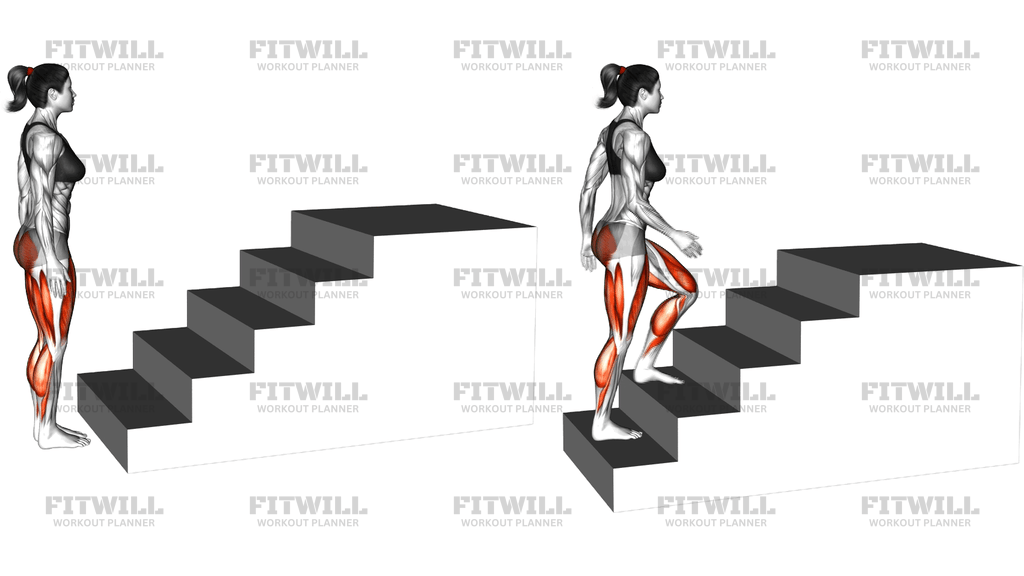
Instructions
- Stand facing the bottom of the staircase with feet hip-width apart, arms relaxed at your sides, and your weight over the mid-foot.
- Shift your weight onto one leg and place the opposite foot squarely on the first step so the entire foot, including the heel, rests on the surface.
- Brace your core lightly and keep your chest tall; look a few steps ahead rather than down at your toes.
- Drive through the heel and mid-foot of the top leg to lift your body until that knee and hip are fully extended.
- Bring the trailing foot up to the same step, finishing tall with your hips directly over your ankles.
- Continue stepping one stair at a time, alternating legs naturally, and press through the ball of the foot at the top of each step to engage the calves.
- Exhale on the effort of pushing up and inhale as you lift the trailing leg, keeping a steady breathing rhythm.
- At the top, turn safely, then walk back down with slow, controlled steps, placing the mid-foot first and keeping the knees soft.
- Pause briefly at the bottom to reset your posture before starting the next climb, and rest as needed between flights.
Tips & Tricks
- The most common mistake is leaning far forward with your chest over your knees, which shifts stress toward the knees and lower back; lift your chest and think about pushing the floor away underneath you.
- Letting the heel hang off the step edge shortens the base of support and loads the calf and Achilles sharply at push-off; place the whole foot on the tread instead.
- Do not pull yourself up by the handrail — grip it lightly for balance only, or the work leaves your legs and the pattern weakens.
- If your knees complain going up, shorten the range by taking a slightly slower step and focusing on pushing through the heel rather than launching off the toes.
- Descending is where most stair-related knee soreness starts; take the way down slowly and consider using the rail when your legs are already tired.
- Avoid taking two stairs at a time until you have solid single-leg strength, since the longer stride demands much more from the glutes and hip extensors.
- A brisk but repeatable pace builds conditioning better than sprinting one flight and being unable to do another; aim for effort where your breathing is elevated but you can still speak a short sentence.
- If you wobble or your hips sway side to side, slow down and focus on stepping through the middle of your foot — that wobble usually means the stabilizing muscles around the hip are being challenged.
- Wear firm, flat-soled shoes rather than slippery or heavily cushioned ones; thin, grippy soles make foot placement on the tread much more secure.
Frequently Asked Questions
What muscles does Climbing Stairs work the most?
The quadriceps on the front of the thigh and the glutes do most of the work of lifting your body with each step, while the calves finish each push-off. The hamstrings and hip flexors assist as the trailing leg lifts.
Is Climbing Stairs good exercise for beginners?
Yes, it is one of the easiest ways to start, since the staircase and your body weight are all you need. Begin with one or two flights at a comfortable pace and build up gradually as your legs and breathing adapt.
How does Climbing Stairs compare to walking on flat ground?
Raising your body against gravity on every step makes it far more demanding than level walking, so it builds more leg strength and raises your heart rate higher in the same amount of time. It also challenges balance because each step is performed on one leg.
Should I hold the handrail while Climbing Stairs?
A light touch for balance is fine and smart on descents, but do not pull on it to help yourself up. If you need to grip hard, slow down or reduce the number of flights.
Why do my knees ache more going down stairs than going up?
Descending loads the front of the knee eccentrically as it controls your body weight against gravity. Slow down, place the mid-foot first, keep the knee tracking over the toes, and use the rail until your legs adapt.
Can Climbing Stairs help with weight loss?
It burns considerably more energy per minute than flat walking and is easy to accumulate in short bouts throughout the day. As with any conditioning work, results depend on consistency paired with your overall diet and activity.
How many flights should I climb in a workout?
Start with what you can climb while keeping tall posture and steady breathing — for many people that is two to five flights. Add a flight or an extra round each week rather than pushing to exhaustion early on.
What can I do if I don't have a staircase?
A sturdy step platform, park steps, or a stable low bench used as a step-up work the same muscles through a similar pattern. Make sure whatever you use is secure and has a non-slip surface.
Is Climbing Stairs safe every day?
For most healthy people, daily stair climbing at a moderate pace is well tolerated because it is low-impact. If your legs feel heavy or your knees stay sore after descents, alternate harder days with easier walks.