Cable Decline One-Arm Press
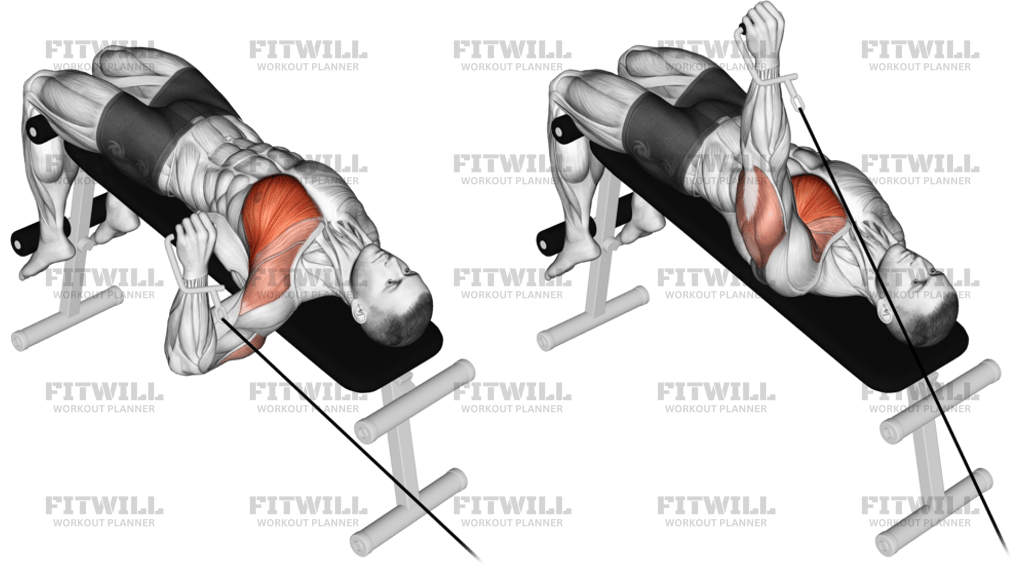
Cable Decline One-Arm Press is a single-arm chest press performed on a decline bench with a low cable and a single handle. The decline angle changes the line of resistance so the press feels slightly downward-to-upward across the torso, which keeps the pecs working while the shoulders and triceps help finish the rep. Because one arm is working at a time, the exercise also challenges trunk control and makes it easier to notice side-to-side differences in pressing strength.
The main target is the chest, especially the lower and mid portion of the pecs, with the front shoulder, triceps, and obliques helping stabilize the body on the bench. In anatomy terms, the primary muscle is the Pectoralis Major, with help from the Anterior Deltoid, Triceps Brachii, and Rectus Abdominis. The decline setup matters because it fixes your body position and changes the press angle enough to make the movement feel different from a flat one-arm cable press.
A good rep starts before the handle moves. Secure your feet under the decline bench rollers, lie back with your shoulder blades set, and keep your chest open without over-arching your low back. The working hand should begin near the lower chest or upper rib line, with the wrist stacked over the forearm and the elbow slightly below shoulder height so the cable can drive the press instead of pulling the shoulder forward.
Press the handle upward in a smooth arc until the arm is nearly straight and the hand finishes above the chest line. Avoid twisting away from the cable; keep the ribs controlled so the torso stays square to the bench. Lower the handle back along the same path with steady tension and stop before the shoulder rolls forward. That controlled return is where the chest and front shoulder keep most of the tension.
This exercise fits well in chest-focused sessions, unilateral accessory work, or any program that needs a pressing pattern with less spinal loading than standing cable presses. It is also useful when one side of the chest or shoulder tends to take over, because the one-arm format makes compensation obvious. Keep the load honest, let the bench do the stabilizing, and use crisp reps that stay smooth from the first rep to the last.
[ Workout Log & Planner ]
Put your next workout in Fitwill
Keep your plan and training log ready when you are.


Instructions
- Set the cable pulley low, place a single handle on the working side, and position the decline bench so the line of pull comes from below and outside the torso.
- Sit on the bench, thread your ankles under the rollers, and lie back with your head supported and your feet locked in place.
- Set your shoulder blades on the bench, open your chest, and keep your lower back only lightly arched.
- Grip the handle with one hand and start with the handle near the lower chest, elbow bent and slightly below shoulder level.
- Brace your torso so the rib cage stays down and the body does not roll toward the cable.
- Press the handle upward in a smooth arc until the arm is nearly straight and the hand finishes above the chest line.
- Pause briefly at the top without shrugging the shoulder toward your ear.
- Lower the handle along the same path until the elbow returns near the lower chest, keeping tension on the cable.
- Breathe out as you press and breathe in as you lower, then reset your shoulders before the next repetition.
Tips & Tricks
- Keep the pulley low enough that the handle travels up and slightly inward instead of straight out from the shoulder.
- If your torso twists toward the cable, reduce the load and keep both shoulder blades heavy on the bench.
- Let the elbow travel in a natural pressing arc; flaring it straight out will shift more stress into the shoulder.
- Finish with the wrist stacked over the forearm so the handle does not bend the hand back.
- Do not bounce off the bottom position; the chest should control the change of direction, not momentum.
- A shorter top lockout is fine if fully straightening the arm causes the shoulder to roll forward.
- Use the free hand to lightly brace the bench or stay by your side if that helps keep the rib cage from opening too much.
- Choose a weight that lets both sides match in tempo if you alternate arms from set to set.
- Stop the set when the handle starts drifting across your face or when the shoulder loses its set position.
Frequently Asked Questions
What does the Cable Decline One-Arm Press work most?
It mainly targets the chest, especially the lower and mid pec fibers, with the front shoulder and triceps helping finish the press.
Why use a decline bench for the Cable Decline One-Arm Press?
The decline angle changes the press path so the handle travels upward from a lower start, which shifts the feel toward the chest and makes the setup more stable.
How should I position the cable handle at the start?
Start with the handle near the lower chest or upper rib line, with the elbow bent and the wrist lined up over the forearm.
Should I keep my shoulders pinned down on the bench?
Keep the shoulder blade set, but do not force it rigidly down; the goal is a stable chest position without letting the shoulder roll forward.
Can beginners do the Cable Decline One-Arm Press?
Yes. Start with a light load and use a very controlled path so you can keep the torso square and the shoulder quiet.
What is the most common mistake with this one-arm cable press?
Twisting toward the cable is the biggest issue. If that happens, lower the weight and keep the ribs and hips fixed against the bench.
Can I use this instead of a flat cable press?
Yes, but the decline bench changes the pressing angle and stability demands, so it feels different even though the chest is still the main driver.
How heavy should the Cable Decline One-Arm Press be?
Use a load that lets you press smoothly without arching hard, twisting, or losing the same path on every rep.