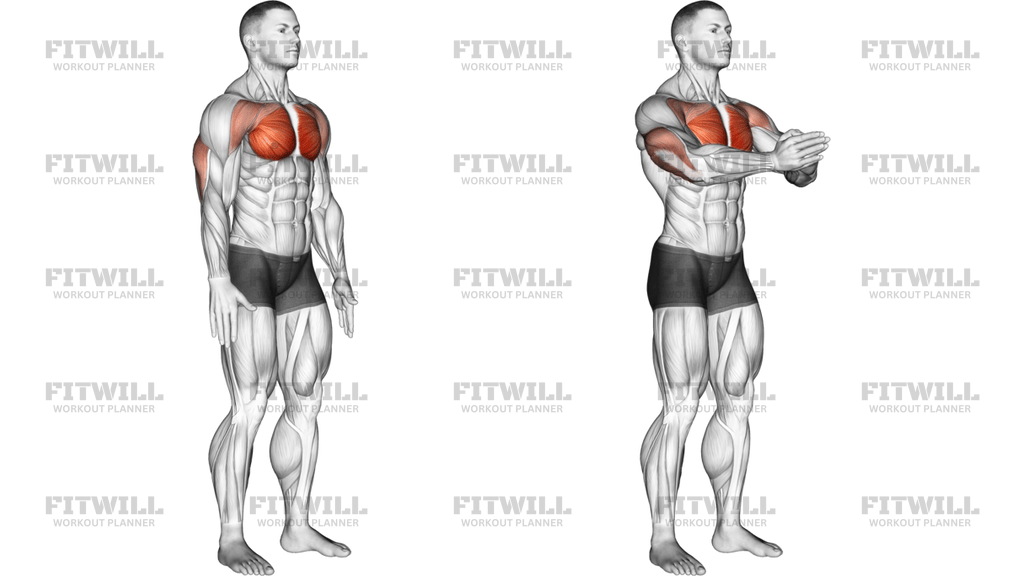
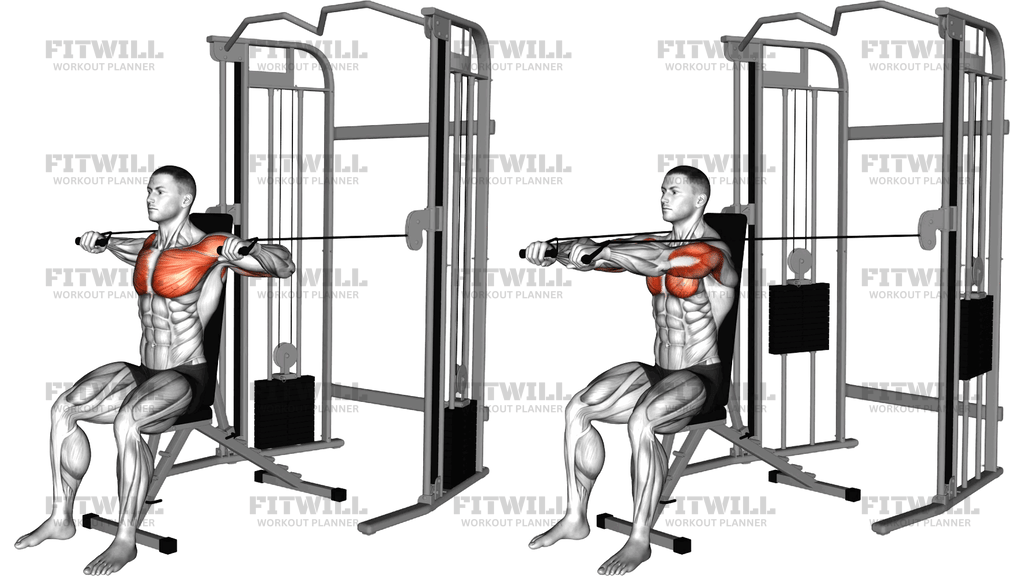
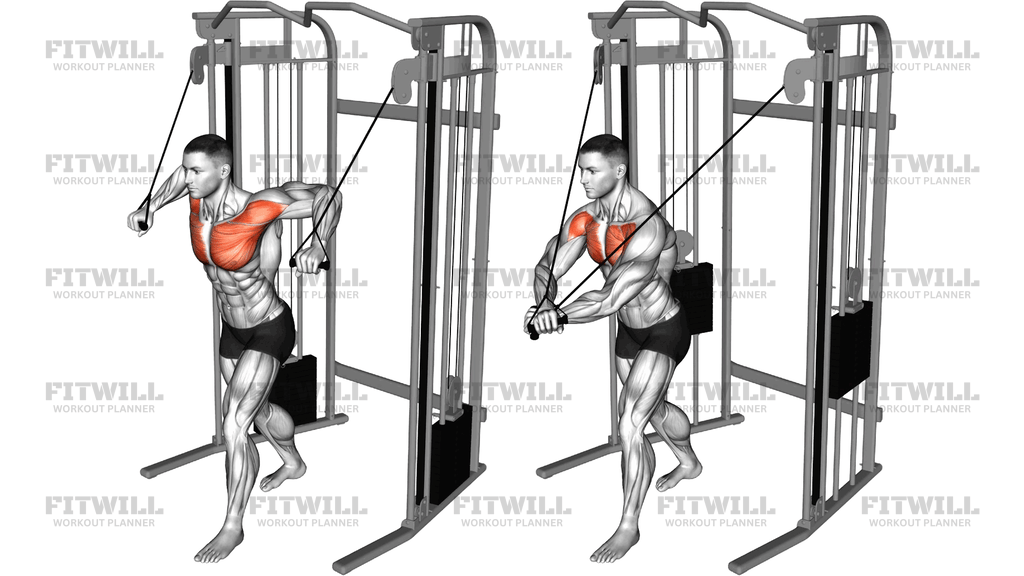
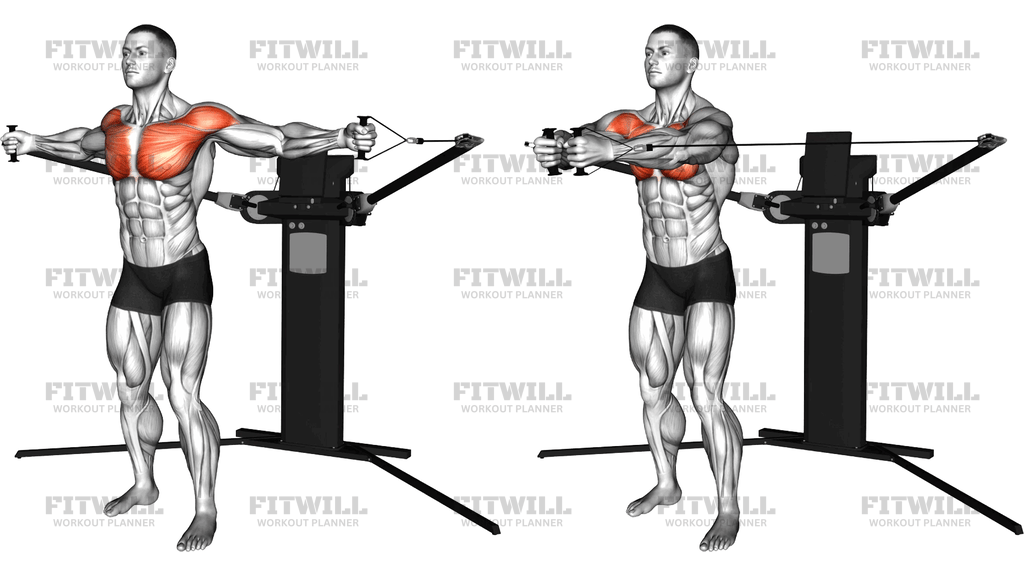
Cable Standing Up Straight Crossovers
Cable Standing Up Straight Crossovers are a standing cable fly variation built around a long, controlled arc through the chest. The high pulleys and handle attachments let you keep continuous tension on the pecs while your shoulders and arms support the path of the movement. Done well, the exercise feels smooth and deliberate rather than explosive, with the chest doing the work and the torso staying organized.
This pattern emphasizes the Pectoralis major, especially through horizontal adduction as the hands travel inward. The anterior deltoids help guide the arm path, the triceps stabilize the elbow angle, and the core keeps the rib cage from flaring or twisting. Cable Standing Up Straight Crossovers are useful when you want chest isolation with less joint impact than heavy pressing, or when you need a chest accessory that keeps tension on the target muscles throughout the repetition.
The setup matters because it determines the line of pull and the amount of stretch you feel in the chest. Stand centered between the pulleys, grasp the handles, and step into a split stance so you can resist the cable pull without leaning or rocking. Keep a soft bend in the elbows, chest tall, shoulders depressed, and wrists stacked with the forearms before you start the first rep.
From there, sweep the handles inward in a wide arc until they meet in front of the lower chest or upper abdomen, depending on your cable height and body angle. Keep the motion driven by the pecs rather than by the hands or upper traps, and avoid turning it into a front-raise or a press. The return should be just as controlled as the pull, with the arms opening until you feel a strong but manageable stretch across the chest.
Cable Standing Up Straight Crossovers fit well in hypertrophy work, accessory chest blocks, or as a lighter finishing movement after presses. They are also a practical option for lifters who want to practice scapular control and chest tension without chasing maximal load. Use a weight that lets you keep the same path on every rep, breathe steadily, and stop the set when you can no longer keep the shoulders quiet and the torso still.
Fitwill
Log Workouts, Track Progress & Build Strength.
Achieve more with Fitwill: explore over 9600 exercises with images and videos, access built-in and custom workouts, perfect for both gym and home sessions, and see real results.
Start your journey. Download today!




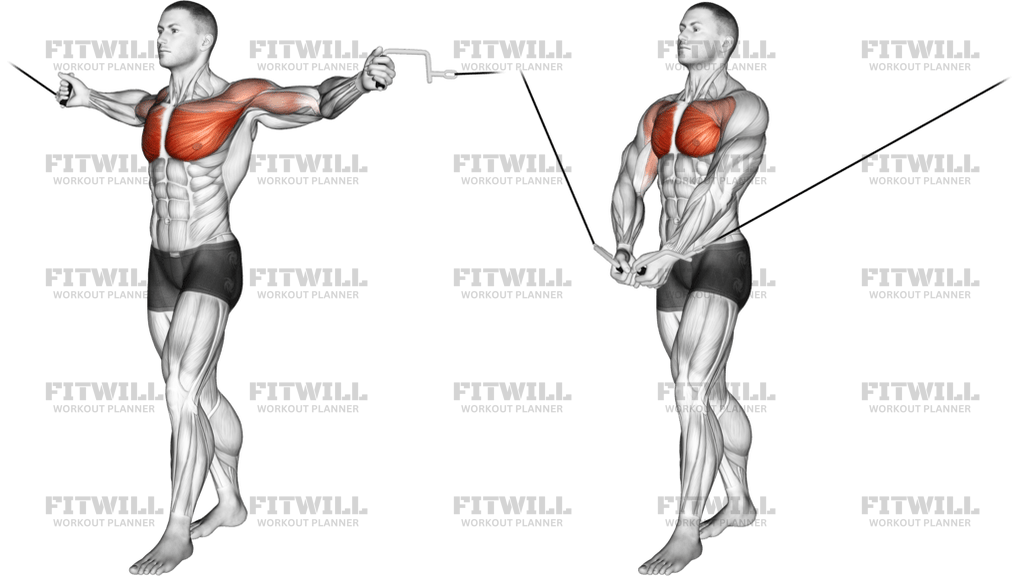
Instructions
- Set both cable pulleys high and attach a handle to each side.
- Stand centered between the towers, grasp the handles, and step one foot forward into a stable split stance.
- Lean only slightly forward from the ankles while keeping your chest lifted and your shoulders down.
- Start with your arms opened wide at about shoulder height and keep a small bend in both elbows.
- Brace your midsection, then exhale as you sweep the handles inward in a wide arc.
- Bring the handles together in front of your lower chest or upper abdomen without shrugging your shoulders.
- Pause briefly and squeeze the chest at the closed position.
- Inhale as you return under control until you feel a stretch across the pecs, then repeat for the planned reps.
Tips & Tricks
- Keep the elbow angle nearly fixed so the movement comes from the shoulder joint, not from bending and straightening the arms.
- Use a split stance that lets you resist the cable pull without swaying or stepping around during the set.
- If the shoulders start to take over, lower the load and think about bringing the upper arms together, not the hands.
- Finish the rep in front of the lower chest or upper abdomen, not high in front of the face, so the chest stays in charge of the line of pull.
- Let the handles travel back slowly on the eccentric to keep tension on the pecs instead of letting the stack pull you open.
- Keep your ribs down and your glutes lightly engaged so the lower back does not arch to fake a bigger range.
- A slight forward lean is fine, but turning the exercise into a hinge usually shifts the work away from the chest.
- Stop the set when you have to shrug, twist, or shorten the return to make the next rep happen.
Frequently Asked Questions
What muscles do Cable Standing Up Straight Crossovers work most?
They primarily train the chest, with help from the front delts, triceps, and core to stabilize the standing position.
Why do the handles start wide and finish low in Cable Standing Up Straight Crossovers?
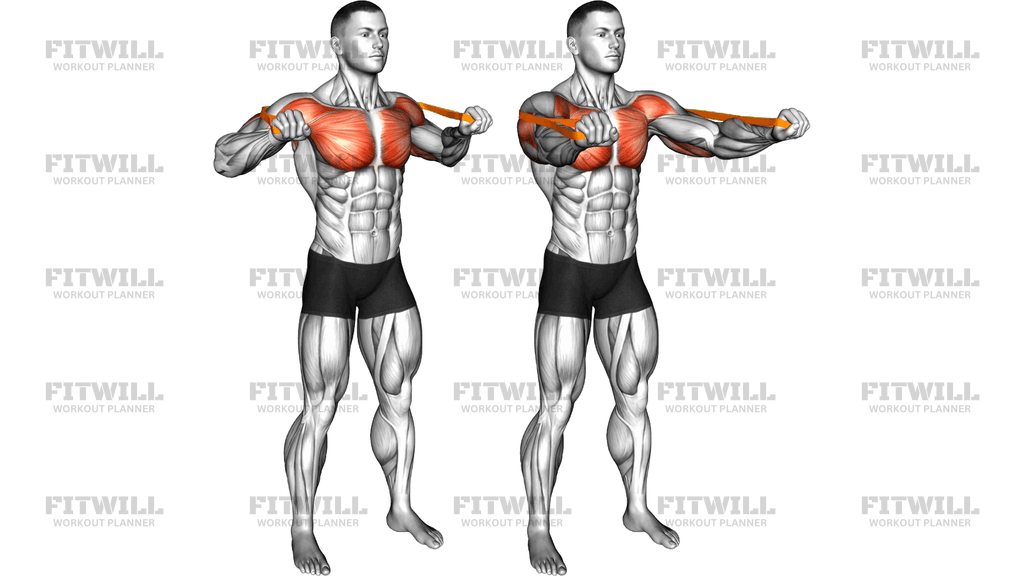
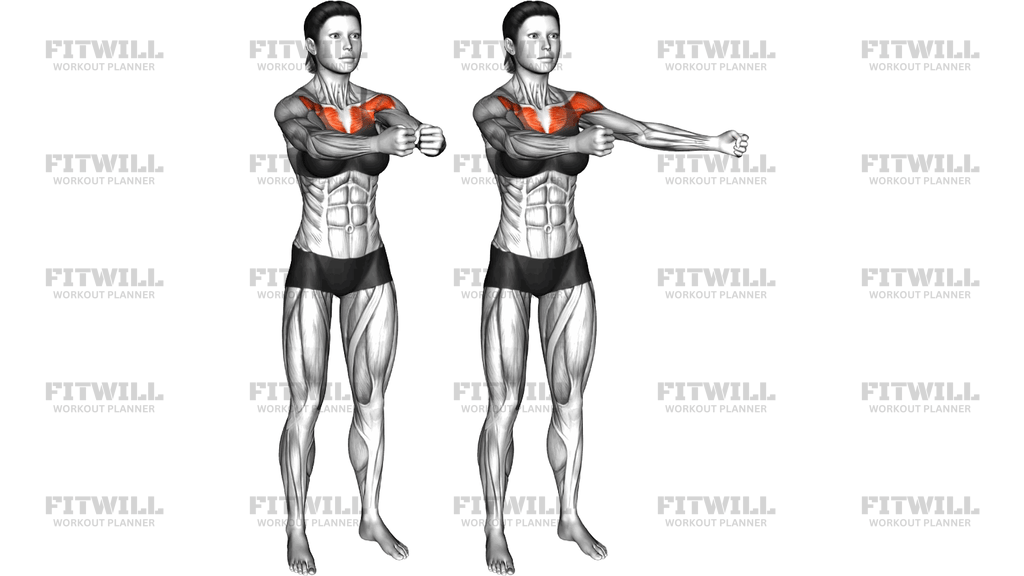
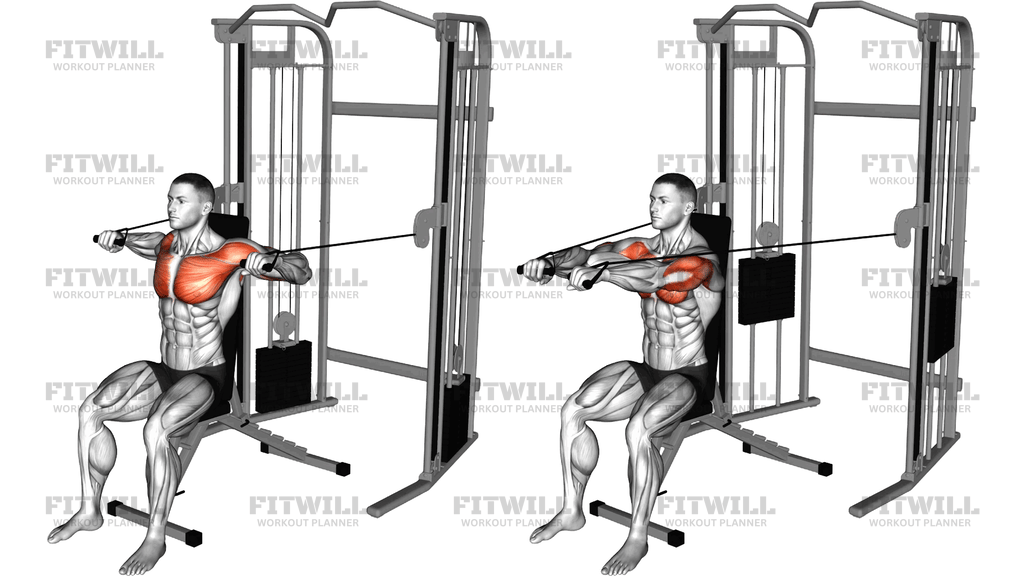
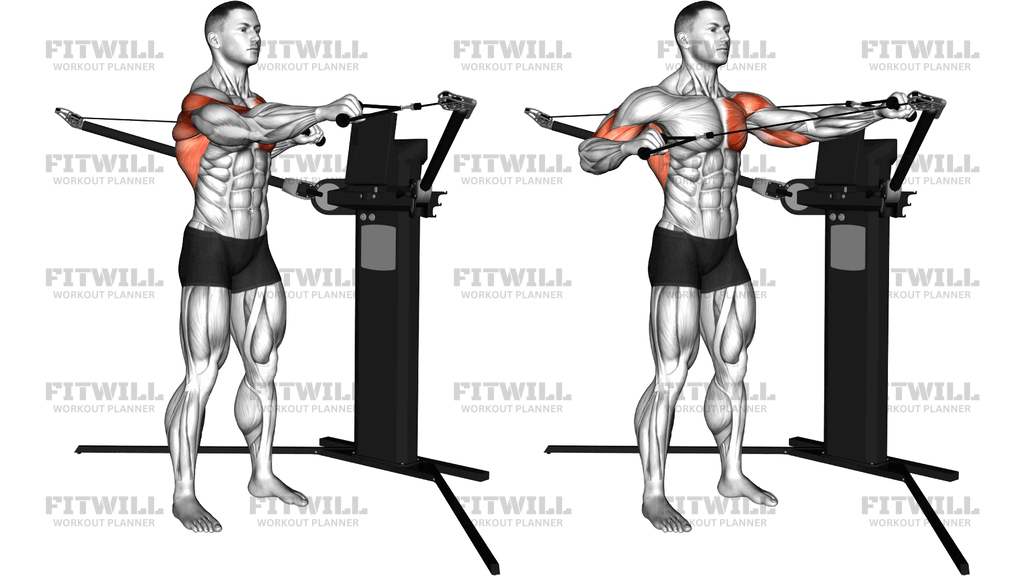
That path keeps tension on the pecs through a long arc and matches the high-pulley crossover pattern shown in the image.
Should my elbows stay straight during Cable Standing Up Straight Crossovers?
Keep a soft, fixed bend in the elbows. If the bend changes a lot, the movement starts to turn into a press or triceps-driven motion.
Can beginners do Cable Standing Up Straight Crossovers safely?
Yes. Start light, use a split stance, and practice the path before adding load. The exercise is easiest to learn when the torso stays quiet.
What is the most common mistake with Cable Standing Up Straight Crossovers?
Most people use too much weight and turn the rep into a shruggy, rushed swing. That usually takes tension off the chest.
How should the cables move on each rep?
The handles should travel in a smooth inward arc, meet in front of the lower chest or upper abdomen, and then return slowly under control.
Are Cable Standing Up Straight Crossovers better for chest size or strength?
They are better for chest tension, control, and hypertrophy than for max strength. Heavy presses are a better choice if your main goal is load on the bar.
What should I do if I feel it more in my shoulders than my chest?
Reduce the load, keep the shoulders down, and focus on bringing the upper arms together instead of reaching the hands forward.