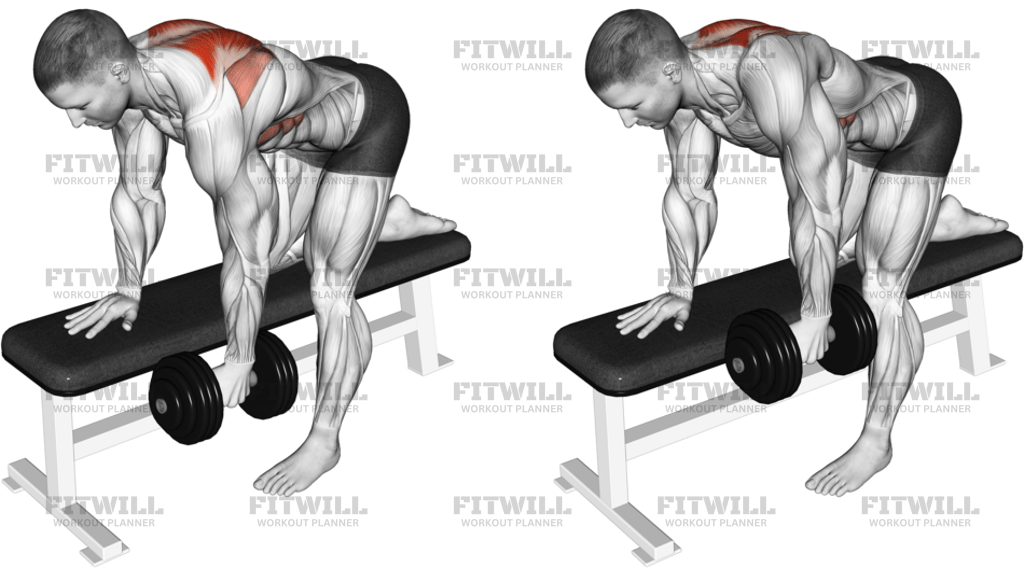
Dumbbell Reverse-Grip Incline Bench Two Arm Row
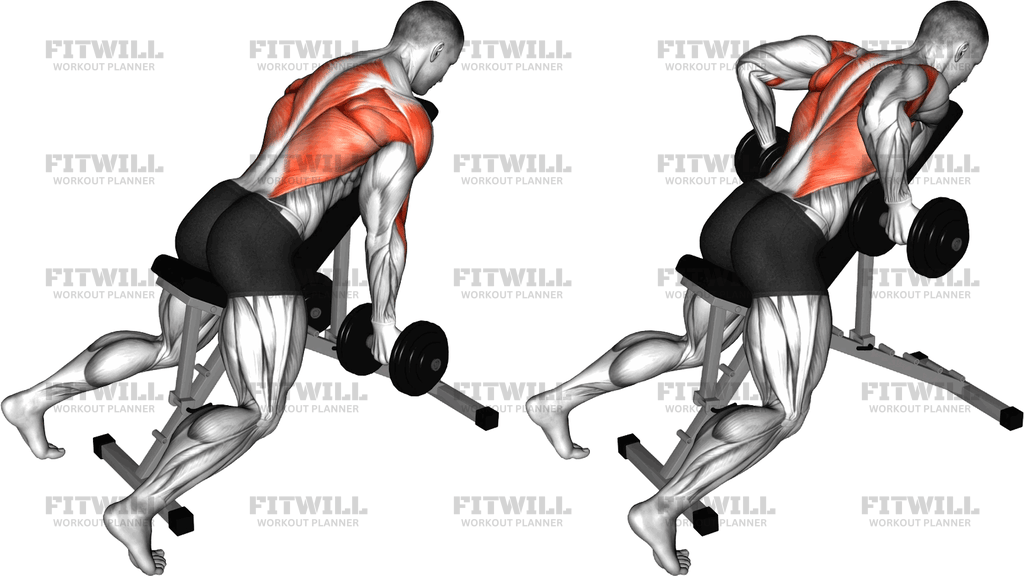
Dumbbell Reverse-Grip Incline Bench Two Arm Row is a chest-supported rowing exercise that uses two dumbbells and a reverse underhand grip to train the upper back with strict control. The incline bench takes most of the balance work out of the lift, which lets you focus on pulling the elbows back smoothly and keeping the shoulder blades moving through a clean retraction and squeeze.
This version of the row places strong emphasis on the trapezius, rhomboids, rear shoulder area, and lats, with the biceps helping because the palms face forward in the bottom position. The support of the bench is important: when your chest stays planted, you can row both arms evenly and avoid turning the repetition into a body swing or a low-back exercise. That makes it useful when you want upper-back work without standing momentum.
The reverse grip changes the feel of the pull. It usually keeps the elbows a little closer to the ribs and encourages a strong drive toward the lower chest or upper waist, depending on the bench angle and arm length. That makes the movement a good choice for controlled back training, accessory work after pressing, or higher-quality pulling volume when you want the upper back to do the work instead of the hips and torso.
Set the bench so your chest is fully supported and your head stays neutral. Let the dumbbells hang straight down, then row them with both arms together while keeping the shoulders away from the ears. At the top, squeeze the shoulder blades without shrugging hard or bouncing the weights. Lower the dumbbells slowly to a full stretch and keep your torso glued to the bench the whole time.
Use a load you can move cleanly for full reps without losing the chest support or twisting through the torso. Beginners can use this movement if they keep the weight modest, the bench stable, and the tempo controlled. If your wrists feel strained by the underhand position, reduce the load and keep the grip firm but not cramped.
[ Workout Log & Planner ]
Put your next workout in Fitwill
Keep your plan and training log ready when you are.


Instructions
- Set an incline bench so your chest can rest firmly on the pad and your arms can hang straight down from the shoulders.
- Lie face down with your chest and upper stomach supported, feet planted for balance, and a dumbbell in each hand using an underhand grip.
- Let the shoulders relax down away from the ears so the dumbbells start from a full stretch without collapsing the upper back.
- Brace your midsection lightly against the bench and keep your neck long with your gaze down.
- Pull both elbows back and slightly out as you drive the dumbbells toward your lower ribs or upper waist.
- Squeeze the shoulder blades together at the top without jerking the weights or letting the chest leave the bench.
- Lower the dumbbells in a slow, controlled path until the arms are almost straight and the back is fully lengthened.
- Inhale on the way down, exhale as you row, and repeat for the planned number of reps without changing your body position.
Tips & Tricks
- Keep your chest glued to the incline bench so the rep stays a row instead of turning into a whole-body heave.
- Use an underhand grip that feels secure in the wrists; if the position forces your forearms to rotate uncomfortably, lighten the load.
- Think about pulling the dumbbells toward the lower ribs, not straight up toward the shoulders.
- Do not shrug at the top. The trap work should come from controlled scapular retraction, not a hard neck lift.
- Pause briefly when the dumbbells reach the top so the shoulder blades finish squeezing before the descent.
- Lower the weights slowly enough that your upper back stays engaged all the way back to the stretch.
- Keep the elbows from flaring excessively; a moderate tuck usually keeps the lats and mid-back working better.
- Choose a bench angle that lets your arms hang freely without the dumbbells hitting the floor at the bottom.
- If your lower back starts helping, shorten the set and reduce the load before the torso shifts against the bench.
Frequently Asked Questions
What muscle does Dumbbell Reverse Grip Incline Bench Two Arm Row target most?
It primarily targets the upper back, especially the traps and rhomboids, while the lats and biceps assist because of the reverse grip.
Can beginners perform this exercise?
Yes. The chest support makes it beginner-friendly as long as the load stays light and the torso does not leave the bench.
Where should the dumbbells travel during the row?
Pull them toward the lower ribs or upper waist with both elbows moving back together, then lower them under control.
Why use a reverse grip on this incline bench row?
The underhand grip usually keeps the elbows a little closer to the body and changes the pull so the lats and upper-back muscles work through a different line.
Should my chest stay on the bench the whole time?
Yes. Keeping the chest supported removes body swing and helps you isolate the rowing motion more cleanly.
What is a common mistake with the top position?
A common error is shrugging the shoulders hard instead of squeezing the shoulder blades back with control.
What bench angle works best for this row?
A moderate incline usually works best because it supports the chest while still letting the dumbbells hang and row freely.
How should I breathe during the set?
Inhale as the dumbbells lower and exhale as you pull them back to the top.
How heavy should I train this movement?
Use a load that lets you keep the chest on the bench, the wrists stable, and every rep smooth from the bottom stretch to the top squeeze.