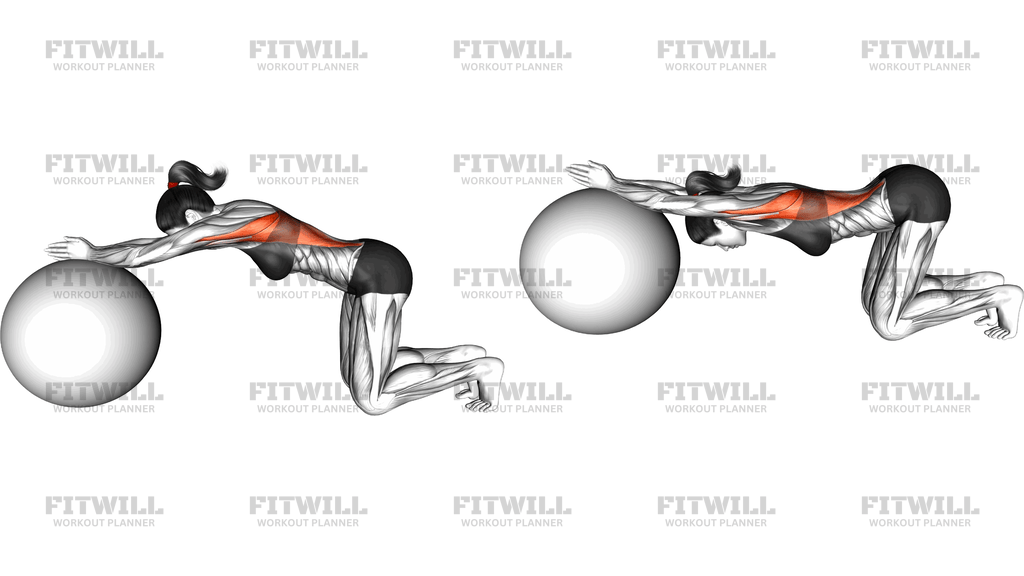
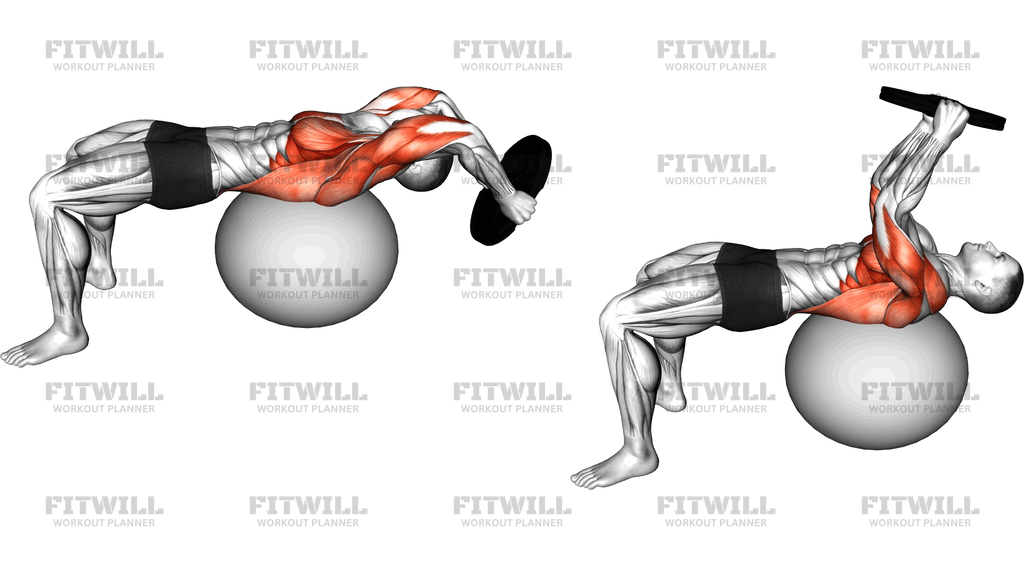
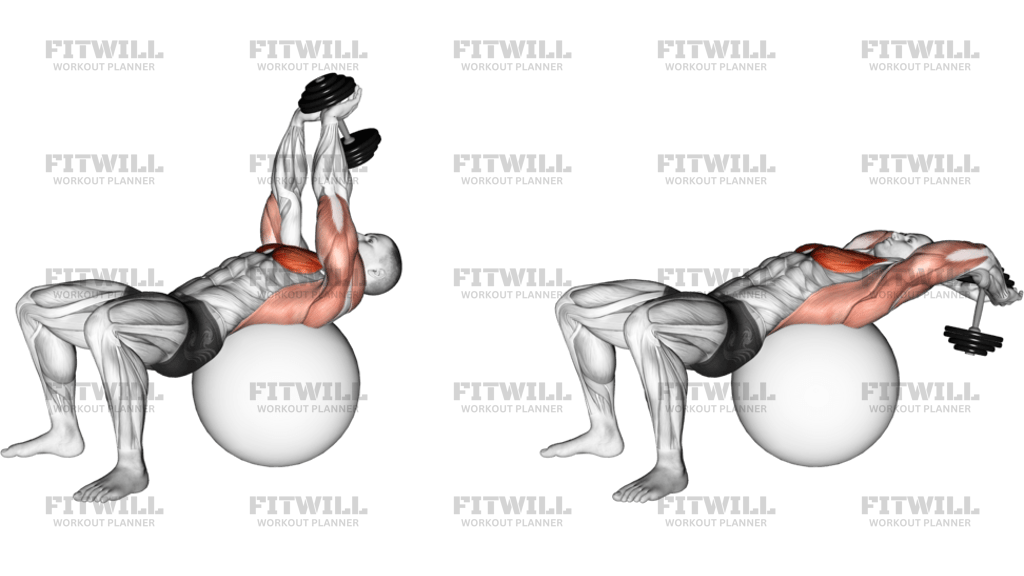
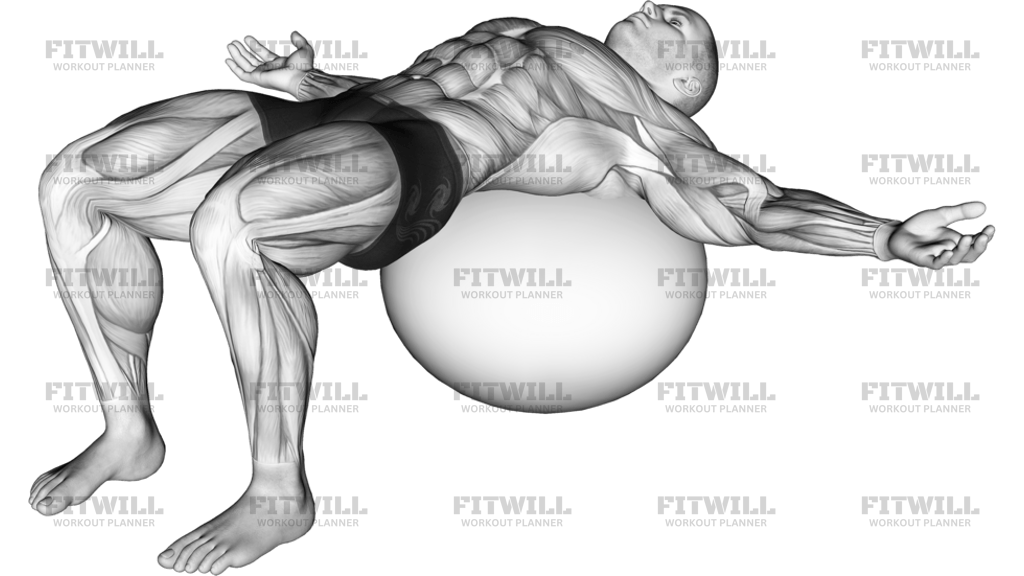
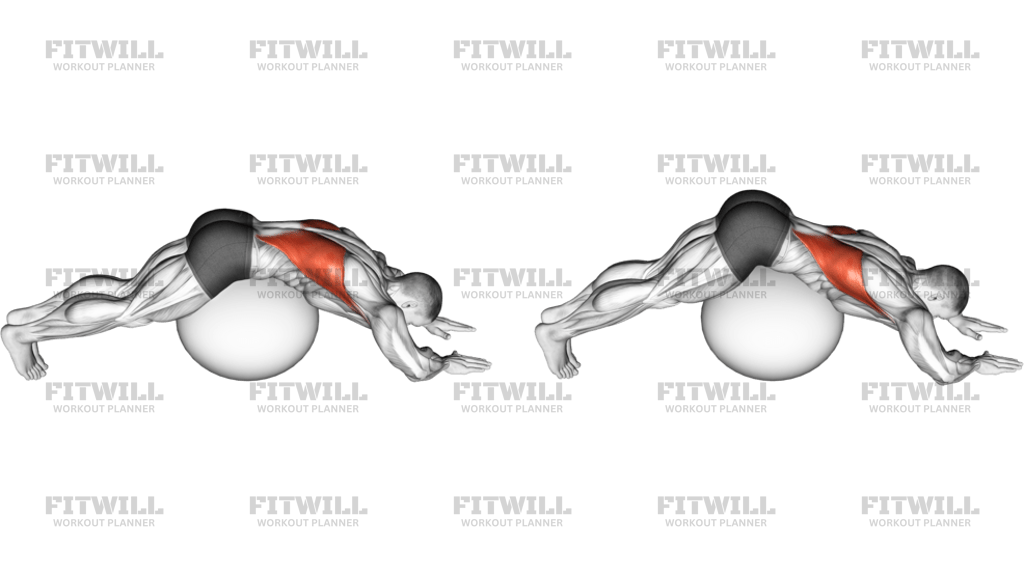
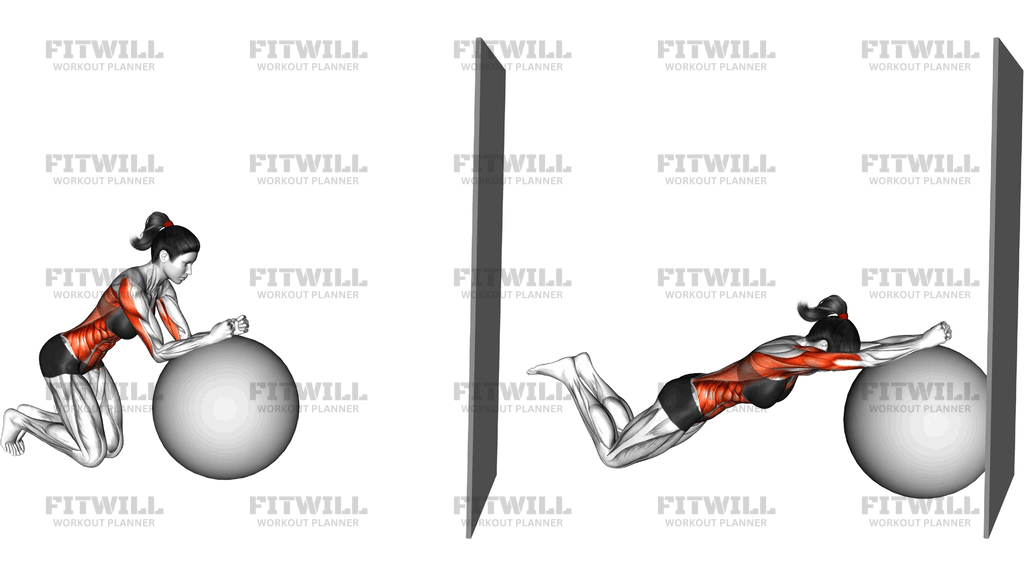
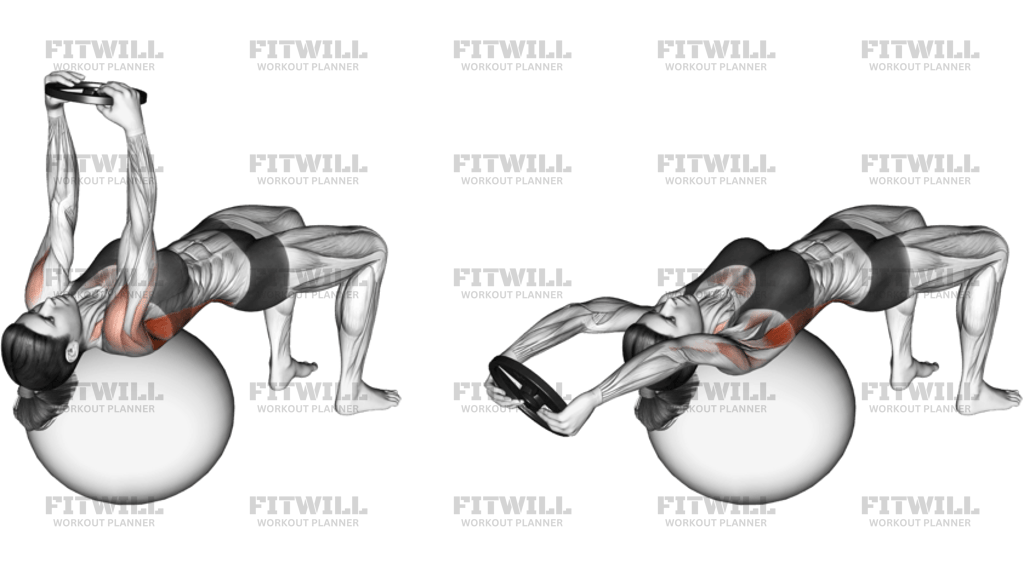
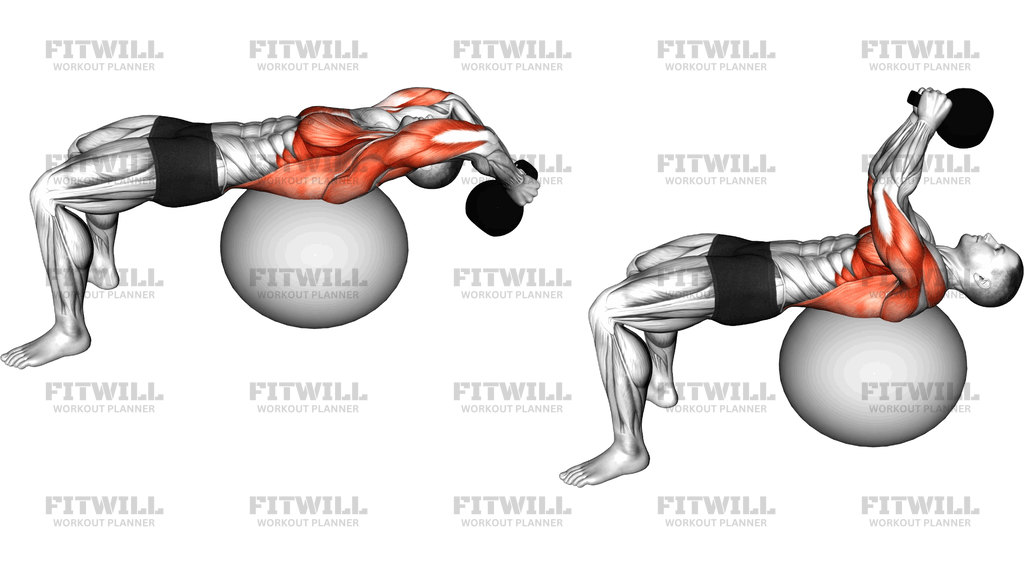
Exercise Ball Lying Side Lat Stretch
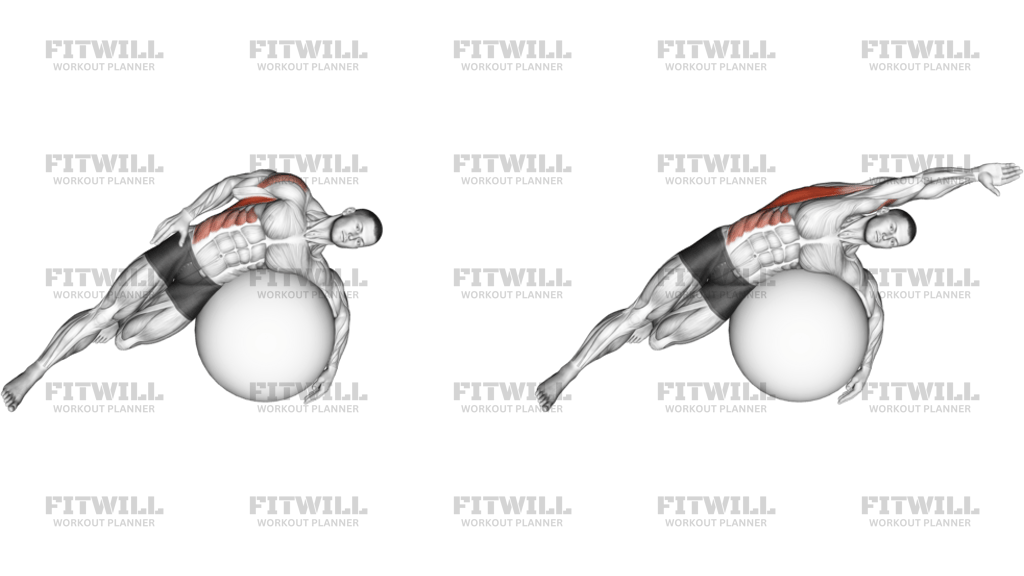
Exercise Ball Lying Side Lat Stretch is a side-lying mobility drill that uses a stability ball to open the lat, side rib cage, and upper back while the body stays supported. The ball changes the angle of the stretch so you can lengthen through the whole side of the torso instead of collapsing into the floor. It is most useful when the lats feel tight after pulling, pressing, climbing, or overhead work, or when the rib cage and shoulder need a gentle reset.
The setup matters because the ball should support the lower ribs and waist well enough to let you relax into the position without pinching the shoulder or arching the low back. A good rep feels like the torso is draping over the ball while the top arm reaches long overhead. The stretch should land along the outside of the armpit, rib cage, and lat rather than turning into a twist through the spine or a crunch in the lower back.
Once you are positioned, the goal is not to force range. Instead, let each exhale soften the side body a little more while the hips stay steady and the neck stays long. Small changes in arm angle, head position, and how far you roll onto the ball can change the feel a lot. That makes this exercise easy to tailor for a beginner, but it also means rushing the setup usually turns it into a generic side bend instead of a focused lat stretch.
This is best used as a mobility or recovery drill, not as a loaded strength movement. Hold the stretch long enough to calm the tissue and improve position, then come out slowly and reset before changing sides. Keep the sensation strong but comfortable, and stop if the shoulder is compressed, the low back takes over, or you feel any sharp pain. Done well, this stretch helps restore overhead reach, cleaner rib cage position, and easier shoulder motion for the next part of training.
[ Workout Log & Planner ]
Put your next workout in Fitwill
Keep your plan and training log ready when you are.


Instructions
- Place the stability ball under your lower ribs and waist, then lie sideways across it with your lower hip and torso supported and your feet braced on the floor or mat.
- Let the bottom shoulder and side of the chest relax down onto the ball, keeping your neck long and your ribs stacked instead of twisting hard open.
- Reach the top arm overhead and slightly past your ear, turning the thumb up if that feels better on the shoulder.
- Slowly let your rib cage drape over the ball until you feel a stretch through the outside of the armpit, lat, and side ribs.
- Keep the hips quiet and the low back from arching as you lengthen through the arm and side body.
- Exhale steadily and let the stretch deepen on the out-breath without bouncing or forcing range.
- Hold the position for a few calm breaths, then ease out a little before re-sinking into the stretch.
- After the hold, bring the top arm back in, support yourself with your hands and feet, and switch sides.
Tips & Tricks
- Set the ball under the lower ribs, not the center of the waist, if you want a cleaner lat stretch and less low-back pressure.
- If the stretch feels more like a twist than a side-body opening, bring the top arm a little forward instead of reaching it straight behind you.
- Keep the bottom ribs from flaring up; a long exhale usually helps the lat soften without arching the lumbar spine.
- Turn the palm up or keep the thumb pointed toward the ceiling if the shoulder feels crowded in the overhead position.
- Use the mat or floor for extra support under the lower leg and hand so you can relax into the stretch instead of balancing.
- A mild stretch in the armpit and along the side of the rib cage is the target; sharp shoulder pinching is not.
- Move only a few degrees deeper after each breath rather than trying to force a bigger range all at once.
- If one side feels much tighter, keep the same setup and hold time on both sides so the stretch stays balanced.
Frequently Asked Questions
What does the stability ball change in this side lat stretch?
The ball supports the torso while letting the side body drape over a rounded surface, which opens the lat and rib cage more than a flat-floor position usually does.
What should I feel during Exercise Ball Lying Side Lat Stretch?
You should feel a long stretch through the outside of the armpit, lat, and side ribs on the top side, not a sharp pinch in the shoulder.
Is this exercise active or passive?
It is mostly a passive mobility stretch with light positional control, not a loaded strength movement.
Why do my lower back or ribs feel it more than my lat?
The ball may be too low, or you may be arching instead of lengthening. Move the ball slightly higher under the ribs and keep the exhale soft.
Can beginners use this stretch?
Yes. Keep the range small, breathe slowly, and use the ball to support your body instead of pushing for a big stretch.
How long should I hold each side?
A few slow breaths or about 15 to 30 seconds is usually enough, as long as the stretch stays comfortable and controlled.
When is this stretch most useful?
It works well after rows, pull-ups, pulldowns, presses, or any session where the lats and overhead reach feel tight.
What is the most common mistake with this movement?
Most people force the torso to twist open instead of letting the side body lengthen over the ball.