Kettlebell Seated Two Arm Military Press
Kettlebell Seated Two Arm Military Press is a strict overhead pressing exercise performed while seated on a bench with a kettlebell in each hand. The seated position removes leg drive and makes the set more honest, so the shoulders and triceps have to do the work while the upper back and trunk keep the torso stacked.
This variation is useful when you want direct shoulder work without cheating the rep with momentum, a dip of the knees, or a big lean-back. The primary emphasis is on the delts, with the triceps, upper back, and deep core muscles helping to stabilize the shoulder girdle and keep the bells moving on a clean vertical path. Because the lift is bilateral, it also exposes side-to-side differences in strength, shoulder mobility, and control very quickly.
The setup matters a lot. Sit tall on a bench with both feet planted, ribs down, and each kettlebell racked at shoulder height with the forearm close to vertical. From there, press both bells up together until the arms finish overhead without letting the low back overextend. Lower them under control to the same rack position, keeping the wrists stacked and the elbows from drifting too far behind the body.
This is a good accessory press for upper-body strength, hypertrophy, or shoulder-focused training days. It also works well when you want to practice overhead stability with a modest load and a strict tempo. The more stable your torso stays, the more of the work stays where it belongs on the delts instead of leaking into the lower back and momentum.
Use a range of motion you can own from the first rep to the last. If one shoulder feels pinchy, narrow the elbow angle slightly, reduce the load, or stop just short of the painful range. Clean, repeatable reps matter more here than pushing a sloppy lockout or arching the bench to finish the set.
Fitwill
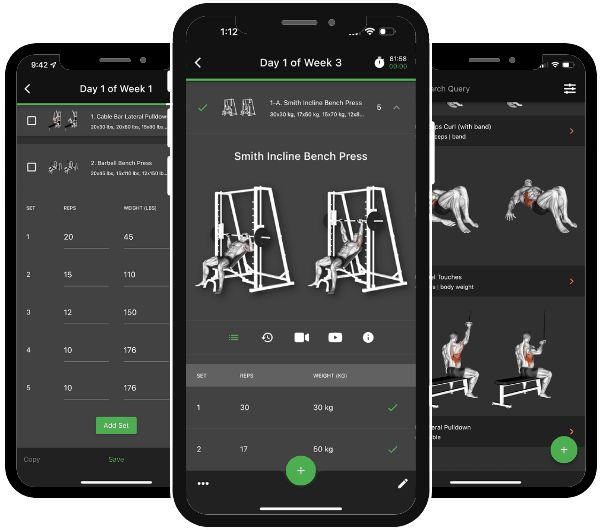
Log Workouts, Track Progress & Build Strength.
Achieve more with Fitwill: explore over 5000 exercises with images and videos, access built-in and custom workouts, perfect for both gym and home sessions, and see real results.
Start your journey. Download today!


Instructions
- Sit upright on a bench with your feet flat and both kettlebells racked at shoulder height, elbows slightly in front of the torso and forearms close to vertical.
- Stack your ribs over your pelvis, keep your chest tall without leaning back, and tighten your midsection before the first rep.
- Press both kettlebells straight up together until your arms are fully extended overhead and the bells finish over your shoulders.
- Keep the kettlebells traveling in a vertical line instead of drifting forward or out to the sides.
- At the top, straighten the elbows without shrugging hard or letting the lower back arch to finish the rep.
- Lower both bells slowly and evenly back to the rack position at shoulder level.
- Reset your breath and shoulder position at the bottom before starting the next repetition.
- Repeat for the planned reps with the same seat position, torso angle, and bar path on every rep.
Tips & Tricks
- Keep both glutes lightly in contact with the bench so the press stays strict and the torso does not drift into a standing-style lean.
- Think about driving the bells up from the shoulders rather than punching them forward; a forward path usually means the ribcage is flaring.
- Keep the forearms close to vertical in the rack so the wrist, elbow, and shoulder stay stacked under the load.
- If the elbows flare wide and the bells feel unstable, lower the load and bring the elbows a little closer to the front of the body.
- Do not finish the rep by arching the lower back; the lockout should come from shoulder extension, not spinal extension.
- A slightly slower lowering phase usually improves shoulder control and makes the set more productive than bouncing the bells back to the shoulders.
- If one arm presses ahead of the other, pause at shoulder height and restart with both bells even before the next rep.
- Stop the set when you have to crane the neck, shrug excessively, or lose the stacked seated position.
Frequently Asked Questions
What does the Kettlebell Seated Two Arm Military Press work most?
It primarily trains the delts, with the triceps and upper back helping to stabilize and finish the press.
Why do I need to sit on a bench for this press?
Sitting removes most leg drive and makes the movement stricter, so the shoulders have to produce the press instead of momentum.
Where should the kettlebells start before each rep?
Start with both bells racked at shoulder height, forearms near vertical, and elbows slightly in front of the torso.
Should I lean back to finish the overhead lockout?
No. A hard lean-back usually means the load is too heavy or the core is not staying stacked over the bench.
Can I use this if one shoulder is tighter than the other?
Yes, but keep the range pain-free and reduce the load if one side cannot reach overhead without twisting or shrugging.
What is a common mistake with the kettlebell path?
Letting the bells drift forward instead of pressing straight up usually turns the rep into a shoulder and back compensation pattern.
Is this better as a strength or hypertrophy exercise?
It can serve both goals; use heavier, lower-rep sets for strength or moderate reps with strict control for size and shoulder endurance.
What should I do if the bells feel unstable overhead?
Lower the weight, slow the tempo, and keep the wrists stacked over the elbows instead of letting the arms drift out of line.