Dumbbell Flat Flye Hold Isometric
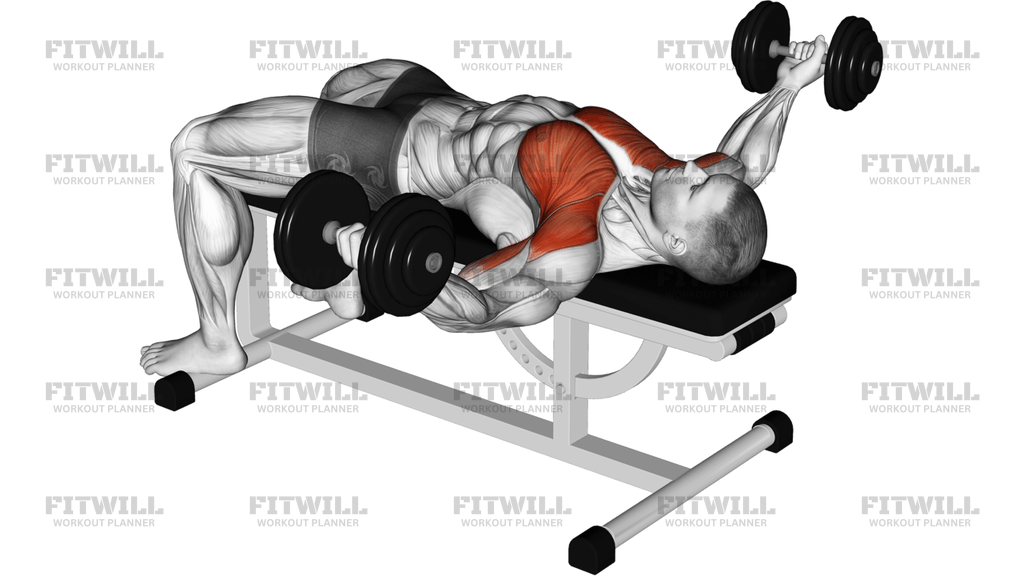
Dumbbell Flat Flye Hold Isometric is a flat-bench chest and shoulder stability drill built around holding the arms in a flye position instead of cycling through full repetitions. With the upper arms opened wide and the elbows kept softly bent, the exercise asks the chest, front shoulders, and upper-back stabilizers to control the dumbbells without letting the shoulders roll forward or the wrists collapse.
The value of this movement comes from the setup angle. A flat bench supports the torso so the chest can stay open while the shoulder blades stay organized against the pad. That fixed position makes the exercise very different from a standing hold: you can focus on keeping the dumbbells steady, controlling the stretch across the chest, and resisting the urge to turn the hold into a press or a shrug.
To perform Dumbbell Flat Flye Hold Isometric well, lower the bells only as far as your shoulders can tolerate without pinching, then lock that arm angle in place. The elbows should stay slightly bent, the hands should remain stacked over the forearms, and the ribs should stay down so the lower back does not take over. The goal is a quiet, deliberate hold where the chest stays loaded and the shoulders stay centered.
This exercise is useful as a chest accessory, a pause-based finisher, or a controlled exposure to the stretched portion of a flye pattern when you want less joint motion and more time under tension. It can be especially helpful for lifters who want to improve positional control before heavier flyes or pressing work. Because the shoulders are in an open position, the load usually needs to be much lighter than people expect, and the hold should stop before the front of the shoulder feels jammed.
The safest version is the one you can hold without drifting into pain or compensation. If the dumbbells shake uncontrollably, the elbows flare wider, or the shoulders creep up toward the ears, the load is too heavy or the opening angle is too deep. Keep the motion clean, breathe in small controlled breaths, and reset the weights to the chest line before sitting up.
[ Workout Log & Planner ]
Put your next workout in Fitwill
Keep your plan and training log ready when you are.


Instructions
- Lie on a flat bench with your head, upper back, and glutes supported and both feet planted firmly on the floor.
- Hold a dumbbell in each hand above your chest with your palms facing each other and a slight bend in both elbows.
- Set your shoulder blades lightly back and down so your chest stays open against the bench.
- Lower the arms in a wide arc until you reach the flye hold position that gives you a strong chest stretch without shoulder pinching.
- Keep the dumbbells over the line of your chest, with the wrists stacked over the forearms and the elbows softly bent.
- Hold that arm angle steady and resist letting the weights drift farther apart or rise back up during the isometric.
- Breathe in small controlled breaths while keeping the ribcage down and the neck relaxed.
- When the hold is complete, bring the dumbbells back together along the same arc, then place them on your thighs or rack them before sitting up.
Tips & Tricks
- Use a much lighter load than you would for a regular flye; the isometric hold gets difficult fast once the arms are opened.
- If the front of the shoulder feels pinched, shorten the arc and hold the dumbbells slightly higher instead of forcing a deeper stretch.
- Keep the palms facing each other or slightly inward so the wrists do not twist while you are trying to hold the position.
- Think about spreading the chest without shrugging the shoulders; the collarbones should feel broad, not lifted toward the ears.
- A small elbow bend is the key to keeping tension on the chest while taking stress off the joint.
- Do not let the dumbbells drift toward your face or your hips; they should stay on the chest line the whole time.
- Choose a hold duration you can finish without your elbows straightening or your upper back peeling off the bench.
- If the weights start shaking violently, stop the set before the shoulders start to roll forward.
Frequently Asked Questions
What muscles does Dumbbell Flat Flye Hold Isometric train most?
It mainly challenges the chest and front shoulders, with the upper-back and arm muscles working hard to keep the dumbbells steady.
Is Dumbbell Flat Flye Hold Isometric beginner-friendly?
Yes, but only with very light dumbbells and a shorter hold range. Beginners should stop well before the shoulders feel stretched or pinched.
How wide should my arms open in Dumbbell Flat Flye Hold Isometric?
Open only until you feel a strong chest stretch and still can keep the shoulders packed on the bench. The exact width depends on shoulder mobility, but pain-free control matters more than going deep.
Should the dumbbells touch or stay apart during the hold?
They should stay apart at the chosen flye angle. The point of Dumbbell Flat Flye Hold Isometric is to keep tension in that open position instead of pressing the bells together.
Why do my shoulders feel more involved than my chest?
If the hold is too high or the elbows are drifting too straight, the front delts can take over. Lower the load and keep a soft elbow bend so the chest stays the main limiter.
Can I do Dumbbell Flat Flye Hold Isometric after bench pressing?
Yes, it works well as a finisher after pressing because the chest is already warm. Use a lighter load than your bench work and keep the hold short and clean.
What is the safest way to finish the set?
Bring the dumbbells back together along the same arc, rest them on your thighs if needed, and then sit up. Do not try to sit up while the arms are still wide open.
How do I progress Dumbbell Flat Flye Hold Isometric over time?
Progress one variable at a time: slightly longer holds, a small load increase, or a deeper pain-free flye angle. If shoulder control breaks down, the progression is too aggressive.