Barbell Reverse Band Bench Press
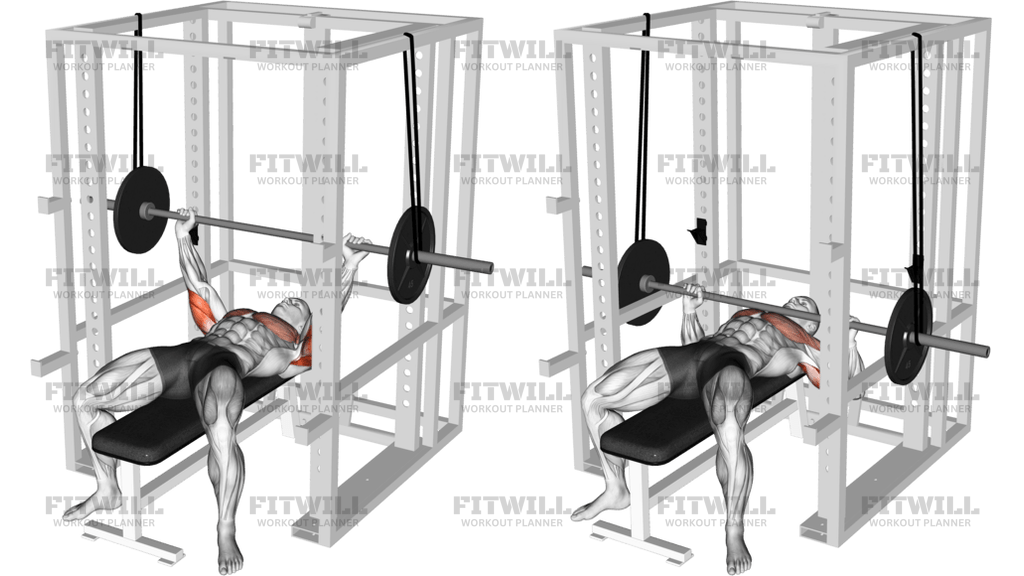
Barbell Reverse Band Bench Press is a bench press variation performed inside a rack with resistance bands anchored high above the bar. The bands reduce the load near the chest and become less supportive as the bar rises, so the press feels strongest off the bottom and progressively heavier toward lockout. That setup makes the exercise useful for building pressing strength, practicing a clean bar path, and handling a heavier bar weight than a standard flat bench press while still controlling the most demanding part of the lift.
The movement primarily trains the chest, with the front delts and triceps contributing throughout the press and the upper back, lats, and trunk helping you stay tight on the bench. In anatomy terms, the main work centers on the pectoralis major, with help from the anterior deltoid, triceps brachii, and rectus abdominis. The reverse-band setup changes the strength curve, so the bottom range is more manageable while the top range demands more force and better bar speed.
Setup matters more here than on a simple bench press because the bands must be even, the bench must be centered, and the bar must move symmetrically between the uprights. Lie on the bench with your eyes under the bar, plant your feet, grip the bar evenly, and set your shoulder blades before you unrack. A stable setup lets the bands do their job without pulling you out of position or drifting the bar toward one side.
Use a controlled descent to touch the chest or sternum area softly, then press the bar back up in a smooth line while keeping the wrists stacked over the elbows. The band tension should help you stay controlled at the bottom and allow a strong drive through the middle and top. Breathe in and brace before the descent, then exhale as you press through the sticking point and finish with the elbows locked without losing upper-back tension.
This exercise is common in strength phases, overload work, or as a safer way to practice heavier bench loads without exposing the shoulders to the same bottom-end stress as an unassisted press. It can also be useful for lifters who need confidence with heavier lockout work or want to build bar speed off the chest. Good reps look deliberate, even, and repeatable; the bar should stay balanced, the setup should not change between reps, and the bands should never twist or pull unevenly.
[ Workout Log & Planner ]
Put your next workout in Fitwill
Keep your plan and training log ready when you are.


Instructions
- Set the bench centered inside the rack and loop matching bands from the top uprights to the bar on both sides.
- Lie on the bench with your eyes under the bar, feet planted, and a grip that keeps your wrists stacked over your elbows.
- Pin your shoulder blades to the bench, arch your upper back slightly, and keep your glutes and upper back in contact with the pad.
- Unrack the bar and bring it over your mid-chest with straight wrists and steady control.
- Lower the bar to the lower chest or sternum area in a controlled path while keeping the forearms vertical.
- Pause briefly on the chest without bouncing, then drive the bar upward as the bands start to lose tension.
- Press through the sticking point and finish with the elbows extended and the bar stable over the shoulder line.
- Reset the shoulder blades and breath before each rep, then repeat for the planned set.
- Rerack the bar carefully after the final rep and keep tension until the hooks are secure.
Tips & Tricks
- Make sure both bands are attached at the same height and tension before you start; uneven band tension will twist the bar.
- Keep the bar path slightly back toward the shoulders on the way up instead of pressing straight toward the rack.
- Touch the same spot on the chest each rep so the reverse-band assistance is consistent.
- Do not let the bands snap you out of the bottom; control the descent and own the touch point.
- Use a grip wide enough to stack the wrists over the elbows, but not so wide that the shoulders roll forward on the descent.
- Keep the upper back tight against the bench so the rack and bands do not pull you into a loose position.
- Choose a load that is heavier than your normal bench press only if the setup is solid and a spotter or safeties are in place.
- If the bar drifts toward one side, stop the set and reset the band placement before continuing.
- Exhale through the press, but do not lose abdominal pressure until the bar is back over the shoulder line.
Frequently Asked Questions
What muscle does Barbell Reverse Band Bench Press target most?
The chest is the primary mover, especially the pectoralis major, with help from the triceps and front delts.
What do the bands change in this bench press?
The bands reduce resistance near the bottom and give you more load as the bar rises, so the press is easier off the chest and harder near lockout.
Where should the bar touch on the chest?
Most lifters should lower it to the lower chest or sternum area, then press back up in a smooth line without bouncing.
Do I need a spotter for reverse band bench press?
It is strongly recommended if you are using heavy loads, because the bar is still loaded with real weight even though the bands assist the bottom.
Is this the same as a regular bench press?
No. The rack-mounted bands change the resistance curve, so the lift is less demanding near the chest and more demanding toward the top.
What setup mistake causes the biggest problem?
Uneven band height or bar placement. If the bench is not centered and the bands are not matched, the bar can tilt or press unevenly.
Can beginners use this exercise?
Yes, but only with light loading and a carefully checked setup. The rack, bands, and bar path all need to feel stable before you add weight.
Why use reverse bands instead of just benching normally?
They let you practice heavier pressing, build confidence through the middle and top of the lift, and reduce stress in the deepest part of the range.