Barbell Power Snatch
Barbell Power Snatch is a dynamic weightlifting lift that moves a barbell from the floor to overhead in one continuous rep, then catches it in a partial squat. It is built for speed, coordination, timing, and whole-body force transfer rather than slow grinding strength. The lift asks the hips, legs, back, shoulders, and core to work together so the bar travels close to the body and finishes in a stable overhead position.
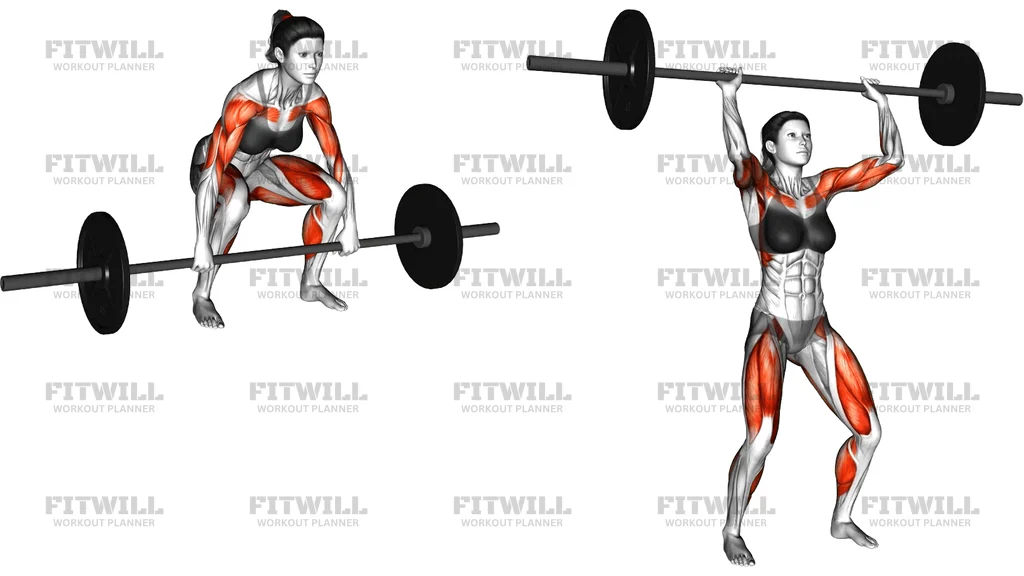
The setup is a major part of the exercise. Start with the bar over the midfoot, feet about hip-width, and a wide snatch grip that lets you lock the bar overhead without collapsing the wrists or shoulders. Keep the shins close to the bar, chest lifted, back flat, and shoulders slightly in front of the bar before the pull begins. That starting position helps the bar stay close and gives you a cleaner line into the second pull.
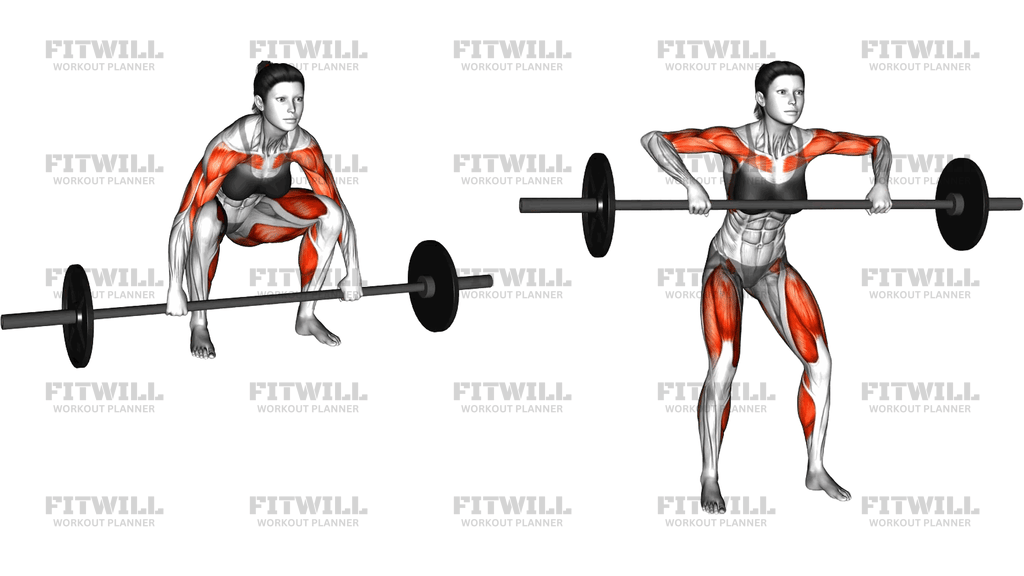
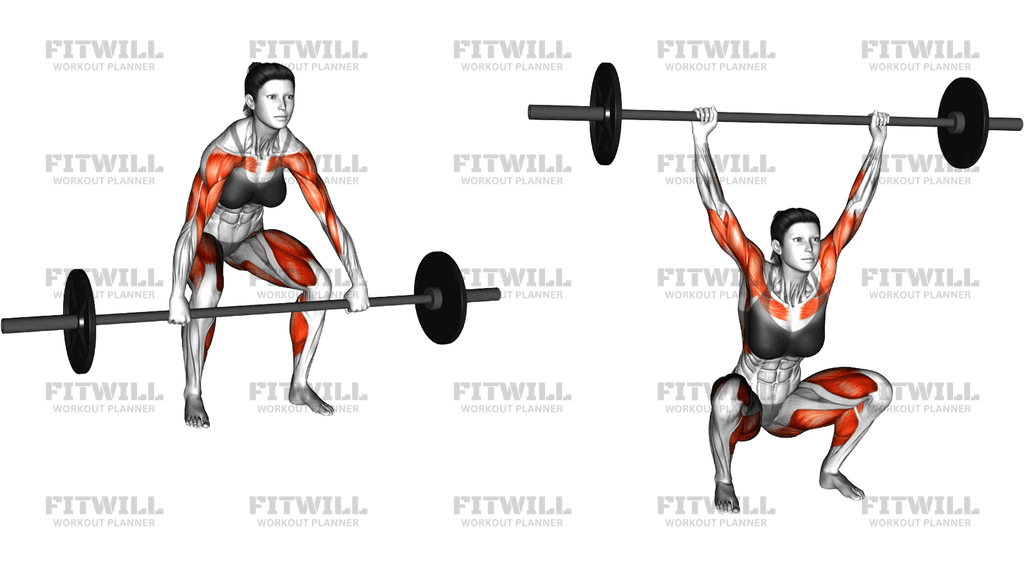
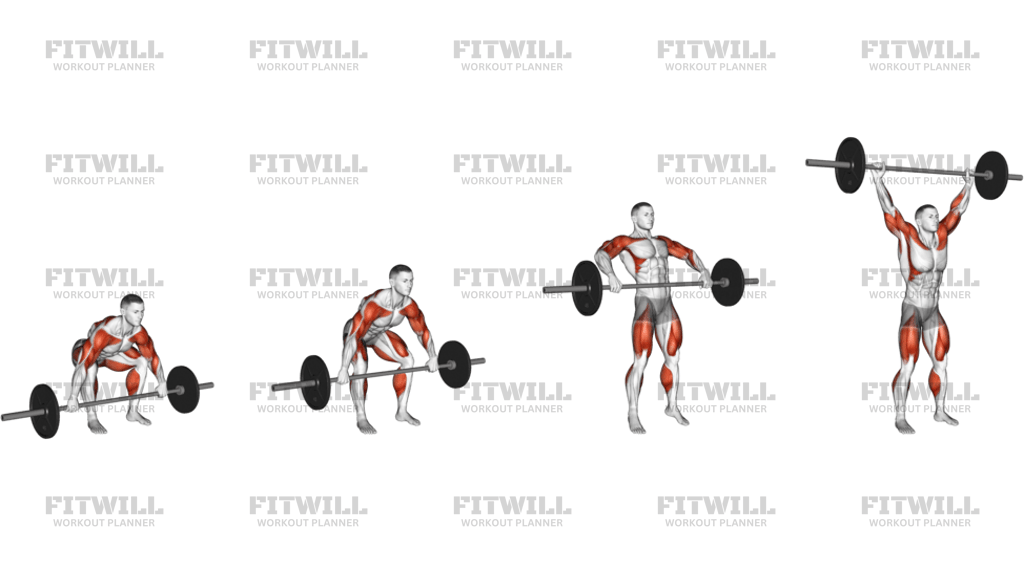
The power snatch is not an arm raise. You drive the bar off the floor, sweep it past the knees, and then explode through the hips, knees, and ankles so the bar accelerates vertically. As the bar rises, you pull yourself under it and punch the arms straight overhead. The catch happens in a quarter squat or power position, with the bar stacked over the midfoot and the torso braced so the load feels controlled instead of dumped on the joints.
Because the bar moves fast, technique matters more than load. The lift is useful for athletes, Olympic lifting practice, and power development when you want explosive extension plus overhead stability in the same rep. Low reps and full recovery are usually the best match, since fatigue quickly makes the bar drift forward, the catch turn soft, or the feet get sloppy. Clean reps are the goal; if the pull gets slow or the catch gets unstable, the set is too heavy.
If overhead mobility, wrist comfort, or shoulder stability are limited, regress before forcing the full lift. Hang power snatches, blocks, and snatch pulls can build the same pattern with less complexity. Keep the bar path tight, land balanced, and lower the bar with control or by safe release on a platform if that is how your gym sets up Olympic lifts. The best reps feel crisp, vertical, and confident from the floor to the overhead lockout.
[ Workout Log & Planner ]
Put your next workout in Fitwill
Keep your plan and training log ready when you are.


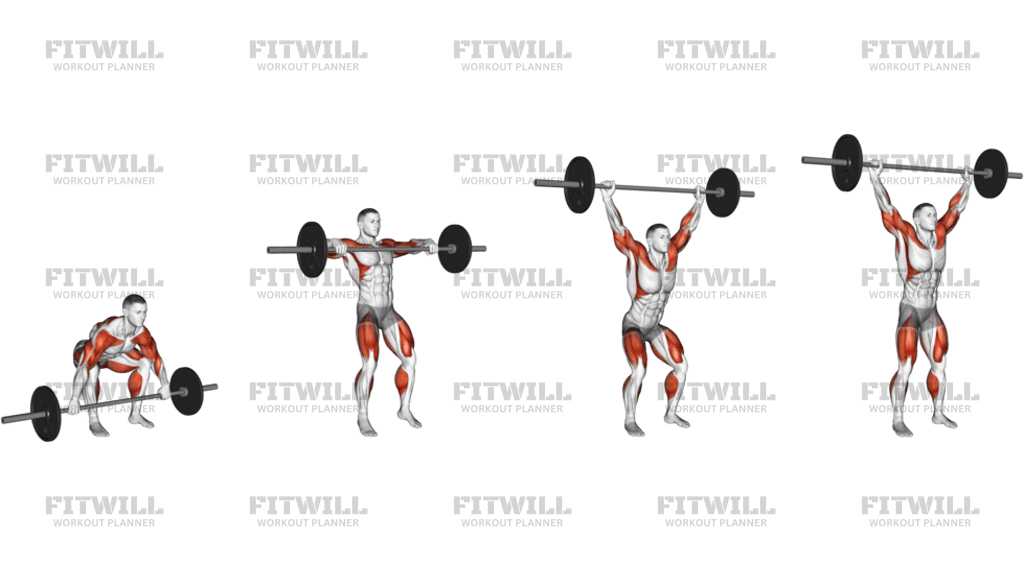
Instructions
- Stand with your feet about hip-width and place the bar over the midfoot, then take a wide snatch grip with your hands set evenly on the bar.
- Lower into the start with your shins close to the bar, chest lifted, back flat, and shoulders slightly in front of the bar.
- Brace your core, keep your lats tight, and set your weight through the whole foot before the bar leaves the floor.
- Push the floor away to break the bar from the ground while keeping it close to your shins.
- As the bar passes the knees, sweep it into the thighs and continue to accelerate by extending the hips, knees, and ankles.
- Finish tall with a hard shrug and keep the bar moving vertically instead of letting it loop forward.
- Pull yourself under the bar and turn the hands over quickly so the arms can lock out overhead.
- Catch the bar overhead in a partial squat with the bar stacked over the midfoot and the feet flat.
- Stand to full extension, then lower the bar with control or reset it safely for the next rep.
Tips & Tricks
- Keep the bar brushing close to the legs on the way up; a looping bar is the fastest way to miss the overhead catch.
- Use a hook grip if it feels secure, because the bar can turn fast in the transition from pull to receive.
- Stay patient off the floor and let the bar pass the knees before you finish hard with the hips.
- Think of the second pull as a vertical jump, not a biceps pull.
- Punch the arms to lockout as you move under the bar; do not try to press it up after you catch it.
- Catch with the chest tall and the ribs controlled so the bar lands over the midfoot, not in front of the toes.
- Use low reps and crisp rest periods; once the bar speed or footwork gets sloppy, the set is done.
- Lower the load or switch to a hang variation if shoulder mobility or overhead stability breaks down.
Frequently Asked Questions
What muscles does the Barbell Power Snatch train?
It trains the legs, hips, back, traps, shoulders, and core together, with the hips and upper back driving most of the explosive work.
Is a power snatch different from a full snatch?
Yes. A power snatch is caught above parallel in a partial squat, while a full snatch is received lower in a deeper squat.
How wide should my grip be on the bar?
Use a wide snatch grip that lets you lock the bar overhead with stacked wrists, elbows, and shoulders without feeling cramped at the bottom.
Do I need to squat all the way down to catch it?
No. The power snatch is specifically caught in a partial squat; if you have to sink deep, the bar was likely too heavy or the pull was too slow.
Should I use a hook grip?
A hook grip is common because it helps keep the bar secure during the explosive pull, especially as the bar speeds up near the hips.
Why does the bar keep drifting forward?
The usual causes are opening the torso too early, pulling with the arms, or letting the bar swing away from the thighs instead of staying close.
Can beginners learn this movement?
Yes, but most people should learn the overhead position, hang power snatch, and snatch pulls first so the timing is easier to control.
What should I do if my shoulders or wrists feel unstable overhead?
Reduce the load and regress to a hang or block variation until the overhead catch is solid and pain-free.