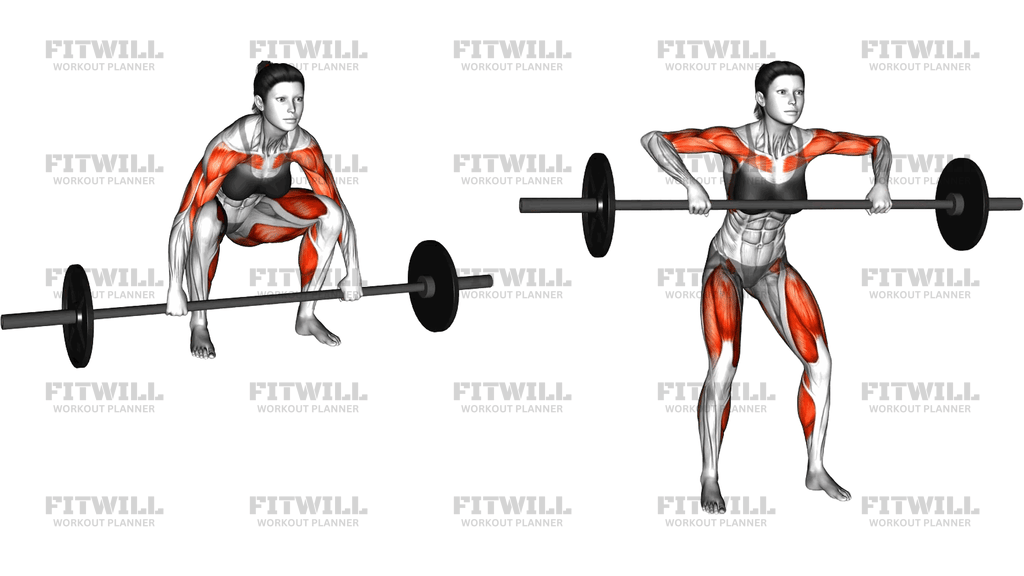
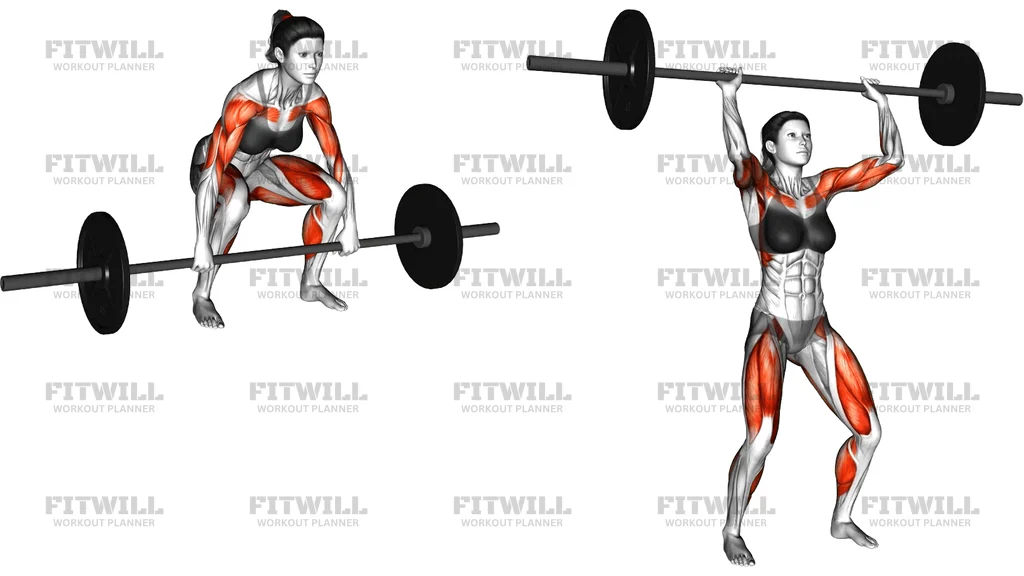
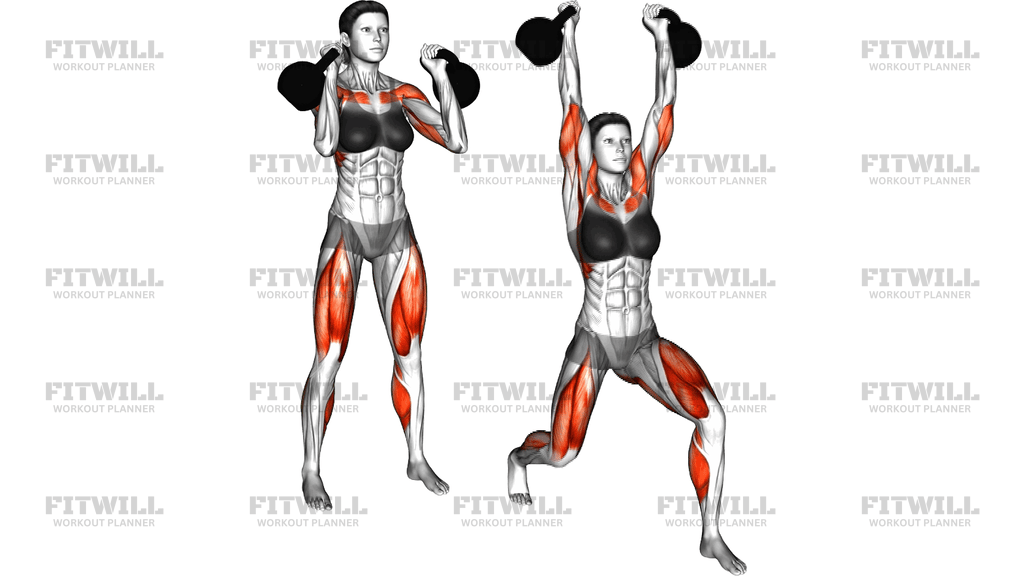
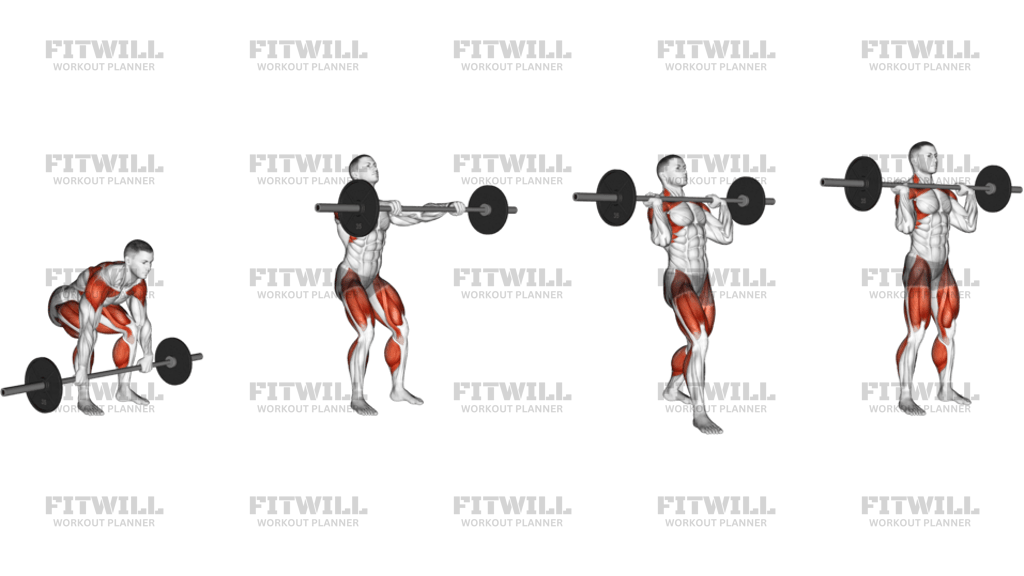
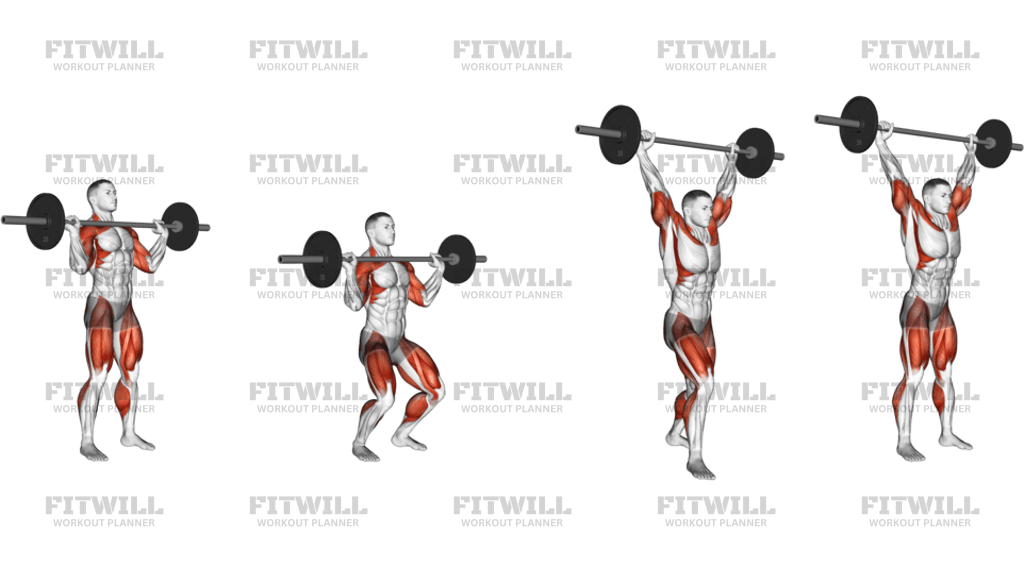
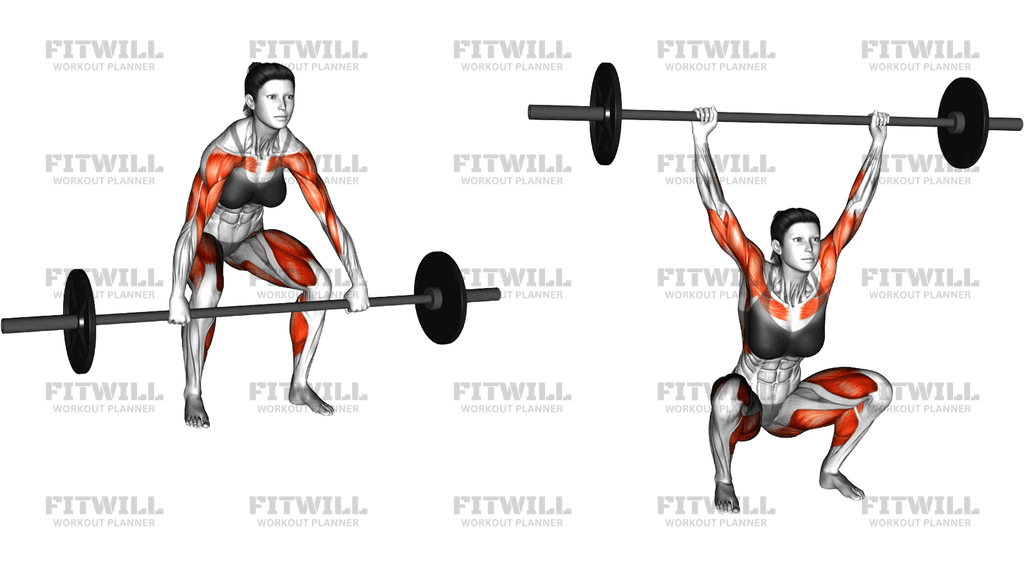
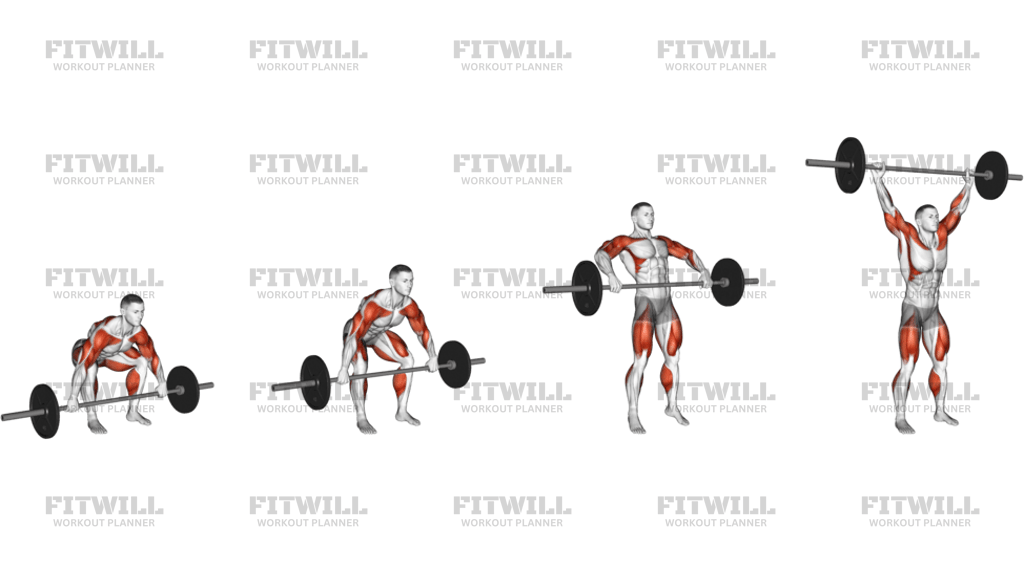
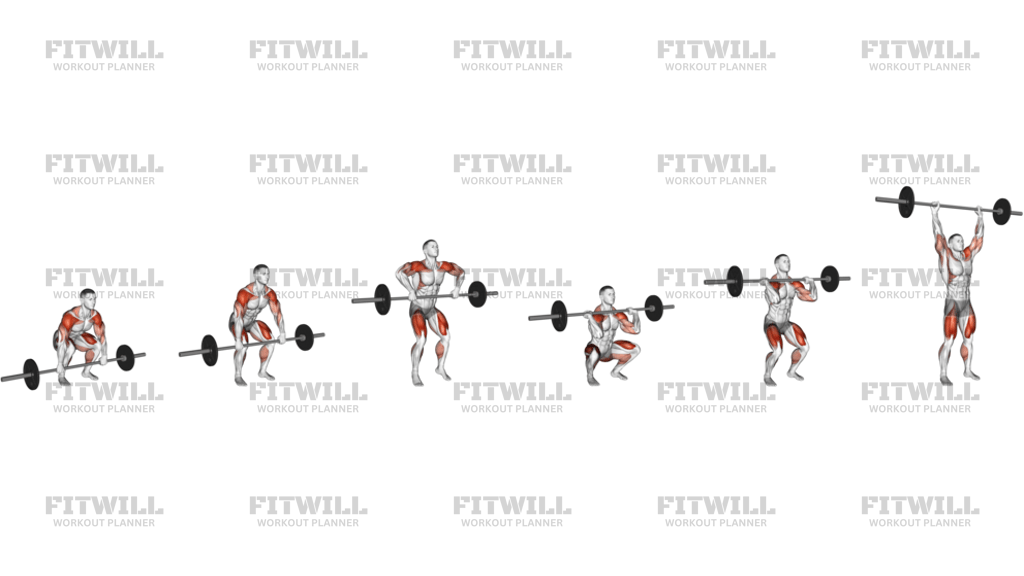
Barbell Hang Power Clean
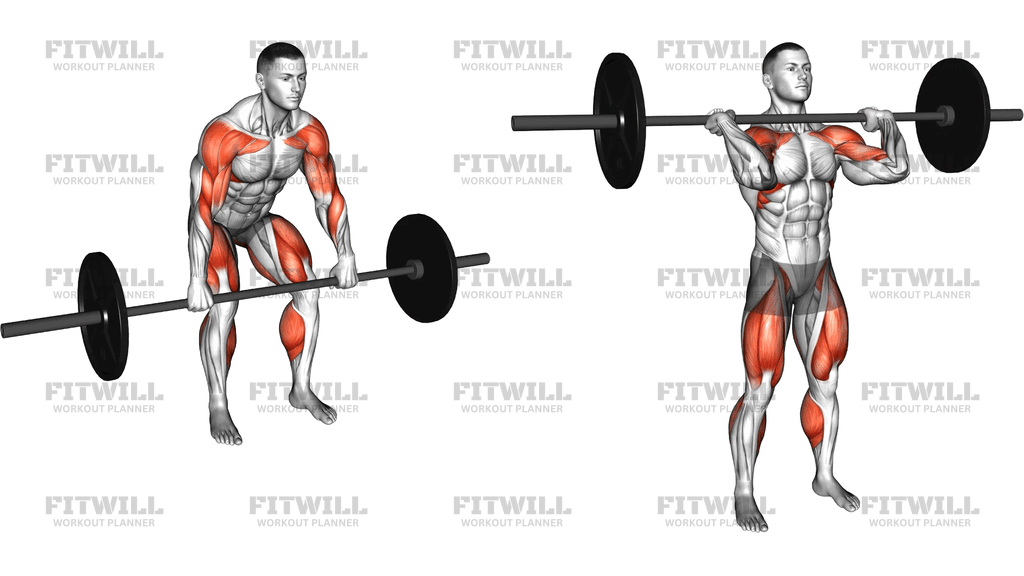
Barbell Hang Power Clean is a barbell weightlifting drill built around a fast pull from the hang and a quick catch in the front rack. The bar starts off the floor, usually around the upper thigh or just above the knee, so the exercise emphasizes the second pull, bar path, timing, and receiving position more than the setup from the floor. It is a power movement, not an isolation lift, and the goal is to move the bar explosively while keeping the path close to the body.
This exercise trains coordinated force production through the hips, knees, ankles, upper back, shoulders, and arms, with the core bracing hard to keep the torso organized. The clean itself is less about muscling the bar up with the arms and more about extending violently through the legs and hips, then pulling yourself under and catching the load on the front of the shoulders. That makes it useful for building athletic power, bar speed, and full-body sequencing.
Setup matters a lot because the hang position determines whether the bar can stay close or drift forward. Stand with a hip-width stance, a grip just outside shoulder width, a neutral spine, and the bar grazing the thighs. Keep the lats on, chest tall, and shoulders slightly over the bar so the bar stays connected to the body before you explode. If the start is too upright or the bar hangs too far away, the pull turns into an arm lift instead of a crisp power clean.
On each rep, load the legs, then extend hard through the floor, hips, and ankles before the elbows bend. Finish tall, shrug, and let the bar rise close to the torso, then rotate the elbows around fast to receive it on the front delts in a shallow quarter squat. Stand up under control, then lower the bar back to the hang with the same close path so the next rep starts from a stable position. A controlled reset between reps keeps the set clean and protects the wrists, lower back, and shoulders.
Because the lift is technical and fast, it is best trained with light to moderate loads and crisp repetitions. It fits well in power blocks, weightlifting practice, or athletic strength sessions where bar speed matters more than fatigue. When the timing starts to break down, the bar loops away from the body, or the catch gets soft, the set is over. Quality is the point: a good hang power clean should look sharp, feel explosive, and finish with you balanced in the rack position rather than chasing the bar forward.
[ Workout Log & Planner ]
Put your next workout in Fitwill
Keep your plan and training log ready when you are.


Instructions
- Stand with your feet about hip-width apart and hold the bar just outside shoulder width with the bar resting against your upper thighs or just above the knees.
- Set your chest tall, keep your spine neutral, and tighten your lats so the bar stays close to your body before you move.
- Lower into a short hang by bending the knees and hips slightly while keeping the bar in contact with the thighs and your shoulders over the bar.
- Brace hard, then drive through the floor as you extend the knees, hips, and ankles in one fast, vertical explosion.
- Keep the bar close as you finish the pull, then shrug and begin to bend the elbows only after the hips have fully extended.
- Pull yourself under the rising bar and rotate the elbows through quickly so the bar lands across the front of your shoulders.
- Catch in a shallow quarter squat with your elbows high, wrists open, and torso upright, then absorb the load softly through the legs.
- Stand up to finish the rep, then lower the bar back to the hang along the same close path before resetting for the next repetition.
Tips & Tricks
- Think "jump then shrug" so the bar is powered by your legs and hips instead of being curled up with your arms.
- Keep the bar brushing close to the thighs; if it swings forward, the catch gets heavier and the path gets sloppy.
- Use your lats to keep the bar connected to your body before the pull so the bar does not drift away from you.
- Do not bend the arms early; the elbows should stay long until the hips finish extending.
- Catch the bar on the front delts, not in your hands, and keep the elbows pointing forward so the rack stays stable.
- Choose a load that lets you move fast and land balanced; if the catch turns into a press-out, the weight is too heavy.
- Lower the bar under control to the same hang position so each rep starts from a repeatable setup instead of a bounce.
- If the bar crashes forward or you jump toward your toes, shorten the load and focus on a cleaner vertical pull.
Frequently Asked Questions
What does the barbell hang power clean train?
It trains explosive triple extension, timing, and front-rack receiving strength through the hips, legs, back, shoulders, and core.
How is the hang version different from a full power clean?
The hang version starts above the floor, so it removes the initial pull from the ground and puts more emphasis on the second pull and the catch.
Where should the bar start in this exercise?
Most lifters start around the upper thigh or just above the knee with the bar close to the body and the torso set in a hinge.
Do I need to squat deeply to catch the bar?
No. A power clean is caught in a shallow quarter squat or athletic power position, not a full front squat.
What is the most common mistake with the hang power clean?
The biggest mistake is pulling with the arms too early instead of finishing the hip and leg extension first.
Can beginners learn this movement?
Yes, but they should start with an empty bar or very light load and practice the bar path, rack position, and timing first.
Should the bar touch my hips or thighs?
It should stay close enough to brush the thighs, but it should not swing out or slam into the body.
How heavy should I go on hang power cleans?
Use a weight that preserves speed, balance, and a clean front-rack catch; once the bar slows down, the lift stops being a power drill.