Dumbbell Two Arm Seated Hammer Curl On Exercise Ball
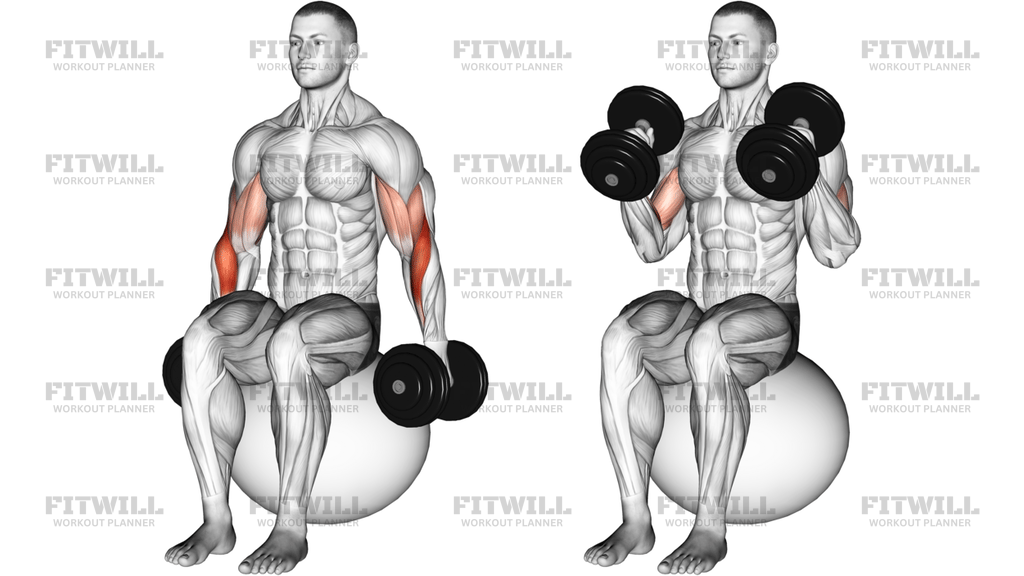
Dumbbell Two Arm Seated Hammer Curl On Exercise Ball is a seated neutral-grip arm exercise performed on a stability ball. The ball changes the feel of the curl right away because it asks you to stay tall, keep your feet planted, and resist any backward lean or side-to-side shift while the elbows flex. That balance demand makes the movement more honest than a standing curl and keeps the focus on clean elbow motion instead of body English.
The hammer grip changes the muscle emphasis compared with a palm-up curl. With the palms facing in, the brachioradialis and the forearm flexor group work hard, while the biceps still help bend the elbows. That makes the exercise useful when you want direct arm training that also reinforces wrist and forearm control. The two-arm pattern also makes it easier to compare both sides and notice if one elbow starts drifting forward, one wrist bends back, or one dumbbell rises faster than the other.
The setup matters because the stability ball can either help you stay organized or make every rep sloppy. Sit on the center of the ball with both feet flat, adjust your position until your knees and hips feel balanced, and let the dumbbells hang beside your thighs with the palms facing each other. From there, keep the chest lifted and the ribs stacked over the pelvis as you curl both weights toward the shoulders. The upper arms should stay close to the torso, the wrists should remain neutral, and the ball should stay quiet under you.
At the top of each rep, squeeze briefly without shrugging or letting the elbows travel forward. Lower the dumbbells slowly until the arms are nearly straight again, then reset your posture before starting the next rep. The goal is a controlled curl with a steady torso, not a bigger range created by leaning back. If the ball rolls, the shoulders take over, or the reps become bouncy, the load is too heavy for this variation. Use it for accessory arm work, forearm emphasis, or balanced upper-body training where strict control matters more than load.
This is a good choice for lifters who want a simple curl pattern with extra postural demand, and it works especially well in moderate rep ranges where form can stay crisp. Treat the ball as part of the exercise: stay centered, keep the feet active, and let the arms do the work while the trunk resists unnecessary movement.
[ Workout Log & Planner ]
Put your next workout in Fitwill
Keep your plan and training log ready when you are.


Instructions
- Sit on the center of the exercise ball with both feet flat on the floor, about hip-width apart, and hold a dumbbell in each hand with your palms facing inward.
- Find a tall seated position so your hips feel balanced over the ball, your chest stays lifted, and your dumbbells hang beside your thighs.
- Set your elbows close to your ribs, keep your wrists straight, and let the weights start in a neutral hammer-grip position.
- Brace lightly through your midsection so the ball stays still before the first curl begins.
- Curl both dumbbells upward at the same time by bending the elbows and keeping the upper arms quiet.
- Keep the palms facing each other as the weights travel up toward shoulder height; do not twist into a full supinated curl.
- Squeeze briefly near the top without leaning back or shrugging the shoulders.
- Lower the dumbbells slowly until the arms are almost straight again and the weights return beside the thighs.
- Reset your posture after each rep and keep breathing steady through the set.
Tips & Tricks
- Plant your feet firmly and slightly wider if needed so the exercise ball does not drift while you curl.
- Keep your elbows near your sides; if they travel forward, the front delts and momentum take over.
- Use a neutral wrist the whole time so the dumbbell sits in line with the forearm instead of folding backward.
- Choose a load that lets both dumbbells rise at the same speed without twisting your torso.
- Lower the weights slowly, because the controlled descent is where this variation builds a lot of the arm tension.
- Keep your chest tall and avoid leaning back to finish the last few reps.
- If the ball feels unstable, shorten the set before your posture starts to collapse.
- Think about bending the elbows, not swinging the hands, to keep the curl strict.
Frequently Asked Questions
What muscle does Dumbbell Two Arm Seated Hammer Curl On Exercise Ball target most?
It mainly targets the forearms, especially the brachioradialis, with the biceps helping to flex the elbows.
Why do this curl on an exercise ball instead of a bench?
The exercise ball adds a balance challenge, which makes it harder to cheat with a lean or torso swing.
Should my palms turn up during the rep?
No. Keep the neutral hammer grip with the palms facing each other so the curl stays true to the exercise.
Can beginners perform this exercise?
Yes. Start with light dumbbells and focus on staying centered on the ball before adding load.
What should my elbows do on the ball?
Keep them close to your ribs and mostly still so the forearms do the lifting instead of the shoulders.
How do I keep the stability ball from moving?
Plant both feet firmly, sit on the center of the ball, and stop the set if you start shifting side to side.
What is the biggest mistake with this hammer curl?
Leaning back or bouncing the torso to get the dumbbells up. That reduces arm tension and turns the set sloppy.
Can I use this as a replacement for a regular hammer curl?
Yes, if you want the same neutral-grip arm emphasis plus extra trunk and balance control.