Assisted Oblique And Latissimus Dorsi Stretch On Stability Ball
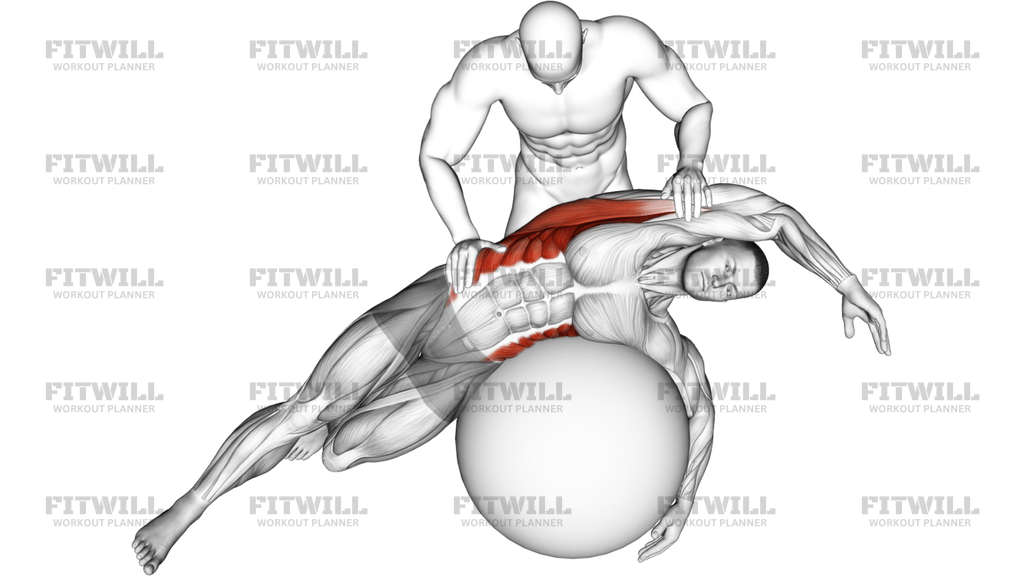
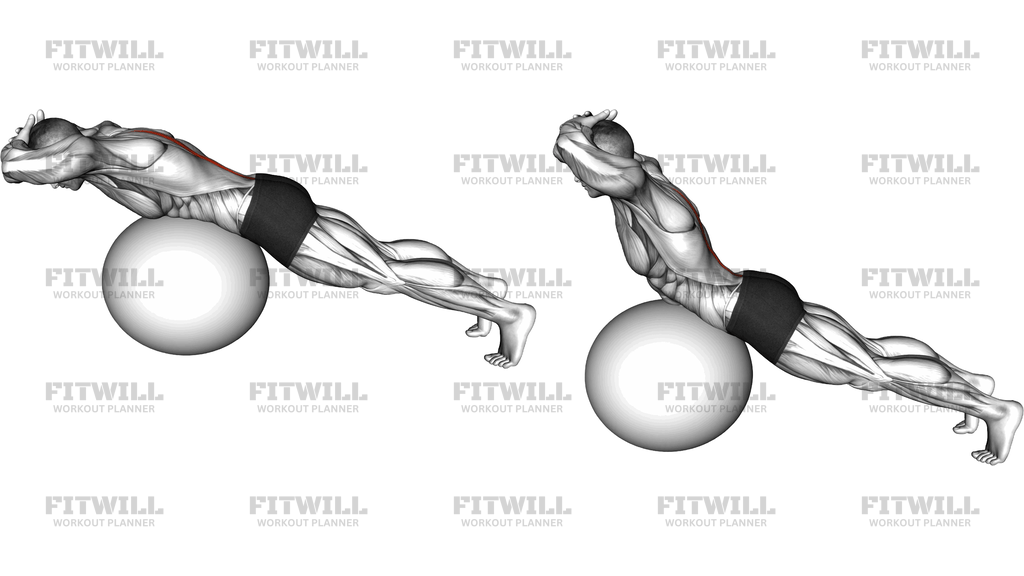
Assisted Oblique And Latissimus Dorsi Stretch On Stability Ball is a partner-assisted side-body stretch that opens the latissimus dorsi, obliques, intercostals, and the tissue along the outside of the ribcage. The stability ball supports the torso so the stretch can be directed into the long line from the hip to the reaching arm instead of being forced through the lower back. The assistance matters because it lets the partner guide the shoulder and pelvis into a cleaner side bend without turning the movement into a sloppy twist.
This exercise is not about loading a muscle hard. It is about creating a long, controlled stretch while the ribs, shoulder, and pelvis stay organized. When the setup is right, the upper arm can reach overhead, the ribcage can expand away from the floor, and the side of the trunk opens without pinching the shoulder or compressing the waist. That makes it useful after pulling sessions, overhead training, or any workout where the lats and side body feel tight.
Position the body so the lower ribs and waist are supported on the ball, then let the assistant steady the top shoulder blade and the hip. That external support keeps the stretch honest: the torso lengthens over the ball, the neck stays long, and the spine does not collapse into a twist. The goal is a smooth, even pull through the side of the body, not a forced range that makes the breath stop or the shoulder roll forward.
Use a slow exhale to sink into the stretch, then breathe into the side of the ribs and waist while holding the position briefly. This works well as a warmup mobility drill, a cool-down reset, or an accessory mobility slot between heavier upper-body sets. Keep the pressure light enough that you can relax into the position and come out of it smoothly. If the shoulder feels jammed or the low back feels compressed, reduce the angle, move the ball, or lighten the assistant's pressure.
[ Workout Log & Planner ]
Put your next workout in Fitwill
Keep your plan and training log ready when you are.


Instructions
- Place a stability ball beside open floor space and lie your side over it so the lower ribs and waist are supported, with the lower leg long for balance.
- Reach the top arm overhead and let the lower arm relax toward the floor while keeping the neck long and the chin slightly tucked.
- Have a partner stand behind you with one hand on the upper shoulder blade and the other on the hip to steady your body.
- Set the feet and knees so you feel balanced, then square the pelvis before you start the stretch.
- Exhale slowly and let the ribs lengthen over the ball as the partner gives only light pressure to open the side body.
- Keep the top shoulder from rolling forward and avoid twisting the torso away from the ball.
- Hold the end position while breathing into the stretched side of the ribs, lats, and waist.
- Ease out of the stretch slowly, reset your position on the ball, and repeat on the other side.
Tips & Tricks
- Let the ball support the lower ribs and waist, not the entire side of the torso, so the stretch stays focused instead of unstable.
- The partner's pressure should feel like a guide, not a push; too much force usually turns the stretch into a shoulder or low-back complaint.
- Keep the reaching arm active overhead instead of letting it collapse behind you, or the lat stretch will disappear into the shoulder joint.
- If the stretch lands in the lower back, bring the torso a little higher on the ball and reduce the side bend.
- If the shoulder feels pinched, lower the overhead arm slightly and stop before the humerus drifts too far behind the body.
- Keep the pelvis quiet while the ribcage opens; rotating the hips usually cheats the oblique line you are trying to lengthen.
- Use a long exhale to soften the side body before holding the position, especially after rows, pulldowns, or overhead work.
- A firmer ball or deeper inflation can make the support more aggressive, so adjust the ball if the stretch feels too harsh.
Frequently Asked Questions
What does the stability ball help with in this stretch?
The ball supports the lower ribs and waist so the side of the trunk can open without collapsing the whole torso.
Where should I feel Assisted Oblique And Latissimus Dorsi Stretch On Stability Ball most?
You should feel a long stretch through the lat, oblique, and side ribcage on the side that is draped over the ball.
Do I need a partner for this exercise?
Yes. The assistant steadies the shoulder and hip so the stretch stays controlled and does not turn into a twist.
How hard should my partner press on my shoulder and hip?
Only enough to guide the position. If the pressure forces the shoulder forward or compresses the waist, it is too much.
Can I bend the lower leg to get more comfortable on the ball?
Yes, as long as the bent leg keeps you balanced and does not let the pelvis rotate away from the stretch.
What is the most common mistake with the overhead arm?
Letting the arm drift behind the torso or drop forward too much, which either jams the shoulder or removes the lat stretch.
Is this more of a warm-up or a cool-down exercise?
It can work as both. Many people use it after pulling or overhead training, but it also fits well before mobility work.
What should I do if I feel this in my low back instead of my side body?
Move the torso slightly higher on the ball, reduce the side bend, and keep the ribs lengthening instead of arching the lumbar spine.