Exercise Ball Dip
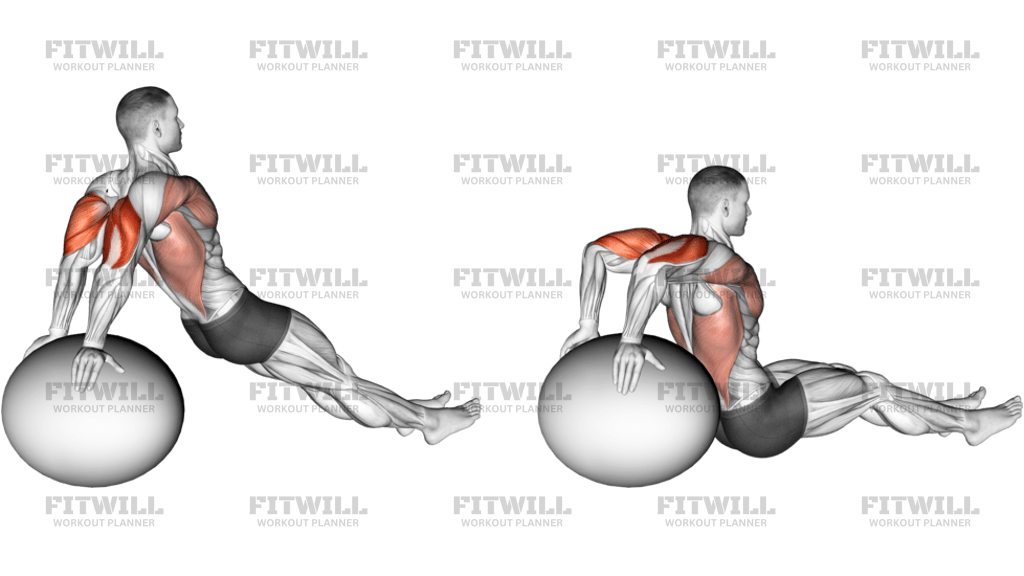
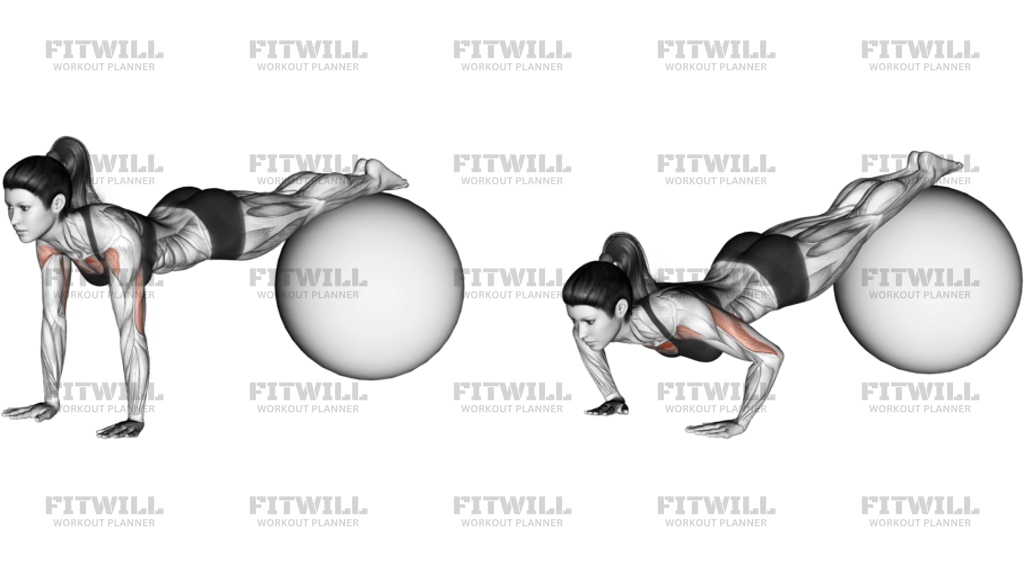
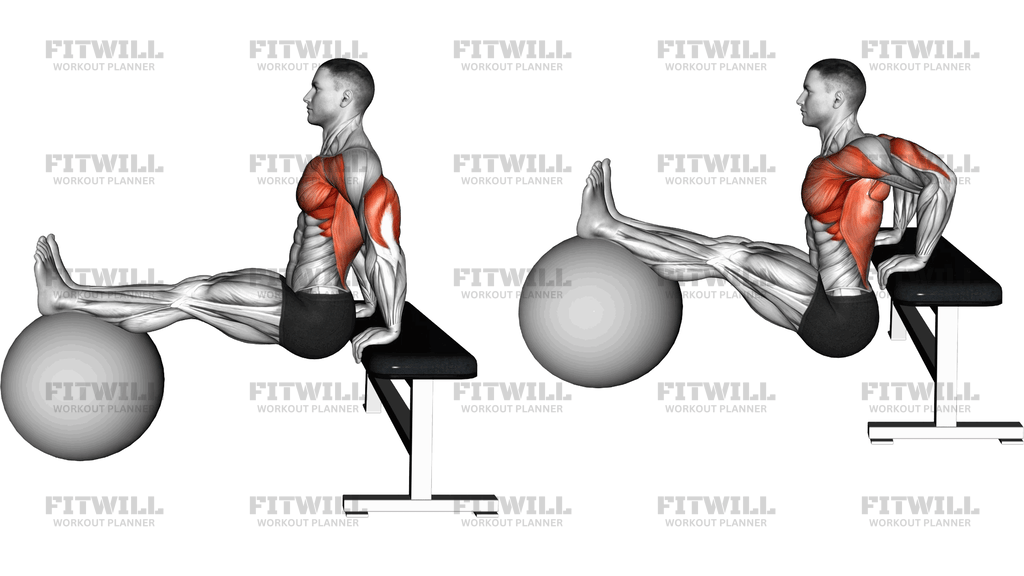
Exercise Ball Dip is a bodyweight triceps exercise performed with the hands braced on a stability ball behind the hips and the legs extended forward. The setup makes balance part of the challenge, so the exercise trains pressing strength, shoulder control, and trunk stability at the same time. Most of the work should still come from elbow extension, but the ball forces the shoulders, forearms, and core to stay organized so the movement does not collapse into a shrug or a hip drop.
The ball changes the feel of a dip compared with a bench or parallel bar. Because the support surface is round and less predictable, your hands must stay active and your shoulders need to stay packed while you lower. That makes this a useful accessory for triceps development when you want clean control, not heavy loading. The exercise is also easy to scale by bending the knees, shortening the lever, or keeping the feet closer to the body if a straight-leg position is too demanding.
Start with the palms on the top of the ball, fingers pointing forward or slightly outward if that feels better on the wrists. Keep the chest open, ribs down, and hips lifted just enough that the body forms a long line from shoulders to heels or to bent knees. As you lower, let the elbows bend straight back and keep them close enough that the shoulders do not drift forward. At the bottom, the upper arms should be near parallel to the floor or as deep as you can control without losing shoulder position.
Press by driving the hands into the ball and straightening the elbows until the arms are fully extended without locking aggressively. Keep the neck long, the shoulder blades stable, and the torso steady while you move. Use a smooth tempo and stop each set before the ball starts wobbling or the hips sag. When done well, this exercise gives the triceps a hard contraction and teaches you to support your own bodyweight through a stable, controlled press pattern.
[ Workout Log & Planner ]
Put your next workout in Fitwill
Keep your plan and training log ready when you are.


Instructions
- Sit in front of the stability ball and place both palms on top of it with your fingers pointing forward or slightly outward.
- Walk your feet forward and extend your hips so your body is supported by your hands and heels, or keep a soft bend in the knees if needed.
- Lift the chest, draw the ribs down, and set the shoulders away from the ears before you start the first rep.
- Bend your elbows straight back and lower your torso until your hips drop only as far as you can control.
- Keep your forearms mostly vertical and let the ball roll only slightly as the elbows flex.
- Pause briefly at the bottom without letting the shoulders dump forward or the lower back sag.
- Press firmly through the palms, extend the elbows, and return to the top with the hips and chest moving together.
- Exhale as you press up, inhale as you lower, and repeat for the planned number of reps.
Tips & Tricks
- Keep the hands high enough on the ball that your wrists stay stacked under your shoulders instead of sliding behind you.
- If the ball wobbles, shorten the lever by bending the knees before you try to force more range.
- Let the elbows travel back rather than flaring wide; that keeps the effort on the triceps and away from the front of the shoulders.
- Do not shrug at the bottom. If the shoulders creep toward the ears, reduce depth immediately.
- A small amount of ball roll is normal, but the torso should not bounce or swing between reps.
- Pause in the stretched position only if you can keep the shoulder line steady and pain-free.
- Use a slower lowering phase to make the triceps work harder without needing extra load.
- Stop the set when your hips start to sag or your hands start slipping on the ball.
Frequently Asked Questions
What muscle does Exercise Ball Dip target most?
The triceps do most of the work, especially during the press back to the top.
Is the stability ball just a support, or does it change the exercise?
It changes the exercise a lot, because the round surface adds balance demands and makes shoulder control more important.
How deep should I lower on the ball?
Lower only until your elbows are well bent and your shoulders stay organized; depth is only useful if the ball stays steady and the shoulders do not collapse forward.
What is the most common mistake on this dip?
People usually let the hips drop and the shoulders shrug, which shifts the work away from the triceps and makes the movement unstable.
Can I do this exercise with bent knees?
Yes. Bending the knees shortens the lever and makes the position easier to control, which is helpful for beginners.
Why do my wrists feel this exercise?
The wrists support a lot of bodyweight on a round surface, so discomfort usually means the hand angle or ball height needs to be adjusted.
What should my feet be doing during the rep?
Your feet should stay planted or lightly supported with the legs extended forward so they help balance the body without driving the movement.
How can I make Exercise Ball Dip harder without adding weight?
Straighten the legs more, slow the lowering phase, and keep the pause at the bottom only as long as you can hold a clean shoulder position.