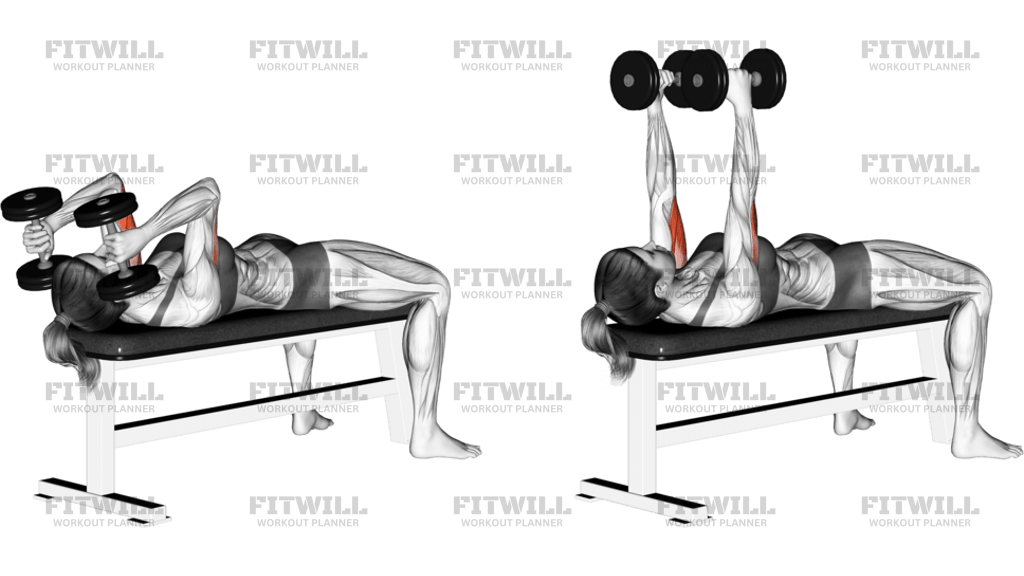
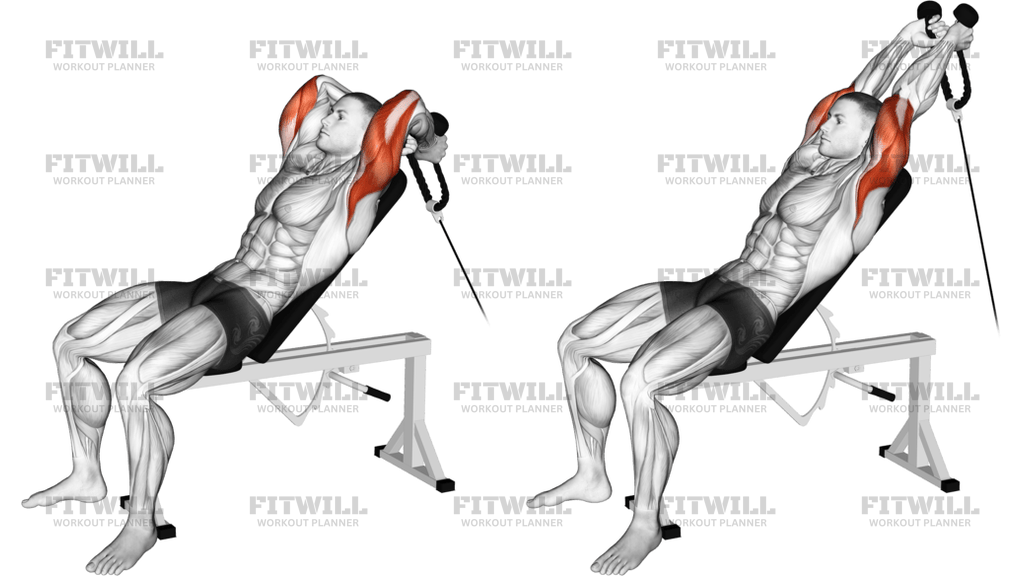
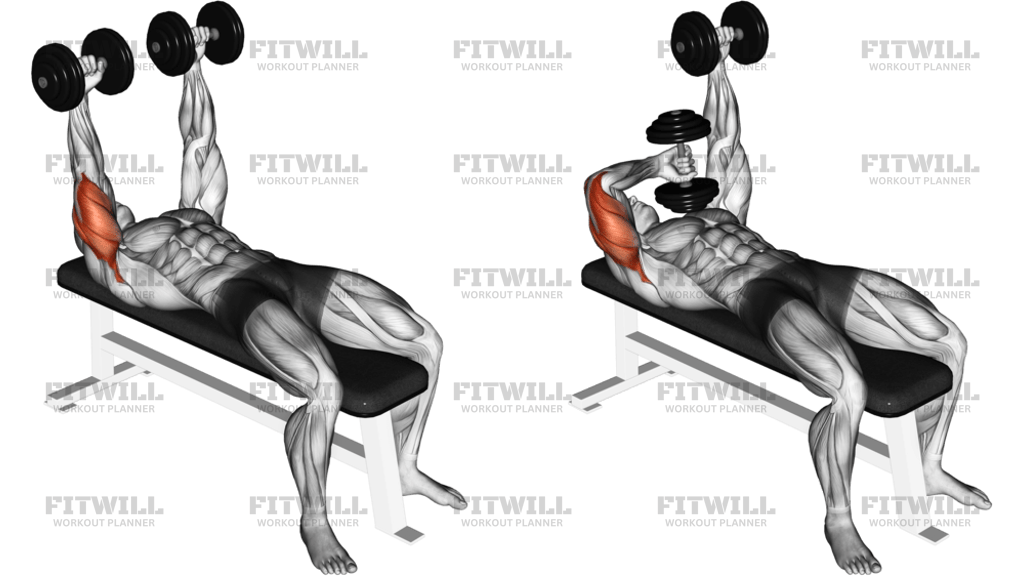
Exercise Ball Supine Triceps Extension
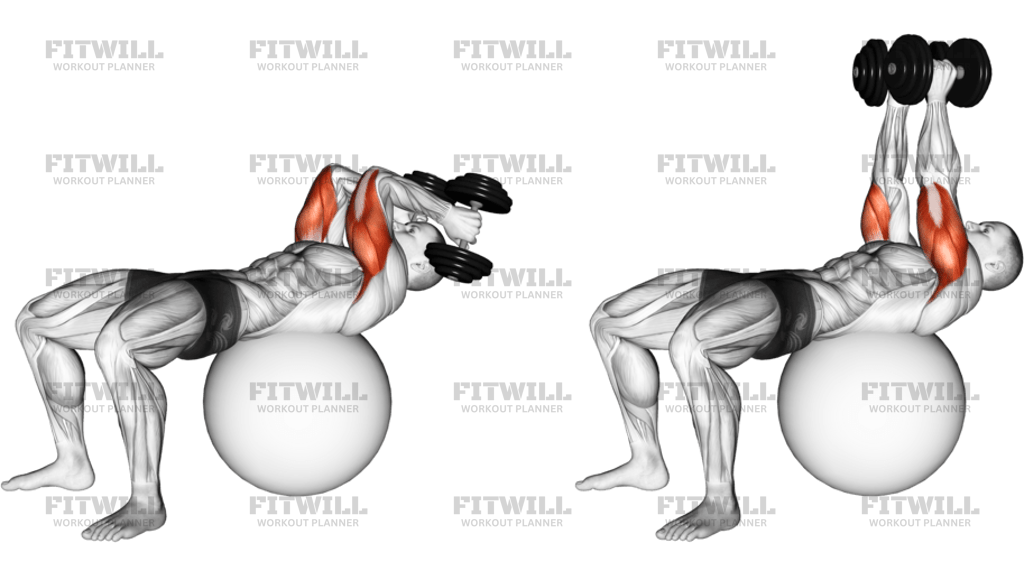
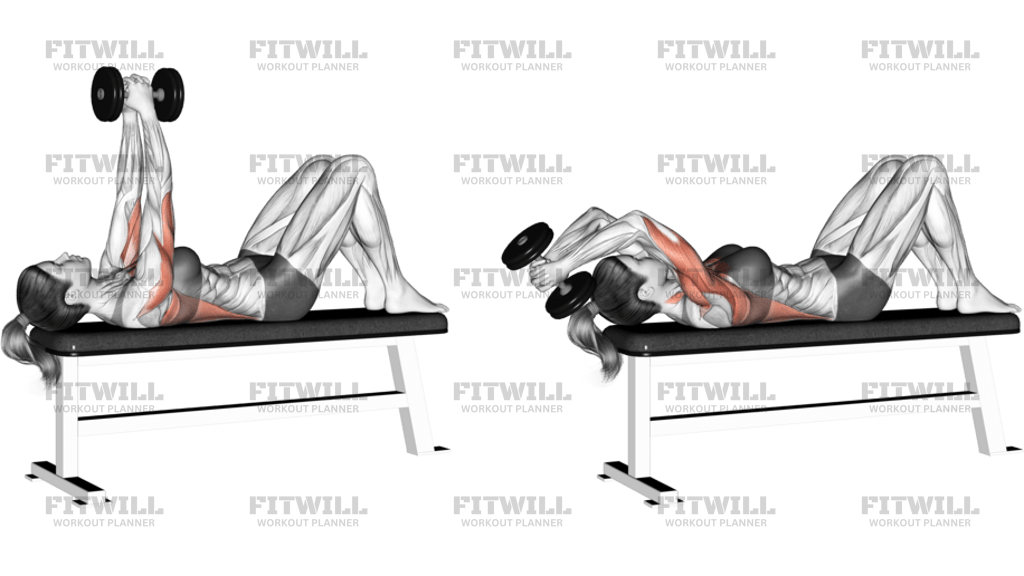
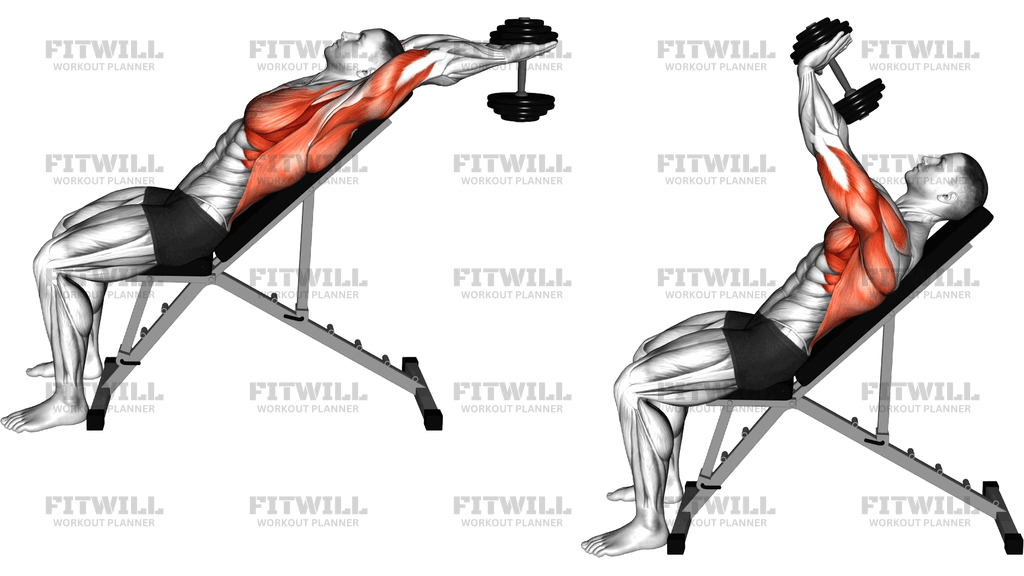
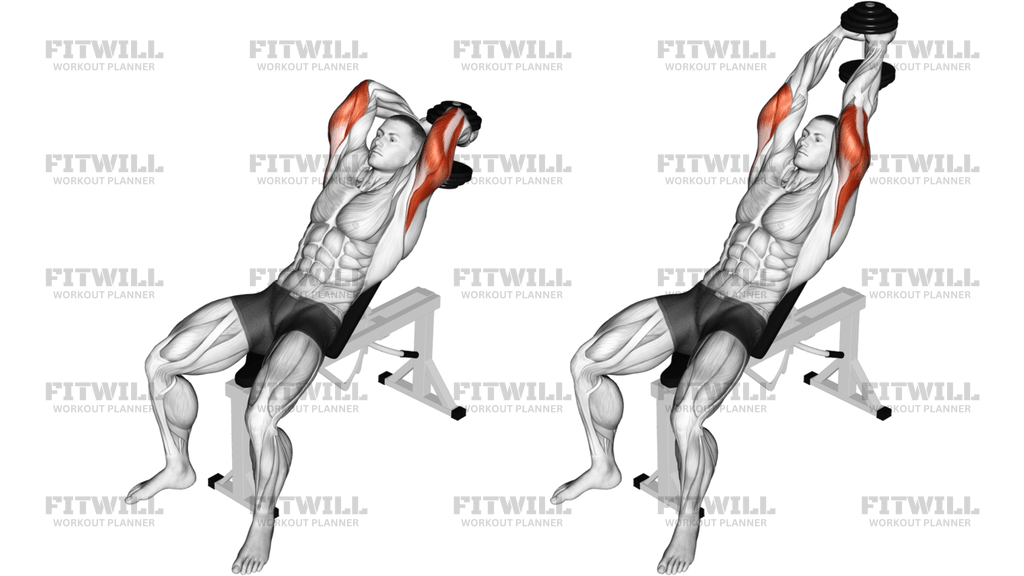
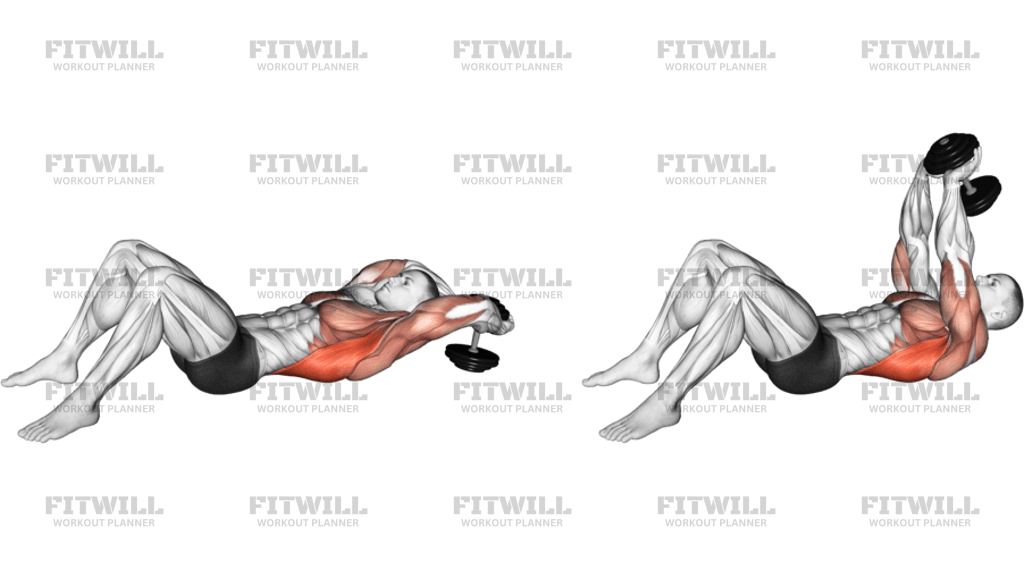
Exercise Ball Supine Triceps Extension is a dumbbell triceps exercise performed while lying with your upper back supported on a stability ball. The position turns a simple elbow-extension drill into a more demanding setup because you have to keep the shoulders, rib cage, and hips organized while the arms move. That makes it a useful choice when you want direct triceps work without turning the set into a full-body heave.
The main muscles are the triceps, especially the long head, with the forearms helping you hold the dumbbells steady. Your shoulders and core also work to keep the upper arms in the right lane and to stop the ball from shifting as you lower the weights behind your head. The exercise is most effective when the elbow joint does the moving and the upper arms stay nearly fixed.
The ball setup matters because your body has less support than it would on a flat bench. Plant your feet firmly, let the upper back settle into the ball, and keep the hips high enough that the torso feels stable but not overarched. From there, the dumbbells start above the chest and lower in a controlled arc until the elbows bend deeply and the weights travel just behind the head.
On the way up, extend the elbows without snapping them forcefully into lockout. The hands should finish over the chest or slightly behind the line of the shoulders, depending on your arm length and ball position, while the upper arms stay mostly still. If the dumbbells drift or the elbows flare, the set shifts away from the triceps and into a loose shoulder movement.
Exercise Ball Supine Triceps Extension works well as accessory volume after pressing, chest training, or overhead work because it loads the triceps in a stretched position. It is also useful for lifters who want a home-friendly option with minimal equipment, since a dumbbell and stability ball are enough. Keep the load honest, the neck relaxed, and the reps smooth so the ball supports you instead of becoming part of the lift.
[ Workout Log & Planner ]
Put your next workout in Fitwill
Keep your plan and training log ready when you are.


Instructions
- Sit in front of a stability ball with a dumbbell in each hand, then walk your feet forward and roll until your upper back and shoulders are supported on the ball.
- Plant your feet flat and spread them wide enough to keep the ball from sliding as you lift your hips into a firm bridge.
- Press the dumbbells above your chest with your palms facing in and keep your wrists stacked over your elbows.
- Let your upper arms stay mostly vertical while you bend only at the elbows and lower the dumbbells in a controlled arc toward the sides of your head.
- Stop when the weights are just behind your head and your triceps are fully lengthened without your shoulders collapsing backward.
- Exhale and extend your elbows to drive the dumbbells back up until your arms are straight over your chest.
- Keep your upper arms quiet so the movement comes from elbow extension instead of shoulder swing or rib flare.
- Reset the dumbbells with control between reps, and finish by bringing them back over your chest before sitting up safely.
Tips & Tricks
- Keep the ball under your upper back, not your lower ribs, so your shoulders can move freely without turning the rep into a crunch.
- Choose a lighter pair of dumbbells than you would for a flat-bench skull crusher; the ball setup makes the bottom position less stable.
- If your elbows drift wide, imagine pinning the upper arms toward the ceiling while the forearms fold back toward your ears.
- Lower the dumbbells slowly enough that you can feel the triceps stretch, but stop before the shoulders roll open or the ball shifts.
- A slight hip lift is fine, but if your lower back is taking over, bring the hips down a little and tighten your feet into the floor.
- Keep your wrists straight so the dumbbells sit over the heel of the hand instead of bending the wrists back under load.
- Use a shorter range if the weights touch the floor or the ball starts sliding when the dumbbells reach behind your head.
- Finish each rep with the triceps doing the last bit of work, not with a chest pop or a hard shrug at lockout.
Frequently Asked Questions
What muscles does Exercise Ball Supine Triceps Extension work?
It mainly targets the triceps, especially the long head, while the forearms, shoulders, and core help you stabilize the dumbbells and the ball.
Is the Exercise Ball Supine Triceps Extension good for beginners?
Yes, if you start with light dumbbells and a stable ball position. Beginners should keep the upper arms quiet and use a shorter range until the movement feels steady.
Why use a stability ball instead of a bench?
The ball adds a balance challenge and forces you to control your torso while the arms move. That can make the set feel stricter, but it also means you should use less load than on a bench.
How should my elbows move during Exercise Ball Supine Triceps Extension?
Your elbows should bend and extend while staying mostly in place. If they flare out or drift a lot, the shoulders start stealing work from the triceps.
How far should I lower the dumbbells?
Lower them until they reach just behind your head and you feel a strong triceps stretch without your shoulders collapsing or the ball shifting. The exact depth depends on your arm length and shoulder comfort.
What weight should I use for this exercise?
Use a load that lets you control the lowering phase and keep your wrists stacked over your elbows. If the ball wobbles or your elbows open up, the dumbbells are too heavy.
Can I do Exercise Ball Supine Triceps Extension with one dumbbell?
Yes. A single dumbbell held with both hands is a useful variation if you want a simpler setup, but keep the same elbow path and avoid flaring the ribs.
What if the ball feels unstable during the set?
Widen your feet, reduce the load, and make sure your upper back is centered on the ball before each rep. If the ball still rolls, switch to a bench version.