Marching On Spot (Version 2)
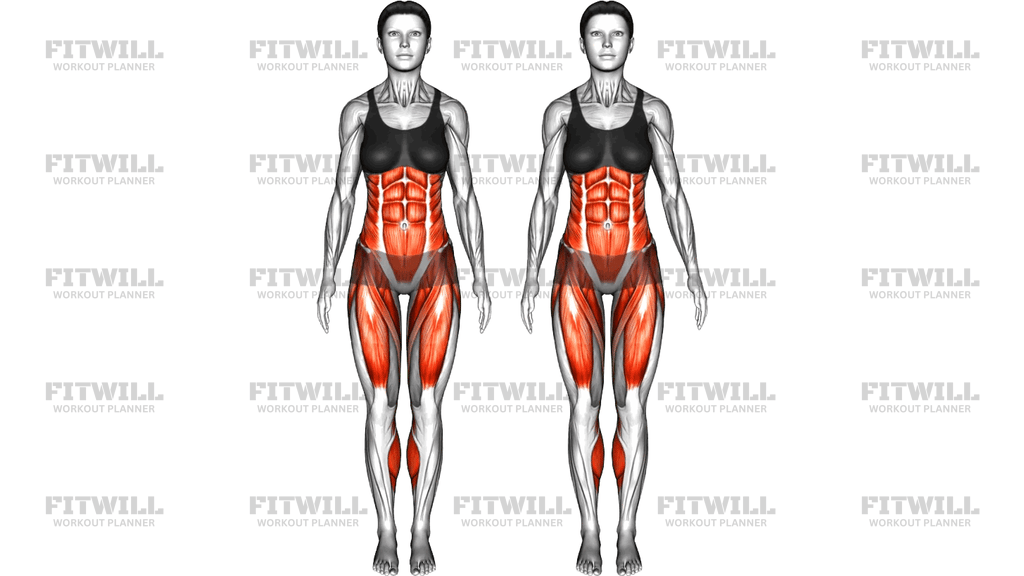
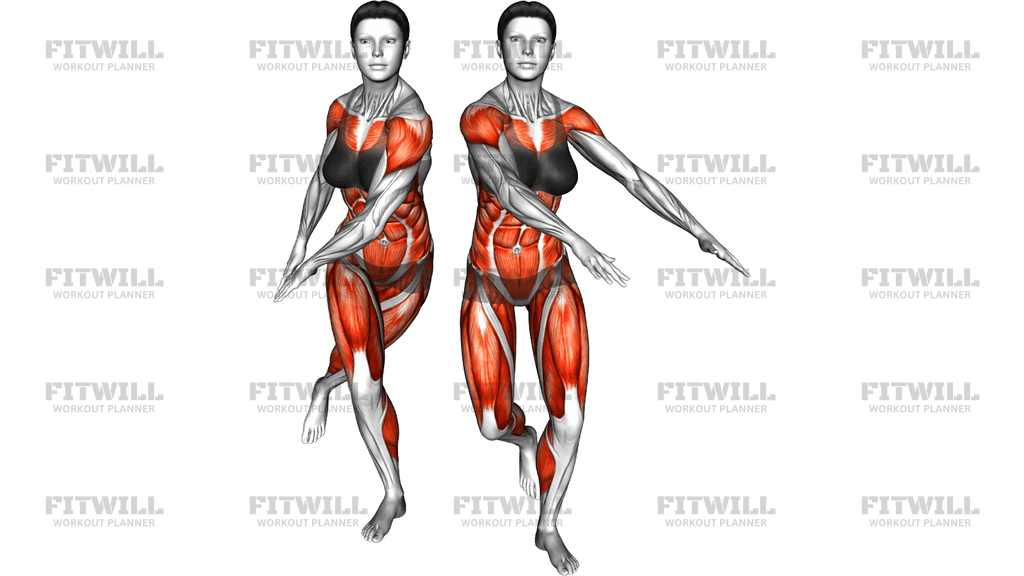
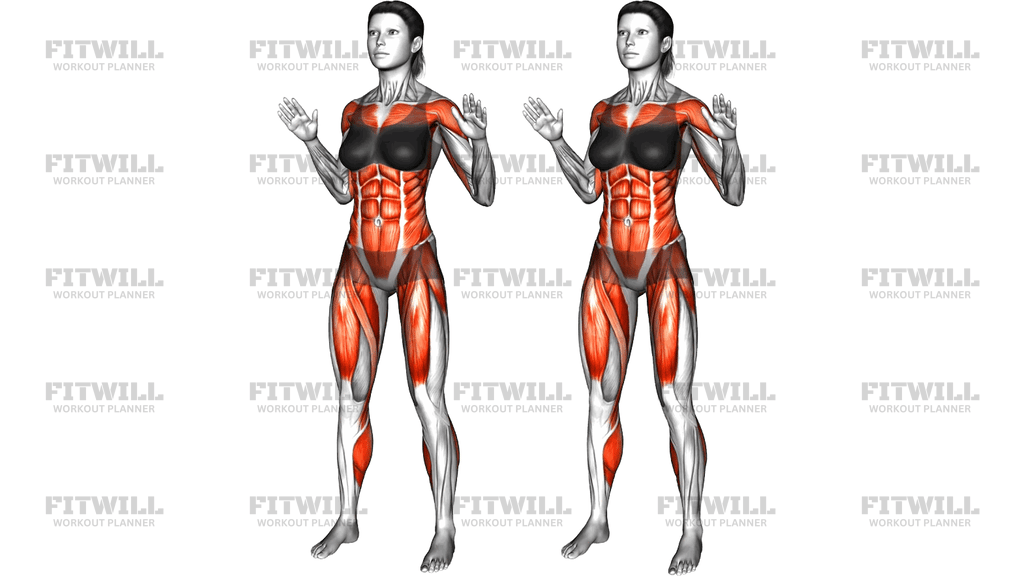
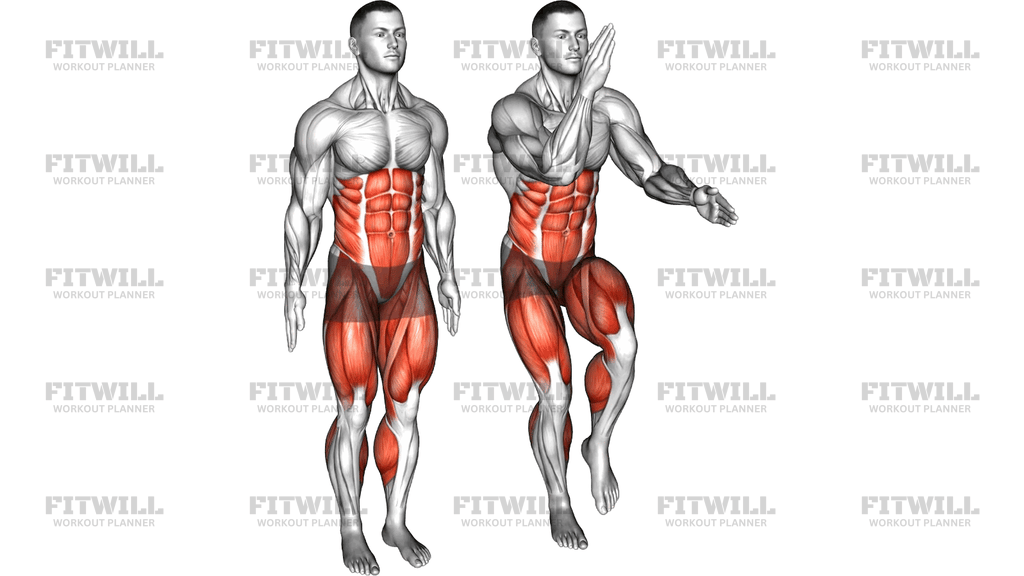
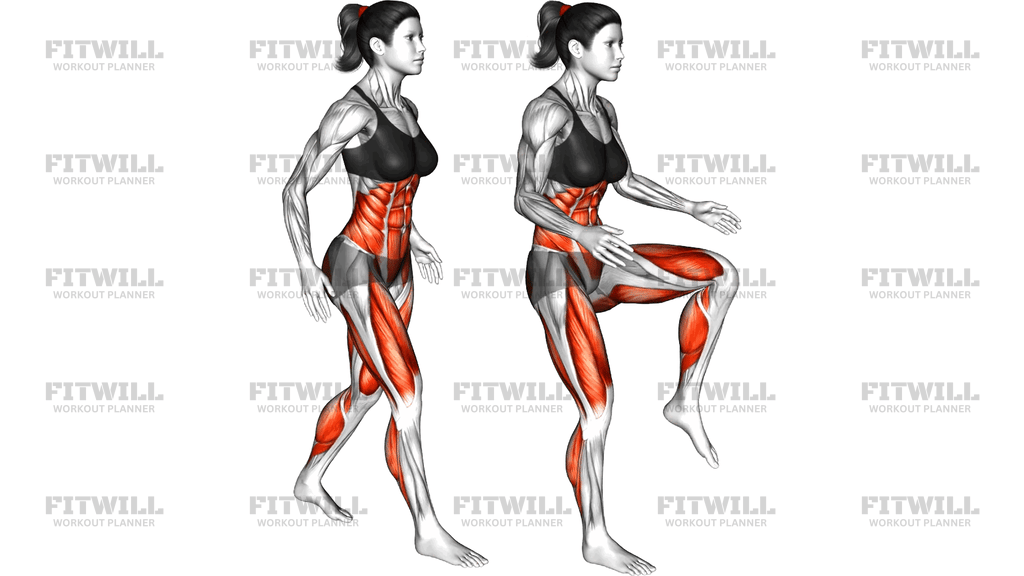
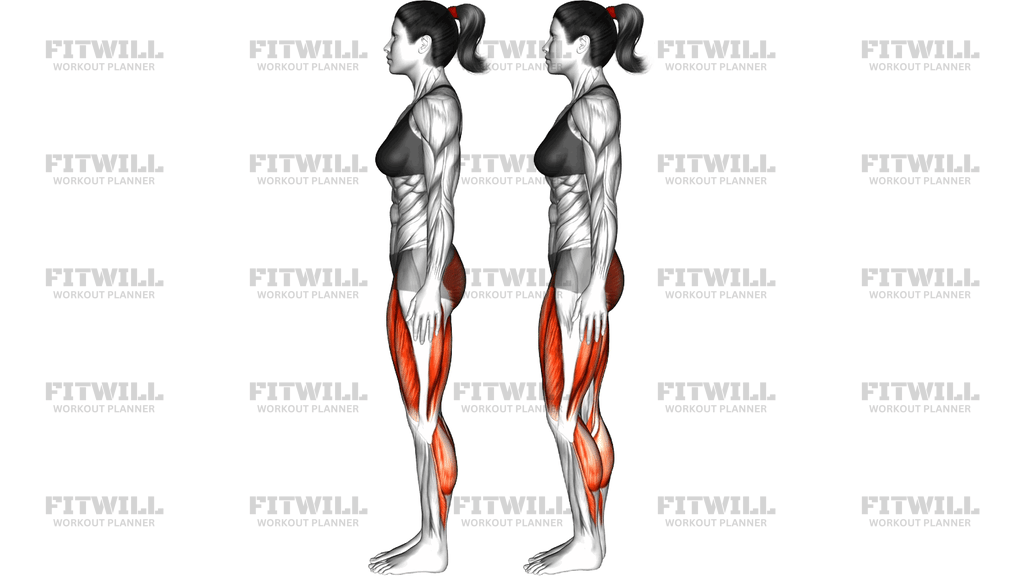
Marching On Spot (Version 2) is a standing bodyweight movement where you alternately lift each knee toward hip height while staying in place, swinging your arms in a natural walking rhythm. The highlighted areas in this movement are the thighs and lower legs, which do most of the visible work, but the trunk stays busy the whole time keeping you tall and balanced. Because there is no equipment and no travel involved, it is one of the simplest ways to raise your heart rate in a small space.
This exercise suits a wide range of people: complete beginners building a movement habit, older adults who want a low-impact cardio option, office workers breaking up long sitting periods, and anyone warming up before a leg workout or a run. Because one foot always returns to the floor, the impact stays gentle on the knees and hips compared with jogging or jumping variations.
The main work comes from the quadriceps lifting the knee, the hip flexors driving the leg upward, and the calves of the supporting leg controlling each landing. The glutes and hamstrings stabilize the standing hip, while the core holds the ribcage over the pelvis so you do not lean back as the knees rise. The arm swing adds a natural coordination challenge and modestly increases the cardiovascular demand.
Setup matters more than most people expect. Stand with your feet about hip-width apart, weight spread evenly across both feet, and your spine tall with shoulders relaxed down and back. Your gaze should be forward, not down at your feet, so your head stays stacked over your spine. A tall posture is what lets the knee lift come from the hip rather than from a collapsing torso.
To perform the movement well, shift your weight slightly onto one leg, then lift the opposite knee to roughly hip height, or lower if that is your current mobility level. Lower that foot under control, and as it lands, begin lifting the other knee. Keep the rhythm steady rather than rushed, and let the arms swing opposite to the legs, as in normal walking. Breathing stays even and conversational; if you cannot speak in short sentences, slow the pace.
Common use cases include warm-ups, home cardio circuits, active recovery days, and short movement breaks throughout the day. Two or three sets of thirty to sixty seconds is a reasonable starting point, building duration or pace gradually. If balance is a challenge, stand near a wall or sturdy chair and rest a fingertip on it for support until single-leg stability improves.
Fitwill
Log Workouts, Track Progress & Build Strength.
Achieve more with Fitwill: explore over 9600 exercises with images and videos, access built-in and custom workouts, perfect for both gym and home sessions, and see real results.
Start your journey. Download today!




Instructions
- Stand tall with your feet hip-width apart, arms relaxed at your sides, and your weight spread evenly across both feet.
- Draw your shoulders down and back, lift the crown of your head toward the ceiling, and engage your core lightly so your ribcage sits over your pelvis.
- Shift your weight slightly onto your left leg and let your right heel rise off the floor, ready to lift.
- Exhale as you drive your right knee up toward hip height, keeping your torso upright and avoiding any backward lean.
- Lower your right foot to the floor under control, placing it back in its starting spot rather than letting it drift forward.
- As the right foot lands, immediately begin lifting the left knee to the same height, keeping the rhythm even on both sides.
- Let your arms swing naturally in opposition to your legs, left arm forward as the right knee lifts, with elbows bent around ninety degrees.
- Keep your breathing steady and rhythmic, inhaling for two to three steps and exhaling for two to three steps.
- Continue marching for your target time, then finish by bringing both feet together and standing still for a few breaths before your next set.
Tips & Tricks
- A frequent mistake is lifting the knee by leaning the torso back; if you feel your lower back arch, reduce the knee height until you can stay upright.
- Avoid slapping the foot down on each landing; place it quietly to keep the movement controlled and protect the knee and ankle.
- Keep the supporting knee soft rather than locked straight; a slight bend absorbs each landing and keeps tension in the thigh muscles.
- Watch for the marching foot drifting forward or crossing the body's midline; the knee should travel straight up in line with the hip.
- If your pace races and your form falls apart, slow down; a slower, higher-quality march raises the heart rate just as effectively for most beginners.
- Point your kneecap toward the ceiling rather than letting the leg rotate outward as you lift, which keeps the hip flexors working in their strongest line.
- Hold your arms deliberately at first, then relax; stiff, high shoulders are a sign you are tensing the upper body instead of letting the swing flow.
- Place a mirror to your side occasionally to check that your head, hips, and standing ankle stay stacked in one vertical line.
Frequently Asked Questions
What muscles does Marching On Spot (Version 2) work?
The primary work comes from the quadriceps and hip flexors lifting each knee, with the calves of the supporting leg controlling each landing. The glutes and core stabilize the hips and torso throughout.
How high should I lift my knees during Marching On Spot (Version 2)?
Aim for roughly hip height, but lower is fine if your hip mobility or balance limits you. Choose the highest knee lift you can repeat while keeping your torso tall and upright.
Is Marching On Spot (Version 2) good for beginners?
Yes, it is one of the most accessible cardio movements because it requires no equipment, minimal space, and one foot always stays close to the floor. Beginners can start with twenty to thirty seconds and build up gradually.
Can I do Marching On Spot (Version 2) if I have sensitive knees?
The low-impact nature makes it kinder to the knees than jogging or jumping, but a sensitive knee still deserves care. Keep the knee lifts modest, land softly, and stop if you feel sharp pain rather than normal muscle effort.
Why do my lower back and shoulders get tired when marching in place?
This usually means you are leaning back as the knees rise or shrugging your shoulders during the arm swing. Reduce the knee height slightly and consciously keep the shoulders relaxed down and the ribs stacked over the pelvis.
How does Marching On Spot (Version 2) differ from high knees?
Marching uses a controlled, deliberate rhythm where one foot fully plants before the other knee lifts, while high knees are a faster, bouncier running-style drill with brief ground contact. Marching is lower impact and easier to sustain for longer periods.
How long should I perform Marching On Spot (Version 2) for a cardio benefit?
Continuous bouts of two to five minutes at a steady pace are a practical target, and multiple bouts through the day add up. Increase duration or pace gradually rather than both at once.
What can I use if I need balance support during Marching On Spot (Version 2)?
Stand beside a wall, countertop, or sturdy chair and rest a fingertip on it for light support. Keep most of your weight on your own feet so the stabilizing muscles still do their job.
Should I hold my breath or breathe in a set pattern while marching?
Breathe continuously and rhythmically rather than holding your breath; a simple pattern of inhaling for two to three marches and exhaling for two to three works well. Holding the breath usually leads to early fatigue and tension in the shoulders.