Assisted Sitting Reverse Shoulder Stretch
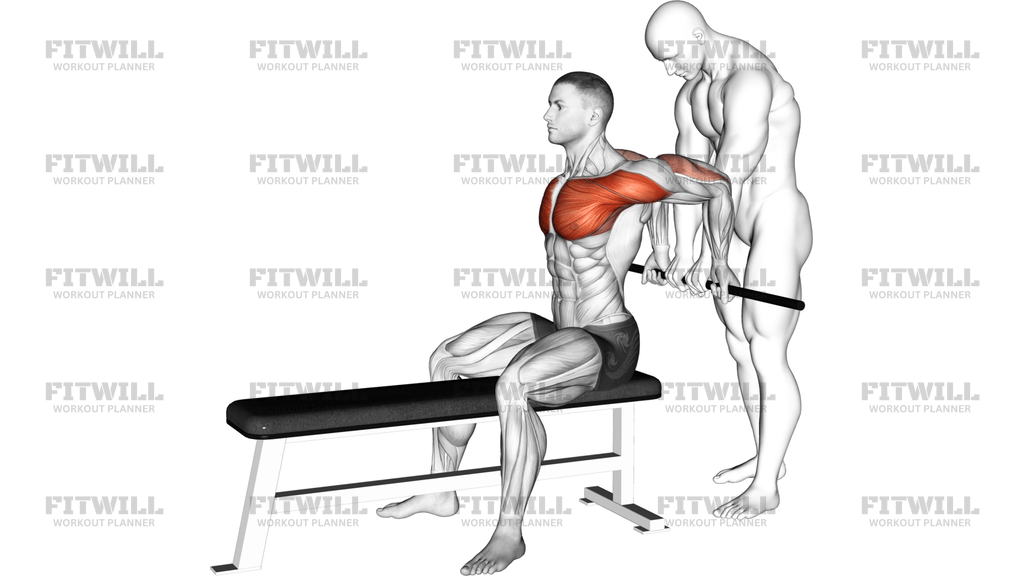
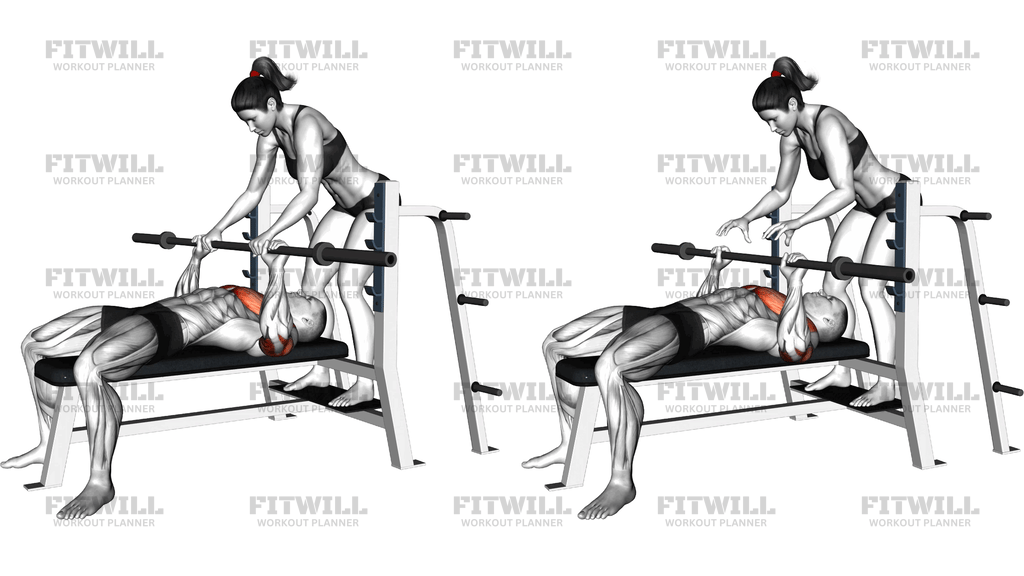
Assisted Sitting Reverse Shoulder Stretch is a partner-assisted mobility drill for the shoulders and upper chest, usually done seated on a bench with a light bar held behind the hips. The helper stands behind the lifter and gently guides the arms into the reverse stretch position, creating a controlled opening across the front of the shoulders, pecs, and upper arms without forcing the range. It is most useful when the shoulders feel tight after pressing, front-rack work, or long periods of sitting.
The setup matters because the bench, seat height, and hand width determine whether the stretch feels organized or irritating. Sitting tall keeps the rib cage from flaring and lets the shoulders open without dumping the lower back forward. A narrow grip tends to increase the stretch in the front of the shoulders and biceps, while a slightly wider grip can make the position easier to control. The assistance should feel smooth and even, not like a yank at the end of the range.
This movement trains tolerance in the shoulder extension and horizontal abduction positions while encouraging the scapulae to settle back and down. In practice, that means you should feel the front of the shoulder and chest lengthen while the upper back stays braced and calm. If the helper overdrives the bar or the lifter shrugs hard, the stretch shifts away from the intended tissues and starts to feel pinchy instead of useful.
Use slow breathing and small positional changes to find the best stretch for your body. On each rep, exhale as the bar is guided into position, pause briefly where the stretch is strong but still comfortable, and then return with control. This is a low-load accessory movement, not a strength lift, so the goal is clean positioning, steady breathing, and consistent tension rather than a big range at all costs.
It fits well after upper-body training, during a warm-up for shoulder-intensive sessions, or as a dedicated mobility piece when the front of the shoulder feels restricted. Keep the neck relaxed, avoid leaning back to fake more range, and stop if the stretch turns into joint pain or numbness. Done well, Assisted Sitting Reverse Shoulder Stretch helps restore smoother shoulder motion without aggressive force.
[ Workout Log & Planner ]
Put your next workout in Fitwill
Keep your plan and training log ready when you are.


Instructions
- Sit upright on a flat bench with both feet planted and your torso tall.
- Hold the bar behind your hips with a shoulder-width or slightly wider overhand grip.
- Have the partner stand behind you and grasp the bar so the load stays even on both sides.
- Keep your chest lifted, ribs stacked over your pelvis, and your chin neutral before the stretch begins.
- Let the partner guide the bar backward and slightly upward until you feel a strong but tolerable opening across the front of the shoulders.
- Pause briefly in the stretched position while keeping the shoulders down and the lower back quiet.
- Breathe out slowly to soften into the stretch without letting the shoulders shrug forward.
- Bring the bar back to the start under control before repeating for the planned number of reps or holds.
Tips & Tricks
- Use a light partner assist at first; the stretch should build gradually, not snap into place.
- If the front of one shoulder feels tighter, adjust hand spacing before adding more force.
- Keep the sternum from flaring upward, or the stretch will move into the lower back instead of the shoulders.
- A small pause is usually more useful than chasing a bigger range with extra pressure.
- Let the elbows stay long and relaxed; bending the arms changes the line of pull and reduces the reverse stretch.
- If the wrists are sensitive, widen the grip a little so the bar feels easier to hold behind the body.
- Do not force the bar past the point where the shoulders feel pinched or the neck starts to tense.
- Use this after pressing work or chest training, when the front of the shoulders is warm and responsive.
Frequently Asked Questions
What does Assisted Sitting Reverse Shoulder Stretch target most?
It mainly targets the front of the shoulders and upper chest, with extra length through the biceps and the tissues around the shoulder joint.
Why is the exercise done seated?
The bench helps keep the torso stable so the stretch comes from the shoulders instead of from leaning, arching, or twisting.
How much help should the partner provide?
Just enough to guide the bar smoothly into the stretch. If the partner has to yank it, the load is too aggressive.
Where should I feel the stretch?
You should feel it across the front of the shoulders and upper chest. A mild pull in the upper arms is also normal.
What grip works best on the bar?
A shoulder-width grip is a good starting point. Widen it slightly if the position feels too intense on the wrists or shoulders.
Is it normal to feel this in my upper back too?
Yes, the upper back helps stabilize the position. The main stretch, however, should stay in the front of the shoulders and chest.
What is a common mistake with this stretch?
The most common mistake is over-arching the lower back to fake more range. Keep the ribs down and let the shoulders do the work.
When should I use this exercise?
It works well after chest, shoulder, or pressing sessions, or anytime the front of the shoulders feels stiff from sitting or desk work.