Shoulder Adductor Protractor And Elevator Stretch
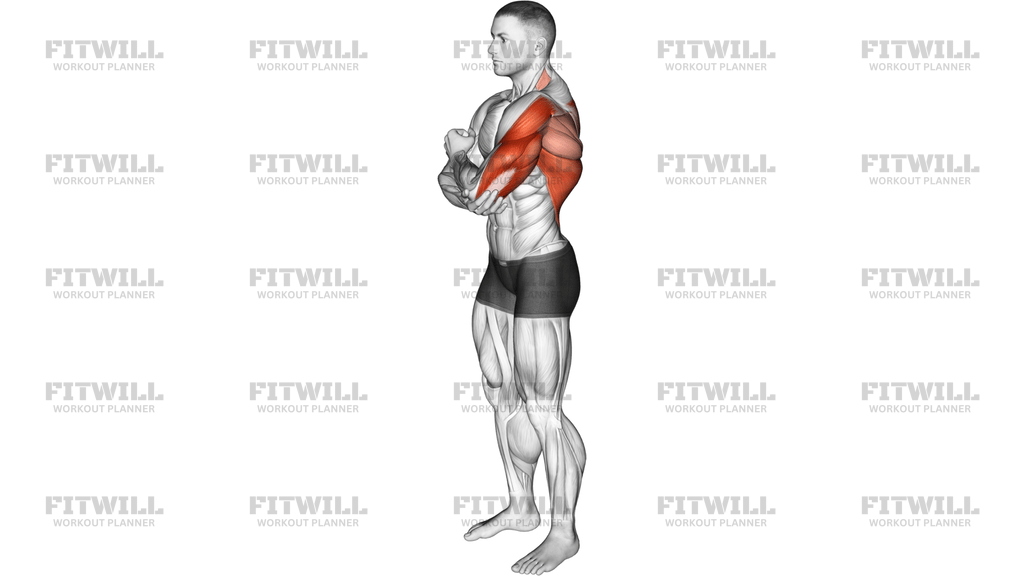
Shoulder Adductor Protractor and Elevator Stretch is a standing shoulder mobility drill that uses the opposite hand to guide one arm across the chest and slightly upward. It is designed to create a controlled stretch through the rear shoulder, upper back, and the tissues around the shoulder blade that influence adduction, protraction, and elevation. The goal is not to force a huge range, but to find a clean line of tension while the neck stays quiet and the torso stays stacked.
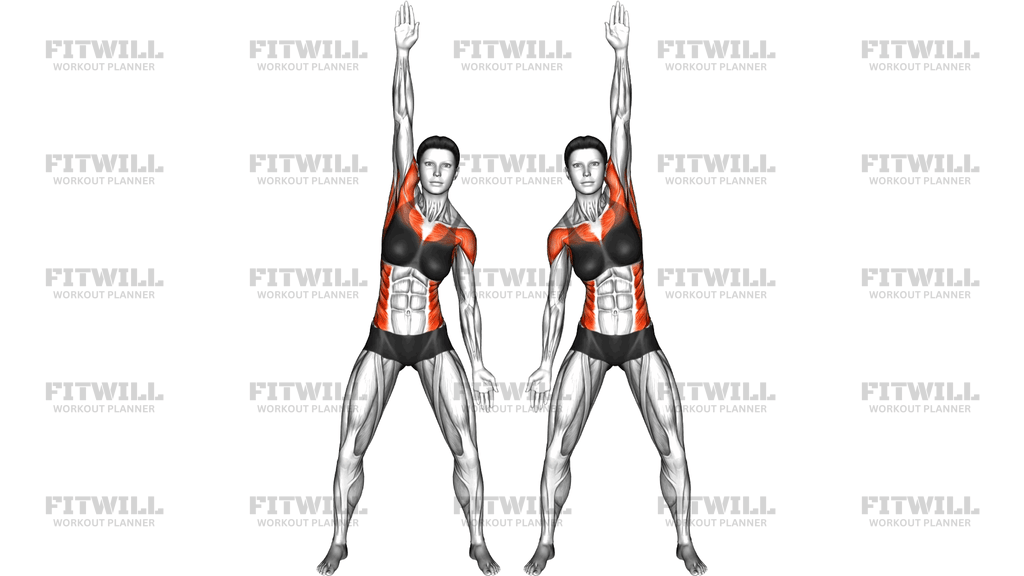
The image shows a simple cross-body setup: the working arm is brought across the front of the body, the elbow stays softly bent, and the other hand controls the position from the forearm. That setup matters because it keeps the stretch focused on the shoulder instead of turning it into a twist through the ribs or a shrug through the neck. When the shoulder is pulled too aggressively or the torso rotates, the sensation shifts away from the target area and the movement stops being useful.
This stretch is especially practical after pressing, pulling, climbing, grappling, or any session that leaves the shoulders rounded forward and the upper back tight. It can also work well in a warm-up when the shoulders feel stiff and you need a low-intensity way to restore comfortable motion before heavier upper-body work. The controlled pull helps you open the back of the shoulder without jamming the front of the joint.
Breathing is part of the movement. Exhale as you settle the arm across the body, then hold the end position with light tension rather than forcing deeper range on every breath. A good rep feels broad and controlled around the back of the shoulder and side of the upper arm, not pinchy in the front of the joint or tense in the upper traps. If the neck starts doing the work, the pull is too strong or the arm angle is too high.
Use this drill as a warm-up between upper-body sets, a cool-down mobility sequence, or a recovery exercise on days when the shoulders feel tight from training or desk posture. Beginners can use it safely because the load is just the opposite hand and body position, but the setup still needs to be deliberate. Keep the movement pain-free, move slowly, and stop if you feel sharp pain, numbness, or tingling down the arm.
Fitwill
Log Workouts, Track Progress & Build Strength.
Achieve more with Fitwill: explore over 9600 exercises with images and videos, access built-in and custom workouts, perfect for both gym and home sessions, and see real results.
Start your journey. Download today!




Instructions
- Stand tall with your feet about hip-width apart and your ribs stacked over your pelvis.
- Lift one arm across the front of your chest at shoulder height or slightly below, keeping a soft bend in the elbow.
- Reach the opposite hand across and secure the working arm near the forearm or just above the elbow.
- Gently draw the arm farther across the body until you feel a stretch through the back of the shoulder.
- Keep your chest facing forward and avoid rotating the torso to chase extra range.
- Let the shoulder blade drift slightly forward and upward, but keep the neck long and the shoulder away from the ear.
- Exhale slowly as you settle into the stretch and hold the end position without bouncing.
- Release the arm with control, then repeat on the other side with the same setup and pressure.
Tips & Tricks
- Pull the arm from the forearm or above the elbow, not from the wrist, so the shoulder stays controlled.
- A small amount of shoulder protraction can increase the stretch, but a hard shrug usually shifts the work into the neck.
- Keep the working arm at or below shoulder height if you feel pinching at the front of the joint.
- If your torso starts twisting, shorten the pull and reset your stance before continuing.
- The target sensation should sit in the rear shoulder and side of the upper arm, not in the front of the shoulder.
- Use a slower exhale to let the shoulder settle instead of forcing the arm farther across the chest.
- Match the hold time on both sides even if one shoulder feels tighter.
- Stop immediately if you feel tingling, numbness, or a sharp catch in the joint.
Frequently Asked Questions
What does Shoulder Adductor Protractor and Elevator Stretch work?
It mainly stretches the rear shoulder and the tissues around the shoulder blade, with a noticeable pull through the upper back and side of the upper arm.
Is this a strength exercise or a mobility drill?
It is a mobility drill. The point is to improve shoulder comfort and range of motion, not to load the muscles.
How should I position the arm for this stretch?
Bring the arm across the chest at shoulder height or slightly lower, then use the opposite hand to guide it gently across the body.
Why does the neck sometimes feel tight during this stretch?
If the shoulder is shrugged up toward the ear, the upper traps take over. Lower the arm a little and keep the neck long.
Can I do this without equipment?
Yes. The pictured version is just a standing bodyweight stretch using the opposite hand for gentle assistance.
What is a common mistake with this movement?
Pulling too hard and rotating the torso are the biggest mistakes. Both reduce the stretch on the shoulder and make it harder to breathe normally.
When should I use this stretch?
It works well after pressing or pulling sessions, during an upper-body warm-up, or at the end of training when the shoulders feel tight.
What should I do if I feel pinching in the front of the shoulder?
Lower the arm slightly, reduce the pull, and keep the motion smaller. Sharp front-shoulder pain is a sign to back off.