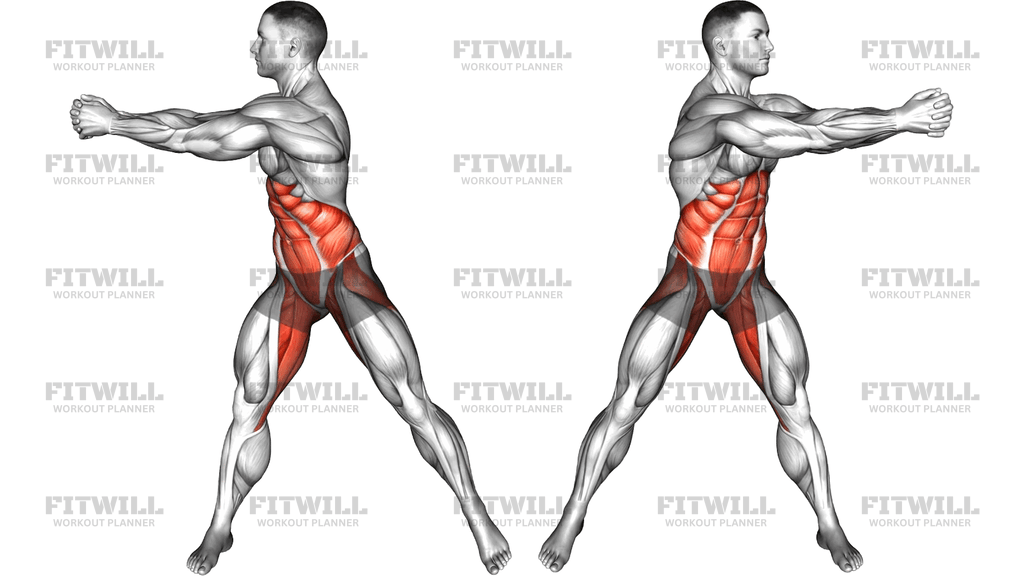
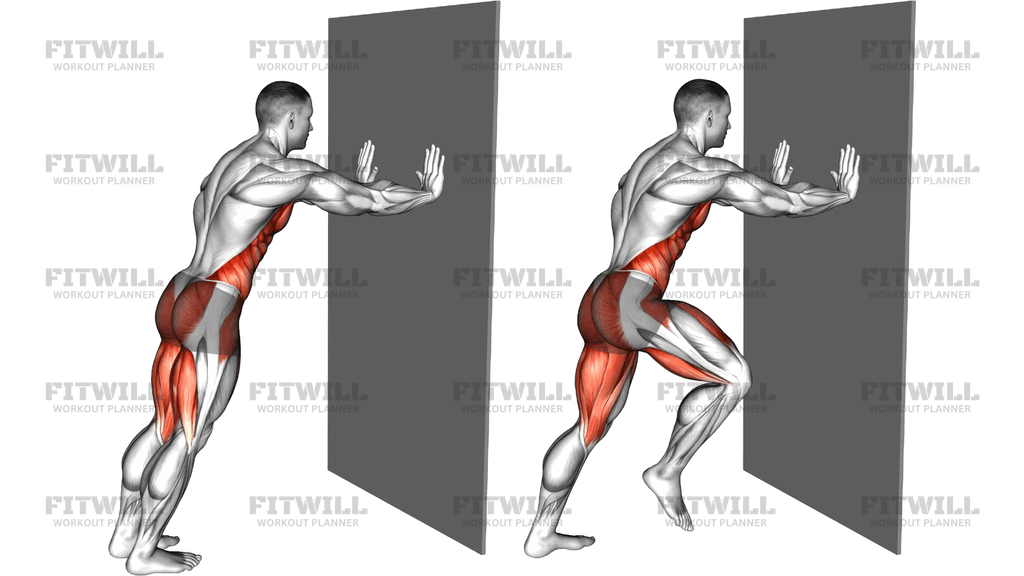
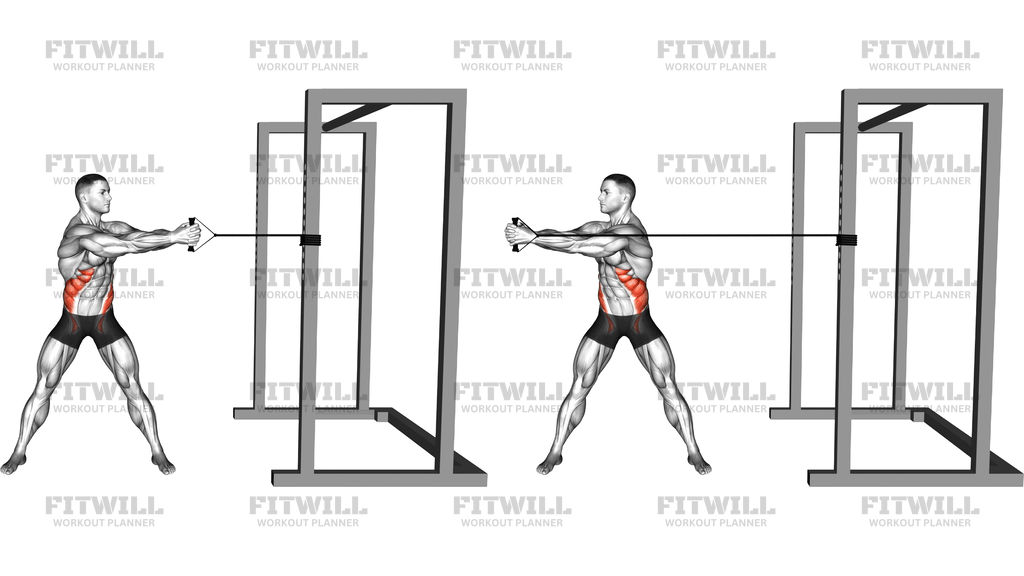
Standing Abs Rotation Stretch
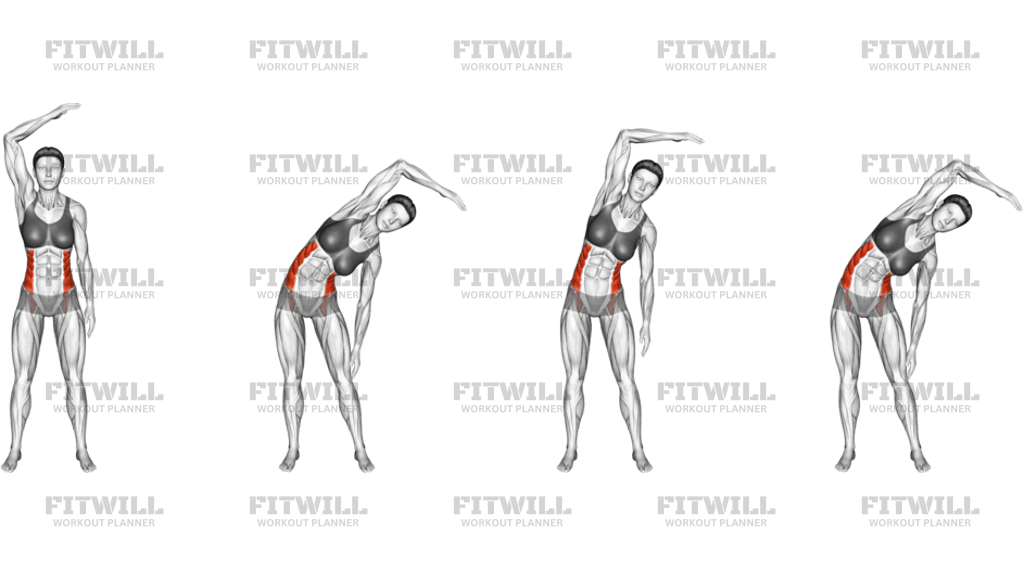
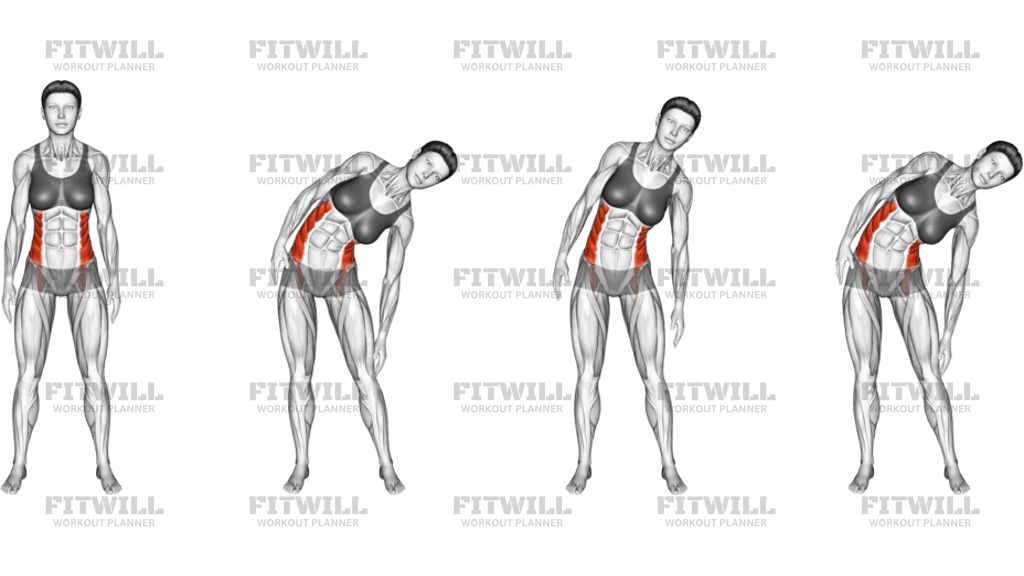
Standing Abs Rotation Stretch is a standing waist mobility drill that lengthens the side body while the feet stay planted and the torso stays tall. The visible position is closer to a controlled oblique side bend than a forceful twist, so the key is to let the ribs move while the pelvis stays quiet. That makes it useful for opening the waist, easing trunk stiffness, and restoring a little rotation and side-bending freedom without turning it into a sloppy low-back sway.
The main areas you should feel are the obliques, the quadratus lumborum, the lower intercostals, and the tissues along the outside of the trunk. Depending on how far you reach and how much you lean, the lats and upper hip line can also contribute. It is not a max-stretch contest. The goal is a smooth line from the ankle through the hip and ribcage, with enough tension to create a clear stretch but not so much that the shoulder lifts, the lower back pinches, or the posture collapses.
The setup matters because this movement gets messy fast if the hips drift, the chest folds forward, or the knees lock out too hard. Stand tall, stack the ribs over the pelvis, and keep both feet grounded before you start. From there, let the ribcage travel slightly to one side and allow only a small amount of upper-torso turn if needed. That keeps the stretch focused on the waist instead of turning into a general bend through the lumbar spine.
Use a slow exhale to deepen the position, then hold long enough to settle into the stretch without bouncing. If the side you are working feels cramped, reduce the range and focus on lengthening from the armpit down to the hip. If you are using the opposite hand to guide the motion, keep the pressure light so the hand assists the stretch instead of yanking you out of alignment.
This is a good drill for warm-ups, recovery days, or between sets when you want to restore torso motion after pressing, carrying, rowing, or rotational work. It also fits well before exercises that need a freer ribcage, such as overhead lifts or cable rotations. Keep the movement pain-free and controlled, and treat it as a mobility and positioning exercise rather than a strength test.
[ Workout Log & Planner ]
Put your next workout in Fitwill
Keep your plan and training log ready when you are.


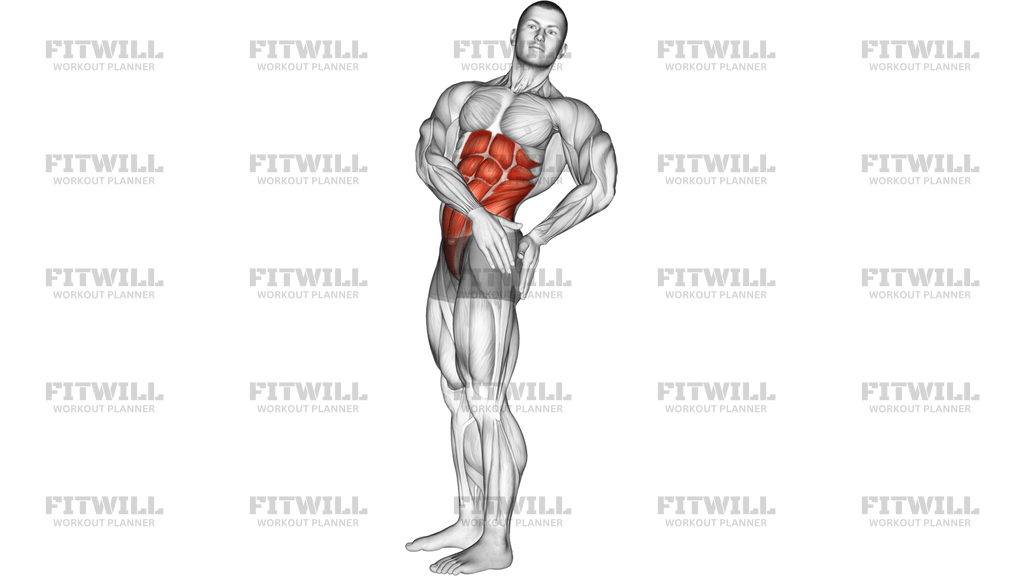
Instructions
- Stand tall with your feet about hip-width apart and keep both soles planted evenly on the floor or mat.
- Stack your ribs over your pelvis, soften your knees slightly, and place one hand on the hip or upper thigh for balance.
- Let the opposite arm stay relaxed or lightly guide the torso so the start position feels upright and long through the spine.
- Exhale, then let the ribcage drift to one side while keeping the hips facing forward and the chest open.
- Allow a small amount of upper-torso turn only if it helps you find the waist stretch, but do not let the pelvis twist with it.
- Keep sliding into the side bend until you feel a clear stretch along the obliques and outer ribs instead of a pinch in the lower back.
- Hold the end position for a steady breath or two without bouncing, shrugging, or collapsing forward.
- Return to center under control, reset your posture, and repeat on the other side with the same range and tempo.
Tips & Tricks
- Think about making the space between your lower ribs and hip bone longer on the stretching side.
- Keep the standing foot that is on the stretching side heavy so the pelvis does not slide away from the stretch.
- If the lower back feels compressed, make the side bend smaller and keep the chest more upright.
- A gentle exhale usually helps the ribs move farther than trying to force the position with your arm.
- Do not let the top shoulder roll forward; keep it relaxed so the stretch stays in the waist instead of the neck.
- If you are using a hand on the thigh for support, use it as a light guide rather than a push into range.
- The best end position is smooth and quiet, not the deepest angle you can reach with momentum.
- Match both sides carefully so the tighter side does not get an extra twist or a bigger lean to compensate.
Frequently Asked Questions
What does Standing Abs Rotation Stretch target?
It mainly targets the obliques and the muscles along the side of the waist, with some stretch through the lower ribs and upper hip line.
Is this exercise really a rotation or more of a side bend?
The visible setup is mostly a controlled side bend, with only a small upper-torso turn if you choose to add one.
Can beginners do the standing waist stretch safely?
Yes. It is a bodyweight mobility drill, so beginners can keep the range small and build it up as the ribs and waist open.
Where should I feel the stretch in the standing torso position?
You should feel it along the side of the waist, the lower ribs, and sometimes the outer hip on the side you are lengthening.
How far should I lean during the stretch?
Lean only until you feel a clear stretch without pinching the low back or losing your balance.
Should my hips twist when I perform this movement?
No. Keep the hips mostly square to the front so the movement stays in the torso instead of turning into a full-body twist.
How long should I hold each side?
A short hold of one to three relaxed breaths per side is usually enough for a warm-up or mobility break.
When is this stretch most useful?
It works well before overhead work, after heavy core training, or anytime your trunk feels tight from sitting or carrying.