Standing Two Side Bend
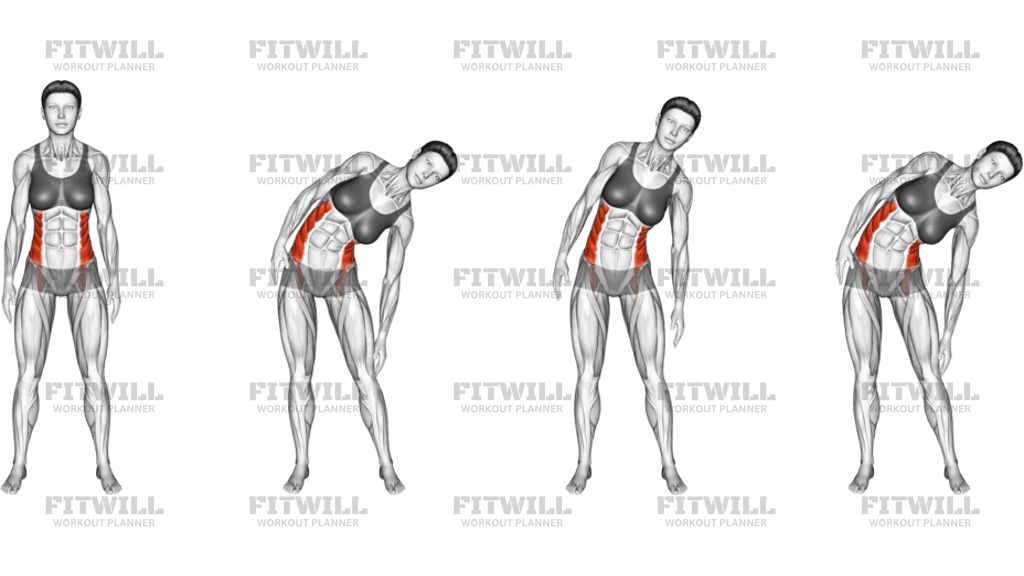
Standing Two Side Bend is a bodyweight standing trunk exercise that trains the waist to move and stabilize through a controlled side-to-side arc. It is useful when you want better awareness of lateral flexion, cleaner ribcage control, and stronger support around the torso without loading the spine with equipment. Because the movement is simple on paper but easy to rush, the quality of the setup and the discipline of each rep matter more than range.
The exercise places the main demand on the side of the waist, with the core and hip stabilizers helping keep the pelvis from drifting and the chest from turning. Standing Two Side Bend should feel like the ribs shorten toward the hip on one side while the opposite side lengthens, not like the body is twisting or folding forward. That distinction is important if you want the movement to target the side body instead of turning into a loose sway.
A good rep starts from a tall stance with the feet planted evenly and the shoulders stacked over the hips. From there, the torso bends laterally in one plane, then returns to center under control before repeating to the other side. The arms stay relaxed and travel with the body rather than driving the motion, which keeps the focus on the waist and reduces the chance of using momentum.
Standing Two Side Bend works well as a warm-up, accessory drill, or low-load core movement for people who need better trunk control and side-body mobility. It can also help lifters who tend to overarch, rotate, or shift their hips during standing work, because the exercise exposes those compensations quickly. Beginners can usually learn it easily, but they should keep the range modest and the tempo smooth so the lower back does not take over.
Safety comes from keeping the motion controlled, the knees soft, and the pelvis mostly level while the torso moves. If the side bend turns into a twist, a forward fold, or a sharp pinch in the low back, shorten the range and slow the return. The goal is a repeatable, symmetrical pattern that teaches the waist to bend cleanly and return to neutral without jerking or collapsing.
[ Workout Log & Planner ]
Put your next workout in Fitwill
Keep your plan and training log ready when you are.


Instructions
- Stand tall with your feet about hip-width apart, knees softly unlocked, and your arms hanging naturally at your sides.
- Stack your shoulders over your hips and keep your chest facing forward so your torso starts in a neutral position.
- Lightly brace your midsection and keep your weight spread evenly through both feet before you begin the first rep.
- Exhale and bend your torso to one side, letting the hand on that side slide down the outside of your thigh.
- Keep both hips facing forward and avoid turning your chest toward the floor as you lean.
- Lower only as far as you can keep the movement smooth, with the opposite side of the waist lengthening instead of the lower back collapsing.
- Pause briefly at the bottom, then inhale and bring your torso back to center without bouncing or swinging.
- Repeat to the other side, then finish tall and reset your posture before the next repetition or set.
Tips & Tricks
- Keep the shoulders level as you bend; if one shoulder dives forward, you are turning the rep into a twist.
- Think about bringing your ribs toward your hip instead of reaching your hand toward the floor.
- A smaller range is better if your pelvis shifts sideways or your lower back starts to pinch.
- Move slowly enough that you can feel the working side of the waist shorten and the other side lengthen.
- Let the arms stay loose and follow the torso instead of trying to reach farther than the body can control.
- Keep the chin neutral and your gaze forward so the neck does not lead the movement.
- Breathe out as you bend and inhale as you return to center to keep the trunk from bracing too hard.
- Stop the set if the movement becomes a side sway; the rep should look clean and centered from the front.
Frequently Asked Questions
What muscles does Standing Two Side Bend work most?
It mainly works the side of the waist, especially the obliques and deeper core muscles that control side bending and trunk stability.
Can beginners perform this exercise?
Yes. It is beginner-friendly because it uses only bodyweight, but beginners should keep the side bend small and controlled so they do not twist or lean forward.
Should my hips move during Standing Two Side Bend?
Your hips should stay mostly level and facing forward. A little natural shift is fine, but the movement should come from the torso, not from swaying the pelvis side to side.
How far should I bend on Standing Two Side Bend?
Only as far as you can keep the chest square, the shoulders level, and the lower back comfortable. The best range is usually the one that gives you a clear side-body stretch without collapsing.
Where should I feel Standing Two Side Bend?
You should feel it along the side of the waist and trunk on the bending side, with the opposite side lengthening as you return to center.
What are the most common mistakes with the arm position?
The biggest mistakes are reaching the arm hard toward the floor or pulling the shoulder forward. Let the arm slide naturally down the thigh and keep the shoulder stacked over the ribcage.
Is Standing Two Side Bend a stretch or a strength exercise?
It sits between the two. The movement creates a side-body stretch, but the controlled return and postural control make it useful as a light core strength drill too.
How can I make Standing Two Side Bend harder without weights?
Slow the lowering and return, pause at the bottom, and keep each rep strict. You can also spend a little more time on each side instead of rushing through alternating reps.