Hip Extension Supported From Back
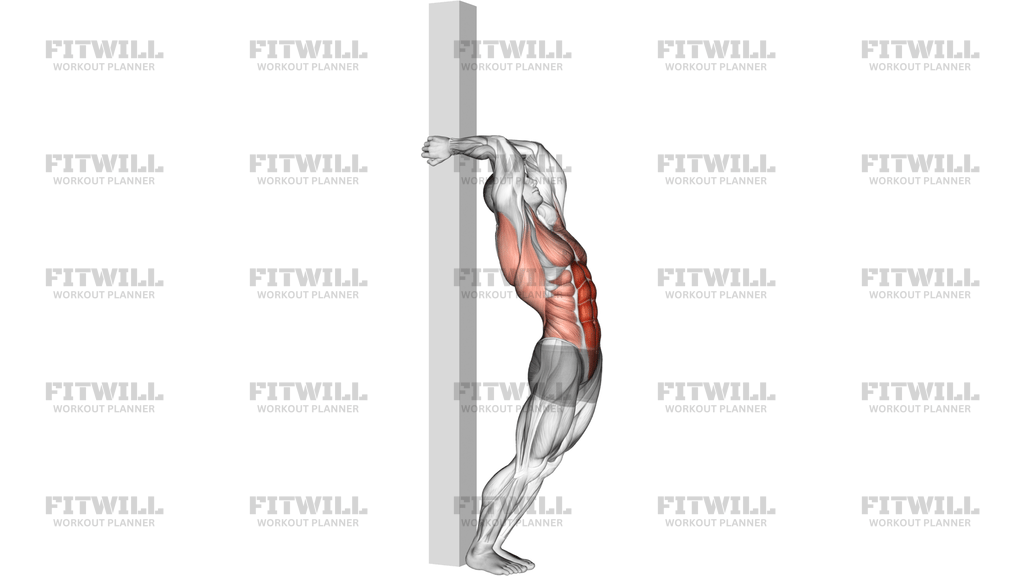
Hip Extension Supported From Back is a supported standing backbend and hip-extension mobility drill. You hold a vertical support behind you, let the chest open, and move the hips forward while the trunk stays long and controlled. The exercise is aimed at the waist, core, and hips, with the support reducing balance demands so you can focus on the shape of the movement instead of fighting to stay upright.
The visible line in the image shows a tall setup: feet planted forward, arms reaching overhead and back to the post, and the torso arcing away from the support. That position creates a strong stretch through the front of the hips, abdomen, and rib cage while the back line of the body stays organized. It is less about forcing range and more about finding a clean, repeatable extension that does not collapse into the low back.
The support matters because it lets you adjust leverage with your feet and hands. Step farther away for a bigger opening, or move closer if the lower back takes over. Keep the knees soft, the heels grounded, and the ribs from flaring violently. The goal is a controlled backbend where the hips travel forward, the chest lifts, and the head stays in line with the rest of the spine.
Use this movement as a warm-up, mobility drill, or accessory stretch when you want to open the front of the body before lifting, sprinting, or other sessions that need better hip extension. It can also help restore trunk extension after long periods of sitting. The best reps feel like a smooth reach and hold rather than a sharp crank into the lumbar spine.
If you lose the front-of-hip stretch and only feel compression in the low back, reduce the arch, shorten the stance, or soften the elbows slightly. Keep breathing slow and steady so the rib cage can expand without losing control. Done well, this exercise teaches you to extend through the hips and trunk while staying supported by the post.
Fitwill
Log Workouts, Track Progress & Build Strength.
Achieve more with Fitwill: explore over 9600 exercises with images and videos, access built-in and custom workouts, perfect for both gym and home sessions, and see real results.
Start your journey. Download today!




Instructions
- Stand facing away from a vertical post, upright, or similar support and hold it with both hands overhead, keeping your arms long.
- Walk your feet a small step forward so your body can lean back while your heels stay down and your stance stays stable.
- Set your feet about hip-width apart and keep a soft bend in the knees before you begin the stretch.
- Brace lightly through the waist, then let the hips move forward as the chest opens and the torso arcs away from the support.
- Keep reaching through the hands so the shoulders stay active while the spine lengthens instead of collapsing.
- Hold the extended position for a controlled breath or two, feeling the front of the hips and abdomen open.
- Return by bringing the ribs back over the pelvis and easing the hips out of the forward drive.
- Reset your stance and repeat for the planned number of reps or holds.
Tips & Tricks
- Keep the heels grounded so the stretch comes from the hips and trunk instead of a forward tip onto the toes.
- If the low back pinches, shorten the stance and reduce the arch before you chase more range.
- Think about lifting the sternum and hips together instead of only dumping the ribs backward.
- Squeeze the glutes lightly to keep the pelvis organized while you open the front of the body.
- Use the hands on the post for position, not to yank yourself deeper into the backbend.
- Breathe into the side ribs and upper abdomen so the rib cage can open without bracing hard.
- Keep the elbows soft if the shoulders feel jammed at full reach.
- Stop at the first point where the stretch stays smooth and supported rather than sharp.
Frequently Asked Questions
What does Hip Extension Supported From Back stretch the most?
It mainly opens the front of the hips and torso, especially the hip flexors and abdominal line.
Do I need equipment besides a post or upright support?
No. A sturdy post, rack upright, pole, or wall edge is enough as long as it will not move when you lean back.
How far should I step away from the support?
Far enough to feel the front of the hips and trunk open, but close enough that you can keep your balance and avoid a hard low-back arch.
Should I keep my knees straight during the hold?
A soft bend is usually better. Locked knees often make the stretch feel tighter in the hamstrings and less controlled through the pelvis.
What is the most common mistake with this stretch?
Letting the low back take over. The movement should feel like a supported opening through the hips and torso, not a forceful lumbar crunch.
Can beginners use this movement?
Yes. Beginners usually do best with a smaller lean back and a shorter hold so they can learn the support and breathing pattern.
When is this exercise useful in a workout?
It fits well as a warm-up, mobility drill, or between heavier sets when you want better hip extension and trunk opening.
What should I do if the shoulders feel tight?
Reduce the reach, soften the elbows, and keep the chest lifted without forcing the arms farther back.