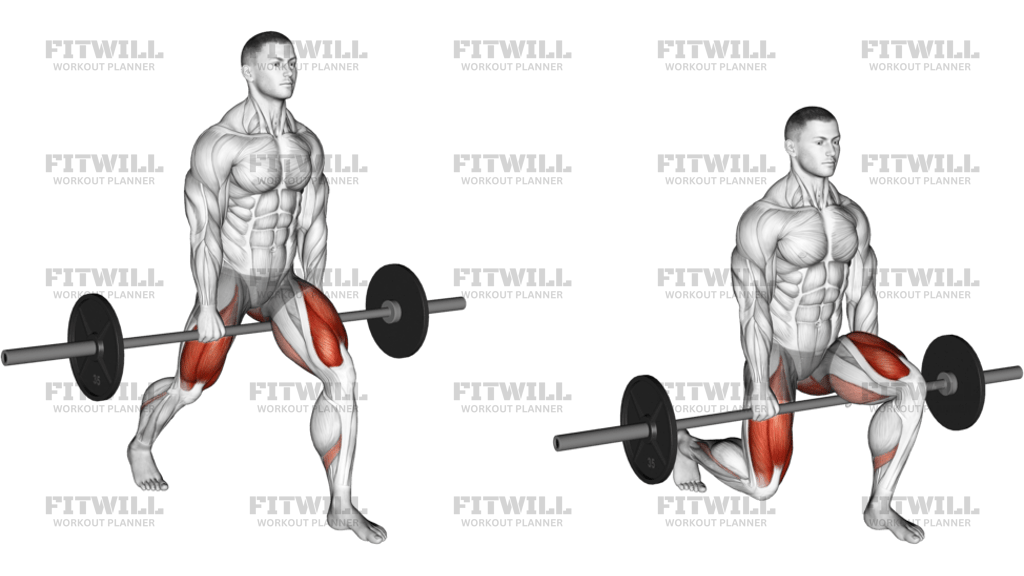
Barbell Rear Lunge
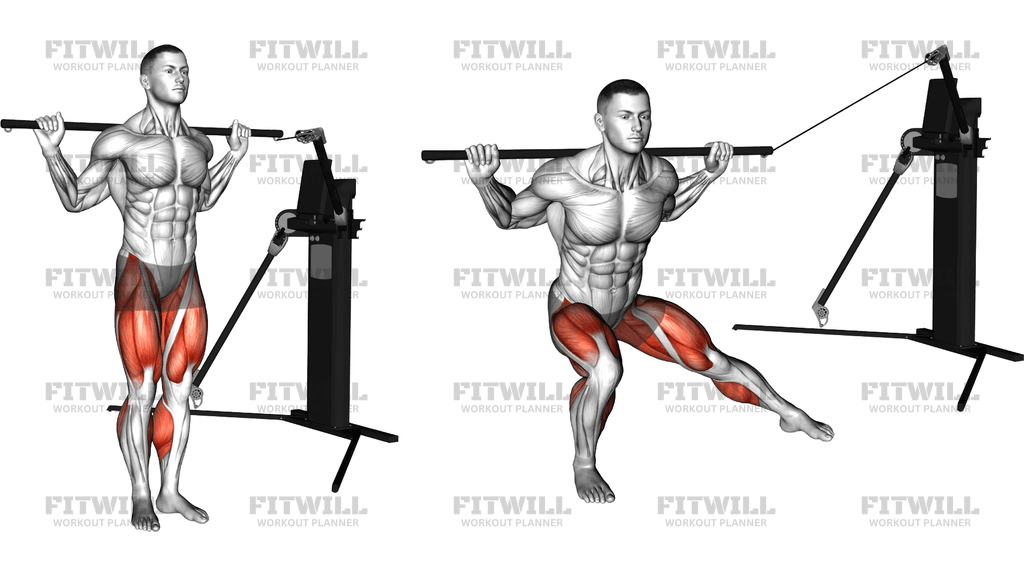
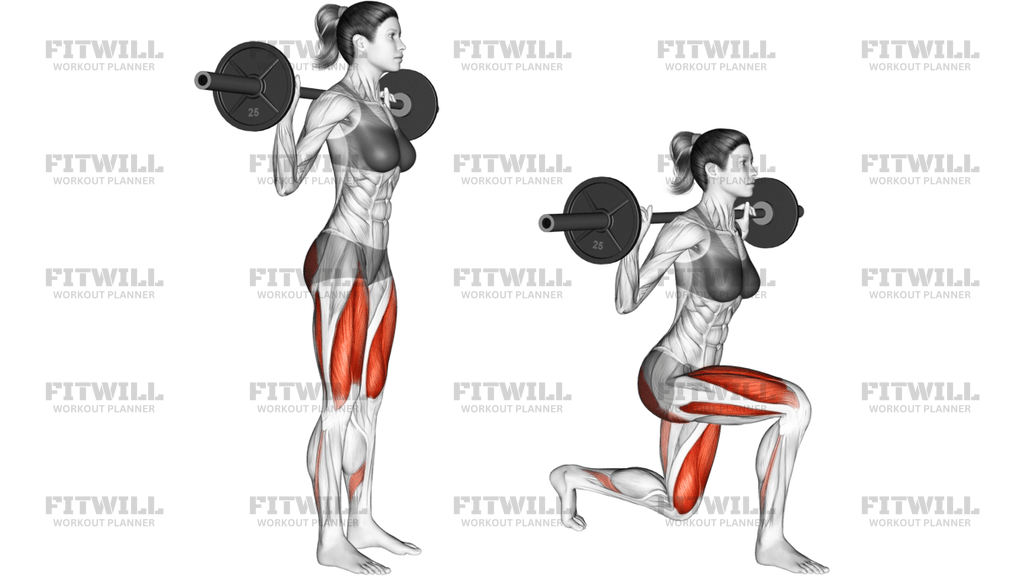
Barbell Rear Lunge is a unilateral lower-body strength exercise that loads the upper back with a barbell while one leg steps back into a controlled split stance. It is designed to build the thighs and glutes of the front leg while also challenging balance, trunk control, and hip stability. Because the load sits on the shoulders, the torso has to stay organized and the front foot has to stay rooted if you want each rep to feel smooth instead of wobbly.
The movement is especially useful when you want one leg to do most of the work. The front leg drives the exercise, with the quadriceps helping control the knee and the glute working to stand you back up. The rear leg acts mostly as a support and depth guide. That makes the exercise valuable for general strength, athletic leg training, and fixing side-to-side differences that can get hidden in bilateral squats.
Setup matters more here than in many machine exercises. A stance that is too narrow, a bar that is not stable on the upper back, or a step that is too long can all shift stress away from the front thigh and into the lower back or hips. A good rear lunge keeps the front foot flat, the front knee tracking in line with the toes, and the torso tall enough that the bar does not drift forward. The bottom position should feel like a controlled split squat, not a collapse.
During each repetition, lower under control until the front thigh approaches parallel or the rear knee comes close to the floor, then drive through the whole front foot to stand up. Keep the descent smooth, avoid bouncing off the floor, and reset your balance before the next rep if needed. Breathing should stay steady: brace before you descend, then exhale as you push back to standing.
Use this exercise as a main lower-body builder or as accessory work after your primary squat or deadlift pattern. It is effective for strength, hypertrophy, and unilateral control, but it only works well when the bar stays stable and the step pattern stays repeatable. If your balance, knee tracking, or bar path breaks down, lighten the load and clean up the setup before adding weight.
[ Workout Log & Planner ]
Put your next workout in Fitwill
Keep your plan and training log ready when you are.


Instructions
- Set the bar across the upper traps or rear delts, take a shoulder-width stance, and plant both feet flat before you start.
- Brace your torso, look straight ahead, and keep the bar centered so it does not roll as you move.
- Step one leg straight back into a reverse lunge, landing on the ball of the back foot with the heel lifted.
- Lower your hips straight down until the front thigh is near parallel and the rear knee is close to the floor.
- Keep the front knee tracking over the toes and the front heel glued to the ground as you descend.
- Drive through the middle of the front foot and stand up without letting the chest collapse forward.
- Bring the back foot back to the starting stance and reset your balance before the next rep if needed.
- Repeat on the same side for the planned reps, then switch legs or alternate sides according to your program.
Tips & Tricks
- Choose a step length that lets the front shin stay controlled; too short shifts the knee forward, and too long turns the rep into a hip stretch.
- Keep the torso tall and the ribs stacked over the pelvis so the bar stays over midfoot instead of drifting forward.
- Let the front leg do the work; the rear leg should only help with balance and depth.
- If the bar bounces on your neck or upper back, lower the load and tighten your upper-back shelf before continuing.
- Use a soft but deliberate knee bend at the bottom instead of dropping fast and rebounding out of the hole.
- Press through the whole front foot, not just the toes, so the quad and glute can finish the rep together.
- If one side feels unstable, pause briefly at the bottom and rebuild control before increasing weight.
- Stop the set when the front knee caves inward or the bar starts wobbling side to side.
Frequently Asked Questions
What muscles does the barbell rear lunge work most?
It mainly trains the front leg’s thighs and glutes, especially the quadriceps and gluteus maximus, with the hamstrings, adductors, calves, and core helping stabilize.
Should the rear foot stay flat on the floor?
No. The rear foot should land on the ball of the foot with the heel lifted so the front leg can take most of the load.
How low should I go in the lunge?
Lower until the front thigh is close to parallel and the rear knee is near the floor, as long as you can keep the front foot flat and the torso controlled.
What is the biggest form mistake with the barbell on my back?
Letting the chest pitch forward or the bar drift ahead of the midfoot. Keep the torso tall and the bar stacked over the center of the stance.
Is the barbell rear lunge good for beginners?
Yes, if they start light and focus on balance, step length, and knee tracking before adding load.
Can I alternate legs every rep?
Yes, but many lifters get better stability by completing all reps on one leg first, then switching sides.
What if my front knee travels forward a lot?
Shorten the step only if needed to keep control, but focus on driving the hips straight down and keeping the heel down rather than chasing a huge stride.
How do I progress this exercise safely?
Add load only after the bar stays steady, each side feels even, and you can keep the same step length and depth on every rep.