Barbell Lateral Lunge
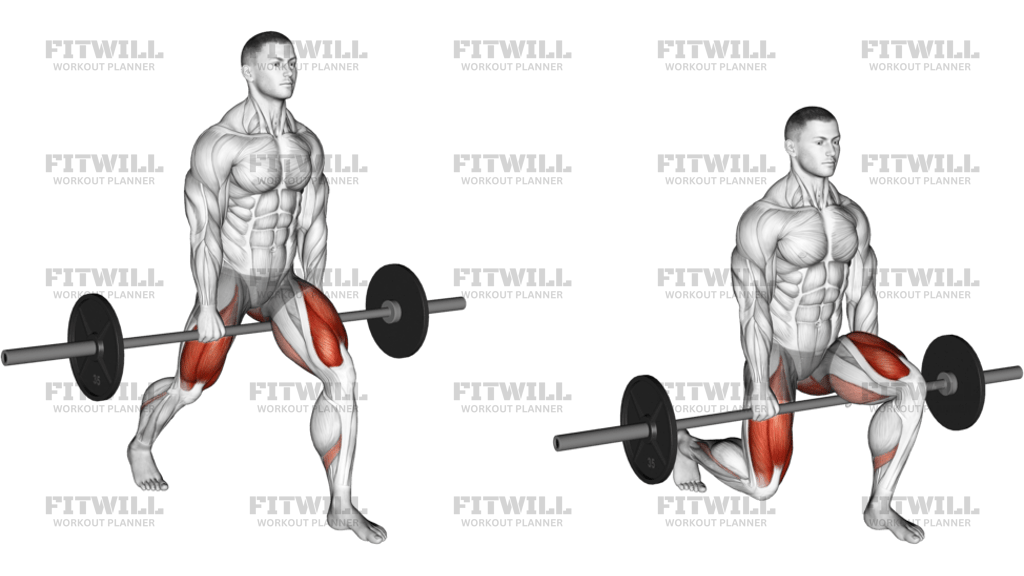
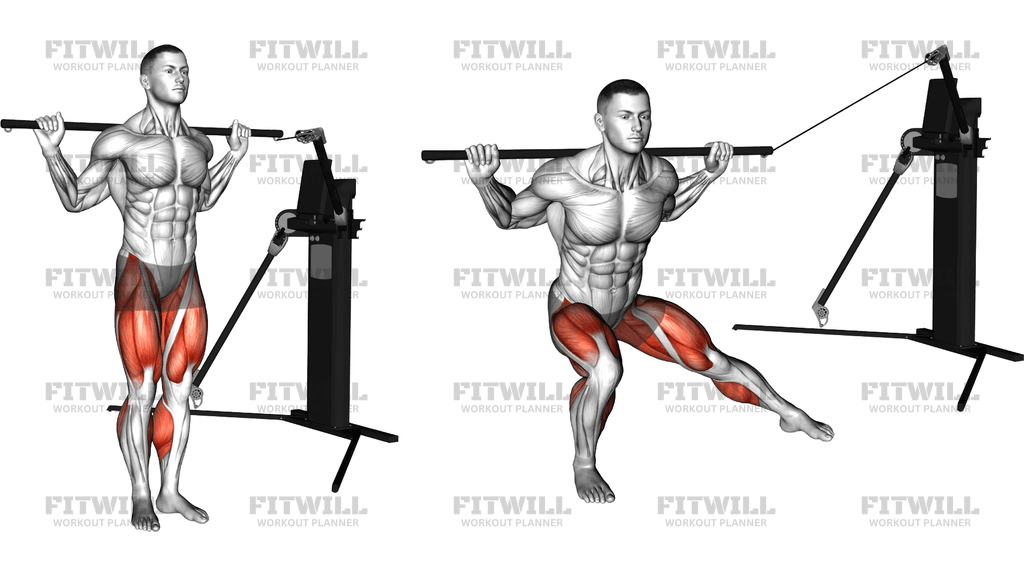
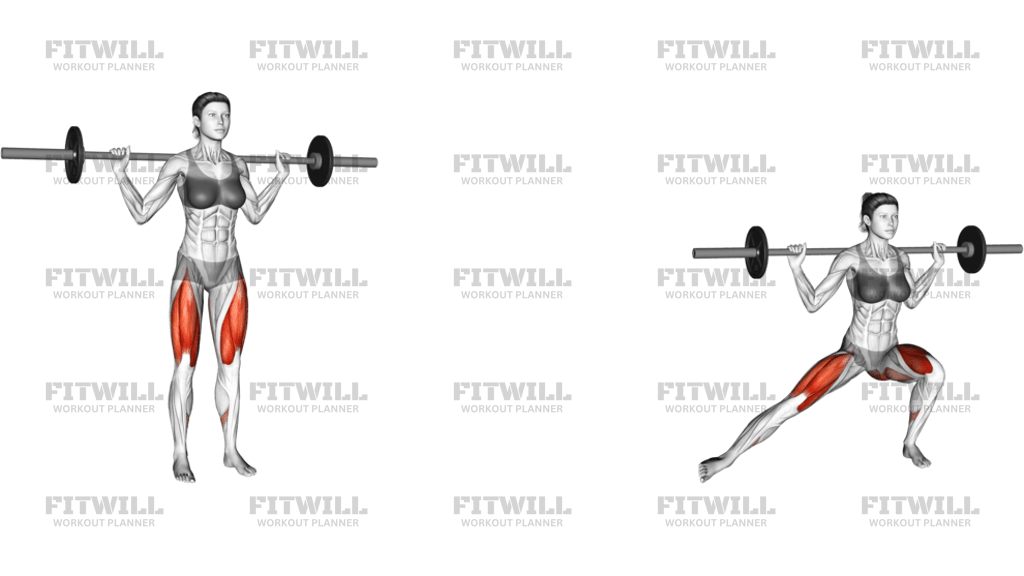
Barbell Lateral Lunge is a side-to-side lower-body strength exercise performed with the bar resting across the upper back. It challenges one leg at a time while the other leg stays long, so the working hip, thigh, and inner thigh have to control both the descent and the push back to standing. The movement is especially useful when you want to train frontal-plane strength, hip control, and leg stability rather than only the straight-ahead squat pattern.
The setup matters because the bar changes balance and makes torso position important. The bar should sit evenly across the traps, the chest should stay proud, and the feet should start about hip width or a little wider so you can step out without losing tension. A lateral lunge works best when the stepping foot lands far enough away to let the sitting hip track back, but not so far that you collapse into the bottom or twist the torso to reach the floor.
As you lower, shift your weight into the bent leg, keep the opposite leg straight or nearly straight, and let the hips travel back instead of letting the knee shoot aggressively forward. The planted foot should stay flat, the knee should track in line with the toes, and the bar should remain level as the torso leans slightly over the working leg. On the way up, drive through the whole foot of the bent leg and return to the center under control before repeating on the other side.
This exercise is a good choice for athletes, field-sport training, and lifters who need stronger adductors, glutes, quads, and lateral hip control. It can also serve as a squat accessory when you want a more joint-friendly, range-of-motion-focused pattern. Because the barbell adds load and balance demand, quality matters more than how wide the step looks or how low the body drops.
If the hips shift, the torso rotates, or the inside knee caves inward, the set is usually too heavy or the stance is too narrow. Keep the rep smooth, use a load you can stabilize, and choose a depth you can repeat evenly on both sides. When done well, the barbell lateral lunge builds strength you can actually use for deceleration, change of direction, and general lower-body control.
[ Workout Log & Planner ]
Put your next workout in Fitwill
Keep your plan and training log ready when you are.


Instructions
- Place the barbell across the upper back and stand tall with your feet about hip width apart.
- Brace your torso, keep the chest lifted, and point both feet mostly forward before you start.
- Take a controlled step out to one side so the stepping foot lands wide enough to sit into the hip.
- Bend the stepping knee and push the hips back as the other leg stays long and straight or nearly straight.
- Keep the planted foot flat and let the knee track in line with the toes instead of collapsing inward.
- Lower until the working thigh is deeply loaded and the opposite leg feels stretched through the inner thigh.
- Drive through the full foot of the bent leg to push back to standing without bouncing out of the bottom.
- Reset your stance at the top, then repeat to the other side for the planned reps.
Tips & Tricks
- Keep the bar centered on the traps so it does not pull you toward the working side.
- Start with a shorter step if you cannot keep the heel down and the knee tracking cleanly.
- Let the hips travel back and down; do not turn the lunge into a forward squat.
- The non-working leg should stay long so the inner thigh gets a real stretch.
- Stop the descent when your pelvis starts to tuck or rotate instead of forcing extra depth.
- Press through the midfoot and heel of the bent leg on the way up to avoid loading the toes only.
- Keep your ribcage stacked over the pelvis so the bar stays level through the side step.
- Use a lighter barbell than your squat if the lateral shift feels unstable or jerky.
- Exhale as you drive back to standing and inhale before the next side step.
Frequently Asked Questions
What muscles work most in a barbell lateral lunge?
The working thigh, glutes, and inner thigh on the bent leg do most of the work, with the core helping keep the bar level.
Is the bar supposed to sit on the shoulders or in front of the body?
It should rest across the upper back on the traps, just like a back squat setup.
How wide should I step out to the side?
Step far enough to load the bent leg and feel the inner thigh on the opposite side stretch, but not so far that you lose balance or twist the torso.
Should the opposite leg bend too?
It can soften a little, but it should stay much straighter than the working leg so the side shift stays clear.
Can beginners use this exercise?
Yes, but start light and practice the side step, hip hinge, and return before loading it heavily.
What is the most common form mistake?
Leaning the torso and letting the knee cave inward are the two biggest issues, especially when the load is too heavy.
Where does this fit in a workout?
It works well as a lower-body accessory movement, a unilateral strength drill, or part of athletic conditioning work.
How do I make the exercise harder without losing form?
Use a slightly heavier bar, increase the step quality, or slow the lowering phase while keeping the bar level and the feet stable.