Walking
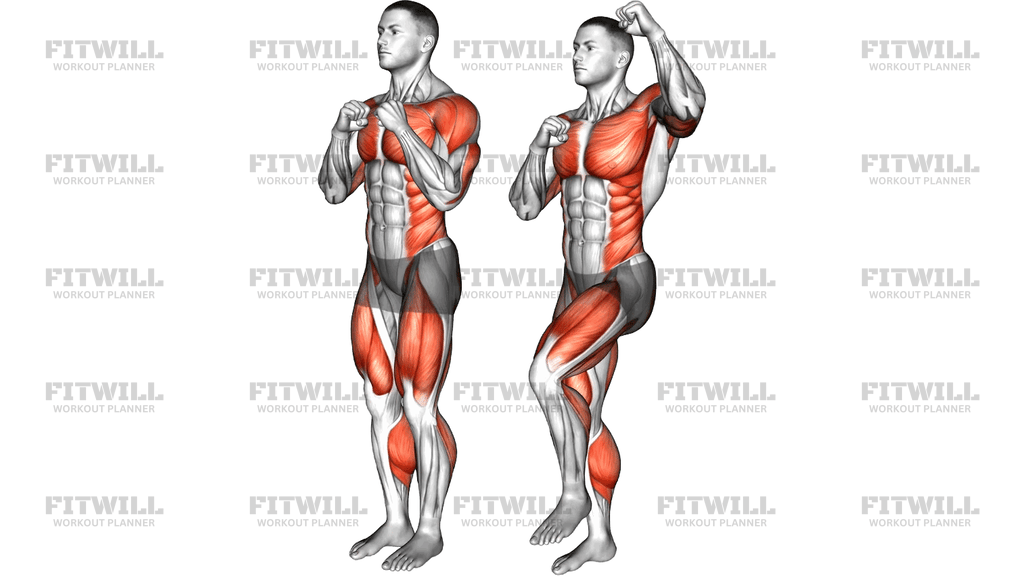
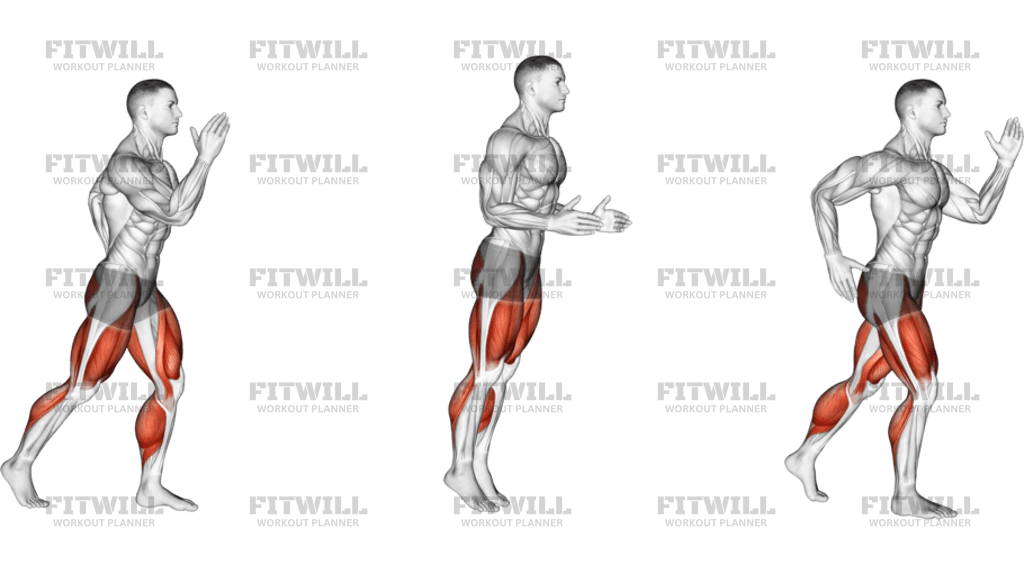
Walking is a simple bodyweight cardio exercise built around repeated steps with steady posture, rhythm, and breathing. It trains the lower body and trunk to work together while you keep the pace controlled enough to stay efficient rather than bouncing, leaning, or reaching forward with each step. The value of the movement comes from how consistently you can repeat the gait pattern, not from how hard you force the stride.
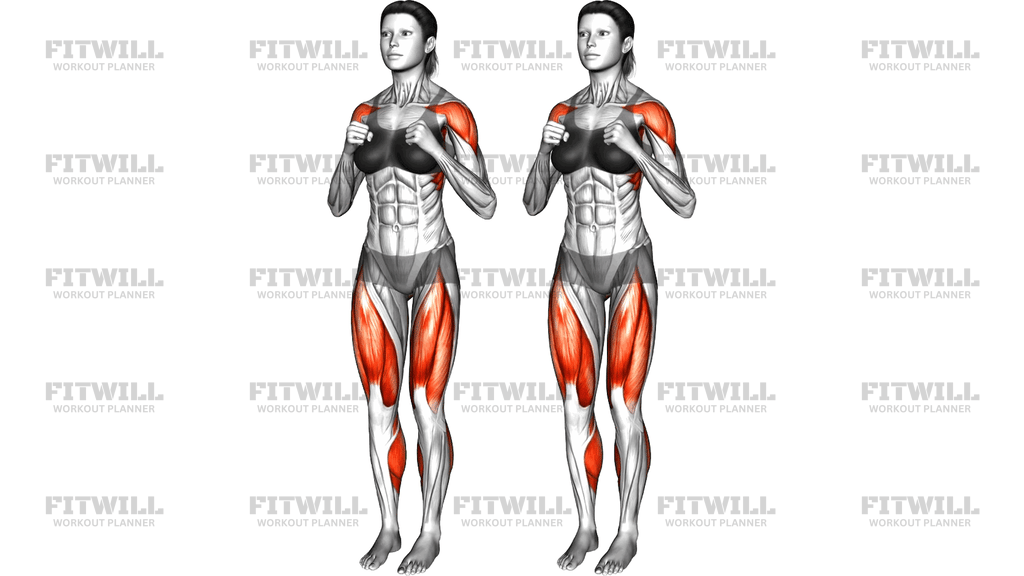
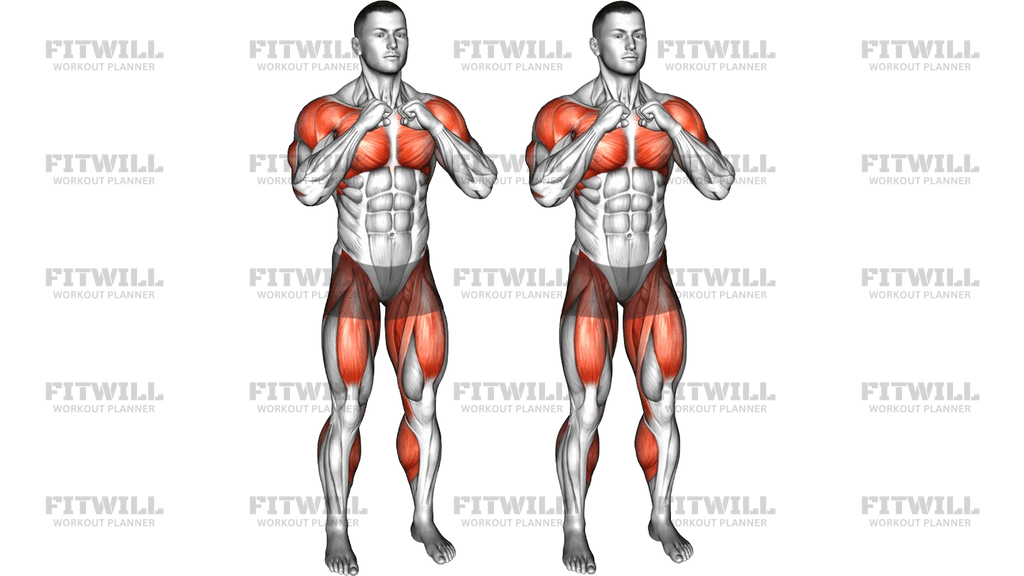
The main lower-body work comes from the quads, with the glutes, calves, hamstrings, hip flexors, and trunk helping you stay balanced from step to step. In practical terms, walking is useful for general conditioning, warm-ups, recovery sessions, and low-impact calorie burn. It can be done outdoors or on a treadmill, and the setup matters because posture, stride length, and cadence decide whether the effort feels smooth or sloppy.
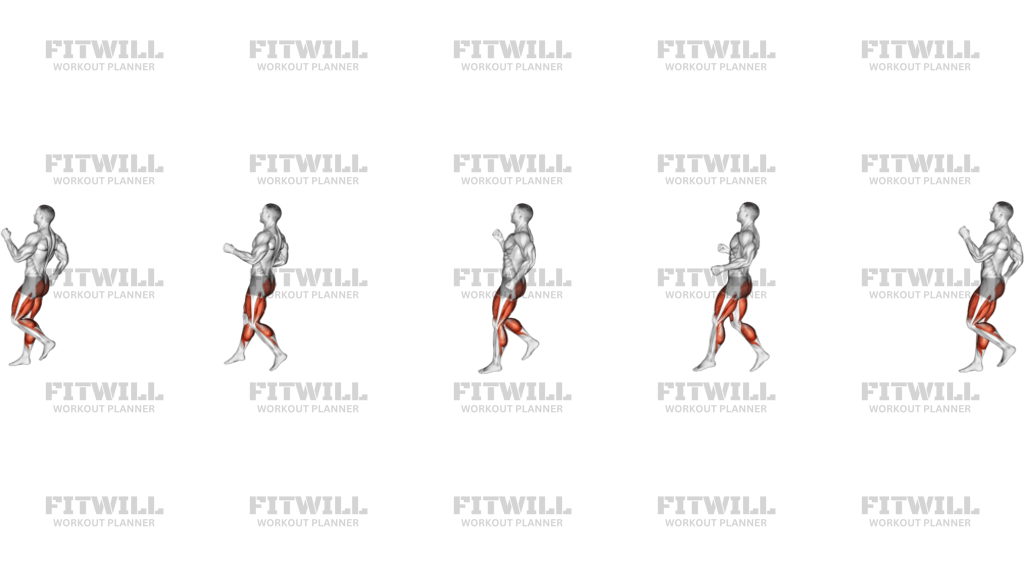
A good walking pattern starts with stacked posture: ribs over pelvis, eyes forward, shoulders relaxed, and feet landing under your center of mass. A moderate stride keeps the foot strike quiet and avoids overreaching in front of the body. Arms should swing naturally at your sides without crossing the chest, and the torso should stay tall so momentum does not take over the work.
During the walk, breathe in a steady rhythm and keep the pace that matches the goal of the session. For conditioning, that may mean a brisk pace that still lets you speak in short phrases; for recovery, it may mean a lighter pace with even softer foot strikes. If you use incline, let the hill increase demand without collapsing your posture. The best repetitions are the ones that look and feel repeatable from start to finish.
Walking is beginner-friendly, but it still rewards attention to detail. Shorten the stride if your shins, hips, or low back start to complain, and slow down if your arm swing or foot placement becomes choppy. Used well, walking is a reliable base exercise for building daily movement capacity, improving work capacity, and giving the joints a controlled, low-impact way to move.
Fitwill
Log Workouts, Track Progress & Build Strength.
Achieve more with Fitwill: explore over 9600 exercises with images and videos, access built-in and custom workouts, perfect for both gym and home sessions, and see real results.
Start your journey. Download today!




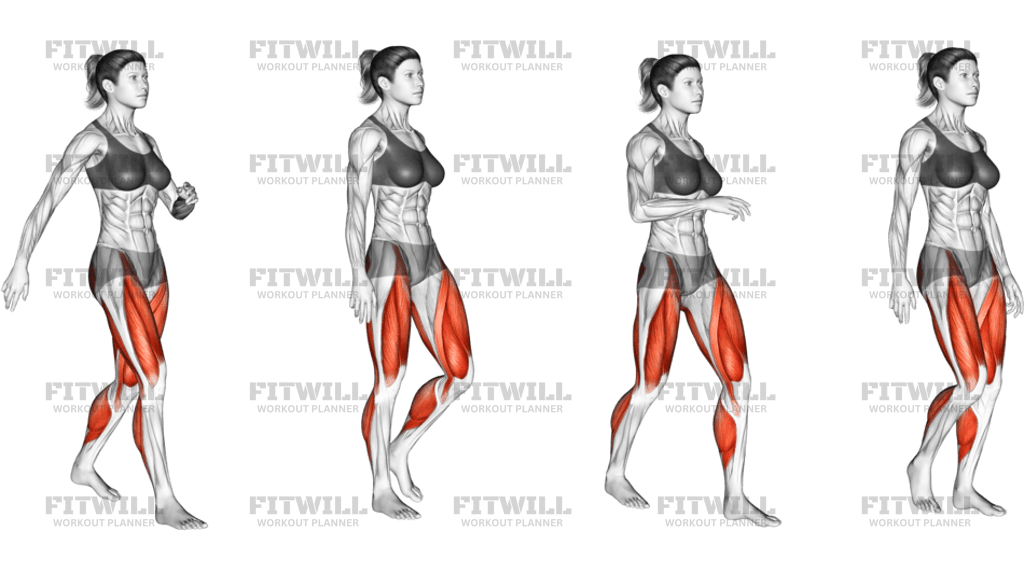
Instructions
- Stand tall on a flat surface or treadmill belt with your feet about hip-width apart, eyes forward, and shoulders relaxed.
- Stack your ribs over your pelvis and lightly brace your midsection before you take the first step.
- Start with a natural step that lands under your body instead of reaching far in front of you.
- Roll through the heel, midfoot, and toes as you transfer weight onto the standing leg.
- Swing the opposite arm naturally at your sides without letting it cross hard in front of your chest.
- Keep your stride moderate and your steps quiet so the hips stay level and the torso stays tall.
- Breathe steadily through the walk and keep the pace smooth enough that you do not start bouncing or leaning.
- If you are using a treadmill, increase speed or incline only after the stride feels balanced, then slow back down before stepping off.
Tips & Tricks
- Keep your steps under your hips; overstriding puts the brakes on every step and wastes energy.
- A slightly shorter stride usually feels smoother and helps you keep a quicker, more efficient cadence.
- Let the arms swing from the shoulders, not from the hands, so the upper body stays relaxed instead of tense.
- If you walk uphill, stay tall through the torso and let the incline do the work instead of bending at the waist.
- Watch for side-to-side hip sway; that is usually a sign the pace is too fast or the stride is too long.
- Use quiet foot strikes as a cue that you are loading the leg smoothly instead of slamming into the ground.
- For brisk walking, aim for a pace where you can still speak in short phrases without gasping.
- If your shins, feet, or low back start to feel beaten up, reduce speed or incline before the form falls apart.
Frequently Asked Questions
What muscles does walking train the most?
Walking primarily trains the quads, with help from the glutes, calves, hip flexors, and trunk stabilizers.
Is walking a good beginner exercise?
Yes. It is one of the easiest ways to build cardio capacity because you can control speed, distance, and incline.
Should my stride be long or short?
Keep it moderate. A stride that lands under your body is usually smoother than a long reach that overstrides in front.
What is the most common walking mistake?
Overstriding and leaning forward are the biggest issues. Both make the walk feel harder and less efficient.
Can I use a treadmill for this exercise?
Yes. Keep the pace controlled, step on and off safely, and increase speed or incline only after your stride feels stable.
Should my arms swing while I walk?
Yes. A natural arm swing helps rhythm and balance, as long as the shoulders stay relaxed and the arms do not cross aggressively in front of the chest.
How fast should I walk for cardio?
Fast enough to raise your breathing, but not so fast that you start bouncing, shuffling, or losing posture.
What should I do if my shins or feet get sore?
Shorten the stride, slow the pace, and reduce incline first. If soreness continues, the issue may be footwear, volume, or walking surface.