Lever Decline Chest Press Version 2
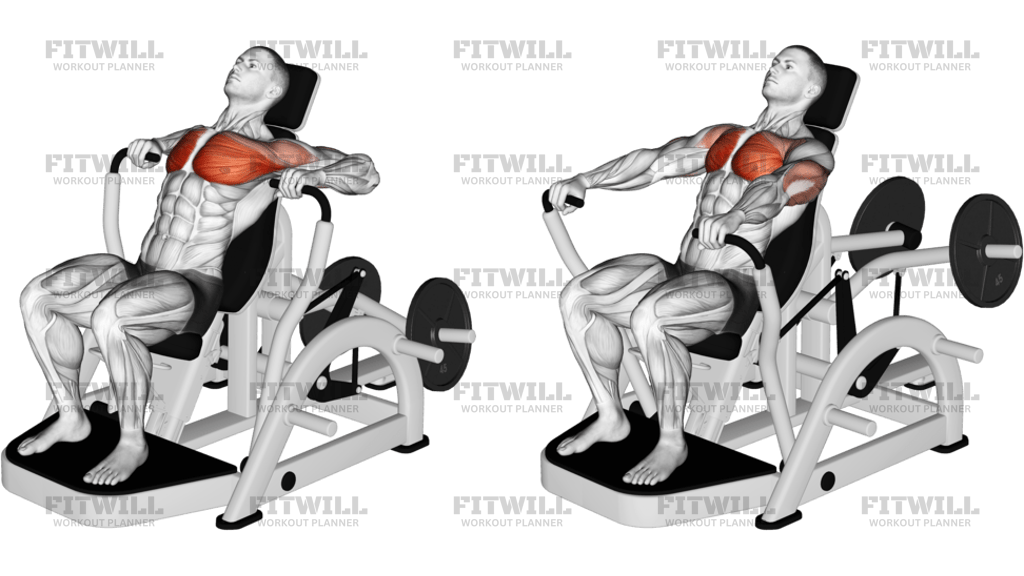
Lever Decline Chest Press Version 2 is a guided machine pressing exercise that emphasizes the chest from a slightly declined torso angle. The fixed lever path removes much of the balance demand of free weights, so the set can stay focused on pressing force, smooth tempo, and repeatable range of motion. That makes it useful for hypertrophy work, accessory pressing, or as a safer option when you want to train the chest hard without stabilizing a barbell overhead.
The decline angle shifts more of the effort toward the lower portion of the pecs while the front shoulders and triceps still help drive the press. Because the machine guides the path, the biggest setup decision is seat height and back-pad position. If the handles start too high or too low, the movement can turn into an awkward shoulder press or a cramped chest squeeze, so the first rep should feel organized before the load gets heavy.
Set the seat so the handles line up around the lower chest or upper ribcage when you are seated with your back against the pad. Your feet should stay flat and firm, your shoulder blades should stay set against the pad, and your wrists should stack over the handles instead of bending back. Once you press, the path should feel like a smooth forward drive with the chest leading the motion and the elbows tracking slightly below shoulder level.
At the top, finish with control rather than slamming into the stops or locking out aggressively. On the way down, let the handles return slowly until you feel a chest stretch without your shoulders rolling forward or your lower back coming off the pad. The machine is meant to give you a stable pressing pattern, but the result still depends on clean breathing, calm posture, and a range that matches your shoulder comfort.
Use Lever Decline Chest Press Version 2 when you want a solid chest-focused press with less setup complexity than a barbell or dumbbell decline press. It works well in bodybuilding sessions, upper-body days, or as a secondary press after your main compound lift. Beginners can learn it quickly because the path is fixed, but the movement still rewards careful seat adjustment, controlled lowering, and a load that lets every rep look the same.
[ Workout Log & Planner ]
Put your next workout in Fitwill
Keep your plan and training log ready when you are.


Instructions
- Sit on the lever decline chest press machine with your back flat on the pad and your feet planted firmly on the floor or foot platform.
- Adjust the seat so the handles start around your lower chest or upper ribcage, not up near your shoulders.
- Wrap your hands around the handles with neutral wrists and keep your shoulder blades set against the pad.
- Brace your torso and keep your chest lifted without letting your ribs flare off the seat.
- Press the handles forward and slightly upward until your arms are nearly straight but not jammed into a hard lockout.
- Keep your elbows tracking a little below shoulder height as you drive through the press.
- Lower the handles slowly until your upper arms return to a comfortable stretch near the bottom position.
- Exhale as you press and inhale as you lower, keeping the tempo smooth and the seat contact steady.
- Finish the set by returning the handles to the starting position under control.
Tips & Tricks
- If the handles start too high, the press drifts toward your shoulders; lower the seat until the push feels centered in the chest.
- Keep your shoulder blades anchored on the pad instead of reaching forward at the bottom, or the front of the shoulder will take over.
- Use a soft elbow bend at the top instead of snapping into a hard lockout to keep tension on the pecs.
- Let the handles come back only until you feel a chest stretch; if your shoulders roll forward, the range is too deep.
- Keep your wrists stacked over the handles so the force goes straight through the forearms instead of bending the wrists back.
- Press with a smooth, continuous drive rather than a burst off the bottom, which usually makes the machine bounce.
- Choose a load that lets you lower the handles under control for at least two to three seconds.
- If the lower back arches hard or your hips lift, reduce the seat height or the load and reset your position.
Frequently Asked Questions
What muscles does Lever Decline Chest Press Version 2 work most?
The main target is the chest, especially the lower portion of the pecs. The triceps and front shoulders assist during the press.
Is Lever Decline Chest Press Version 2 beginner-friendly?
Yes. The machine guides the pressing path, so beginners can focus on seat height, grip, and control instead of balancing free weights.
Where should the handles start on Lever Decline Chest Press Version 2?
They should line up around your lower chest or upper ribcage when your back is against the pad. If the handles are too high, the movement feels more like a shoulder press.
How far should I lower the handles?
Lower them only until you feel a controlled chest stretch and your shoulders stay pinned to the pad. Do not chase extra depth if the front of the shoulder starts to roll forward.
Should I lock out my elbows at the top?
A soft finish is usually better than a hard lockout. Stop just short of slamming the joints so the chest stays under tension.
Can I use this instead of a decline barbell press?
Yes, it can be a good substitute when you want a more stable pressing path. It usually reduces balance demands and makes it easier to keep the rep pattern consistent.
Why do my shoulders feel this more than my chest?
The seat is probably too high, or your elbows are flaring too much. Lower the seat and keep the elbows a little below shoulder height as you press.
Do I need to keep my feet flat during Lever Decline Chest Press Version 2?
Yes. A firm foot plant helps keep your torso steady against the pad and prevents you from sliding or losing pressure through the press.