Chest Bench Press Shoulders WRONG-RIGHT
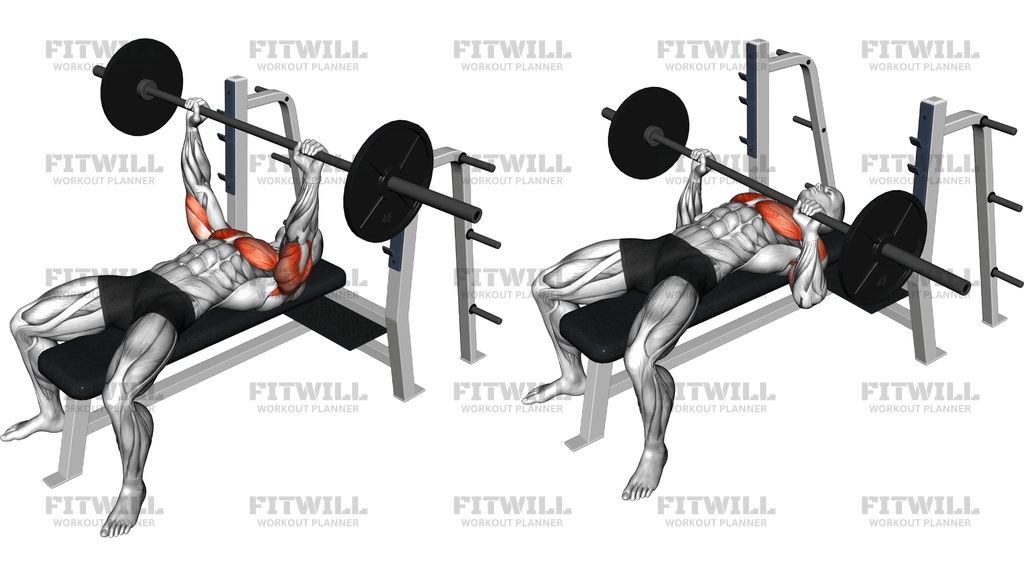
The barbell bench press is a horizontal pressing exercise performed lying on a flat bench. It trains the chest most strongly, with the front shoulders and triceps contributing to the press, and it is one of the clearest ways to build pressing strength, upper-body size, and bar control when the setup is repeatable.
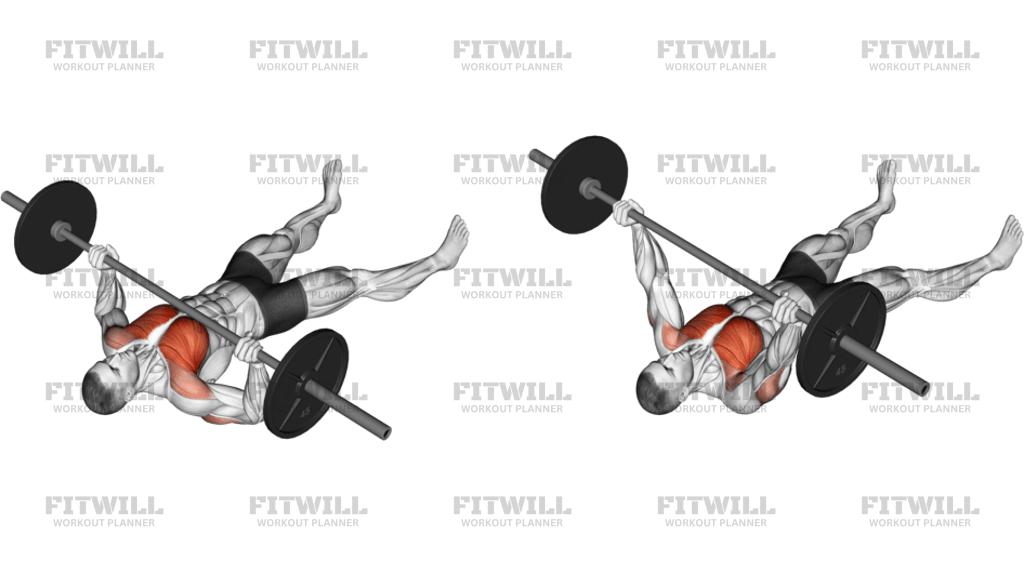
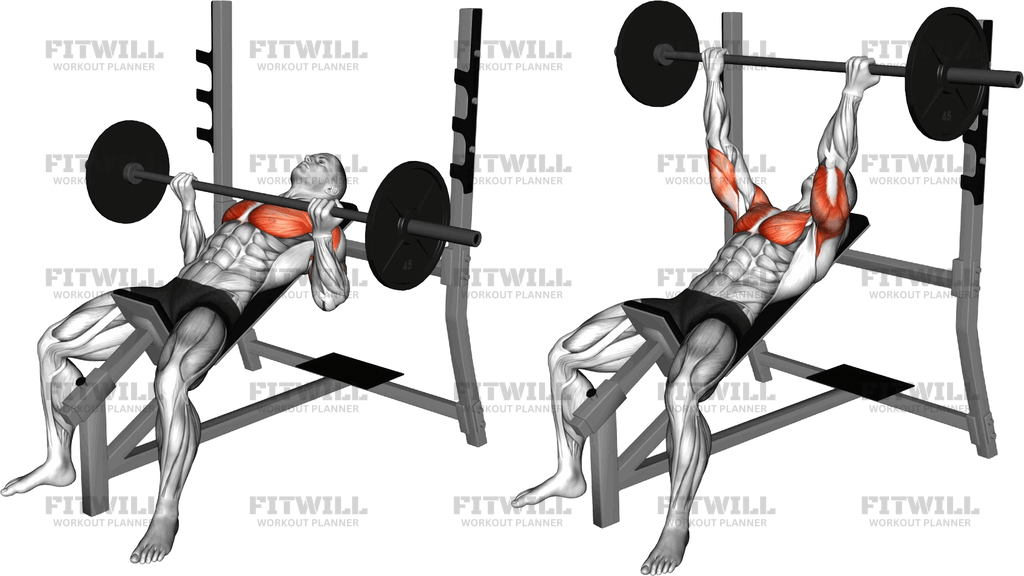
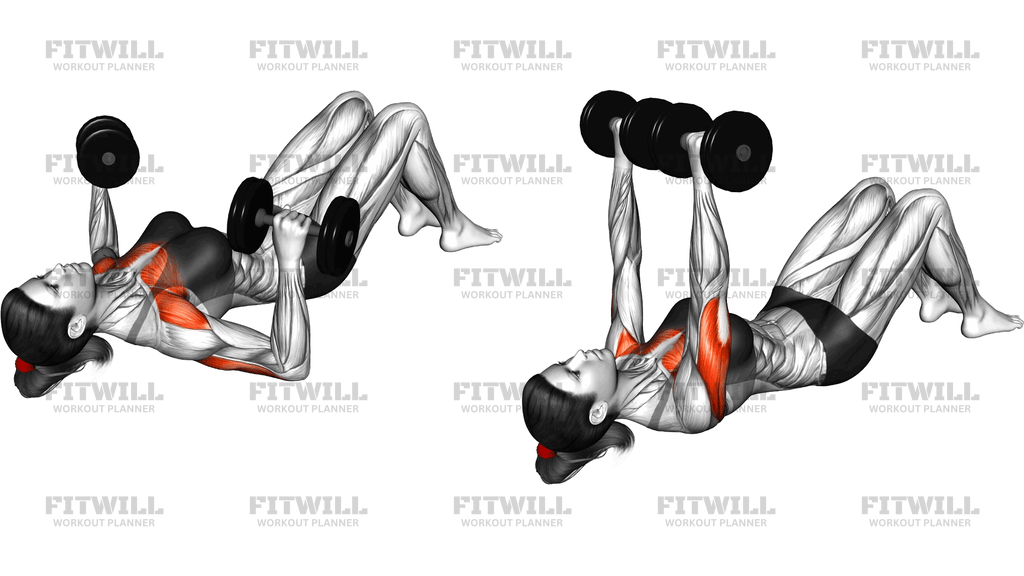
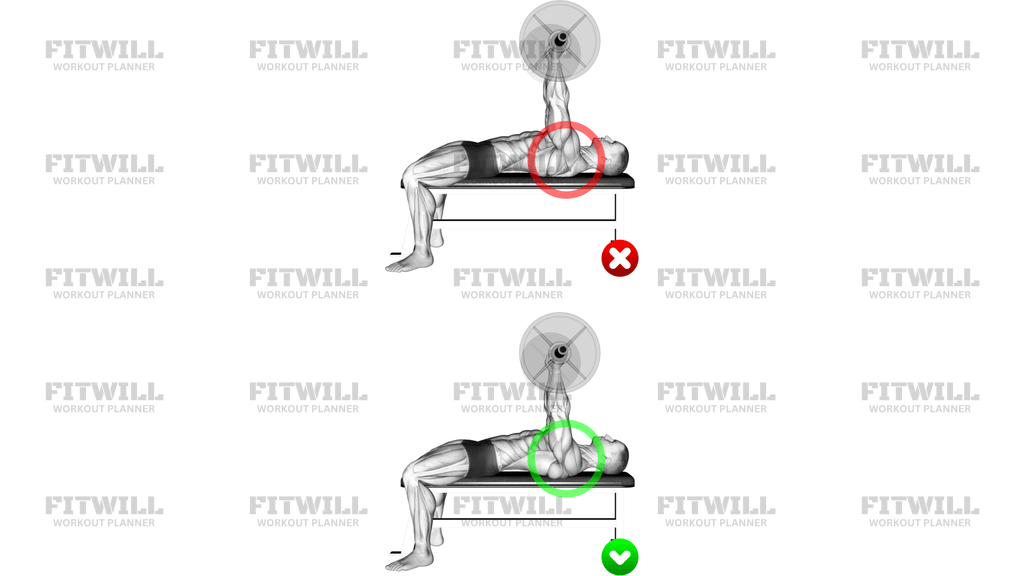
This image shows the difference between a poor rep and a solid rep. The correct version keeps the wrists stacked over the elbows, the bar traveling over the mid-chest to shoulder line, and the shoulder blades set back and down against the bench. That positioning lets the pecs do the work while the shoulders and triceps assist without the lift turning into a shoulder-dominant press.
Setup matters because bench press performance is decided before the bar ever moves. Your eyes should be under the bar, feet planted, glutes on the bench, and upper back tight enough that the chest stays high. A medium grip usually works best for most lifters, but the exact width should still let the forearms stay close to vertical at the bottom and the bar stay balanced over the forearm.
On each rep, lower the bar under control to the lower or mid-chest, pause lightly if needed, and press it back up in a smooth line without bouncing off the sternum or letting the elbows flare hard to the sides. Keep the bar path consistent, breathe into the brace before the descent, and exhale as you drive through the sticking point. The finish should be a strong lockout with the shoulders still packed, not shrugged forward.
Because this is a loaded barbell press, quality matters more than chasing extra weight. The best use is for chest-focused strength work, hypertrophy sessions, or technique practice when you want to reinforce a stable pressing pattern. If the shoulders roll forward, the bar drifts toward the face, or the lower back is doing most of the work, the set is too heavy or the setup needs correction. Done well, it is a reliable chest-builder that also teaches pressing discipline, upper-back tension, and controlled force production.
[ Workout Log & Planner ]
Put your next workout in Fitwill
Keep your plan and training log ready when you are.


Instructions
- Lie on a flat bench with your eyes under the bar and your feet planted firmly on the floor.
- Grip the bar just outside shoulder width so your wrists stay stacked over your elbows when the bar reaches your chest.
- Pin your shoulder blades back and down, then keep a slight arch in the upper back while your glutes stay on the bench.
- Unrack the bar by straightening the arms and bringing it over the shoulder line without losing upper-back tension.
- Lower the bar in a controlled path to the lower or mid-chest while keeping the forearms nearly vertical.
- Touch the chest lightly or pause just above it, then press the bar back up in a smooth line toward the shoulder line.
- Keep the elbows from flaring hard and avoid letting the bar drift toward the neck or face.
- Exhale through the press, reset your brace at the top, and repeat for the planned reps before racking the bar carefully.
Tips & Tricks
- If your wrists bend back, move the bar deeper into the heel of the hand so the knuckles, wrist, and elbow stay in one line.
- A slight arch is fine, but the ribcage should not lift so high that the press becomes a lower-back bridge.
- Keep the shoulder blades pinned for the whole set; letting them slide forward at the bottom steals tension from the chest.
- Use a bar path that comes down a little lower than where it finishes so the press stays efficient and shoulder-friendly.
- If the bar touches too high on the chest, the elbows usually flare and the front shoulders take over.
- Pause the bar briefly if you tend to bounce it or lose tightness off the chest.
- Choose a load that lets you control the descent without the bar drifting or wobbling from side to side.
- When spotting your own form, watch whether the forearms stay vertical at the bottom and adjust grip width if they do not.
- Stop the set if the bar starts to tilt, because uneven bar speed usually means one shoulder is taking over.
Frequently Asked Questions
What does the barbell bench press train most?
It primarily trains the chest, with the front shoulders and triceps helping to drive the press.
Why does the image show a wrong rep and a correct rep?
It highlights the difference between a loose, shoulder-dominant press and a tighter bar path with stacked joints and better chest engagement.
Where should the bar touch on the bench press?
For most lifters, it should lower to the lower or mid-chest, not the neck, then press back toward the shoulder line.
How wide should my grip be?
Use a grip just outside shoulder width that lets your forearms stay close to vertical at the bottom of the rep.
Do my shoulder blades need to stay tight the whole time?
Yes. Keeping them back and down creates a stable pressing base and helps the chest work more efficiently.
Can beginners do the barbell bench press safely?
Yes, but only with a manageable load, a controlled descent, and preferably a spotter or safety pins.
What is the most common bench press mistake?
Letting the elbows flare hard and the bar drift toward the face, which usually shifts the stress away from the chest.
Should I bounce the bar off my chest?
No. A light touch or brief pause is better than bouncing, which reduces control and can irritate the shoulder or sternum.