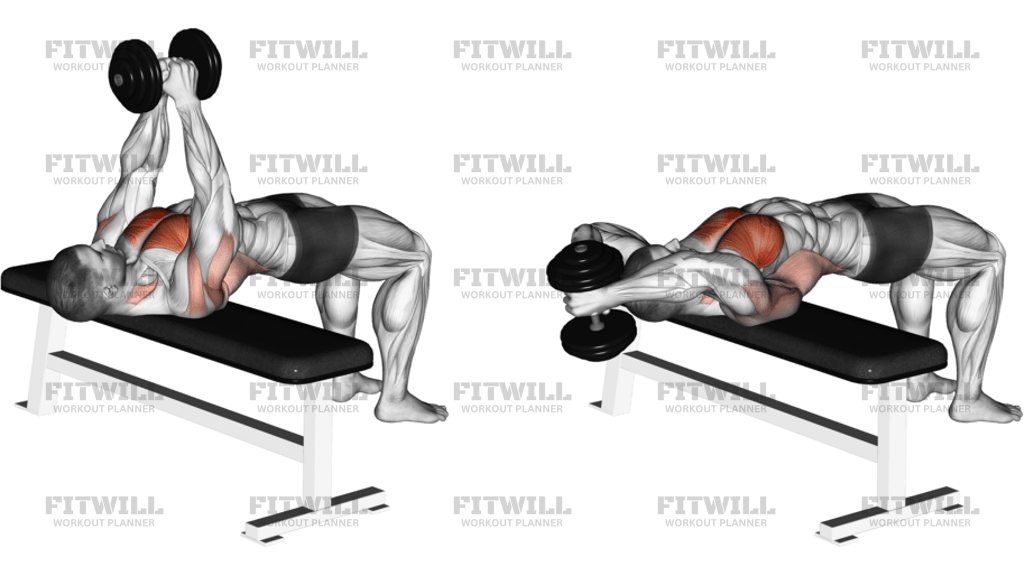
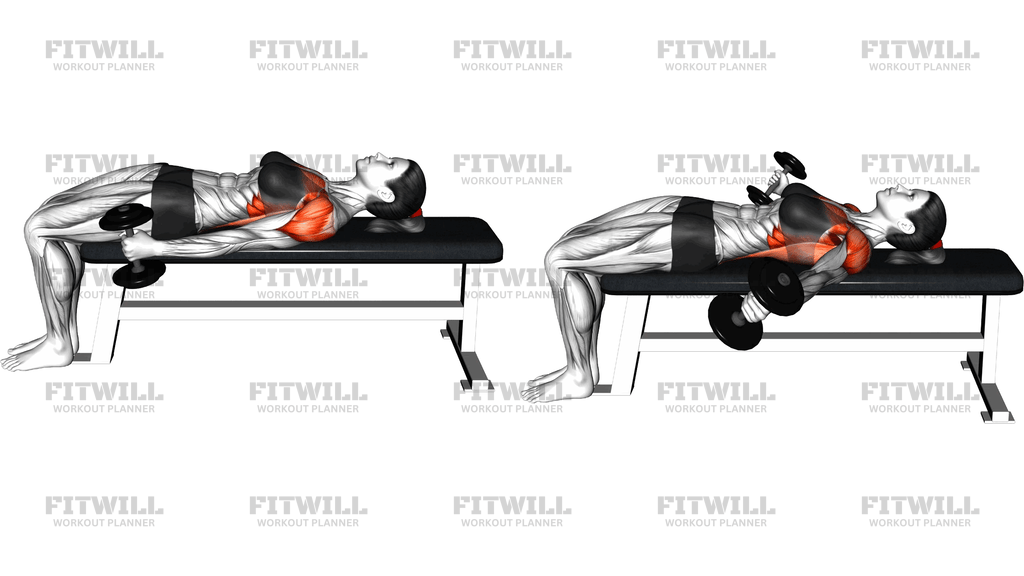
Dumbbell Incline Squeeze Press
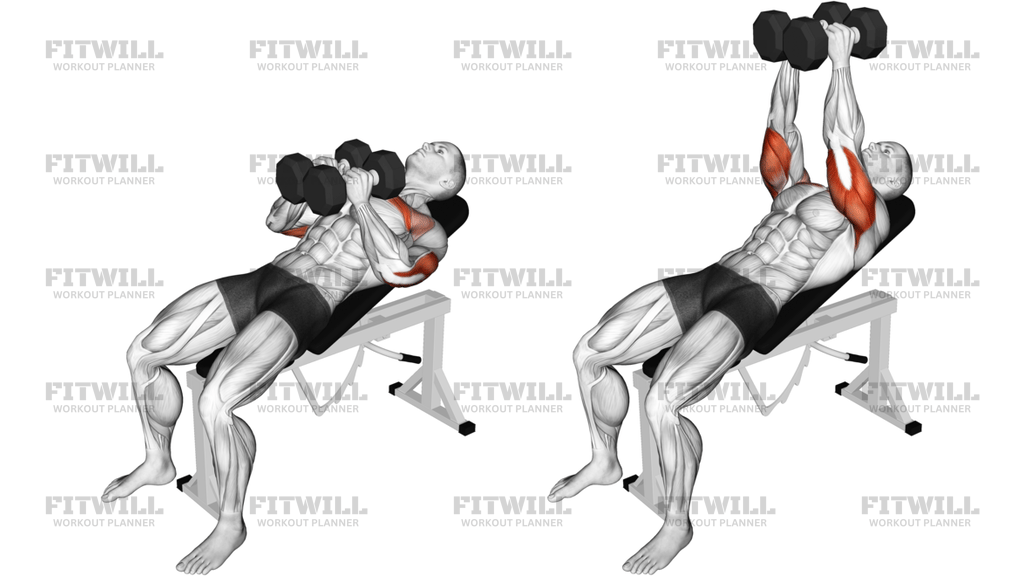
Dumbbell Incline Squeeze Press is a chest-focused pressing exercise performed on an incline bench with two dumbbells pressed tightly together for the entire set. The squeeze is not just a visual cue: keeping the dumbbells in contact creates a more centered pressing path and increases the demand on the chest to stabilize the load while the arms move. The incline position shifts more of the work toward the upper fibers of the pecs, while the front delts and triceps still help finish each rep.
This movement is useful when you want chest work that feels stable, controlled, and easy to keep technically clean. Because the dumbbells stay close together, the exercise usually feels less like a wide press and more like a narrow, direct drive upward from the upper chest. That makes bench angle, shoulder position, and wrist alignment important. If the bench is too steep or the shoulders roll forward, the press turns into a front-delt dominant lift and the pecs lose tension.
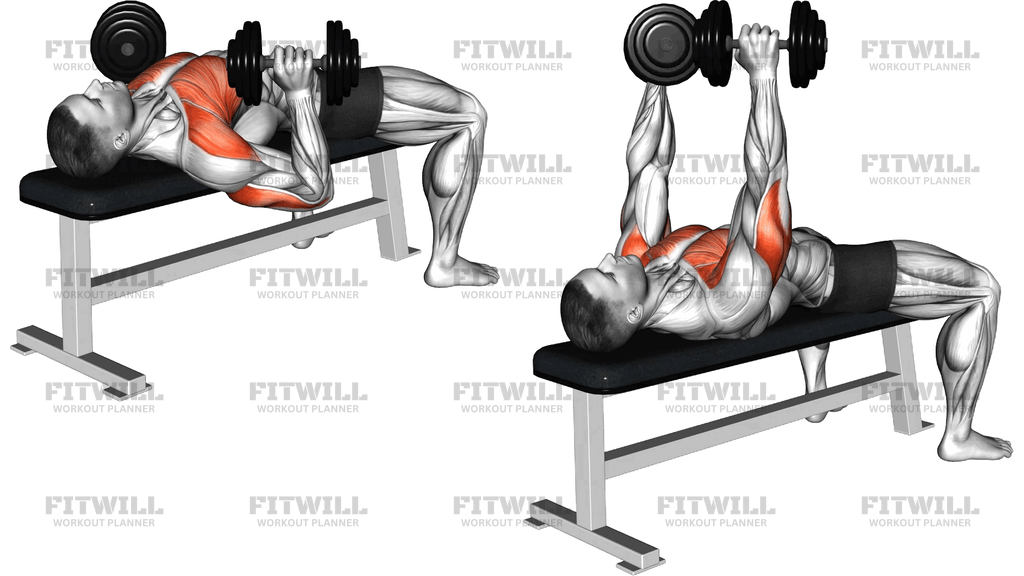
Set the bench to a moderate incline, lie back with your feet planted, and pin your shoulder blades into the bench before the first rep. Start with the dumbbells touching at the upper chest line, elbows slightly tucked, and wrists stacked over the handles. Press upward in a smooth arc until the arms are nearly straight without letting the weights separate, then lower them back to the same contact point with control. The goal is to keep the dumbbells together, the ribs down, and the movement steady from the first repetition to the last.
This exercise works well as an accessory press, a chest-builder after heavier barbell work, or a controlled option for lifters who want a strong contraction without a very wide elbow flare. It can also be a good choice when you want to emphasize upper-chest tension without changing to cables or machines. The load should be light enough that the dumbbells can stay squeezed together without wrist wobble, shoulder shrugging, or bouncing off the chest at the bottom.
Safety and technique matter more here than load. If the dumbbells drift apart, the movement becomes harder to control and the chest squeeze disappears. If the shoulders feel pinchy, lower the incline angle and shorten the range slightly. Smooth reps, a firm bench setup, and consistent dumbbell contact are what make this variation effective.
[ Workout Log & Planner ]
Put your next workout in Fitwill
Keep your plan and training log ready when you are.


Instructions
- Set an incline bench to a moderate angle and lie back with your head, upper back, and hips supported.
- Plant both feet on the floor and press your shoulder blades down and back into the bench.
- Hold a dumbbell in each hand and bring the bells together over the upper chest with a neutral grip.
- Keep the dumbbells touching, wrists stacked over the handles, and elbows slightly tucked.
- Brace your torso and lower the dumbbells together toward the upper chest in a controlled line.
- Pause briefly when the bells reach chest level without losing contact or shoulder position.
- Press the dumbbells up and slightly back until the arms are nearly straight while keeping them squeezed together.
- Lower under control to the same starting point and keep breathing steady through each rep.
- Reset your shoulder blades and dumbbell contact before the next repetition if the position shifts.
Tips & Tricks
- Use a moderate incline; a steep bench usually turns this into more of a shoulder press.
- Keep the dumbbells pressed together the entire set so the chest has to stabilize both bells.
- Choose hex dumbbells or another shape that stays stable when squeezed together.
- Let the elbows travel slightly below the bench line, not far out to the sides.
- Keep the wrists straight; if they bend back, the squeeze becomes harder to control.
- Lower until the bells touch the upper chest area, then stop before the shoulders roll forward.
- Drive the bells up in a smooth path without letting them separate or drift over your face.
- If the shoulders feel crowded, shorten the range and reduce the incline angle before adding load.
- Stop the set when the dumbbells can no longer stay aligned or the squeeze disappears.
Frequently Asked Questions
What muscle does Dumbbell Incline Squeeze Press target most?
It primarily targets the chest, with extra emphasis on the upper pecs because of the incline bench and the squeezed dumbbell position.
Can beginners perform this exercise?
Yes. Beginners usually do best with light dumbbells and a moderate incline so they can keep the bells touching and control the lowering phase.
Why keep the dumbbells pressed together during the set?
The squeeze creates a centered pressing path and makes the chest work harder to stabilize the load instead of letting the arms drift wide.
What bench angle works best for this press?
A moderate incline is usually best. Too steep a bench shifts the effort toward the front shoulders and makes the squeeze less useful.
Where should the dumbbells touch on the way down?
They should travel together to the upper chest line, not flare wide toward the shoulders or drift down to the stomach.
What are the most common mistakes with this exercise?
The biggest issues are letting the dumbbells separate, using too steep an incline, flaring the elbows too much, and bouncing off the chest.
Is this a good substitute for a regular incline dumbbell press?
It can be a useful variation if you want more chest squeeze and stability work, but it is not identical because the narrower path reduces the usual wide-press feel.
What should I do if my shoulders feel uncomfortable?
Lower the bench angle, keep the elbows a little closer to the torso, and reduce the range if needed. If pain persists, stop the set and switch exercises.