Dumbbell Side Bend
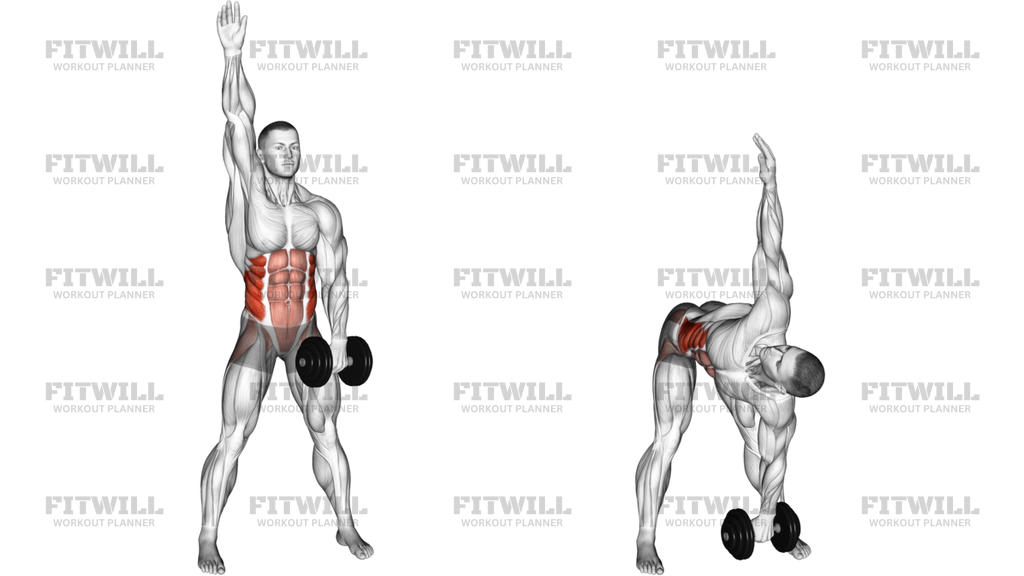
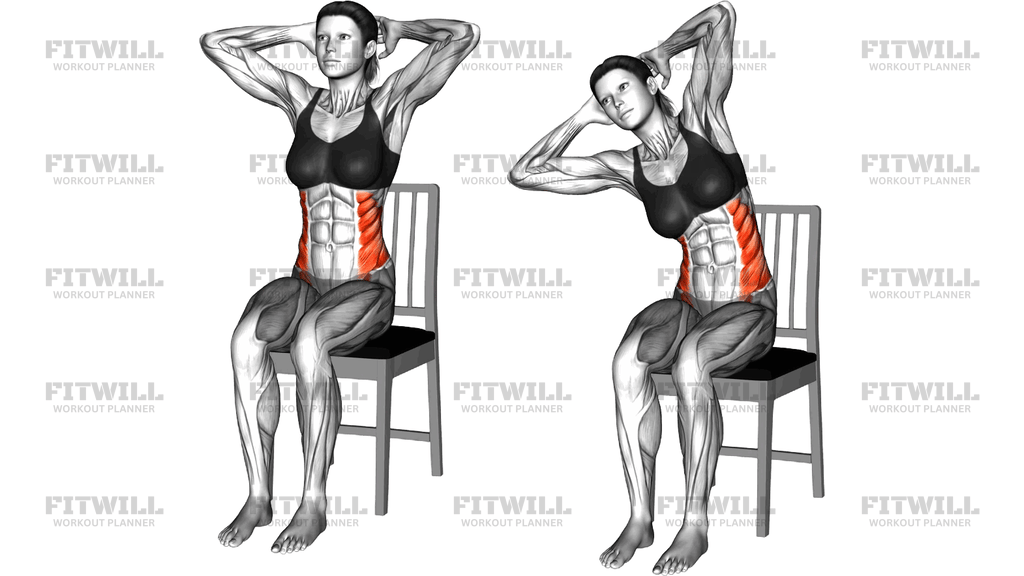
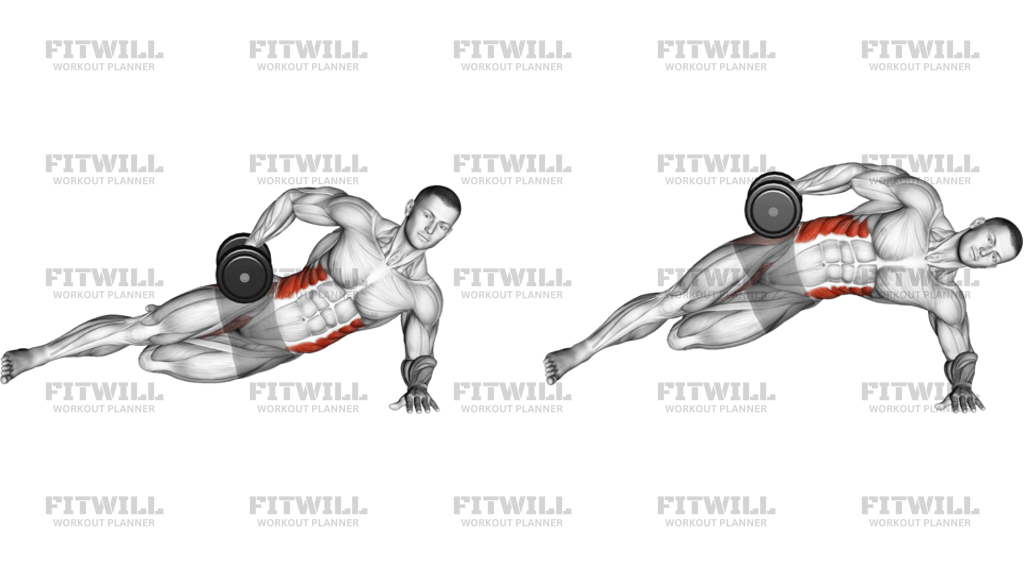
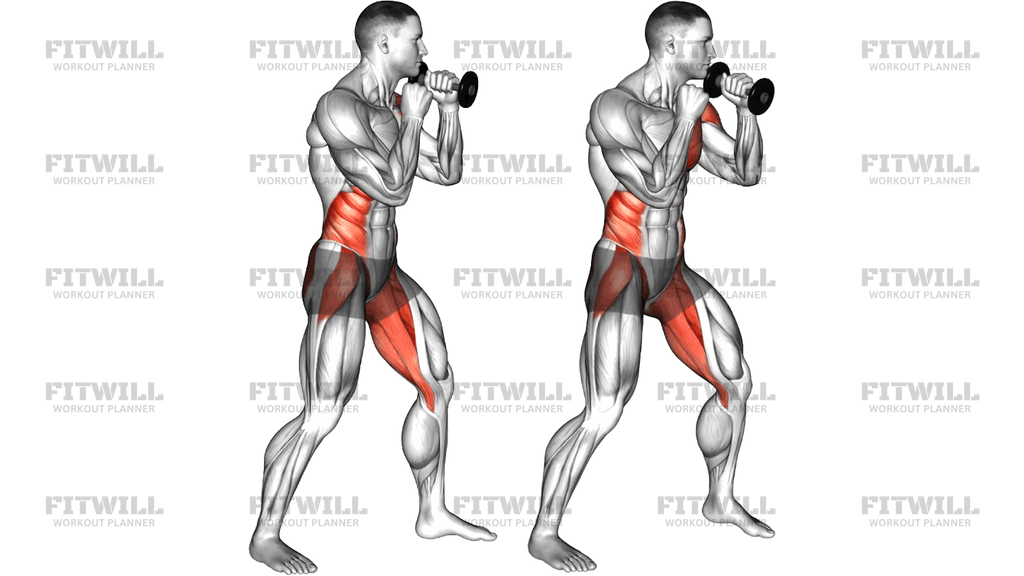
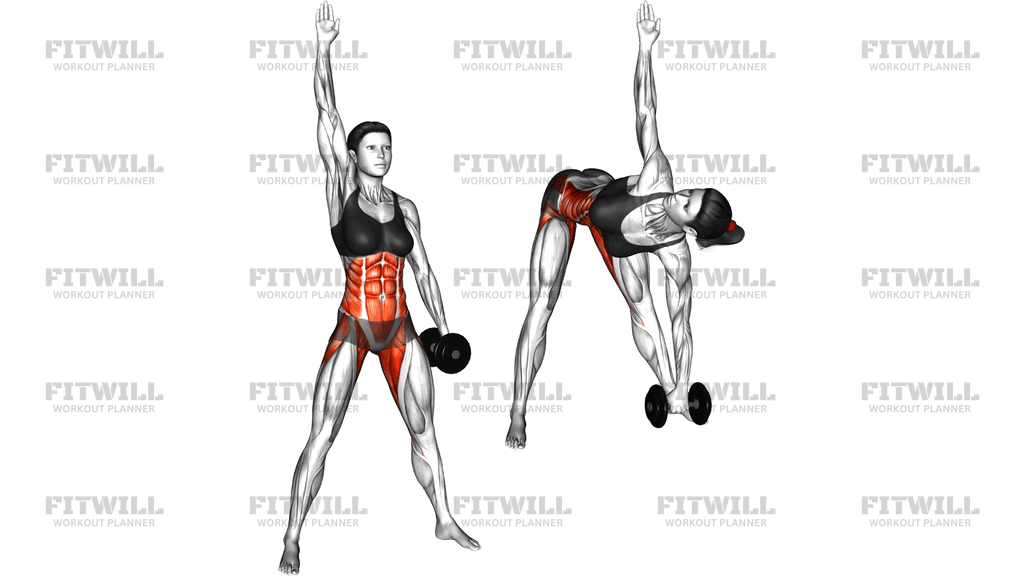
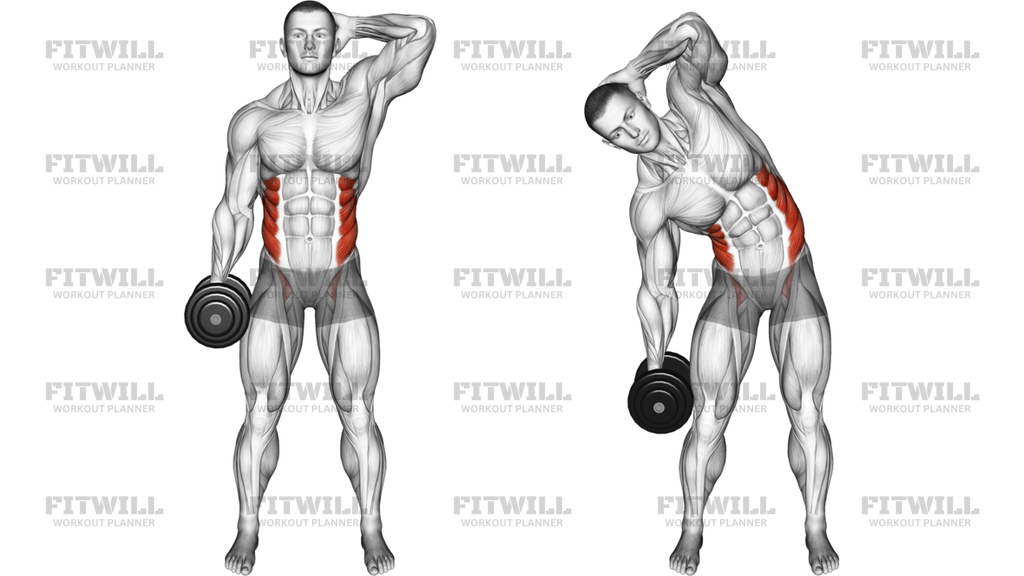
Dumbbell Side Bend is a standing unilateral trunk-flexion exercise that loads the obliques through side bending while the pelvis and shoulders stay square. In the image, one dumbbell hangs at the working side and the free hand is placed behind the head to help keep the ribcage open and the torso honest. The movement should look like a clean lateral fold, not a twist, hip shift, or a shortened shrug.
This exercise mainly targets the external obliques and the deeper sidewall of the trunk, with the quadratus lumborum and spinal stabilizers helping control the descent and return. Grip also matters because the dumbbell is held for the full set, but the goal is not to turn this into a forearm exercise. The core should be doing the visible work while the shoulders stay level and the hips stay stacked.
The setup is what makes the rep useful. A stable stance, neutral feet, and a tall torso give you a fixed line to bend from. Keeping the working-side arm long at your side increases the lever arm and makes the sidewall work harder, while the opposite hand behind the head discourages the chest from collapsing forward. If the ribcage drifts, the pelvis slides, or the shoulders rotate, the load is no longer sitting where the exercise intends it to.
Perform each rep slowly enough to feel the lengthening on the way down and the contraction on the way up. Bend toward the dumbbell side until the opposite obliques are challenged without letting the torso pitch forward or the hip pop out. Then use the side of your waist to bring yourself back to tall. Exhale through the effort, keep the neck relaxed, and reset at the top before starting the next rep.
Dumbbell Side Bend is best used as accessory work for oblique strength, trunk control, and asymmetry cleanup rather than as a heavy max-effort lift. It fits well near the end of a session, especially when you want direct lateral core work without floor work or machine setup. Keep the range strict, the tempo smooth, and the weight honest. If the low back starts taking over or the dumbbell becomes a swing, the load is too high or the range is too big.
[ Workout Log & Planner ]
Put your next workout in Fitwill
Keep your plan and training log ready when you are.


Instructions
- Stand tall with your feet about hip-width apart and the dumbbell hanging straight down at one side.
- Place your free hand behind your head and keep your chest open instead of letting it cave forward.
- Set your ribs over your pelvis and keep both shoulders level before the first rep.
- Let the dumbbell side of your torso shorten as you bend sideways in a slow, controlled arc.
- Keep the hips stacked and avoid sliding them out toward the weight as you descend.
- Lower until the opposite side of your waist is clearly stretched, but stop before your trunk starts to twist or lean forward.
- Drive the torso back to tall by squeezing the obliques on the side that is working.
- Pause briefly at the top, then repeat all reps before switching sides.
Tips & Tricks
- Keep the dumbbell close to the outside of your thigh so the load stays in a true side-bend line instead of swinging away from you.
- If the weight makes you shrug or bend your elbow, it is too heavy for this movement.
- Think about reaching your ribcage toward your hip on the working side, not about dropping your shoulder.
- The free hand behind your head should help you stay open through the chest, not yank your neck forward.
- A short pause at the bottom can expose whether you are actually controlling the stretch or just dropping into it.
- Do not chase a huge range if your pelvis shifts or your torso starts turning toward the floor.
- Use a slower lowering phase than lifting phase to keep the obliques under tension.
- If your lower back feels pinchy, reduce the range first, then reduce the load if needed.
Frequently Asked Questions
What muscles does Dumbbell Side Bend work?
It mainly works the obliques, with help from the quadratus lumborum, spinal stabilizers, and grip. The free hand and tall stance are there to keep the torso from turning the rep into a twist.
Should my free hand stay behind my head?
That is a common setup, and it can help keep the ribcage open and the shoulders level. Just avoid pulling on your neck or letting the elbow collapse forward.
How far should I bend to the side?
Go only until the opposite side of your waist is strongly stretched and the dumbbell-side obliques are still controlling the descent. If your hips slide or your torso twists, the range is too deep.
Can I use two dumbbells instead of one?
Not for this version. The exercise is meant to load one side at a time so you can bend cleanly and keep the torso from simply sinking straight down between two weights.
What should I feel during the rep?
You should feel the side of your waist lengthen on the way down and contract on the way up. The neck, shoulders, and low back should stay mostly quiet.
Is this mainly an oblique exercise or a grip exercise?
It is mainly an oblique exercise. Grip is only there to hold the dumbbell steady while the torso does the work.
Why does my torso twist when I do this?
Usually the load is too heavy or the stance is too loose. Lighten the dumbbell, keep your feet planted, and think about bending straight to the side rather than rotating toward the floor.
What should I do if I feel it in my lower back instead of my side abs?
Shorten the range, slow the lowering phase, and reduce the dumbbell weight. The movement should stay in the side wall of the trunk, not become a back extension or hip shift.