Donkey Calf Raise
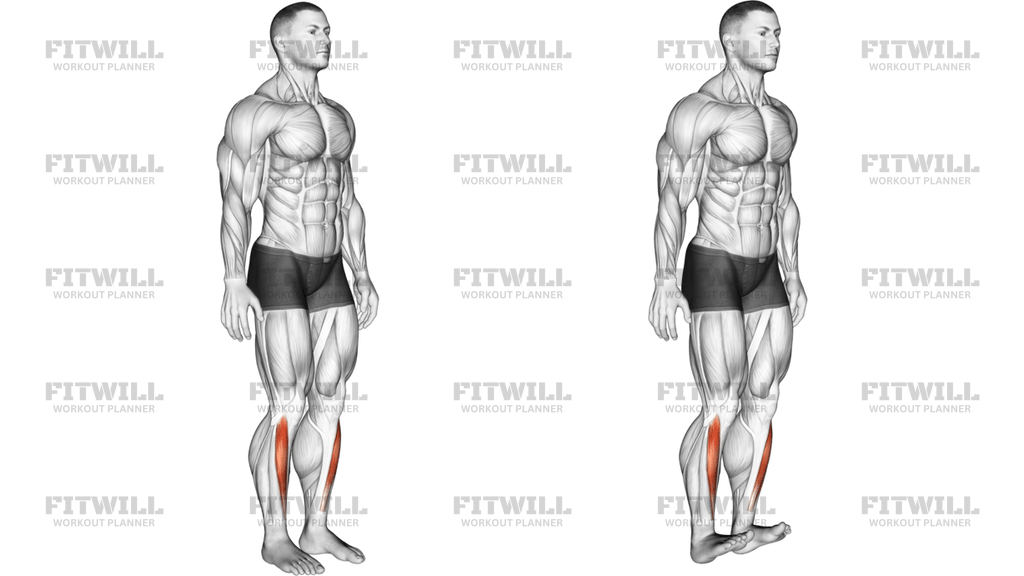
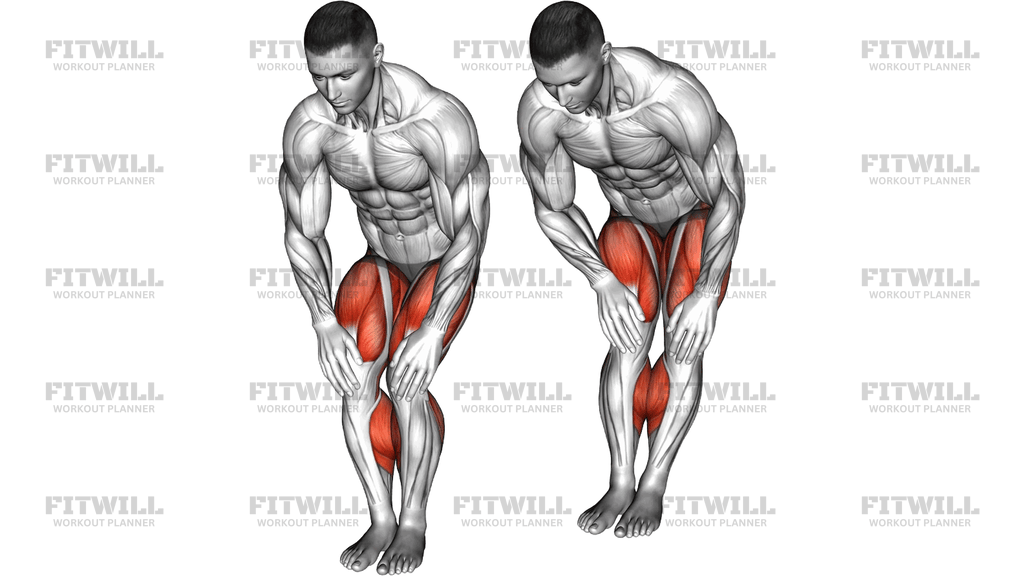
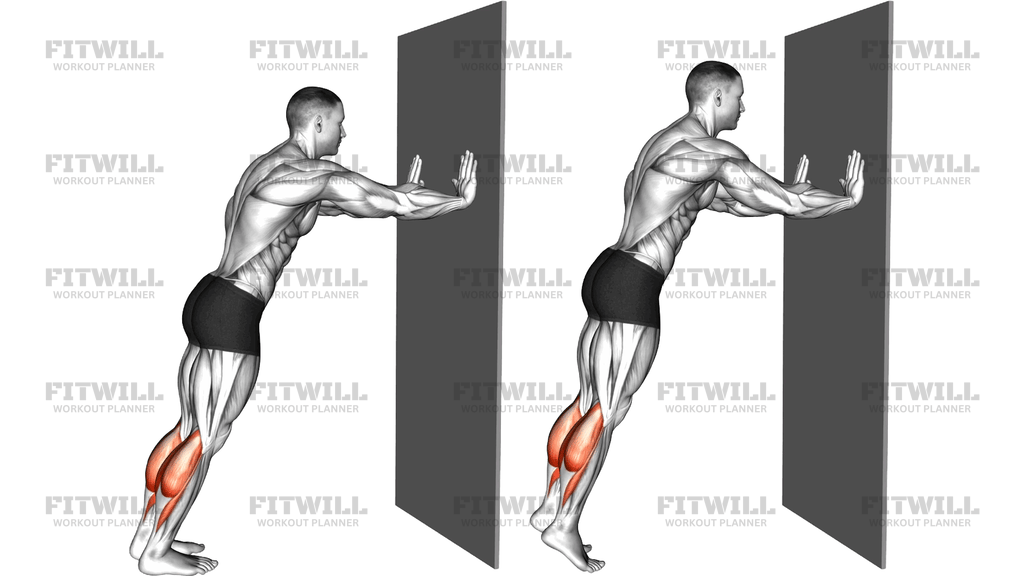
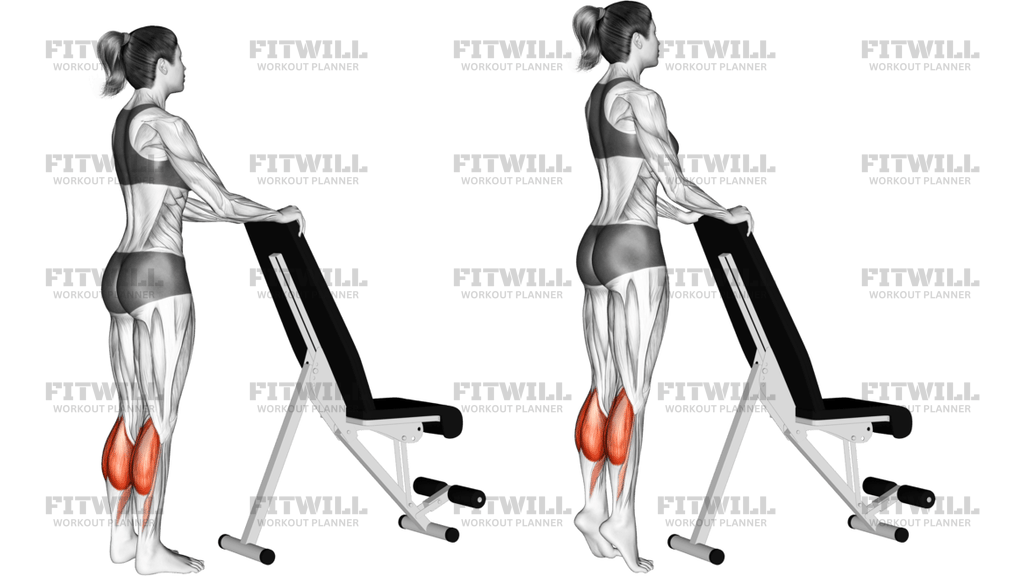
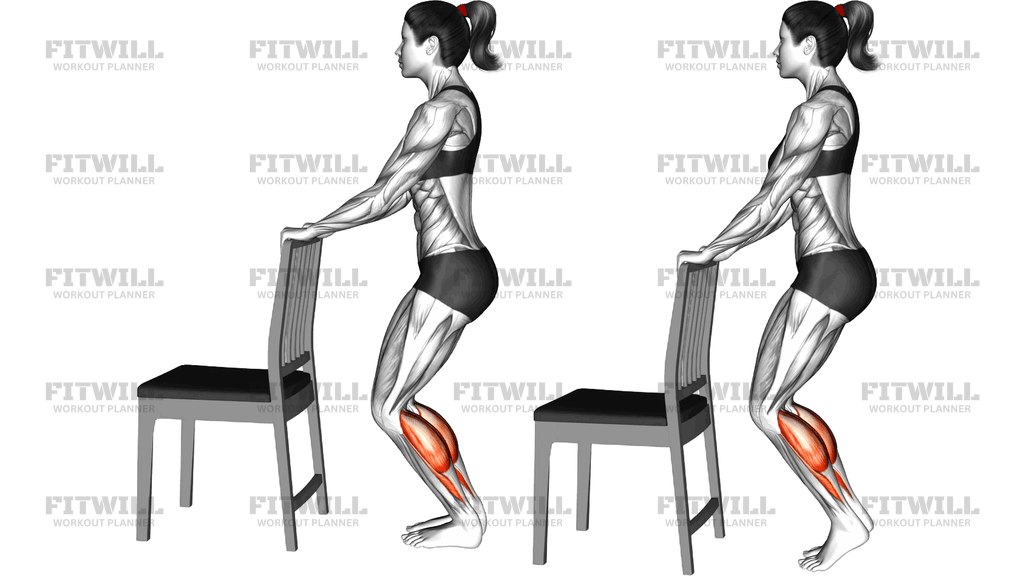
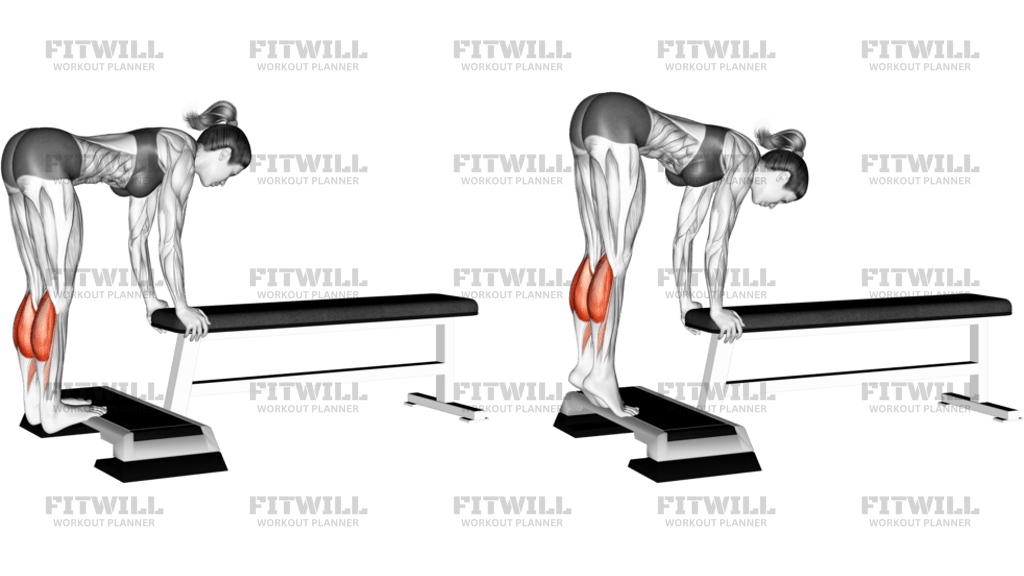
Donkey Calf Raise is a bodyweight calf exercise performed with the hands braced on a bench, the hips hinged forward, and the feet standing on the edge of a step so the heels can drop below the platform. That forward-leaning setup changes the line of pull at the ankle and lets the calves work through a long stretch at the bottom of each rep.
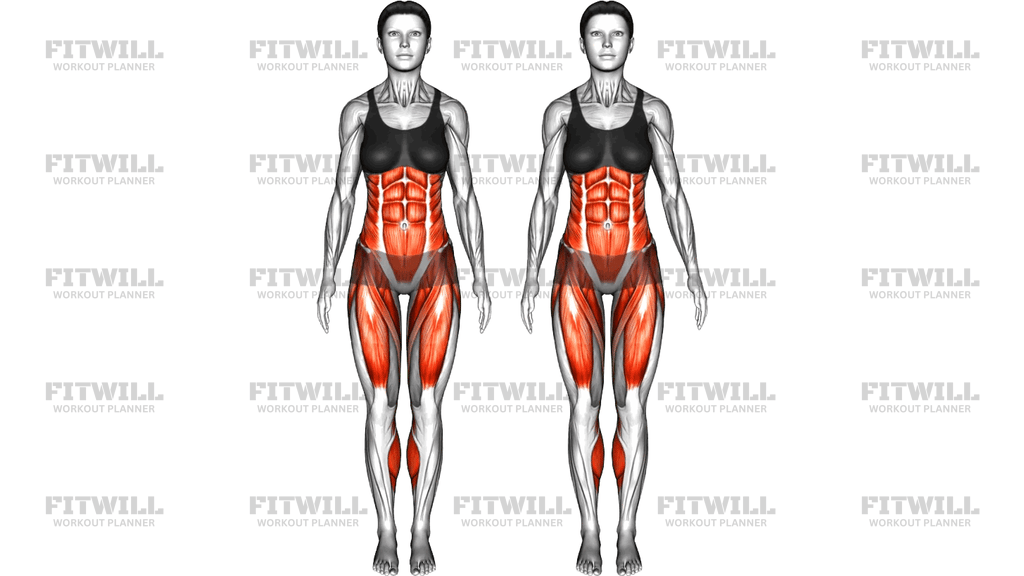
The movement is built to train the lower leg with a strict, repeatable range rather than with speed or whole-body swing. Most of the work comes from the gastrocnemius and soleus, while the foot muscles and ankle stabilizers keep the arch organized as you rise and lower. The bent-over body position also takes balance out of the equation, which makes this a useful accessory exercise when you want the calves to be the limiting factor.
The setup matters more here than it does in many standing calf raises. Your hands should stay solid on the bench, your torso should stay hinged forward, and your hips should stay high enough that the knees do not turn the rep into a squat. With the balls of the feet on the edge of the step and the heels free to travel, you can get a clean stretch at the bottom without losing pressure through the big toe and second toe.
Each repetition should feel like a controlled ankle press. Lower the heels slowly, pause or briefly settle into the stretch if it is comfortable, then drive up onto the toes and finish with a hard calf squeeze at the top. If the heels are bouncing off the step, the arches are collapsing, or the upper body is doing the work, the set is too fast or the range is too aggressive.
Donkey Calf Raise is a good choice for calf-focused strength or hypertrophy work, especially when you want a long range of motion and minimal momentum. It is also a useful option for beginners because the bodyweight version is easy to scale, but the exercise still rewards precision. Keep the motion smooth, the ankle path consistent, and the load honest so the calves get the full stimulus without irritating the Achilles or the front of the foot.
[ Workout Log & Planner ]
Put your next workout in Fitwill
Keep your plan and training log ready when you are.


Instructions
- Place the balls of both feet on the edge of a step or platform and let the heels hang free below it.
- Hinge forward at the hips and brace both hands on a bench so your torso stays supported and angled down.
- Keep the knees only slightly bent, the hips high, and the weight centered through the big toe and second toe.
- Let the heels descend slowly until you feel a strong stretch through the calves and Achilles area.
- Exhale and drive through the forefoot to raise the heels as high as possible.
- Pause for a moment at the top and squeeze the calves without shifting your body position.
- Lower back down under control instead of dropping into the bottom stretch.
- Repeat for the target reps, then step off the platform carefully.
Tips & Tricks
- Keep your shoulders stacked over the bench so the hinge stays fixed and the calves do the work.
- Press evenly through the big toe, second toe, and little toe instead of rolling to the outside edge of the foot.
- Use a full stretch only if the ankles stay smooth; a shorter bottom position is better than bouncing off the step.
- Hold the top position long enough to feel the calves finish the rep, not just the ankle joint.
- Keep the knees softly unlocked, but do not let them bend enough to turn the exercise into a squat pattern.
- Lower with a slow count so the Achilles tendon gets time under tension and the set stays controlled.
- If the feet cramp, shorten the set, reduce the stretch depth, and keep the toes relaxed instead of clawing the step.
- Add external load only after the bodyweight version is crisp; a backpack or weight vest should not change the ankle path.
Frequently Asked Questions
What does the Donkey Calf Raise train most?
It mainly targets the calf complex, especially the gastrocnemius, with the soleus and foot stabilizers helping throughout the set.
Why do the hands stay on the bench during this exercise?
The bench support lets you hinge forward and keep the torso steady so the calves, not balance, become the limiting factor.
How far should my heels drop below the step?
Only as far as you can control without losing the arch or feeling a sharp pull at the Achilles. A deep stretch is useful, but it should stay smooth.
Should my knees stay straight or bent?
Keep them mostly straight with just a soft unlock. Too much knee bend turns the movement into a squat-like pattern and reduces calf emphasis.
Why do I feel this in my feet or arches too?
That is normal to a point, because the foot muscles help stabilize the forefoot on the step. If the arches cramp, reduce the range and slow the tempo.
Is this different from a standard standing calf raise?
Yes. The forward hinge and hand support change the line of load and usually allow a longer stretch at the bottom of the rep.
Can beginners do Donkey Calf Raise safely?
Yes. The bodyweight version is beginner-friendly if the step height is modest and the movement stays smooth and pain-free.
How can I make the exercise harder without changing the setup?
Slow the lowering phase, pause longer at the top, or add a small amount of load such as a backpack or weight vest once the bodyweight version is clean.