Strongman Dumbbell One-Arm Clean And Jerk
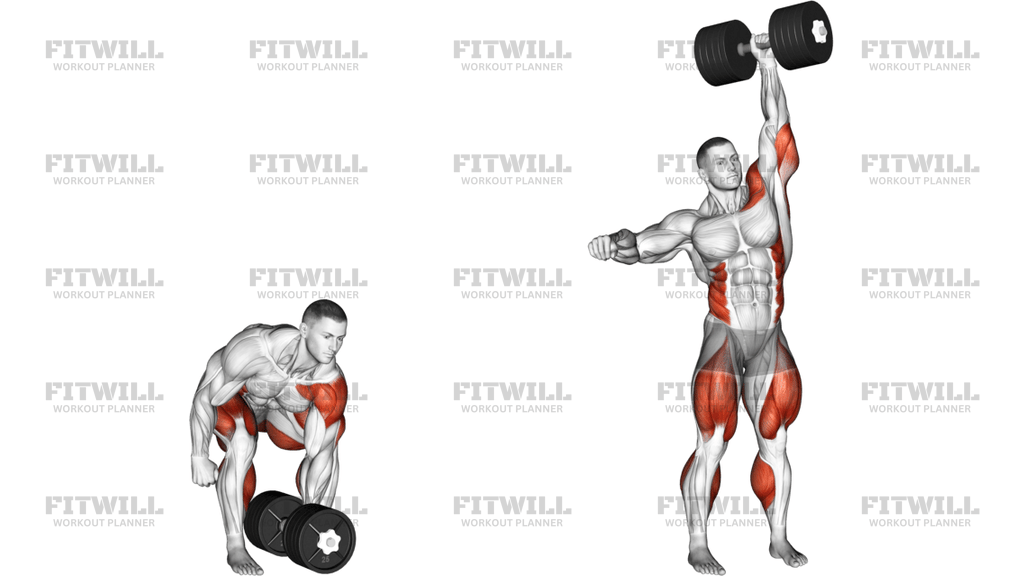
Strongman Dumbbell One-Arm Clean and Jerk is a unilateral power-strength exercise that moves a single dumbbell from the floor to an overhead lockout. It combines a short, explosive pull from the legs and hips with a quick drive to finish the rep overhead. Because only one arm is loaded, the trunk, shoulder, and hip stabilizers have to work hard to keep the torso square and the bell path efficient.
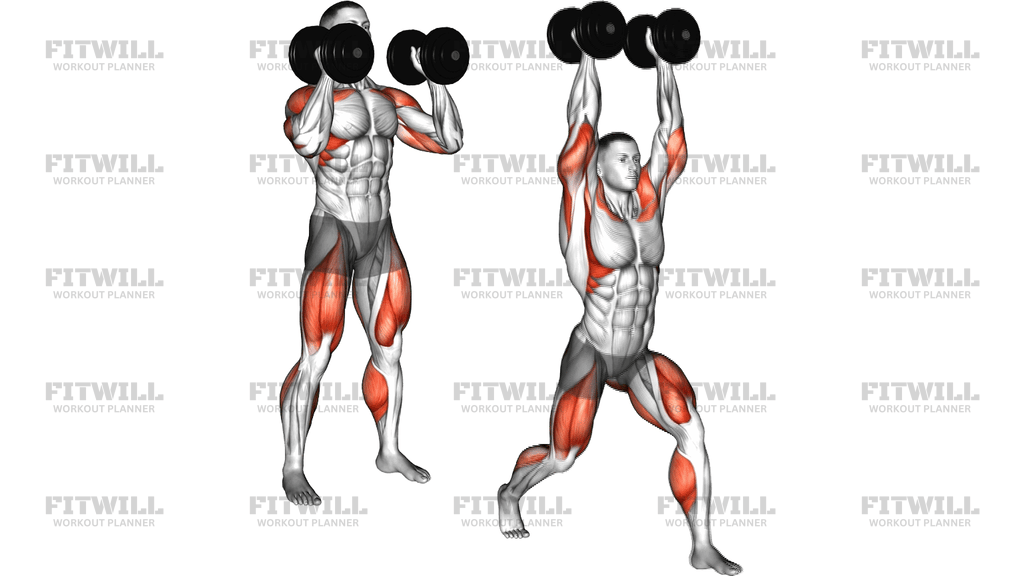
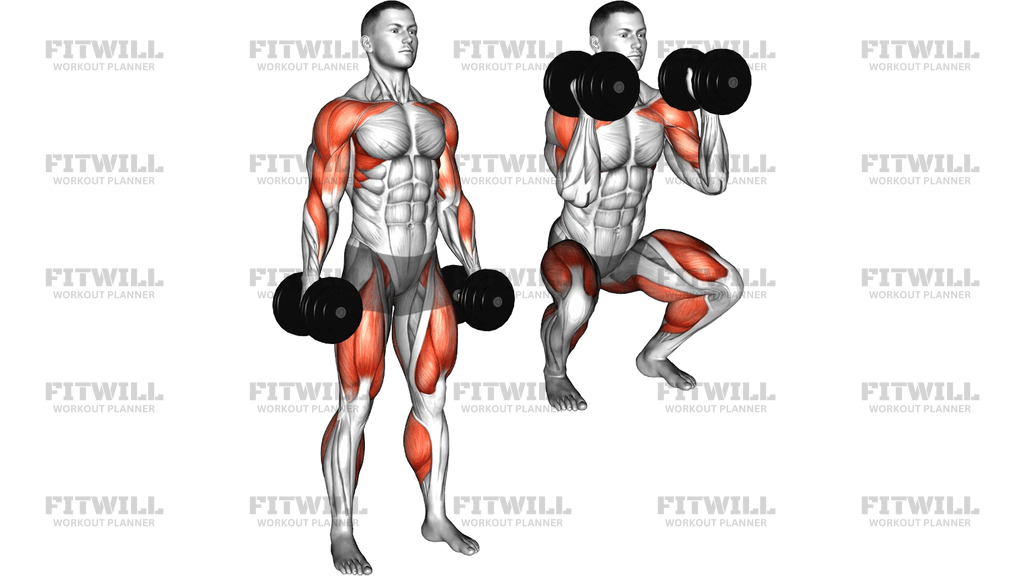
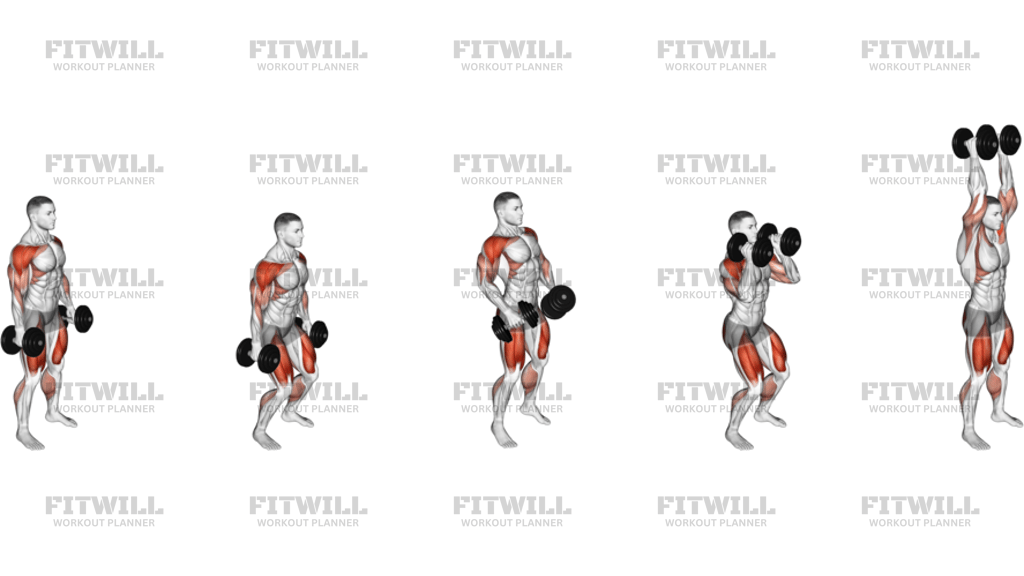
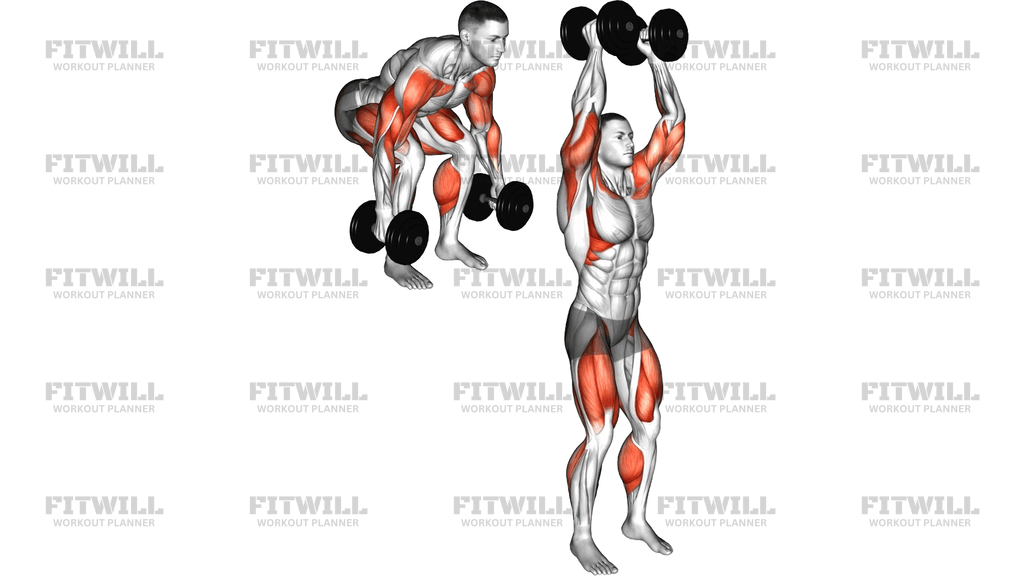
The image shows a floor start, a close pull into the body, and a finished overhead position with the free arm used for balance. That makes the setup important: a stable stance, a flat back, and a close grip on the dumbbell help you create force without swinging the weight away from the midline. The goal is not to curl the bell up; it is to use leg drive, a fast turnover, and a strong overhead finish.
This movement is useful for developing coordination, grip strength, shoulder stability, and total-body power. The clean gets the dumbbell into a strong rack or shoulder line, and the jerk or push drive finishes it overhead with control. The working side should feel forceful but organized, while the torso stays braced and the non-working arm helps you stay balanced.
Treat each repetition as a sequence: set the bell, drive it close, receive it cleanly, then punch it to the ceiling and reset under control. If the dumbbell drifts forward, the rep usually turns into a swing. If the rib cage flares or the lower back arches, the overhead finish becomes less stable. Light to moderate loading usually works best until the timing, foot pressure, and overhead lockout feel consistent.
Use this exercise when you want a more athletic, full-body dumbbell lift than a basic press or curl. It can fit strength blocks, power work, or conditioning circuits, but only if the reps stay crisp. A clean one-arm jerk should finish with a stacked wrist, elbow, shoulder, and rib cage, not a saved rep or a leaning torso.
Fitwill
Log Workouts, Track Progress & Build Strength.
Achieve more with Fitwill: explore over 9600 exercises with images and videos, access built-in and custom workouts, perfect for both gym and home sessions, and see real results.
Start your journey. Download today!




Instructions
- Stand next to the dumbbell with your feet about hip-width apart and the weight between your feet.
- Hinge at the hips, bend your knees, and grip the dumbbell with one hand while keeping your chest long and your back flat.
- Let the free arm drift out to the side for balance and keep the working shoulder slightly in front of the bell.
- Brace your midsection before the pull so your torso stays tight when the weight leaves the floor.
- Drive through your legs and pull the dumbbell close to your body instead of swinging it forward.
- As the bell rises, rotate your elbow under it and receive it at the shoulder or upper rack with a quick, stable catch.
- Dip a few inches by bending the knees, then drive hard through the floor to send the dumbbell overhead.
- Finish with the elbow straight, wrist stacked over the shoulder, ribs down, and the body tall under the load.
- Lower the dumbbell back to the shoulder and then under control to the floor before the next repetition.
Tips & Tricks
- Keep the dumbbell close to your leg and torso so the rep stays powerful instead of becoming a wide swing.
- Think "push the floor away" on the first pull; if the arm does all the work, the clean usually turns into a curl.
- Catch the dumbbell with the wrist neutral or slightly turned in, not bent back hard behind the forearm.
- Use a short dip before the jerk rather than a deep squat unless the load and intent call for a push jerk style.
- Keep the free hand active and away from the bell so your shoulders and ribs do not twist toward the loaded side.
- Lock the overhead finish by stacking wrist, elbow, and shoulder vertically instead of pressing the bell forward.
- If the lower back arches at lockout, reduce the load and finish with the ribs tucked and glutes tight.
- Reset each rep on the floor or at the shoulder instead of bouncing through sloppy transitions.
- Start light enough that the turnover is fast and the overhead catch feels smooth before adding speed or load.
Frequently Asked Questions
What muscles do a one-arm dumbbell clean and jerk work?
It trains the legs, glutes, upper back, shoulders, and core, with a big demand on grip and overhead stability.
Is the dumbbell supposed to stay close to the body during the clean?
Yes. Keeping it close helps you use hip drive and keeps the bell from swinging forward.
Do I need to catch it in a full squat?
Not necessarily. Many lifters catch it in a quarter squat or athletic stance before standing tall and driving overhead.
What is the most common mistake with this exercise?
Letting the dumbbell drift away from the body and turning the lift into a swing instead of a clean.
Can beginners use this movement?
Yes, if they start with a light dumbbell and focus on the floor pull, the rack catch, and the overhead lockout.
Should I press the dumbbell straight up from the shoulder?
Use leg drive to help start the jerk so the overhead finish is powerful and not a strict shoulder press.
How do I know if the load is too heavy?
If you cannot keep the bell close, stabilize the catch, or finish overhead without leaning, the weight is too heavy.
What should I focus on during the overhead finish?
Stack the wrist, elbow, and shoulder, keep the ribs down, and stand tall under the dumbbell.