Dumbbell Hang Clean
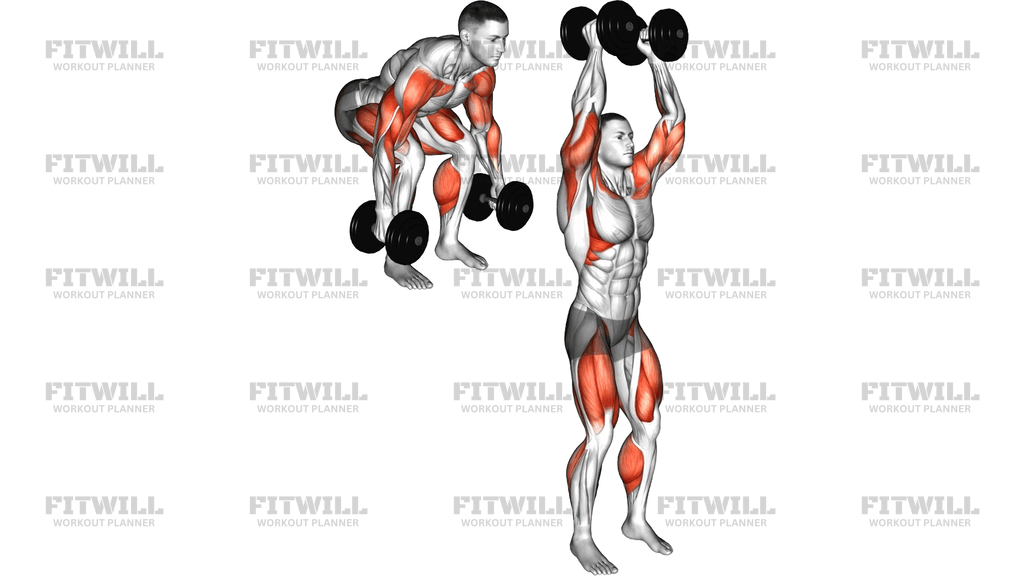
Dumbbell Hang Clean is a fast, technical power exercise that teaches you to transfer force from the hips into a strong front-rack catch. It uses the dumbbells, hips, legs, upper back, and core together, so the goal is not to muscle the bells up with the arms. The cleaner the timing, the more the movement feels like a coordinated pop from the floorless hang position into a stable rack at the shoulders.
Because each dumbbell moves independently, the setup matters more than in a barbell clean. Start with the bells close to the thighs, a tall chest, and a hinge that loads the hamstrings without rounding the lower back. That position gives you room to explode upward without swinging the dumbbells away from your body or turning the rep into a front raise.
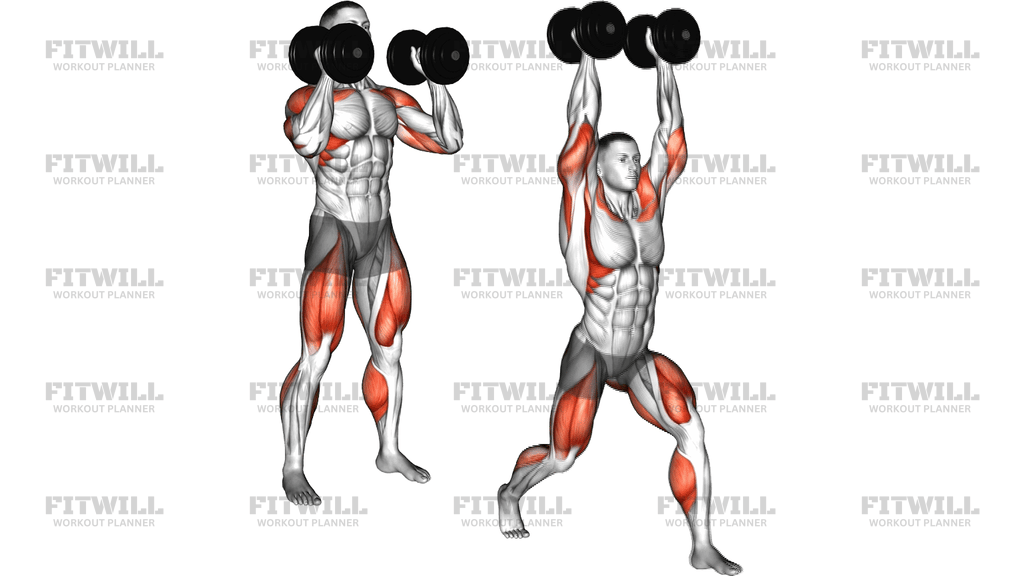
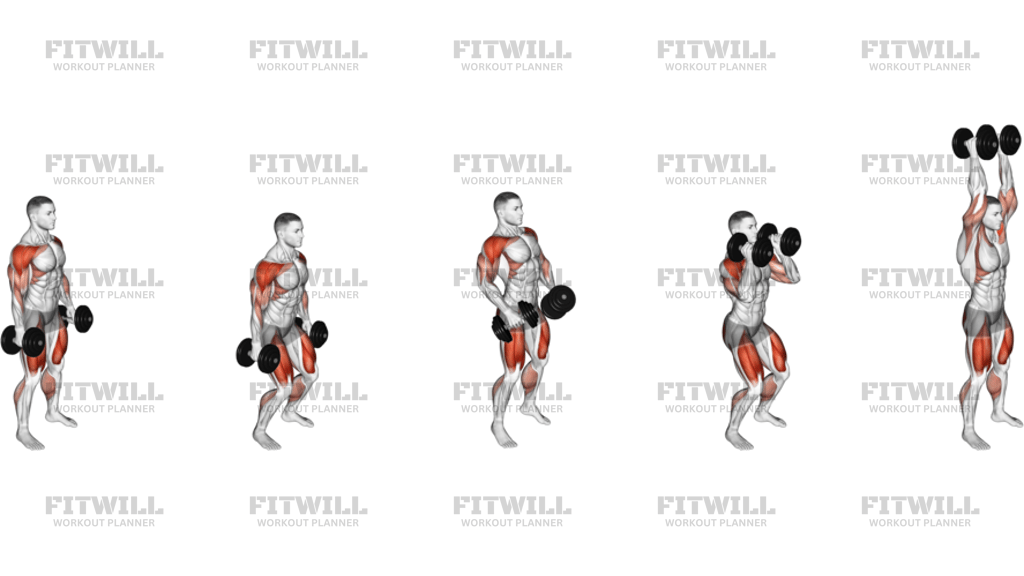
The pull should be driven by a sharp hip extension and leg drive, then finished with a quick pull under the bells. As the dumbbells rise, they stay close to the torso, the elbows turn through, and the hands land on top of the shoulders in a front rack. In the catch, the knees can bend softly to absorb force, but the torso should stay proud and the elbows should stay forward so the bells do not crash onto the wrists.
Dumbbell Hang Clean is useful for athletes and lifters who want explosive power, better coordination, and a cleaner transition into rack-position work such as presses, thrusters, or front squats. It also fits well in conditioning sessions when the load is light enough to keep the movement crisp. If the dumbbells start drifting forward, the rep turns sloppy quickly, so it is better to choose a lighter pair and keep the path tight than to chase weight.
The safest reps are the ones you can repeat the same way every time. Keep the neck neutral, the ribs down, and the dumbbells controlled on the way back to the hang so the next rep starts from a stable hinge. If your wrists, shoulders, or elbows get irritated, shorten the catch slightly and reduce load until the front-rack position feels smooth. When done well, Dumbbell Hang Clean is a compact, powerful drill that builds usable strength without needing a long setup or a huge range of motion.
[ Workout Log & Planner ]
Put your next workout in Fitwill
Keep your plan and training log ready when you are.


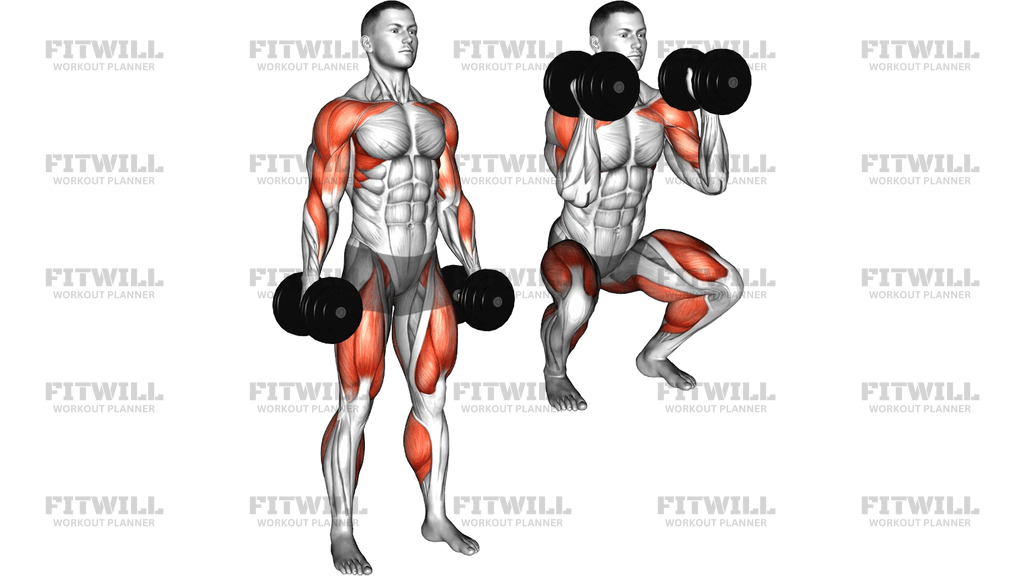
Instructions
- Stand with your feet about hip-width apart and hold a dumbbell in each hand in front of your thighs, palms facing your body.
- Hinge your hips back until the dumbbells sit just above your knees, keep your shins mostly vertical, and let your chest stay tall.
- Brace your core and keep your shoulders slightly in front of the bells so your hamstrings and glutes are loaded before you pull.
- Drive hard through your feet and extend your hips and knees so the dumbbells travel straight up close to your body.
- As the bells pass mid-thigh, shrug and begin to pull your elbows up and around without curling the weights with your arms.
- Rotate your elbows under the dumbbells and catch them on the fronts of your shoulders with your wrists neutral and your chest up.
- Absorb the catch with a soft knee bend or shallow squat while keeping the dumbbells stacked over your shoulders.
- Stand tall to finish the rep, then lower the dumbbells back to the hang under control.
- Reset your hinge, take a breath, and repeat for the planned number of repetitions.
Tips & Tricks
- Keep both dumbbells close to your torso; if they swing forward, the clean turns into a front-delt swing instead of a power pull.
- Think hips first, arms second. The dumbbells should feel like they are being launched by leg drive, not lifted by a biceps curl.
- A shallow catch is fine, but do not crash into a deep squat unless you can keep the rack stable and the elbows forward.
- Use a load that lets you move fast enough to make the bells float; if you have to grind the pull, the timing is too heavy.
- Let the dumbbells settle on the shoulders before standing up all the way, especially if the catch feels off balance.
- Keep your wrists neutral in the rack. If they fold back hard, reduce the load or shorten the catch.
- Lower the dumbbells back to the hang with control instead of dropping them straight to the floor and bouncing into the next rep.
- If one dumbbell lands later than the other, slow the set down and match the pull on both sides before adding weight.
- Exhale through the explosive pull and take a quick breath before the next hinge so your torso stays braced.
Frequently Asked Questions
What muscles does Dumbbell Hang Clean work most?
It mainly trains the glutes, quads, hamstrings, upper back, shoulders, and core through an explosive hip extension and front-rack catch.
How low should I start the dumbbells in Dumbbell Hang Clean?
Start with the bells just above your knees or around mid-thigh after a small hinge. That gives you enough room to load the hips without turning the rep into a deadlift.
Should I catch Dumbbell Hang Clean in a squat?
You can catch it with a soft quarter squat if that helps absorb the force, but the key is keeping the dumbbells racked on the shoulders with elbows forward.
Is Dumbbell Hang Clean beginner friendly?
Yes, if you learn the hinge and the rack position first. Start light so you can practice the timing and keep the dumbbells close to your body.
What is the biggest mistake in Dumbbell Hang Clean?
The most common error is using the arms too early and letting the dumbbells swing away from the thighs. That kills power and makes the catch unstable.
Why do my wrists hurt in Dumbbell Hang Clean?
Usually the bells are landing too hard or your elbows are too low in the rack. Reduce the load, catch softer, and bring the elbows forward sooner.
Can I use Dumbbell Hang Clean before presses or thrusters?
Yes. It is a good way to get into a strong rack position before front-loaded pressing, squatting, or conditioning work.
How heavy should Dumbbell Hang Clean be?
Heavy enough to challenge the pull, but light enough that the dumbbells stay close and the catch stays crisp. If the bells start looping forward, the weight is too much.
What should I do if I cannot stay balanced on the catch?
Shorten the catch, slow the lowering phase, and use a lighter pair until you can land with stable feet, an upright chest, and both bells stacked over the shoulders.