Cable Hip Abduction Toe In
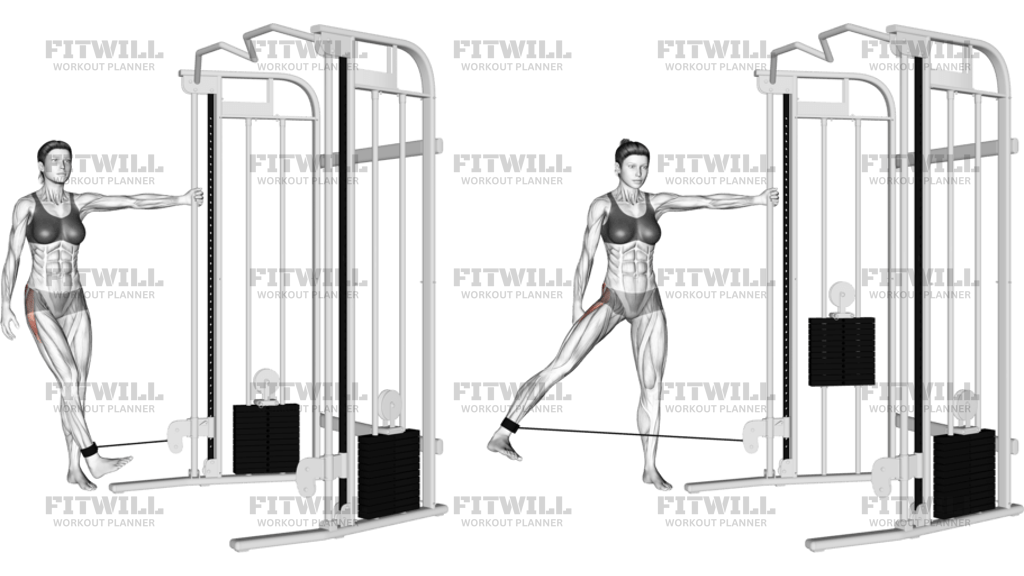
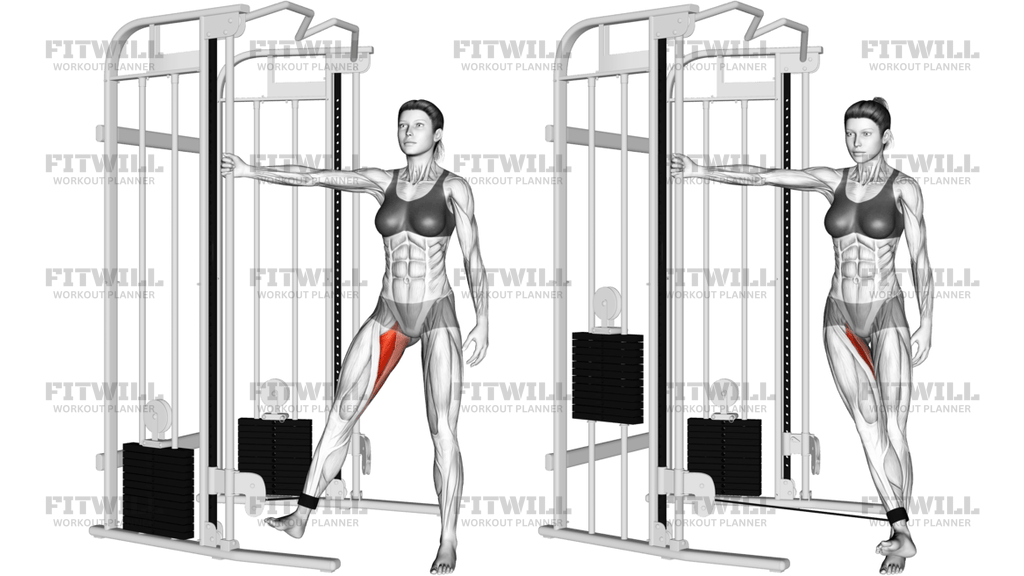
Cable Hip Abduction Toe In is a standing cable hip isolation exercise that trains the outer hip while asking the pelvis and trunk to stay steady. With the working toes turned slightly inward, the movement becomes less about swinging the leg and more about controlling the hip as the cable pulls across the body. It is useful for anyone who wants better single-leg control, cleaner lateral hip strength, or a more focused accessory drill after squats, deadlifts, lunges, or running work.
The setup matters because a cable hip abduction only feels smooth when the stack, ankle strap, support hand, and stance all line up. Stand side-on to the low pulley, keep the cable taut from the first rep, and use the hand closest to the machine for balance. The support leg should stay softly bent and grounded while the working leg moves in a controlled arc, not a kick. A slight toe-in position should stay subtle; if the foot turns hard inward, the pelvis usually twists with it.
Each repetition should come from the outer hip, with the torso staying tall and the ribs stacked over the pelvis. Lift the leg out to the side without hiking the hip, leaning away, or letting the lower back take over. Pause briefly near the top when you can still keep the pelvis level, then lower the leg slowly until the cable is under control again. Breathing should stay calm and regular, with an easy exhale on the lift and a quiet reset on the way back down.
Cable Hip Abduction Toe In works well as a warm-up, activation drill, or accessory movement when you want precise tension rather than heavy loading. The exercise is also a practical choice for beginners because the cable gives immediate feedback when the body starts to sway or the range gets too large. Use a light to moderate load, keep the motion crisp, and stop the set when the standing hip starts to drift or the stack begins to slam. Done well, the movement builds cleaner hip control without needing a big range of motion, and it carries over nicely to lateral stability in walking, cutting, and single-leg strength work.
[ Workout Log & Planner ]
Put your next workout in Fitwill
Keep your plan and training log ready when you are.


Instructions
- Set the cable to the lowest pulley, attach the ankle strap to the working ankle, and stand side-on to the machine with the cable already under light tension.
- Hold the upright or handle with the hand closest to the stack, and keep your shoulders level with your hips square to the front.
- Plant the support foot firmly, soften that knee, and turn the working toes slightly inward before the first rep.
- Let the working leg start close to the support leg without letting the weight stack rest, so the cable stays engaged.
- Brace lightly through the midsection and lift the working leg out to the side in a smooth arc.
- Keep the torso tall and the pelvis level as the leg rises, avoiding any lean away from the machine.
- Pause briefly at the top when the outer hip is fully shortened and the cable still feels controlled.
- Lower the leg back to the start at a slow, steady pace, stopping before the stack slams.
- Reset your stance if needed, then repeat for the target reps before switching sides.
Tips & Tricks
- Keep the toe-in angle small; if the foot turns too far inward, the pelvis usually twists with it.
- Use the support hand for balance only. A hard pull on the frame often hides hip compensation.
- Step far enough from the stack that the cable stays taut at the bottom, but not so far that you have to lean.
- Lift only as high as you can keep the standing hip level; a smaller arc is often better than a bigger, sloppy one.
- A one-second lift and two- to three-second return usually keeps tension on the outer hip without rushing the rep.
- If you feel the front of the hip more than the side of the hip, shorten the range and slow the lowering phase.
- Keep the support knee softly bent so the standing leg can absorb the load instead of locking out and wobbling.
- Stop the set when the stack starts to tap down or the torso begins to sway to finish the rep.
Frequently Asked Questions
What does Cable Hip Abduction Toe In train most?
It mainly works the outer hip and glute area on the working side, while the standing leg and core keep your pelvis from tipping.
Why are the toes turned inward on Cable Hip Abduction Toe In?
The slight toe-in position changes the hip angle and can make the side-glute feel more direct, but the rotation should stay mild.
How should I hold the support handle on Cable Hip Abduction Toe In?
Use the handle or upright for balance only. A light grip is enough; if you have to yank on it, the working hip is probably losing control.
How high should I lift my leg?
Lift only until your pelvis stays level and the cable still feels smooth. If the hip hikes or the torso leans, the range is too large.
Is Cable Hip Abduction Toe In beginner-friendly?
Yes, if you use a light load and a short, controlled range. The cable gives immediate feedback, which makes it a good teaching exercise.
What is the most common mistake in this exercise?
The biggest mistake is turning the rep into a swing by leaning away from the stack or snapping the leg up with momentum.
Can I use Cable Hip Abduction Toe In as a warm-up?
Yes. It works well before lower-body training because it wakes up the outer hip without fatiguing you like a heavy compound lift.
How do I know if the cable setup is correct?
The cable should already have light tension at the start, and the working ankle should travel cleanly without the stack banging down at the bottom.