Exercise Ball One Legged Diagonal Kick Hamstring Curl
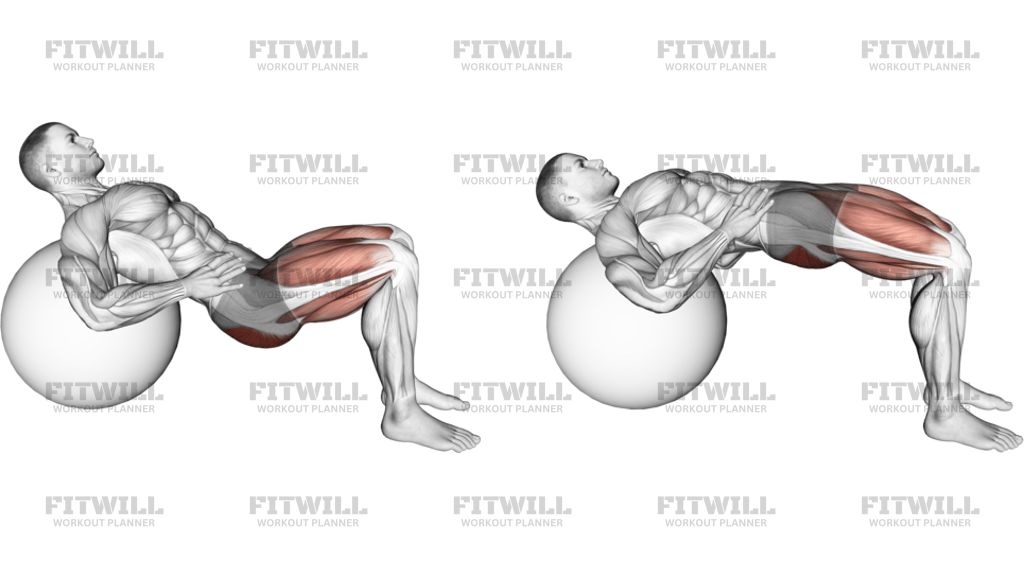
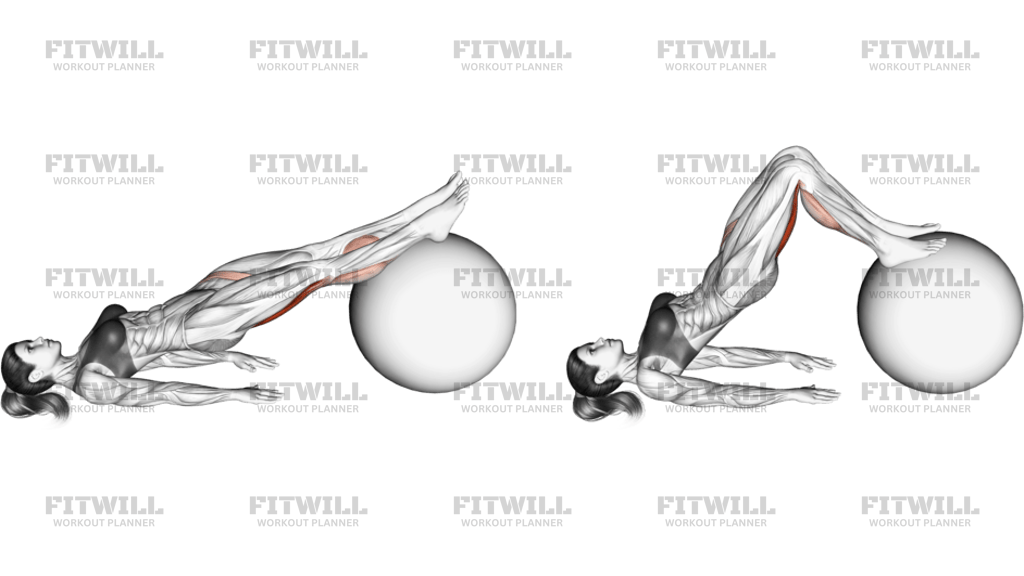
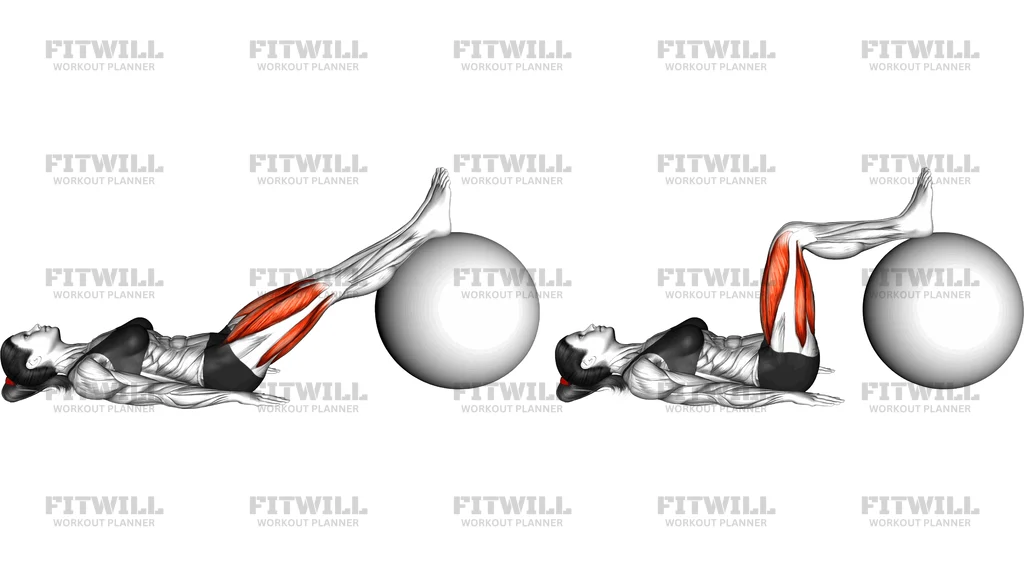
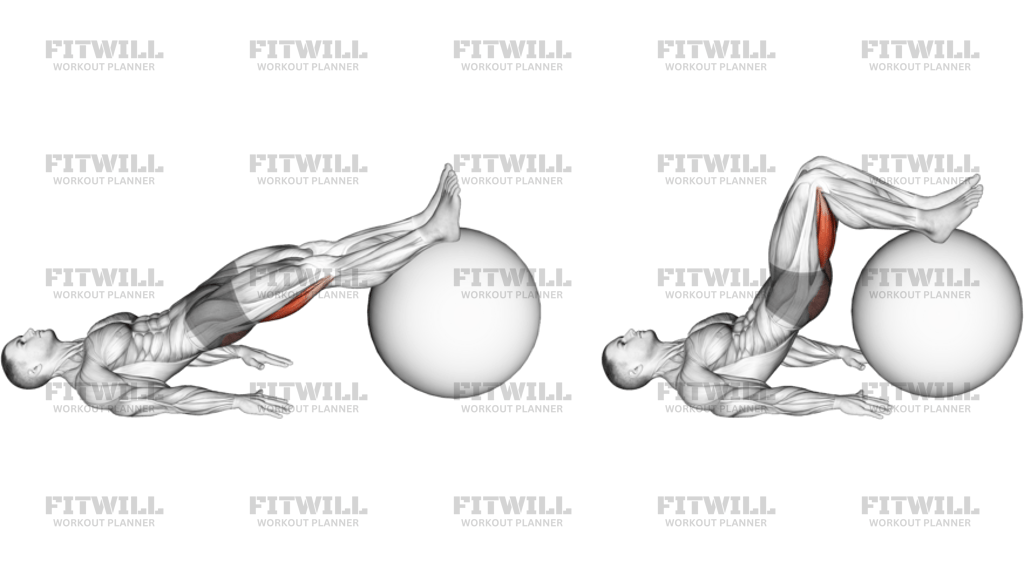
Exercise Ball One Legged Diagonal Kick Hamstring Curl is a supine posterior-chain exercise performed with one heel on a stability ball and the other leg lifted into a diagonal kick. It combines a single-leg hamstring curl with anti-rotation control, so the working leg has to flex the knee and pull the ball in while the pelvis stays level. The result is a demanding lower-body drill that trains hamstrings, glutes, and core together instead of letting one side of the body do all the work.
The setup matters because the ball is unstable and the movement is unilateral. Lie on your back with your shoulders relaxed on the floor, one heel centered on the ball, and the free leg reaching upward and slightly outward on the diagonal. That raised leg is not decoration; it helps challenge trunk control and keeps you from twisting through the low back as the working leg curls.
A good repetition starts from a braced bridge position. Press the support heel into the ball, lift the hips, and keep the ribs down so the torso does not overextend. From there, curl the ball toward your hips by bending the working knee and driving through the heel. The free leg should stay active and long, with the diagonal kick maintained as the ball comes in. Pause briefly when the heel is closest to the hips, then extend the leg back out under control without letting the hips sag or rotate.
This exercise is useful when you want unilateral hamstring work that also reveals side-to-side differences in hip stability, pelvic control, and cramping tolerance. It fits well in accessory strength work, warm-ups for sprinting or lower-body sessions, or core-focused posterior-chain training. Keep the range of motion honest, because the ball will reward smooth tension more than aggressive speed.
For most people, the main form goals are a stable pelvis, a smooth curl, and a controlled return. If the hamstrings cramp, shorten the range and focus on holding the bridge longer before adding more curl. If you can keep the hips square and the free leg quiet through the entire rep, you are doing the exercise the way it is meant to be done.
[ Workout Log & Planner ]
Put your next workout in Fitwill
Keep your plan and training log ready when you are.


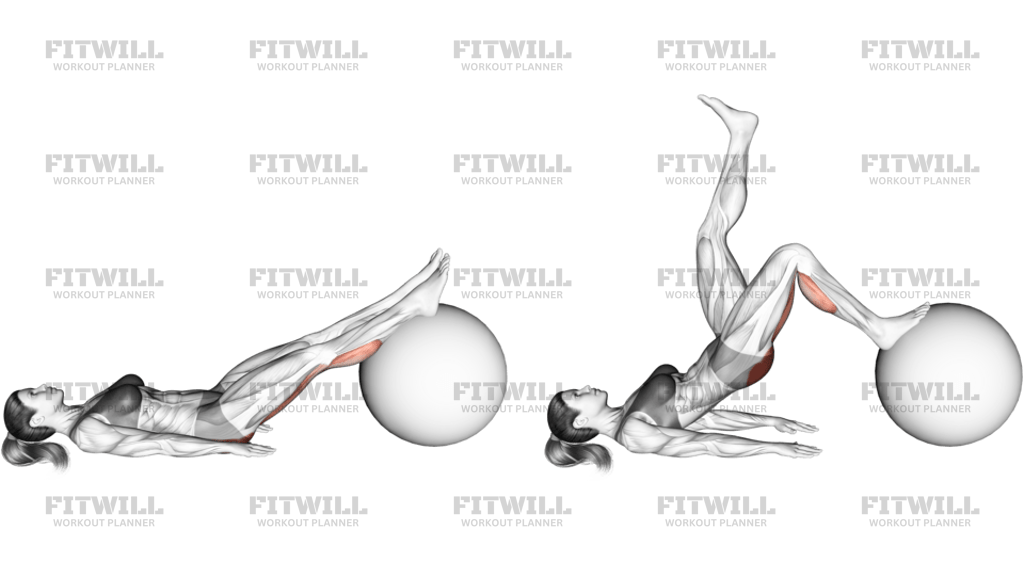
Instructions
- Lie on your back with your shoulders relaxed on the floor and place one heel in the center of the stability ball.
- Lift the other leg upward in a diagonal line so the free leg stays active and off the floor.
- Press the support heel into the ball, lift your hips, and keep your ribs down so your lower back does not arch.
- Start with the working knee slightly bent and the ball under tension rather than hanging loose.
- Curl the ball toward your hips by bending the support leg and pulling through the heel.
- Keep the raised leg long and diagonally active as the ball moves in, and avoid letting the pelvis twist.
- Pause briefly when the ball is close to your hips and the hamstrings are fully loaded.
- Extend the working leg back out slowly until you return to the starting bridge position.
- Exhale as you curl the ball in, inhale on the controlled return, and keep the hips level through every rep.
Tips & Tricks
- Keep the heel, not the toes, centered on the ball so the hamstrings stay loaded through the curl.
- Think about lifting the hips first; if the pelvis drops, the low back usually starts helping too much.
- The diagonal kick should stay purposeful but small enough that you can keep the torso square.
- If the ball starts wobbling side to side, shorten the range before trying to add more speed or reps.
- A slower return is usually harder than the curl itself, so resist letting the ball roll out quickly.
- Use a bridge height you can actually hold, not the highest position you can hit for one second.
- If your hamstring cramps, reset with a smaller curl and a more active ankle instead of forcing depth.
- Keep the chin neutral and eyes up so your neck does not tense while your hips work.
- Stop the set when the free leg can no longer stay lifted without the pelvis rotating.
Frequently Asked Questions
What muscles does Exercise Ball One Legged Diagonal Kick Hamstring Curl target most?
The main target is the hamstrings, with the glutes and deep core helping keep the pelvis level and stable.
Why is one leg kicked diagonally upward?
The diagonal kick makes the body fight rotation while the working leg curls the ball, which adds a core-and-hip stability challenge.
Should my hips stay lifted the whole time?
Yes. Keep the hips up in a controlled bridge so the hamstrings stay loaded and the low back does not take over.
Where should I place my foot on the ball?
Place the heel in the middle of the ball. If the foot slides too far forward onto the toes, the curl gets less stable.
How is this different from a regular stability-ball hamstring curl?
A regular curl uses both legs or a more symmetrical setup, while this version loads one side and adds a diagonal anti-rotation demand.
Can beginners do this exercise?
Yes, but most beginners should first learn a solid bridge and a basic ball curl before adding the one-leg diagonal version.
What is a common form mistake?
Letting the hips twist or drop as the ball comes in is the most common issue, and it usually means the set is too hard.
What should I do if I feel cramping in the hamstring?
Reduce the range of motion, keep the heel active, and hold the bridge position for a few seconds before curling again.
When would I use this exercise in a workout?
It works well as accessory posterior-chain work, especially when you want unilateral hamstring training with extra core control.