Kettlebell Kneeling One-Arm Bottoms Up Press
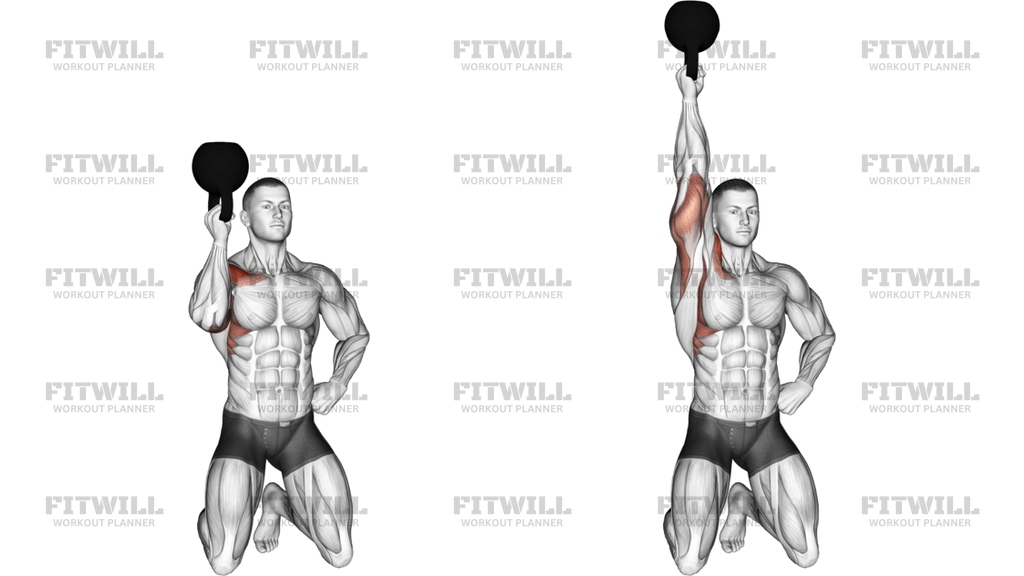
Kettlebell Kneeling One-Arm Bottoms Up Press is a highly controlled overhead press that challenges shoulder strength, wrist stability, and full-body coordination at the same time. The bottoms-up position turns the kettlebell into a balance test, so even a small load can feel demanding. Kneeling removes help from the legs and forces the press to come from the shoulder, upper back, and trunk rather than from a dip, drive, or lean.
The main training focus is the delts, but the triceps, traps, rhomboids, forearm muscles, and deep core all have to contribute to keep the bell steady. That makes Kettlebell Kneeling One-Arm Bottoms Up Press useful when you want a press that rewards clean mechanics instead of brute force. It is especially helpful for lifters who need better overhead control, stronger rack-position awareness, or a more honest check on side-to-side differences.
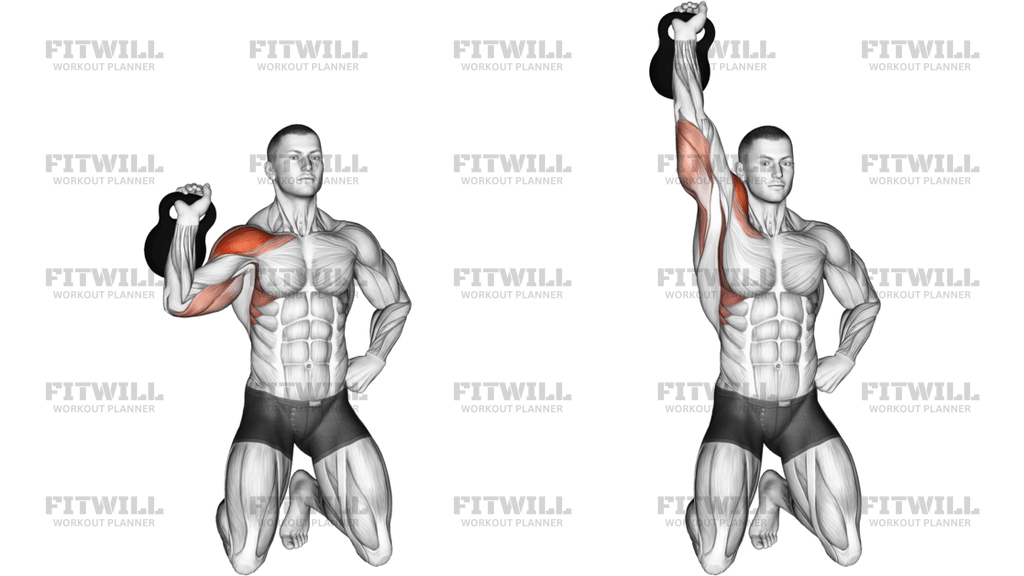
The setup matters more than it does in a regular press. Kneel tall on both knees, keep the ribs stacked over the pelvis, and hold the kettlebell at shoulder height with the bell pointing up and the wrist directly under the handle. From there, press the weight smoothly upward without letting the forearm tip back, the elbow flare out, or the torso drift away from the working side. The bell should travel in a controlled line and finish with the arm vertical and the shoulder still organized.
Because the kettlebell is inverted, small errors show up quickly. If the wrist softens, the bell wobbles, or the body tries to twist to save the rep, the load is too heavy or the rep is too fast. A short pause overhead helps you own the position before lowering the bell back to the rack with the same level of control. That makes the exercise valuable for warm-ups, accessory work, shoulder stability training, and light pressing blocks where precision matters more than volume.
Use Kettlebell Kneeling One-Arm Bottoms Up Press with a conservative load and clean spacing between reps. The goal is to keep the bell stable, the rib cage quiet, and the neck relaxed while the shoulder does the work. When performed well, this press builds strength that transfers to cleaner overhead positions, better unilateral control, and more reliable pressing mechanics under fatigue.
[ Workout Log & Planner ]
Put your next workout in Fitwill
Keep your plan and training log ready when you are.


Instructions
- Kneel tall on both knees with your hips stacked over your knees, torso upright, and the kettlebell racked at one shoulder with the bell upside down and the wrist under the handle.
- Keep your free hand on your hip or by your side, and hold the working elbow slightly in front of the shoulder with the forearm vertical.
- Squeeze your glutes and pull your ribs down so the torso stays tall instead of arching backward.
- Take a breath, brace your midsection, and make sure the bell is steady before you press.
- Press the kettlebell straight up, keeping the bell balanced over the handle and the wrist from folding back.
- Finish with the arm vertical near your ear, the shoulder still packed, and the rib cage quiet.
- Pause briefly overhead so the kettlebell stops moving instead of bouncing through the top.
- Lower the kettlebell under control back to the shoulder rack, reset the shoulder, and repeat for the planned reps before switching sides.
Tips & Tricks
- Use a very light kettlebell at first; the inverted position exposes wrist and shoulder weakness fast.
- If the bell wobbles overhead, slow the press down and shorten the set before the hand starts to drift backward.
- Keep the forearm vertical in the rack position; if the elbow floats away from the body, the press usually turns unstable.
- Do not lean away from the working arm or let the chest twist open to fake extra range.
- Exhale as the bell passes eye level so the ribs stay down and the lower back does not take over.
- Press slightly in front of the ear instead of behind it so the arm can finish stacked without a big shoulder shrug.
- Pad the knees if the floor is hard; discomfort in the knees will make it harder to keep the torso still.
- Stop the set the moment the wrist starts to bend or the bell loses its upside-down balance.
Frequently Asked Questions
What does Kettlebell Kneeling One-Arm Bottoms Up Press train most?
It primarily trains the delts, with a strong demand on the triceps, upper back, forearm muscles, and core to keep the kettlebell stable.
Why is the kettlebell held upside down in Kettlebell Kneeling One-Arm Bottoms Up Press?
The inverted position forces the wrist and shoulder to stabilize the load instead of just moving it, which makes the press much more demanding with a lighter weight.
Can beginners do Kettlebell Kneeling One-Arm Bottoms Up Press?
Yes, but only with a very light kettlebell and short, controlled sets. If the bell wobbles or the torso twists, the load is too heavy.
Should my wrist stay straight during Kettlebell Kneeling One-Arm Bottoms Up Press?
Yes. The wrist should stay stacked under the handle so the kettlebell remains balanced. If the wrist bends back, the rep usually turns into a fight for balance rather than a clean press.
What is the most common mistake in Kettlebell Kneeling One-Arm Bottoms Up Press?
People usually lean away from the working arm, flare the elbow, or use a kettlebell that is too heavy to control in the upside-down position.
Is half-kneeling better than full kneeling for this press?
Half-kneeling is a useful regression if full kneeling feels unstable, but full kneeling makes it harder to use the legs or hips to help the press.
How much weight should I use for Kettlebell Kneeling One-Arm Bottoms Up Press?
Choose the lightest kettlebell that lets you keep the bell steady from the rack to the lockout and back down without wrist collapse or torso sway.
Where should I feel Kettlebell Kneeling One-Arm Bottoms Up Press?
You should feel the shoulder working hardest, with extra effort in the triceps, forearm, and upper back. A little core work is normal because the kneeling position resists rotation.