Standing Calf Raise
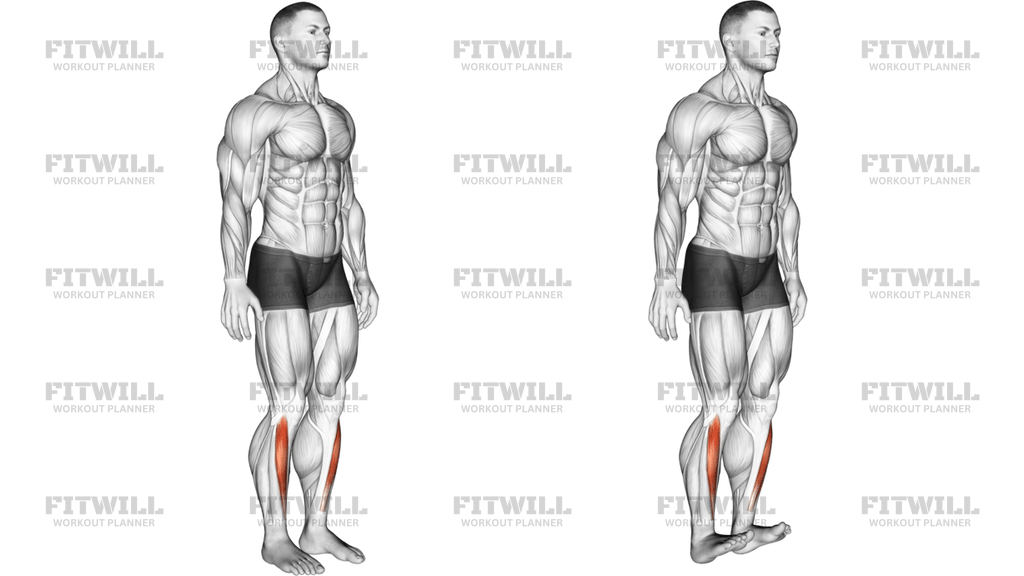
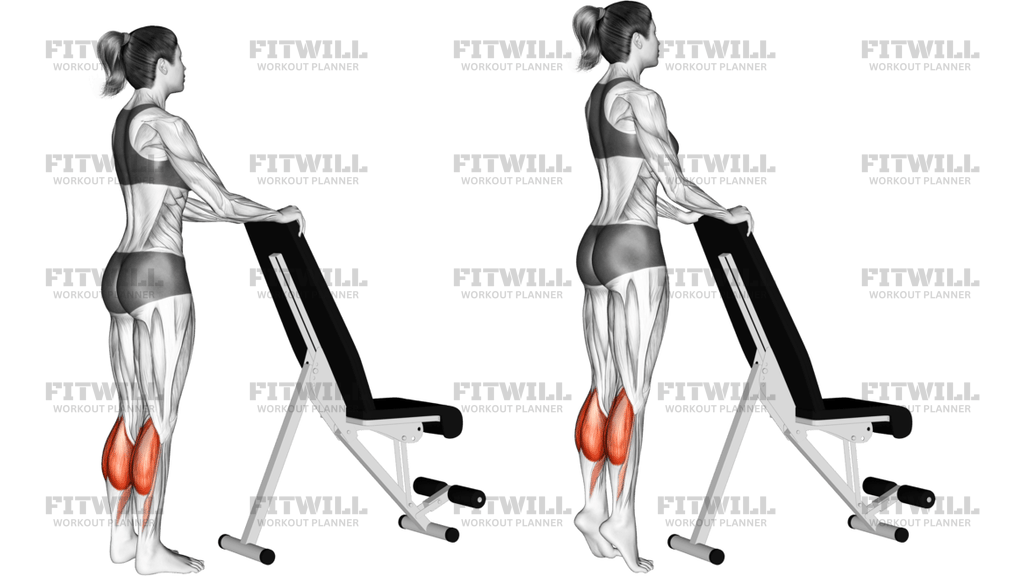
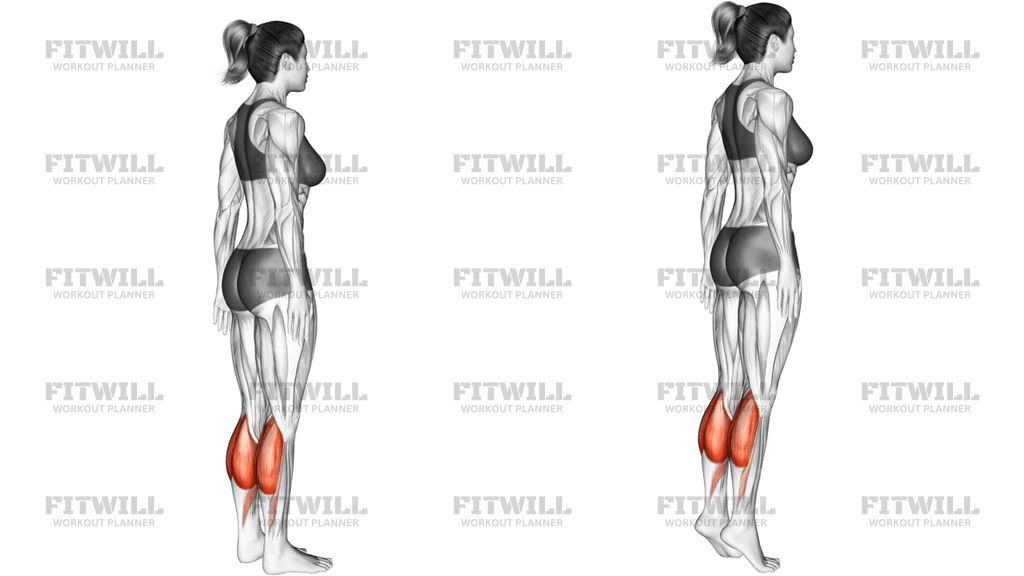
Standing Calf Raise is a bodyweight ankle-extension exercise that targets the calves with a straight-knee bias. It is simple in appearance but easy to turn into a sloppy bounce if the feet, knees, and torso are not organized. The image shows the classic floor-based version: stand tall, rise onto the balls of the feet, and lower the heels under control while the ankles move through a clean, repeatable path.
Because the knees stay mostly straight, the gastrocnemius does more of the visible work than it does in a bent-knee calf raise. The soleus still assists, and the small stabilizers around the ankle and foot help keep the heel track centered. That makes this movement useful not only for calf size and strength, but also for balance, ankle control, and better push-off mechanics in walking, running, jumping, and change-of-direction work.
Setup matters more than people expect. A tall posture, stacked ribs, and balanced pressure through the big toe, second toe, and heel help the calves do the lifting instead of the hips or lower back. If the torso tips forward, the knees bend, or the feet roll inward or outward, the set becomes less about the calves and more about compensation. The cleanest reps come from a stable stance and a deliberate rise to the top rather than from momentum.
On each rep, press the floor away, lift the heels as high as you can without losing balance, and briefly squeeze the calves at the top. Lower slowly until the heel returns to the floor or to the deepest pain-free range you can control. The bottom position should feel loaded, not collapsed. If you need support, use a wall, rail, or rack lightly for balance only. The exercise works well as accessory volume after bigger lifts, as part of lower-leg development, or as a simple way to build ankle stiffness and control with very little equipment.
Use a slower tempo when bodyweight reps become too easy, or progress to a single-leg version once the double-leg pattern stays strict. The goal is not to bounce through a huge range; the goal is to make every repetition look the same from the first heel lift to the last. Stop the set when the ankles start wobbling, the arches collapse, or the hips start to shift to cheat the rep.
[ Workout Log & Planner ]
Put your next workout in Fitwill
Keep your plan and training log ready when you are.


Instructions
- Stand on a flat floor with feet about hip-width apart, toes pointing forward or slightly out, and your weight centered over the balls of the feet.
- Keep your knees straight but not locked, stack your ribs over your pelvis, and lightly brace so your torso stays tall.
- Let your arms hang by your sides or touch a wall or rack lightly for balance without pulling yourself upward.
- Press evenly through the big toe, second toe, and forefoot as you begin to lift both heels.
- Rise onto your toes as high as you can while keeping the ankles from rolling inward or outward.
- Squeeze the calves for a brief pause at the top with your body still stacked and tall.
- Lower the heels slowly under control until they return to the floor or to your deepest pain-free range.
- Inhale on the way down, exhale as you rise, and repeat the same smooth path for each rep.
Tips & Tricks
- Keep pressure through the big toe and second toe so the arch does not collapse as you rise.
- Think about lifting straight up and down instead of leaning the chest forward to cheat the top position.
- A one-second squeeze at the top makes the set much harder than a fast rebound.
- Do not bounce off the floor; the lowering phase should be slow enough that you can feel the calves lengthen.
- If balance is limiting you, use one fingertip on a wall or rack instead of gripping hard with the hands.
- Keep the knees soft but mostly straight so the movement stays on the standing-calf pattern rather than turning into a squat.
- Shorter shoes or barefoot work can improve foot pressure and make the ankle path easier to feel.
- Stop the set when the heels drift side to side, because that usually means the calves are already fatigued.
Frequently Asked Questions
What muscle does Standing Calf Raise target most?
It primarily targets the calves, especially the gastrocnemius in this straight-knee version.
Why are the knees kept mostly straight?
Straight knees shift more of the work to the gastrocnemius and make the exercise behave like a true standing calf raise.
Do I need a step or can I do it on the floor?
The floor version matches the image and works well for strict reps; a step is optional if you want a deeper heel drop.
How high should I rise on each rep?
Lift as high as you can without rolling the ankles or leaning the torso forward. The top should feel like a strong calf contraction, not a jump.
Can I hold onto something for balance?
Yes. A light touch on a wall, rail, or rack is fine if it keeps the calves doing the work instead of your balance strategy.
Should my heels touch the floor at the bottom?
They can return to the floor or stop just above it if a deeper drop irritates the Achilles or causes you to bounce.
Why do my ankles wobble during this exercise?
That usually happens when the pressure shifts off the big toe and forefoot or when the set is too fatiguing. Reduce the pace and simplify the stance.
How can I make bodyweight calf raises harder?
Slow the lowering phase, add a top pause, switch to single-leg reps, or use a longer range only if the ankles stay controlled.