Groin Crunch
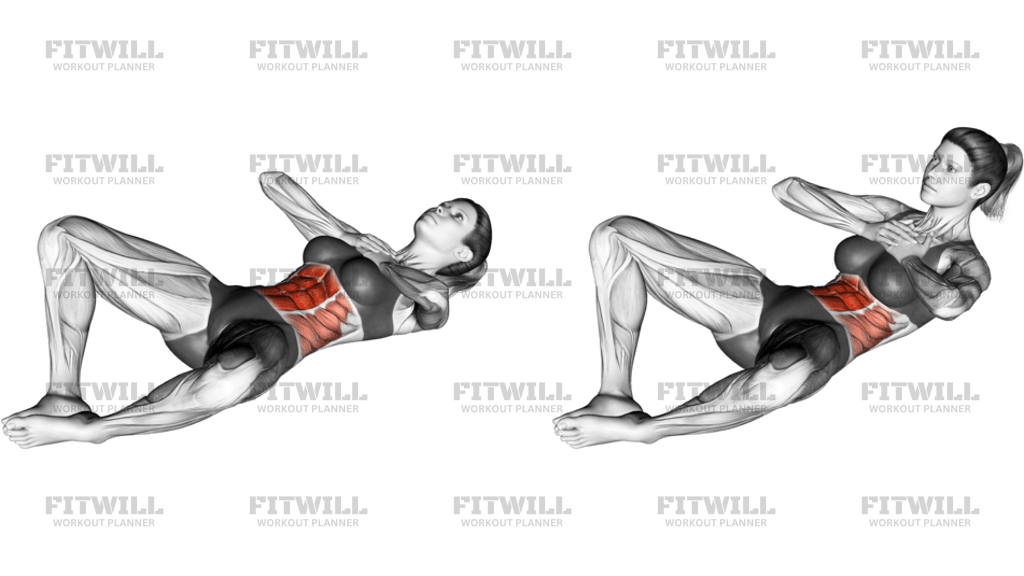
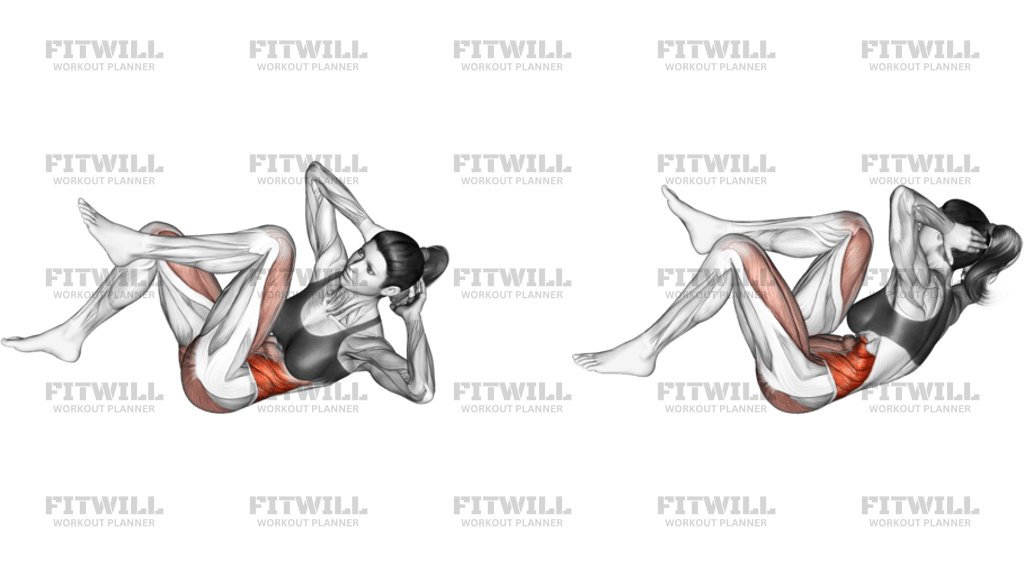
Groin Crunch is a bodyweight floor crunch built around a strong inner-thigh squeeze. With the soles of the feet pressed together and the knees opened out, the position shifts attention away from a standard straight-leg crunch and toward the groin, lower abs, and the stabilizers that keep the pelvis quiet. It is a small, controlled movement, not a sit-up, and the quality of the setup matters more than the size of the curl.
The exercise works best when the lower body is organized before the first rep. Pressing the feet together helps keep the adductors active, while the knees stay comfortably open instead of being forced down. That position gives the torso something to brace against and keeps the hips from sliding around as you crunch. If the knees wander or the feet lose contact, the movement turns into a loose abdominal curl and the groin stimulus drops off.
Each repetition should feel like a short curl of the ribcage toward the pelvis. The shoulder blades leave the floor, the neck stays long, and the movement finishes when the abs are fully engaged rather than when the elbows or head try to reach forward. On the way down, the torso lowers under control and the feet keep pressing together so the adductors stay involved. The goal is a steady rhythm with no jerking, no head pull, and no bounce at the bottom.
Groin Crunch fits well as accessory core work, a warmup drill before lower-body training, or a controlled finisher when you want a low-load adductor and abdominal stimulus. It is useful for beginners because the resistance comes from body position rather than external load, but that also means it can be performed badly very easily. Keep the range short, the breathing deliberate, and the pelvis stable. If the groin or front of the hip feels pinchy, reduce the range or stop the set and reset the position.
[ Workout Log & Planner ]
Put your next workout in Fitwill
Keep your plan and training log ready when you are.


Instructions
- Lie on your back with your knees bent, the soles of your feet pressed together, and your knees opened out comfortably to the sides.
- Keep your heels planted, your lower back lightly against the floor, and your fingertips at your temples or your arms crossed over your chest.
- Take a breath in, then brace your midsection before each rep so your ribs and pelvis stay organized.
- Exhale and curl your shoulders and upper back off the floor, bringing your ribcage toward your pelvis.
- Keep the feet pressing together and the knees open while you crunch; do not pull the legs in or let them drift apart.
- Lift only as high as you can without yanking on your neck or turning the movement into a sit-up.
- Pause for a beat at the top while the abs and inner thighs stay tight.
- Lower your shoulders back to the floor under control, keep the feet together, and reset before the next rep.
Tips & Tricks
- Press the inner edges of the feet together as if you were pinching a small object between them.
- Keep the knees open only as far as your hips allow without a groin pinch.
- Think about sliding the ribs toward the pubic bone instead of reaching the chest straight up.
- Keep the curl small; the shoulder blades only need to clear the floor.
- If your neck takes over, shorten the range and keep the chin softly tucked.
- Lower slowly enough that the abs do not relax between reps.
- Hold the feet together through the whole set so the adductors stay active.
- Stop the set if the front of the hip pinches or the lower back starts arching off the floor.
Frequently Asked Questions
What does Groin Crunch train?
It emphasizes the inner thighs or adductors while also training the rectus abdominis and the muscles that stabilize the pelvis.
Why are the soles of my feet pressed together?
That position keeps the groin muscles working while you crunch, which is what makes this movement different from a standard floor crunch.
How high should I curl up?
Only far enough to lift the shoulder blades and tighten the abs. This is a short crunch, not a full sit-up.
Should my knees stay on the floor?
No. Let the knees open comfortably while the feet stay in contact, but do not force them down or let them collapse inward.
Can beginners do this exercise?
Yes. It is a bodyweight movement, and beginners usually do best with a small range and a slow tempo.
What is the most common mistake?
The usual error is pulling on the neck or turning the rep into a bigger sit-up instead of keeping the curl short and controlled.
Where does this fit in a workout?
It works well as accessory core work, a warmup drill, or a light finisher after leg training.
How can I make Groin Crunch harder?
Slow the lowering phase, pause longer at the top, or keep the feet actively squeezed together for the entire set.