Static Position Lying Front
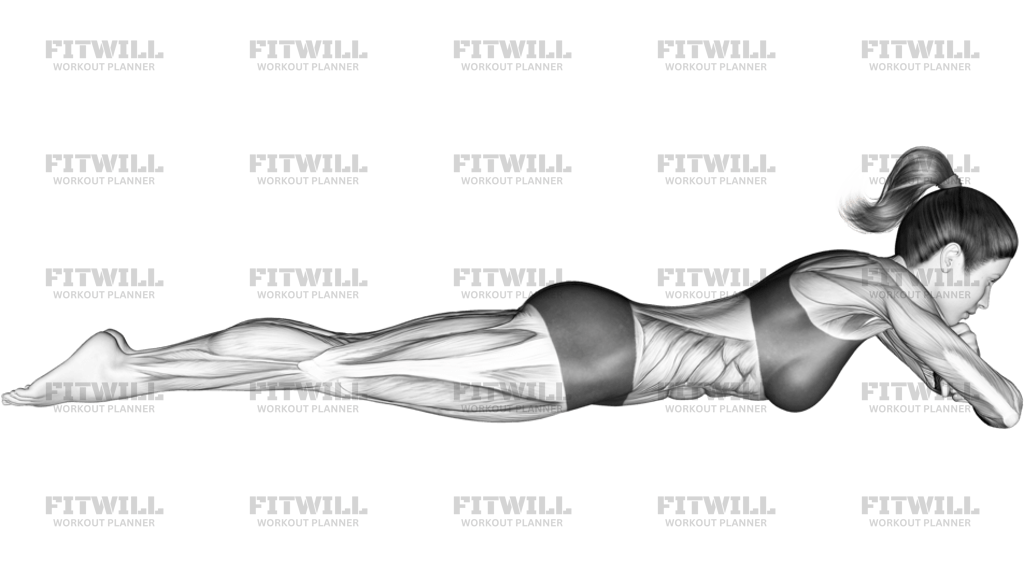
Static Position Lying Front is a prone isometric hold performed face down with the torso lightly lifted off the floor. It is used to build endurance, control, and body tension in the posterior chain and shoulder girdle while teaching you how to hold a long, organized body line. The image shows a straight-body front-lying position with the chest elevated, the hips down, and the arms reaching forward, which makes this much closer to a controlled prone hold than a stretching drill.
Because the body is supported only by the floor and your own muscle tension, setup matters. The hold should start from a long prone position with the neck neutral, the ribs controlled, and the pelvis set so the lower back is not taking over. When the chest, arms, and legs stay aligned, the exercise becomes a clean test of posture and endurance instead of a sloppy back-arch.
This movement mainly trains the muscles that keep the trunk extended and stable, especially the spinal erectors, glutes, upper back, and rear shoulder area, with the core working hard to keep the ribs from flaring. It is useful in warm-ups, accessory work, posture-focused sessions, and rehab-style conditioning when you want a low-load exercise that still demands precise control.
The rep quality is defined by how still you can stay. Lift into the position smoothly, hold without shrugging or collapsing through the lower back, and lower with control before resetting. If the chest rises only because the low back is cranking hard or the neck is jutting forward, the hold is too aggressive. The best version feels long, braced, and deliberate from fingertips to toes.
[ Workout Log & Planner ]
Put your next workout in Fitwill
Keep your plan and training log ready when you are.


Instructions
- Lie face down on the floor or mat with your legs straight behind you and your arms reaching forward.
- Set your forehead or chin in a neutral line so your neck stays long instead of cranked up.
- Lengthen through the fingertips and toes, then lightly brace your midsection before lifting.
- Raise your chest and, if the variation calls for it, your thighs a few inches off the floor without jerking.
- Keep the ribs tucked and the glutes engaged so the lift comes from control, not a hard low-back arch.
- Hold the top position with steady breathing and a long body line.
- Lower yourself back down under control and reset before the next hold or repetition.
- Repeat for the planned number of holds or repetitions.
Tips & Tricks
- Keep the gaze down so the back of the neck stays long; looking forward usually overextends the cervical spine.
- Think about lifting the sternum away from the floor instead of throwing the shoulders back.
- If the lower back pinches, reduce the height of the lift and keep the ribs closer to the mat.
- Squeeze the glutes gently to support the pelvis and reduce unwanted lumbar extension.
- Reach the arms forward rather than letting them drift out to the sides, which usually turns the hold into a different pattern.
- Use short holds with crisp posture before trying longer holds that degrade into shaking and arching.
- Breathe slowly behind a controlled brace; do not hold your breath for the entire set unless the programming specifically calls for it.
- Stop the set when the chest no longer stays lifted without shrugging or when the hips start twisting.
Frequently Asked Questions
What does Static Position Lying Front work most?
It mainly trains the spinal erectors, glutes, upper back, rear shoulders, and the deep core muscles that keep the torso organized in a prone hold.
How is this different from a superman hold?
This version is a more general prone front-lying hold, but the image shows a similar face-down extension pattern with the chest lifted and the body held long.
Where should I feel the hold?
You should feel tension across the low and mid back, glutes, and upper back, with the neck staying relaxed rather than strained.
Can beginners do this exercise?
Yes, as long as the lift stays small and the hold is brief. Beginners should prioritize a neutral neck and a modest chest lift over height.
Why do my lower back and neck get tired first?
That usually means the ribs are flaring or the chest is lifting too high. Reduce the range and focus on glutes, abdominal brace, and a long neck.
Do my legs have to leave the floor?
Not always. Some versions keep the legs down and emphasize the chest and upper back, while others lift the thighs slightly to increase posterior-chain demand.
Is this a stretching exercise or a strength exercise?
It behaves more like an isometric strength and control drill than a stretch, even though it uses a long, extended body position.
How can I make the movement harder without adding weight?
Increase the hold time, lift the chest slightly higher while keeping form clean, or extend the arms and legs longer without letting the low back collapse.