Static Position Seated Back
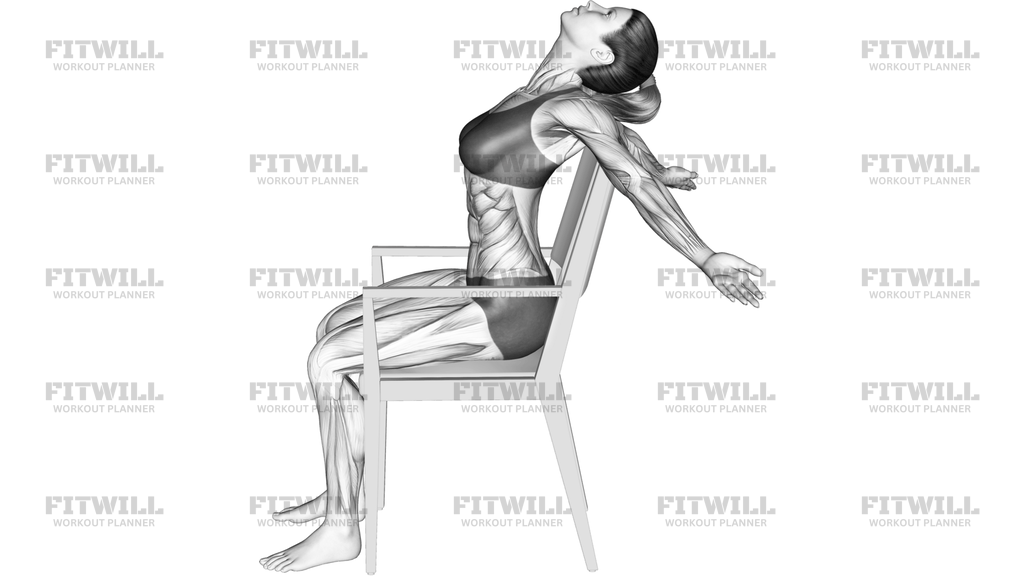
Static Position Seated Back is a seated thoracic-extension and chest-opening hold done on a sturdy chair. It is useful when you want to counter a rounded seated posture, open the front of the shoulders, and teach the upper back to stay tall without dumping into the lower back. The exercise is not about forcing a huge backbend; it is about creating a controlled, repeatable open posture that you can hold while breathing normally.
The setup matters because the pelvis, rib cage, and shoulder position decide where the stretch and effort go. Sit with both feet planted, the hips balanced on the chair, and the spine long before you lean back or reach the arms behind the torso. When the feet stay grounded and the ribs stay stacked over the pelvis, you can open the chest without turning the hold into a sloppy lumbar arch.
In the hold, the sternum lifts, the shoulders move away from the ears, and the arms lengthen slightly behind the body or along the chair sides. That creates a stretch across the chest and front delts while the postural muscles of the upper back work to keep the torso organized. Breathe slowly into the sides and back of the rib cage so the position stays calm instead of rigid.
Use Static Position Seated Back as a warm-up, desk-break reset, or cool-down drill when the goal is posture, mobility, or gentle isometric control. It fits especially well after pressing work, long sitting, or any session where the upper body feels closed off. The best version is quiet and controlled: no neck craning, no aggressive low-back pinch, and no forcing the shoulders farther back than they can comfortably support.
Treat the hold like a small posture change that you can repeat exactly, not a dramatic stretch. If the position feels sharp in the low back or front of the shoulders, reduce the range and keep the sternum lift modest. Over time, the exercise should help you sit taller, open the chest more easily, and maintain cleaner alignment under light tension.
Fitwill
Log Workouts, Track Progress & Build Strength.
Achieve more with Fitwill: explore over 9600 exercises with images and videos, access built-in and custom workouts, perfect for both gym and home sessions, and see real results.
Start your journey. Download today!




Instructions
- Sit on a sturdy chair with both feet flat on the floor and your knees about hip-width apart.
- Set your hips evenly on the seat and lengthen your spine before you move your arms or chest.
- Stack your ribs over your pelvis, then let your shoulders drop away from your ears.
- Reach your arms slightly behind your torso or along the chair sides with relaxed hands.
- Lift your sternum and gently open the front of the chest without collapsing into the lower back.
- Keep the neck long and the chin neutral or only slightly lifted as you settle into the hold.
- Breathe slowly and steadily while you maintain the open position for the planned time or breaths.
- Release by lowering the chest, bringing the arms back in, and returning to a tall neutral seated posture.
Tips & Tricks
- Keep both feet planted so the chair does not become a full-body lean.
- Think about lifting the sternum rather than flaring the ribs forward.
- If the shoulders feel jammed, reduce how far behind you the arms reach.
- Let the neck stay long; do not throw the head back to fake more range.
- Use slow nasal or controlled mouth breathing to keep the hold relaxed.
- A small, clean opening is better than a deep arch that pinches the low back.
- If the chair back presses uncomfortably, scoot slightly forward and use less lean.
- Stop the hold if you feel sharp pain in the shoulders, neck, or lumbar spine.
Frequently Asked Questions
What does Static Position Seated Back train?
It emphasizes upper-back posture, thoracic extension, and a controlled chest-opening hold.
Is this more of a stretch or a strength drill?
It is both, depending on how long you hold it. The chest and shoulders open while the postural muscles work isometrically to keep you tall.
Do I need special equipment for the seated back hold?
No. A sturdy chair is enough as long as you can sit balanced with both feet flat and your torso supported.
Should my lower back arch during the hold?
A little natural curve is fine, but the opening should come mostly from the chest and upper back, not a hard lumbar arch.
Where should my hands go in the seated back position?
Reach them slightly behind the torso or along the chair sides. Keep the shoulders relaxed instead of forcing the arms too far back.
Can beginners do this exercise?
Yes. Beginners usually do best with a smaller chest lift, a shorter hold, and steady breathing.
When is this exercise most useful?
It works well as a warm-up, a posture reset between desk sessions, or a cool-down after pressing and upper-body work.
What is the most common mistake with this position?
Most people either over-arch the lower back or crank the neck back. Keep the ribs stacked and the neck long instead.