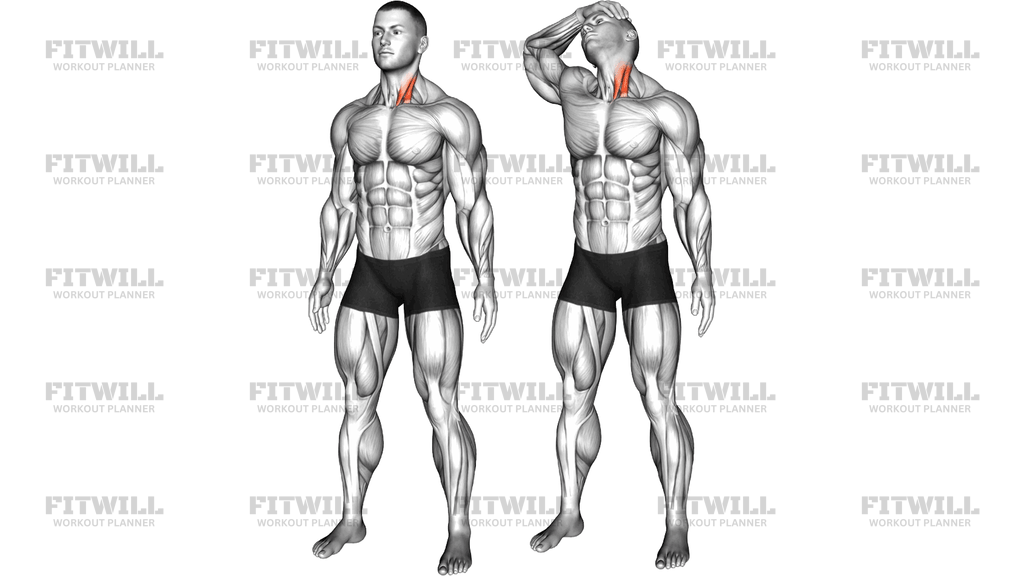
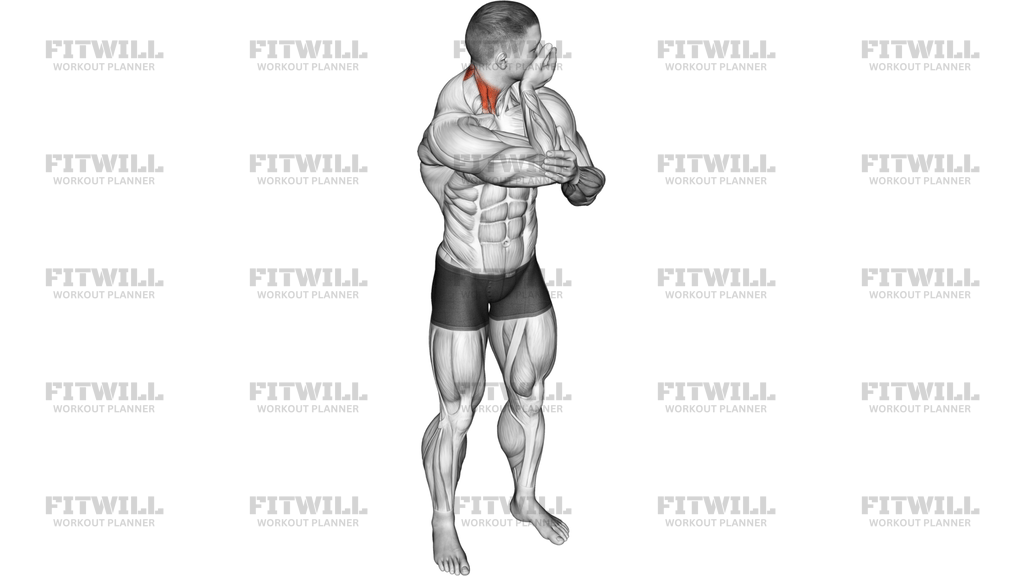
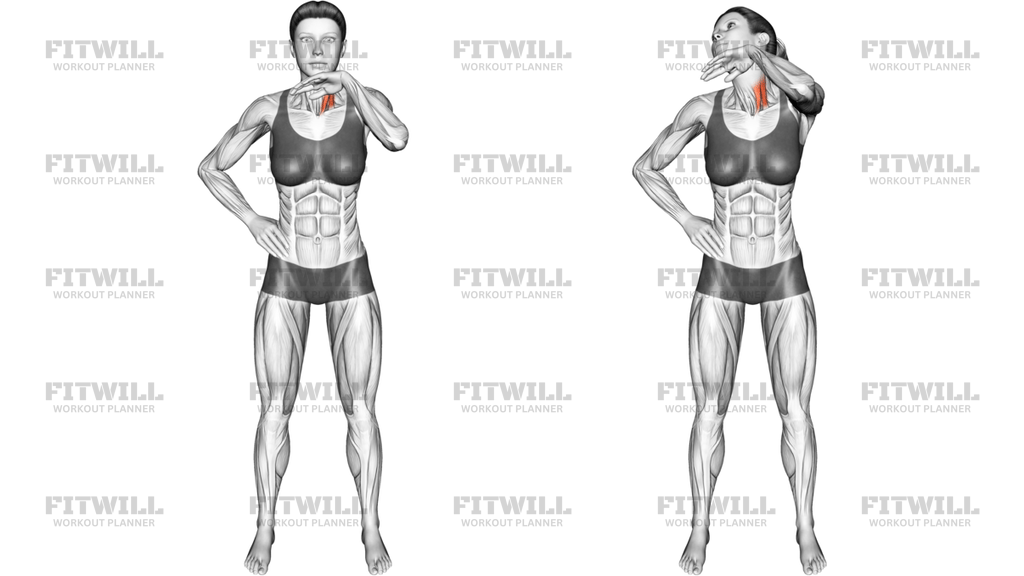
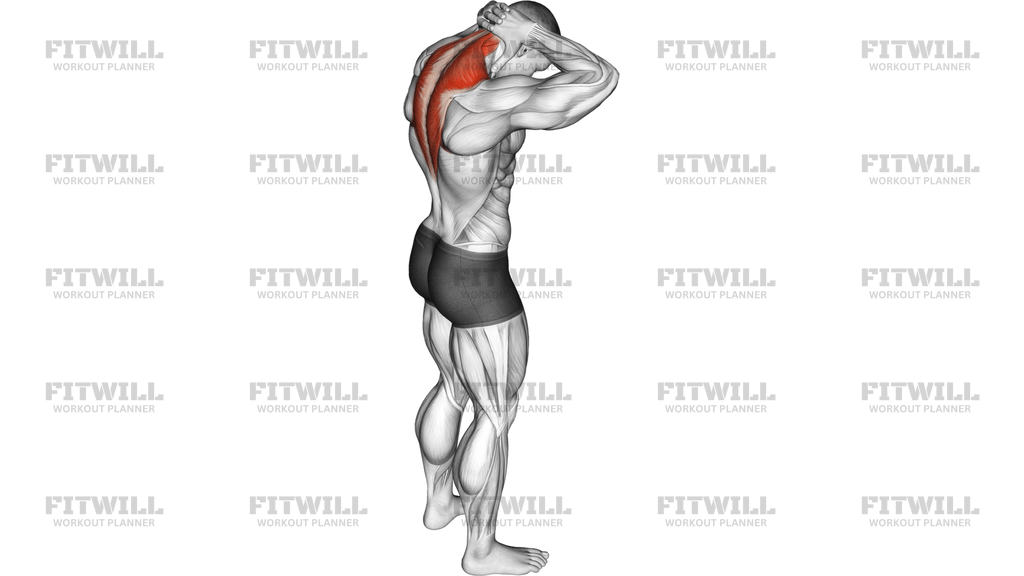
Assisted Chin Tuck
Assisted Chin Tuck is a standing neck-control drill that teaches you to slide the head straight back without tipping the chin up or dropping the chest. The exercise is usually done with a wall or upright reference behind you and a light hand cue at the chin so you can feel the line of travel. That assistance matters because the movement is small, and the goal is precision, not force.
The main training effect comes from the deep neck flexors and the muscles that keep the cervical spine stacked over the rib cage. When the rep is clean, the front of the neck works while the jaw stays relaxed, the shoulders stay down, and the torso does not lean backward to fake extra range. That makes the drill useful for posture work, neck activation, warm-ups, and rehab-style preparation when a coach wants a controlled reset rather than a heavy strength effort.
Start tall with the feet rooted and the ribs quiet. Keep the back of the head close to the wall or vertical line, then lightly guide the chin with the fingertips. The first move is a straight back glide of the head, followed by a small nod-like tuck that lengthens the back of the neck. The chin should move toward a gentle double-chin position while the eyes stay level and the neck feels long instead of compressed.
Quality matters more than range. A good repetition finishes with the head stacked over the shoulders, the neck relaxed, and the front of the throat working without jaw tension or shoulder hiking. If you need to push hard with the hand, lean into the wall, or arch the low back to get motion, the rep has gone too far. Use the smallest range that stays smooth, pain-free, and repeatable.
This is a simple exercise, but it pays off when it is done with patience and exact positioning. It is especially useful for beginners, people who spend long hours at a desk, and lifters who want better head-and-neck control before pressing, pulling, or overhead work. Keep the tempo slow, breathe normally, and stop the set if the neck starts to shake, pinch, or lose the stacked alignment you were trying to train.
Fitwill
Log Workouts, Track Progress & Build Strength.
Achieve more with Fitwill: explore over 9600 exercises with images and videos, access built-in and custom workouts, perfect for both gym and home sessions, and see real results.
Start your journey. Download today!




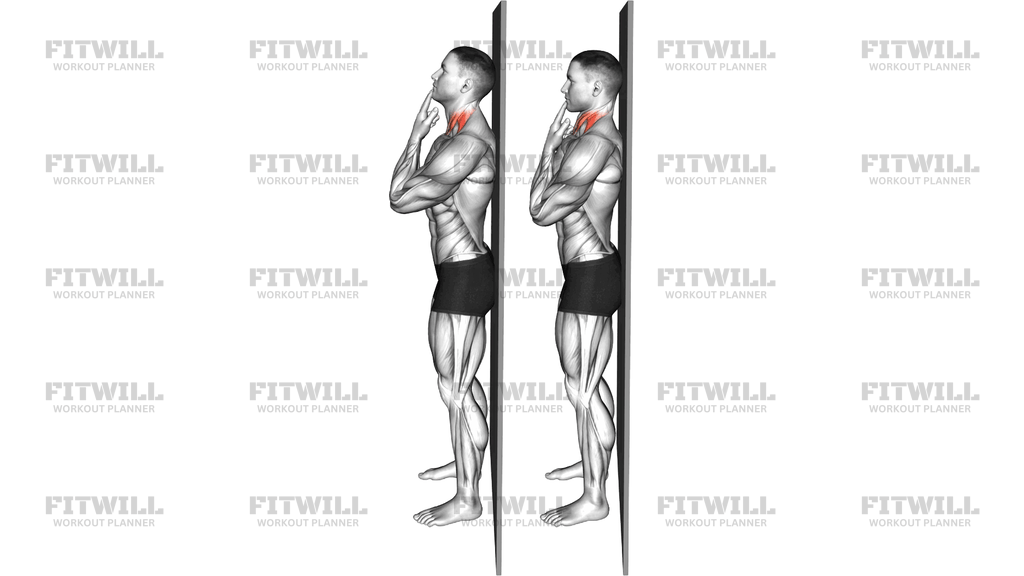
Instructions
- Stand tall with your feet hip-width apart and your back close to a wall or vertical reference.
- Let the back of your head, upper back, and hips stay lightly stacked so you can feel when the neck starts to drift forward.
- Place one or two fingertips on the chin as a light guide, not a push.
- Draw the head straight back first, as if making a small double chin, while keeping the eyes level.
- Keep the jaw loose and the shoulders down as the neck lengthens against the wall cue.
- Pause for a brief moment when the head is stacked over the shoulders and the back of the neck feels long.
- Return slowly to the starting position without jutting the chin forward.
- Breathe out during the tuck and inhale as you reset for the next rep.
- Repeat for the planned number of repetitions with the same small, clean range.
Tips & Tricks
- Think of the head sliding straight back, not tilting up toward the ceiling.
- Keep the chin effort gentle; the fingers are a cue, not something you pull against hard.
- If the chest lifts or the ribs flare, you are losing the stacked posture the drill is meant to train.
- A small range done cleanly is better than forcing the head far back and cranking the neck.
- Keep the back of the neck long; the front of the throat should do the work without jaw clenching.
- Use the wall as a reference so you can tell whether the occiput is drifting forward.
- Move slowly enough that you could stop the rep at any point without losing position.
- Stop if the movement creates pinching, dizziness, or a sharp pull instead of a smooth muscle effort.
Frequently Asked Questions
What does an Assisted Chin Tuck train?
It mainly trains the deep neck flexors and the muscles that help keep the head stacked over the shoulders.
Why use a wall or vertical reference for this movement?
The wall makes it easier to feel when the head glides back without the chin jutting forward or the torso leaning away.
How much should I push with my hand on the chin?
Very little. The hand should guide the motion and give feedback, not force the head backward.
Should my chin move down or straight back?
It should travel mostly straight back first, with only a small tuck, so the neck lengthens instead of collapsing.
What should I feel during a good rep?
You should feel a gentle effort at the front of the neck and a long, organized feeling through the back of the neck, not strain in the jaw or shoulders.
Can I do this if I work at a desk all day?
Yes. It is commonly used as a posture drill for people who sit for long periods and want better head positioning.
What are the most common mistakes with chin tucks?
Pushing the chin forward, flaring the ribs, shrugging the shoulders, and forcing too much range are the biggest ones.
Is this exercise for beginners?
Yes. Beginners usually do best with slow reps, a very light hand cue, and a small pain-free range.