Zigzag Hopes
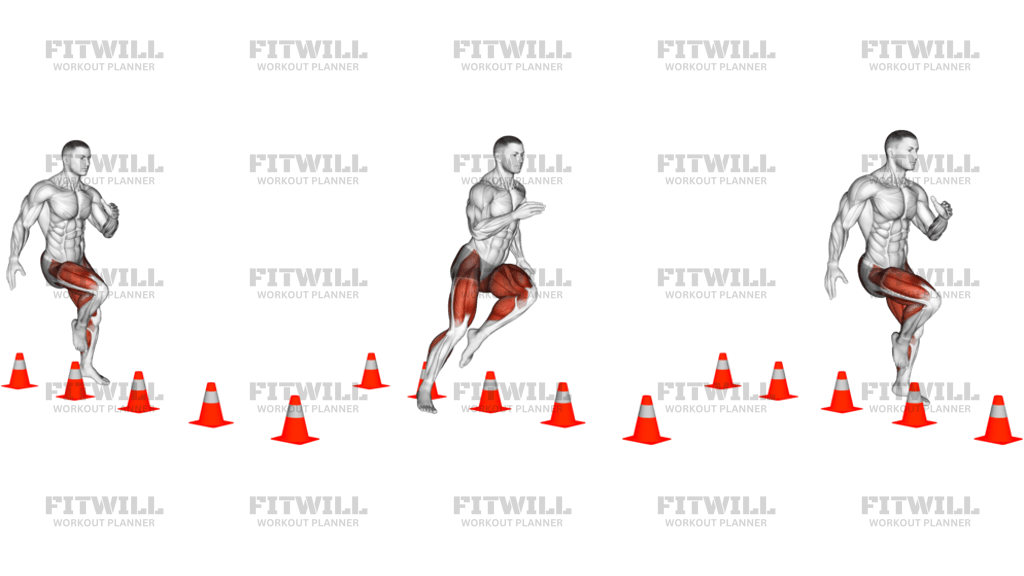
Zigzag Hops is a bodyweight plyometric drill built around quick diagonal bounds between markers. It challenges lower-body power, foot speed, and coordination without needing external load, so it fits well in warm-ups, conditioning circuits, and sport prep sessions. The zigzag path makes you change direction repeatedly instead of simply hopping in a straight line, which raises the demand on balance and control.
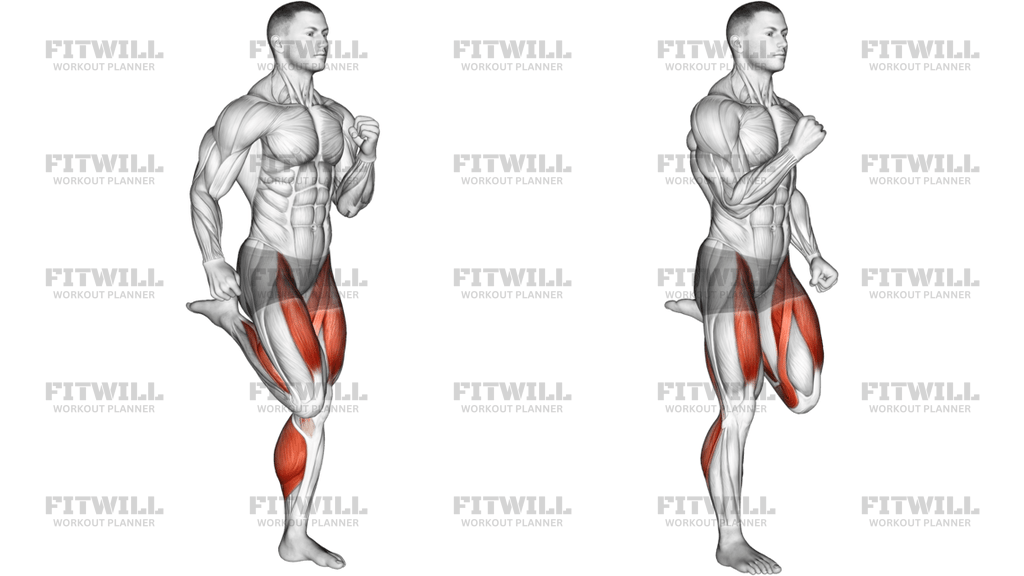
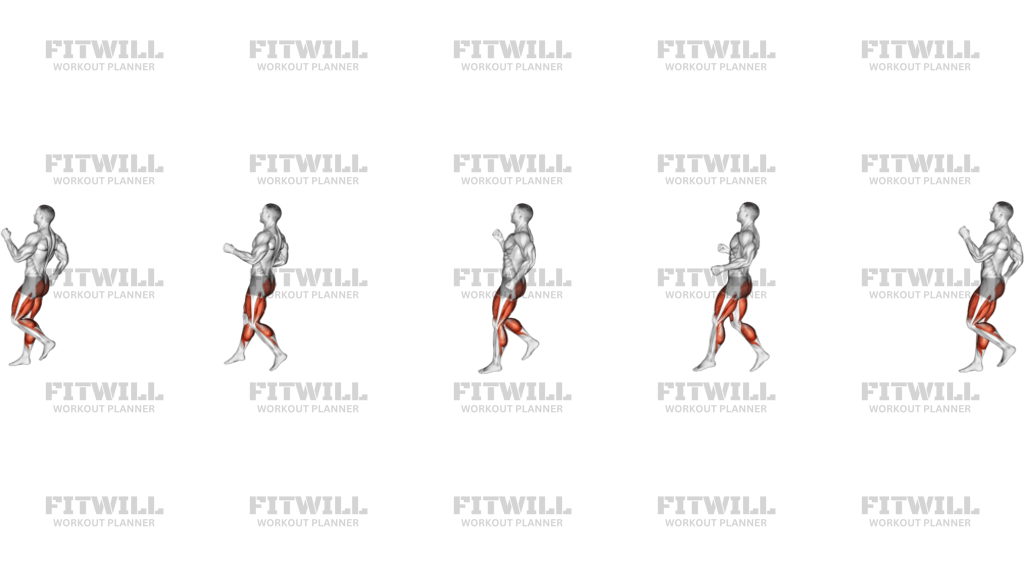
The main work comes from the calves, quads, glutes, and hip stabilizers, with the core helping keep the trunk steady as you travel from cone to cone. Because the movement is reactive, the quality of each landing matters as much as the jump itself. Soft, centered landings teach the legs to absorb force and rebound efficiently.
Set the cones or floor markers in a shallow zigzag with enough room to land cleanly between them. Start in an athletic stance with knees slightly bent, chest tall, and eyes forward, then load into the first hop by sitting back just enough to keep the hips under control. The arms should move like a sprint drill, helping you stay quick without twisting your torso.
As you hop, push through the forefoot, travel diagonally to the next marker, and land under your center of mass instead of reaching too far. Keep the hops low and snappy, use a brief contact time, and rebound immediately into the next direction change. If the pattern starts to get noisy, crooked, or sluggish, shorten the distance or stop the set before the mechanics break down.
Zigzag Hops work well as a prep drill before running, court sports, or lower-body power work, and they can also serve as a short conditioning interval when you want a higher heart rate with minimal equipment. Beginners can start with fewer markers, slower rhythm, or a two-foot version before moving to harder single-leg bounds. The goal is not just speed; it is crisp foot placement, stable knees, and repeatable landings from the first rep to the last.
[ Workout Log & Planner ]
Put your next workout in Fitwill
Keep your plan and training log ready when you are.


Instructions
- Place 4-6 cones or floor markers in a shallow zigzag with enough room between them for clean landings.
- Stand at the first marker in an athletic stance with your feet about hip-width apart, knees soft, chest tall, and eyes forward.
- Lower into a small quarter squat and load the first hop while keeping your torso square to the path.
- Swing your arms and hop diagonally to the next marker, driving the free knee forward as you leave the floor.
- Land softly on the ball of the foot with the knee tracking over the toes and the hips staying level.
- Rebound quickly into the opposite diagonal hop, keeping each jump low, fast, and controlled instead of chasing height.
- Keep your breathing rhythmic and your core firm so your trunk does not twist as you change direction.
- Finish the last marker under control, step out of the pattern, and reset before starting the next set.
Tips & Tricks
- Set the markers close enough that you can land cleanly without reaching for the floor or drifting off line.
- Keep the hops low; if your head rises a lot, you are jumping too high for a drill that should stay quick.
- Land quietly. Loud foot strikes usually mean you are not absorbing force through the ankle, knee, and hip.
- Use your arms to keep rhythm, not to whip your torso sideways while you change direction.
- Keep the knees tracking in line with the toes on every landing so the zigzag stays stable.
- If you clip cones, widen the pattern before you try to make the hops faster.
- Stop the set when your contacts get sticky, uneven, or noticeably slower.
- For conditioning, use short bursts of 10-20 seconds instead of long sets that turn into sloppy bouncing.
Frequently Asked Questions
What muscles do Zigzag Hops work most?
Zigzag Hops mainly train the calves, quads, glutes, and hip stabilizers, with the core helping keep the trunk steady as you change direction.
Are Zigzag Hops good for beginners?
Yes, if you shorten the spacing and slow the rhythm. Beginners can also use a two-foot version before moving to harder single-leg bounds.
Should I land on one foot or two during Zigzag Hops?
The drill is usually done with alternating single-leg landings, but a two-foot hop version is a useful regression if your balance or landing control is limited.
How high should I jump in Zigzag Hops?
Just high enough to travel cleanly to the next marker. The drill should look fast and springy, not like a max vertical jump.
What if my torso keeps turning as I hop?
Slow the drill down and keep your chest square to the zigzag path. Think of the arms as a rhythm cue, not a way to yank the shoulders around.
Can I do Zigzag Hops without cones?
Yes. Tape marks, floor spots, or chalk lines work just as well as long as the spacing gives you a clear diagonal target.
When should I use Zigzag Hops in a workout?
They work best in a warm-up, athletic prep block, or short conditioning interval before the legs are too fatigued.
What is the biggest safety mistake with Zigzag Hops?
Most problems come from making the pattern too wide or doing too many reps until the landings get loud and uncontrolled.