Kneeling Plank Tap Shoulder
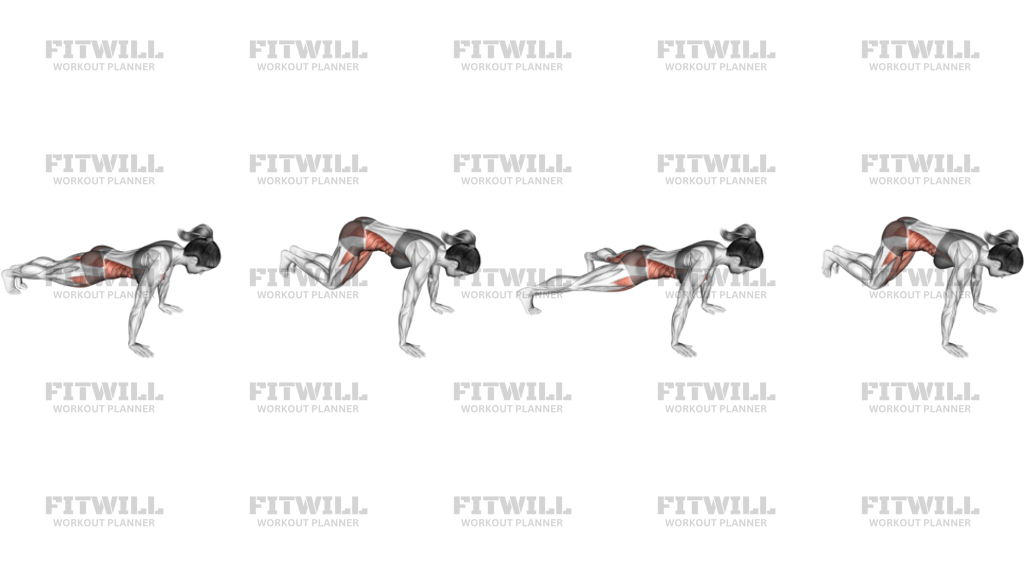
Kneeling Plank Tap Shoulder is a bodyweight anti-rotation drill that trains the trunk and shoulder girdle to stay organized while one hand leaves the floor. In the kneeling plank variation, the knees stay grounded so you can focus on keeping the torso long, the pelvis level, and the ribcage from twisting as you alternate shoulder taps. It is less about speed and more about controlling the shift in bodyweight without letting the lower back sag or the hips sway.
This exercise is useful when you want core work that carries over to pressing, crawling, and plank-based stability training. The working muscles are not just the abs. The shoulders, serratus, glutes, and deep spinal stabilizers all have to coordinate so the support arm stays steady while the free hand reaches across to the opposite shoulder. That is why the setup matters: if the hands are too far forward, the shoulders drift; if the ribs flare, the low back takes over; if the knees are too narrow or the hips are soft, the body starts rocking.
The best version starts from a clean kneeling plank with the hands under the shoulders and the knees down on a mat or floor. Brace before each rep, press firmly through the support hand, and lift the opposite hand only as far as you can without shifting the torso. The tap should be brief and controlled, with the hand returning to the floor under the shoulder before the next rep begins. A small, strict range is better than reaching far and twisting through the spine.
Use this movement as a warm-up drill, accessory core exercise, or part of a shoulder-stability block. It fits well in circuits where you want the trunk to resist rotation while the upper body works in a closed-chain position. Beginners can use it early because the kneeling variation reduces leverage, but the exercise still exposes poor control quickly if the hips drift or the neck cranes forward.
Keep the rep quality high by moving slowly enough to own each transition and stopping the set when the body starts to rotate. If the shoulder tap turns into a side-to-side sway, the drill has stopped training the right pattern. The goal is a quiet torso, a steady support side, and a controlled tap that makes the core do the stabilizing work instead of momentum.
[ Workout Log & Planner ]
Put your next workout in Fitwill
Keep your plan and training log ready when you are.


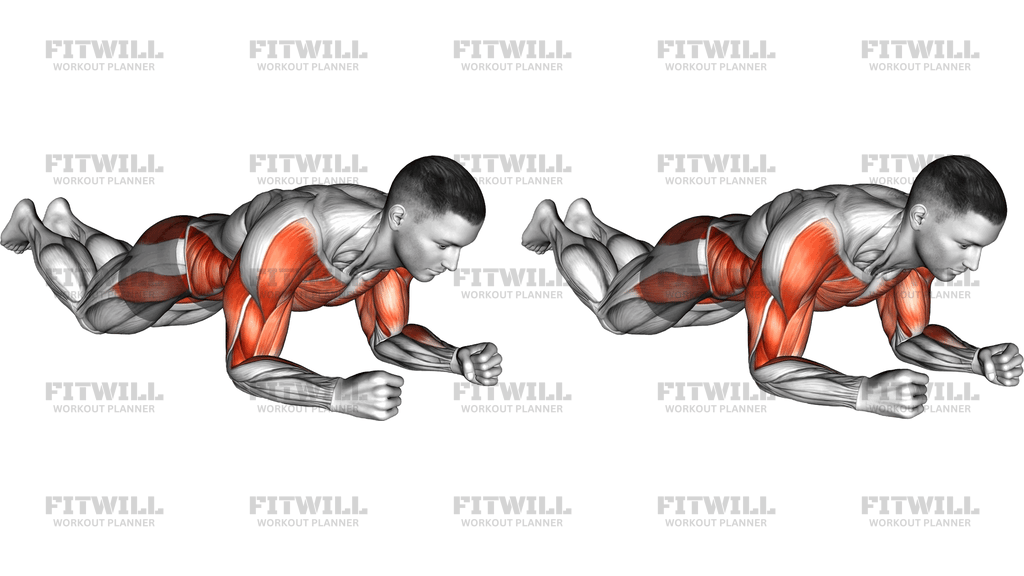
Instructions
- Kneel on a mat and place both hands on the floor under your shoulders with your arms straight and your torso long from head to knees.
- Walk your hands just far enough forward that your shoulders stay stacked over your wrists and your ribs do not collapse toward the floor.
- Brace your abs and squeeze your glutes so your pelvis stays level before you lift either hand.
- Shift your weight slightly into one support hand without letting your hips twist or your chest drop.
- Lift the opposite hand and tap the front of your shoulder on the other side with a short, controlled reach.
- Return the hand to the floor under your shoulder and re-establish a steady base before the next rep.
- Alternate sides for the planned reps while keeping your breathing slow and even.
- Finish by lowering your hips to the floor and resting your wrists and shoulders.
Tips & Tricks
- Keep the knees down if your hips start rocking; the kneeling version should make control easier, not harder.
- Press the floor away through the support hand so the shoulder stays active instead of collapsing into the joint.
- Tap the opposite shoulder lightly; if you have to reach far across the chest, the torso is probably twisting.
- Keep the ribs from flaring up, because that is usually the first sign the low back is taking over.
- Move at a slow, even tempo so the free hand does not create momentum on the way back to the floor.
- Let the support side feel firm and quiet while the working side moves; the exercise is about resisting motion more than creating it.
- If your neck tightens, shorten the rep and look slightly ahead of your hands instead of tucking the chin.
- Stop the set when the hips begin to shift side to side, even if your shoulders still feel fresh.
Frequently Asked Questions
What does Kneeling Plank Tap Shoulder train most?
It mainly trains anti-rotation core strength, with the shoulders and serratus working hard to keep the plank stable.
Is the kneeling version easier than a full plank shoulder tap?
Yes. Keeping the knees down shortens the lever and makes it easier to control hip rotation while you learn the pattern.
Where should my hands and shoulders be in the setup?
Place your hands directly under your shoulders and keep your shoulder blades controlled rather than shrugged up toward your ears.
Why do my hips twist when I tap my shoulder?
Usually the reach is too large or the brace is too soft. Shorten the tap and keep the ribs and pelvis square to the floor.
Should I tap across my chest or directly to the shoulder?
Tap directly to the opposite shoulder with a short reach. Crossing far across the chest usually adds unnecessary rotation.
What muscles should I feel working?
You should feel the abs, obliques, shoulder stabilizers, and glutes holding the body steady while the hand moves.
How can I make this exercise harder?
Use a slower tempo, hold the tap for a second, or progress to a full plank shoulder tap with the knees off the floor.
What is the most common mistake to avoid?
The biggest mistake is letting the hips sway from side to side as the hand leaves the floor.