Kettlebell Half Turkish Get Up
Kettlebell Half Turkish Get Up is a floor-based strength and stability drill that takes you from lying on your back to a tall half-kneeling position while keeping one arm locked out overhead. It is a slower, more technical version of the Turkish get-up that asks the shoulders, trunk, hips, and legs to work together instead of letting momentum do the work. The lift is small compared with a full get-up, but the control demand is high from the first rep to the last.
This movement is especially useful when you want to train overhead stability, torso control, and hip coordination in the same drill. The kettlebell should stay stacked over the shoulder the whole time, which is why the setup matters so much: if the wrist, elbow, and shoulder are not aligned at the start, every transition becomes harder. Clean reps build better positions for pressing, carrying, and other unilateral work.
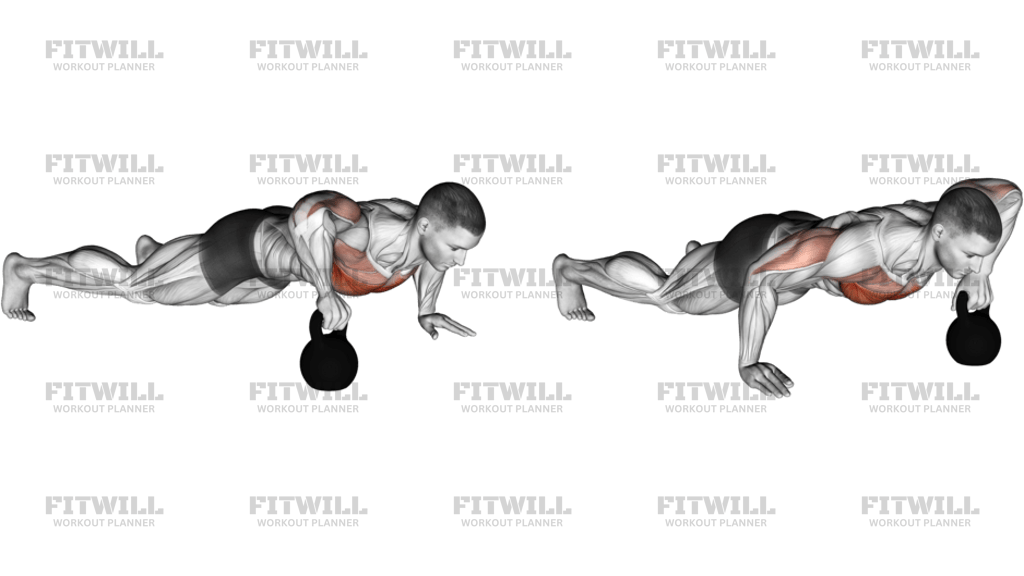
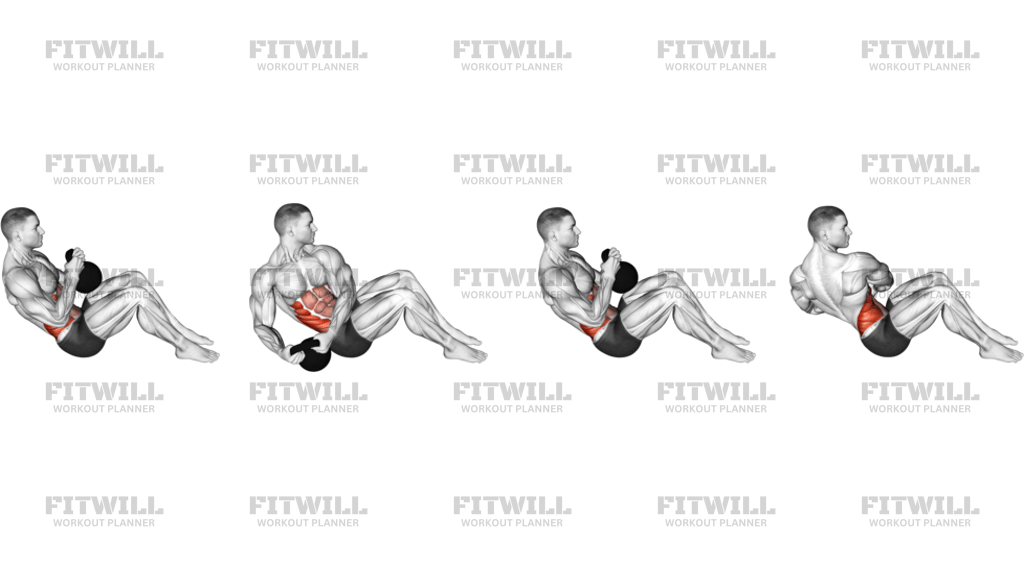
The exercise usually starts with one knee bent, the opposite leg long, and the free arm out to the side for balance. From there, you roll to your elbow, post on the hand, bridge the hips, and sweep the long leg underneath until you reach a stable half-kneeling base. Each phase should feel deliberate, with the kettlebell staying vertical and the chest turning with the body rather than drifting away from it.
Because the load is held overhead while the body changes positions, the half get-up is less about brute force and more about timing, breathing, and joint stacking. It is a good accessory for lifters who need stronger shoulders, better core stiffness, or more confidence moving from the floor. Keep the rep smooth, stop if the kettlebell starts wobbling, and choose a weight that lets you own every transition without rushing the return to the floor.
Fitwill
Log Workouts, Track Progress & Build Strength.
Achieve more with Fitwill: explore over 9600 exercises with images and videos, access built-in and custom workouts, perfect for both gym and home sessions, and see real results.
Start your journey. Download today!




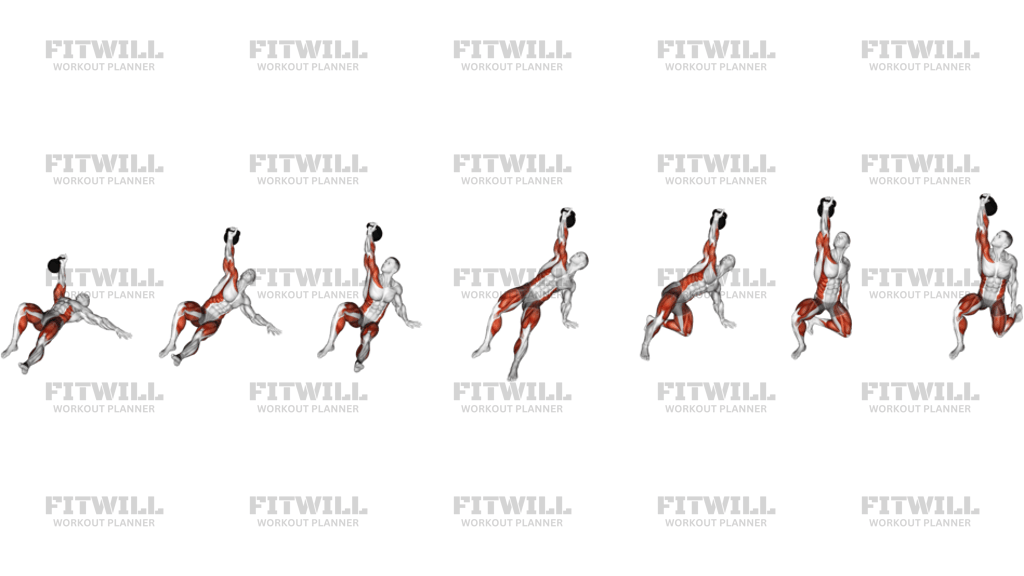
Instructions
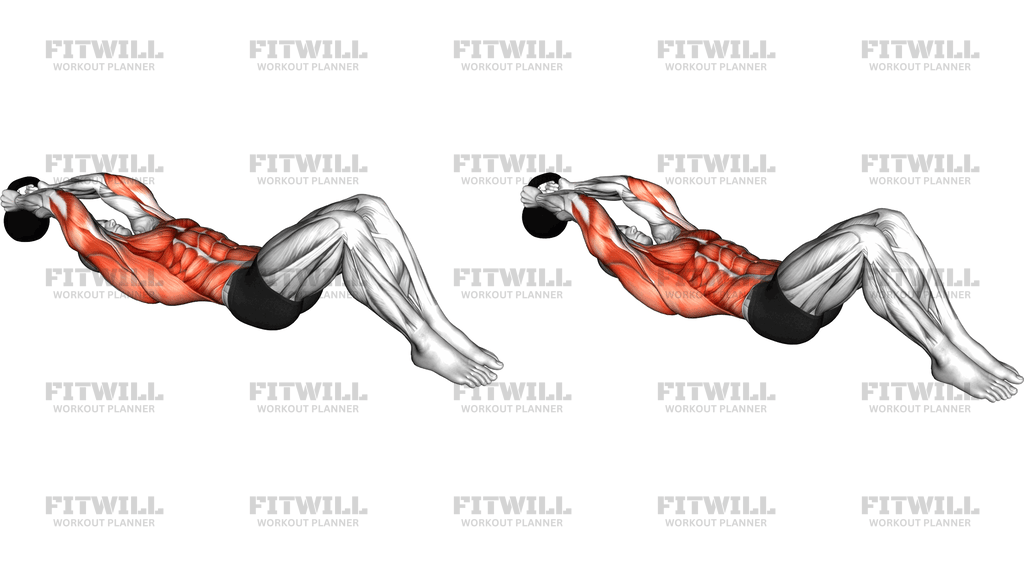
- Lie on your back with the kettlebell in one hand, arm straight above the shoulder, that knee bent, the opposite leg long, and the free arm angled out from your side.
- Lock your wrist, stack the kettlebell over the shoulder, and look at the weight before you start the rep.
- Press the planted foot into the floor and roll onto the opposite elbow while keeping the kettlebell vertical.
- Push the floor away with the elbow and press up onto the hand, turning your chest slightly toward the kettlebell.
- Drive through the bent foot to lift the hips, creating space for the long leg to sweep underneath you.
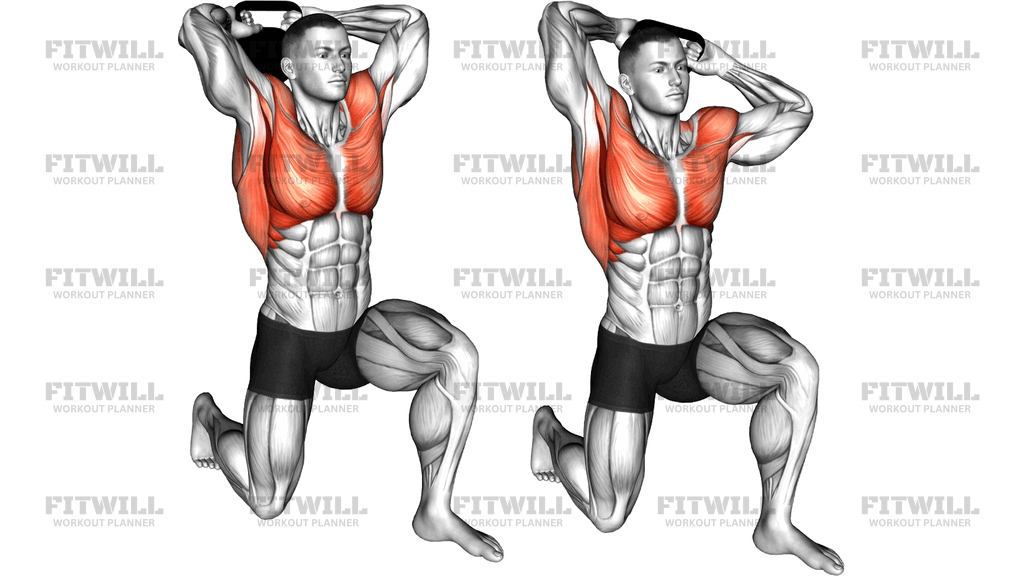
- Thread the long leg back under your body and bring the shin into a half-kneeling base.
- Finish tall with ribs down, glutes on, and the kettlebell still stacked directly over the shoulder.
- Reverse the sequence one step at a time to return to the floor, then repeat on the other side.
Tips & Tricks
- Keep your eyes on the kettlebell until you are back on the floor; losing the bell is a common way to lose the shoulder stack.
- Think of the overhead arm as a fixed post. If the elbow bends during the roll or bridge, the rep is too heavy.
- When you post on the hand, keep the shoulder packed down instead of shrugging toward the ear.
- Drive the hips up just enough to clear the sweeping leg; an exaggerated bridge usually means the timing is off.
- Sweep the long leg in a wide arc instead of dragging the foot straight through, which helps keep the hips open.
- In the half-kneeling finish, keep the front knee pointing forward so the shin does not collapse inward.
- Exhale during the roll and the hand-off, then take a steady breath at the top before starting the descent.
- Use a light kettlebell if the wrist drifts back or the bell wobbles when you move from elbow to hand.
Frequently Asked Questions
What muscle does Kettlebell Half Turkish Get Up target most?
Other is the primary target muscle group.
Can beginners perform this exercise?
Yes, beginners can use it with light resistance and controlled technique.
How heavy should I train this movement?
Choose a load that allows clean repetitions without compensating with momentum.
What is a common mistake to avoid?
The most common issue is rushing reps and losing control of posture and range.
How many repetitions are usually recommended?
Moderate to higher rep ranges are commonly used, depending on the training goal.
Should I feel this in supporting muscles too?
Some support-muscle involvement is normal, but the main effort should stay on the target area.
Can I include this in a full-body routine?
Yes, it can fit well as accessory work within full-body or split routines.
How can I progress this exercise over time?
Progress by increasing load gradually, improving control, and keeping execution quality high.