Oblique Crunches With Bent Knee Leg Lift
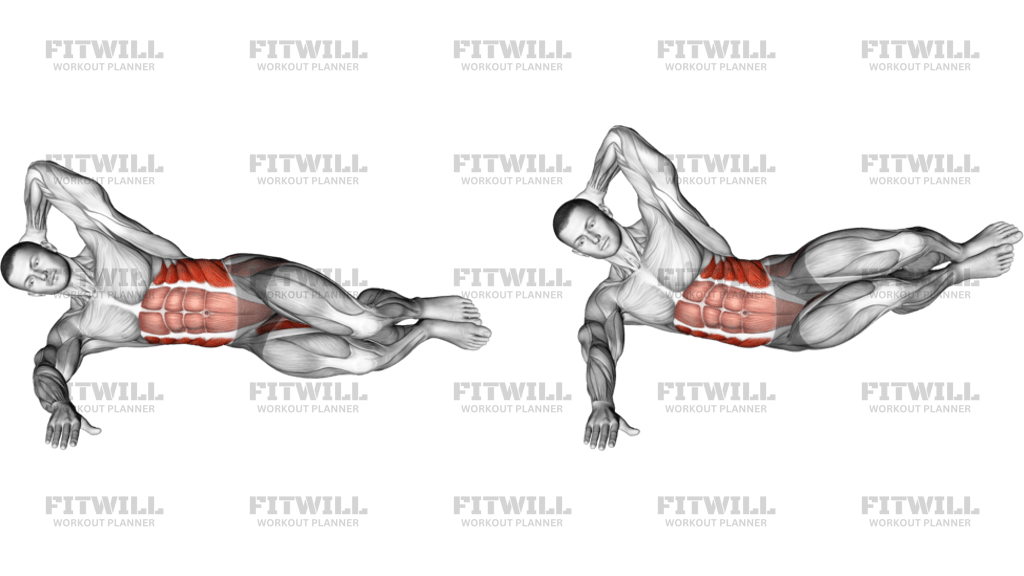
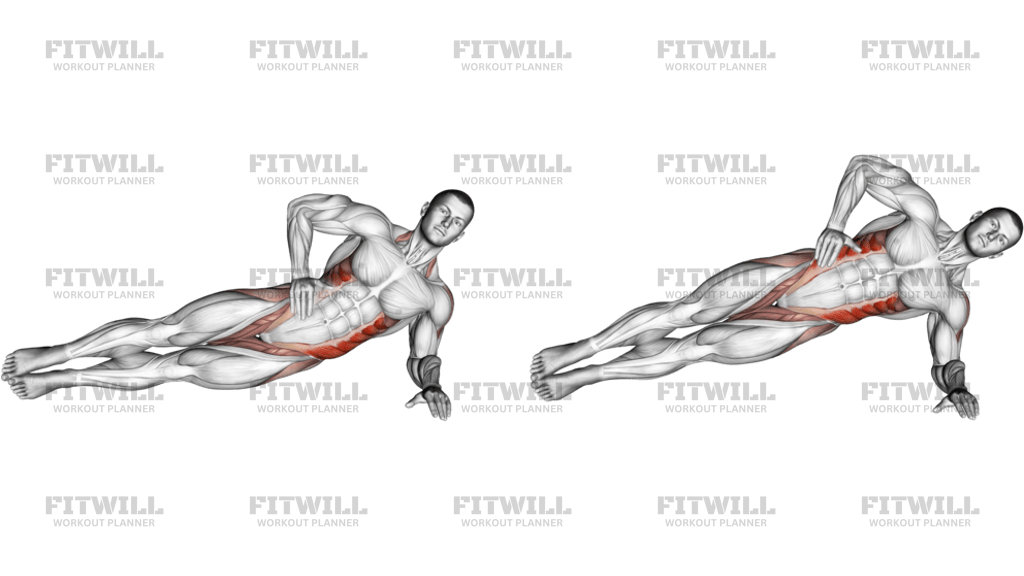
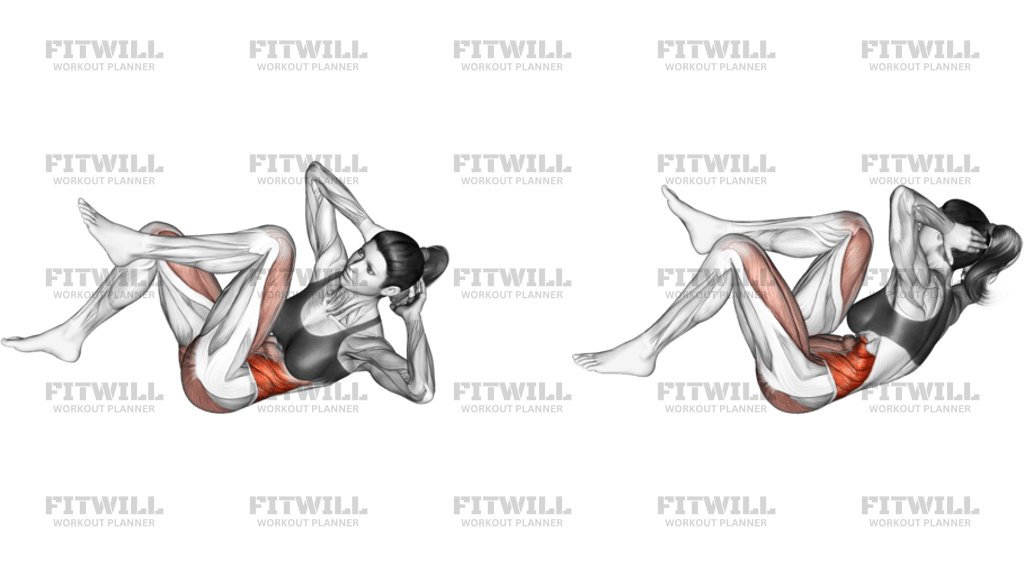
Oblique Crunches With Bent Knee Leg Lift is a floor-based bodyweight core exercise that combines a side crunch with a small bent-knee lift. In the image, the body stays mostly on one side while the torso curls upward and the knees travel in toward the ribs, so the movement is best thought of as a controlled squeeze through the side waist rather than a fast twisting rep. It is a useful option when you want direct abdominal work without loading the spine with external weight.
The main training effect comes from the obliques, with the rectus abdominis, hip flexors, and shoulder stabilizers helping to keep the body organized. Oblique Crunches With Bent Knee Leg Lift is especially valuable because the bent-knee position makes it easier to isolate the side body and control the range. The movement is small, but the quality of each rep matters: the torso should curl, the ribs should close, and the hips should stay stacked instead of rolling backward.
The setup drives the result. Lie on a mat on one side, support the upper body with the bottom forearm, place the top hand lightly behind the head, and bend both knees so the legs can lift together without swinging. Keep the neck long, the bottom shoulder packed, and the ribs pulled down before the first repetition. If the body starts out twisted or collapsed, the rep usually turns into a neck pull or a hip swing instead of a clean oblique contraction.
During each repetition, lift the upper ribs toward the top hip while the bent legs rise with them. Exhale through the crunch, pause briefly at the top, then lower slowly until the shoulder and hip are just above the floor. The goal is not a huge range of motion; it is a repeatable squeeze that stays smooth from the first rep to the last. If the top elbow closes hard, the pelvis rolls backward, or the legs fling upward, the set has drifted away from the intended pattern.
Oblique Crunches With Bent Knee Leg Lift fits well in core circuits, warmups, and accessory work because it teaches torso control, lateral flexion strength, and coordinated hip-torso movement without equipment. It can be scaled easily for beginners by shortening the range or slowing the tempo, and it can be made harder by extending the top leg more or adding a longer pause at the top. Keep the motion strict and side-specific so each side works evenly and the set finishes with the same control it started with.
[ Workout Log & Planner ]
Put your next workout in Fitwill
Keep your plan and training log ready when you are.


Instructions
- Lie on one side on a mat with your bottom forearm under your shoulder, your top hand lightly behind your head, and both knees bent and stacked.
- Keep your chest slightly rolled forward, your hips stacked, and your neck long before you start the first rep.
- Draw your ribs down and brace your midsection so the movement starts from the side waist instead of the lower back.
- Lift your upper shoulder and rib cage toward your top hip while keeping the elbow open and the head relaxed in your hand.
- At the same time, lift the bent legs upward in a small arc so the knees travel toward the torso without swinging.
- Pause briefly at the top when the obliques are fully shortened and the torso and legs are both under control.
- Lower the torso and legs slowly until the shoulder and hip are just above the floor, then reset without collapsing.
- Finish all reps on one side, switch sides, and repeat with the same setup and tempo.
Tips & Tricks
- Keep the bottom elbow directly under the shoulder so the support arm does not dump pressure into the neck.
- Think about pulling the ribs toward the hip, not about yanking the elbow toward the knee.
- Let the legs rise with the crunch instead of kicking them upward; the lift should look compact and deliberate.
- Keep the top elbow wide so the hand does not turn the movement into a neck pull.
- If the pelvis rolls backward, shorten the leg lift and keep the knees stacked.
- Exhale as the side waist closes and inhale on the slow return to the floor.
- Use a smaller range if the lower back starts to arch or the torso loses its side-lying position.
- Stop the set when the movement turns into momentum, because the target muscles stop doing the work.
Frequently Asked Questions
What muscles does Oblique Crunches With Bent Knee Leg Lift work?
It mainly trains the obliques, with the rectus abdominis, hip flexors, and shoulder stabilizers helping through the lift.
Is Oblique Crunches With Bent Knee Leg Lift beginner-friendly?
Yes. The bodyweight setup is easy to scale, and beginners can keep the range small while learning to curl the ribs and lift the bent legs together.
Should my legs stay on the floor during Oblique Crunches With Bent Knee Leg Lift?
No. The bent legs lift with the torso, which is part of what makes the exercise different from a basic side crunch.
How high should I lift in Oblique Crunches With Bent Knee Leg Lift?
Lift only until the side waist shortens cleanly and the pelvis stays stacked. Bigger range is not better if the hips roll backward or the neck takes over.
Why does my neck hurt during Oblique Crunches With Bent Knee Leg Lift?
Usually the top hand is pulling the head or the elbow is closing too much. Keep the elbow open and think ribs-to-hip instead.
Can I do Oblique Crunches With Bent Knee Leg Lift on a bench instead of the floor?
A mat is the safest choice. A bench can make it harder to keep the torso stacked and the hips controlled, which reduces the quality of the rep.
How can I make Oblique Crunches With Bent Knee Leg Lift harder?
Slow the lowering phase, add a brief pause at the top, or extend the top leg a little more while keeping the torso from twisting.
What is the biggest mistake in Oblique Crunches With Bent Knee Leg Lift?
The biggest mistake is turning the rep into a swing. If the knees fling up or the torso rolls backward, the obliques lose the tension.