Dumbbell Side Bridge
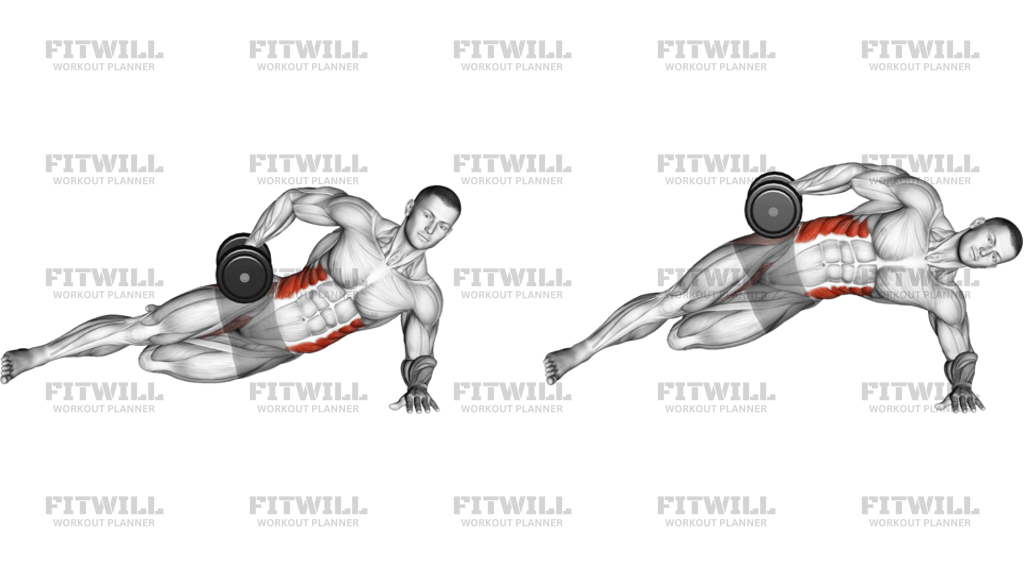
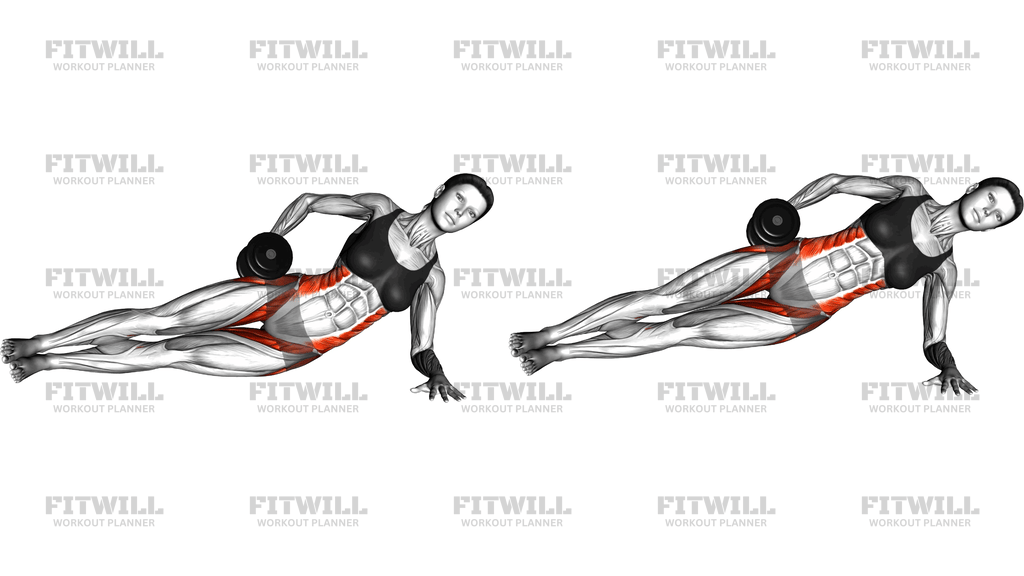
Dumbbell Side Bridge is a loaded side plank variation that challenges the lateral core while also asking the shoulder, hip, and trunk stabilizers to keep the body in one straight line. In the image, the dumbbell is placed on the upper hip/waist so the obliques have to fight both gravity and the extra downward load. That makes the exercise useful for building side-to-side trunk strength, better pelvic control, and more stable bracing in carries, presses, running, and contact sports.
The main job is to keep the torso from sagging, twisting, or drifting forward while the supporting arm and the side of the trunk share the load. The external obliques are the primary driver, with the rectus abdominis, transverse abdominis, glute medius, quadratus lumborum, and shoulder stabilizers helping keep the line from shoulder to ankle clean. Because the weight sits on the hip, small position changes matter: if the hips rotate or the rib cage flares, the dumbbell becomes harder to control and the tension leaks away from the target muscles.
This exercise works best when the setup is deliberate. Stack the body on the side, press the floor away through the bottom hand, and set the feet so you can balance without wobbling before you even lift. The dumbbell should rest securely on the upper hip or waist, not slide down toward the thigh or roll onto the abdomen. Once you lift, your task is to create a long line from the supporting shoulder to the ankles and keep the pelvis level while breathing quietly under tension.
The movement itself is simple: lift into the side bridge, hold the position, then lower with control. A good rep or timed hold should feel hard through the side of the waist and upper hip, not painful in the low back or collapsed in the shoulder. If the shoulder shrugs, the hips drift backward, or the dumbbell shifts position, the set is too heavy or the hold is too long.
Use Dumbbell Side Bridge as an accessory core exercise, a warm-up drill for trunk stability, or a finishing hold when you want anti-lateral-flexion work without a machine. It is beginner-friendly when the load is light and the hold is short, but the position is demanding enough that clean form matters more than duration. The goal is a steady, stacked side plank that keeps the dumbbell planted and the torso rigid from the first second to the last.
[ Workout Log & Planner ]
Put your next workout in Fitwill
Keep your plan and training log ready when you are.


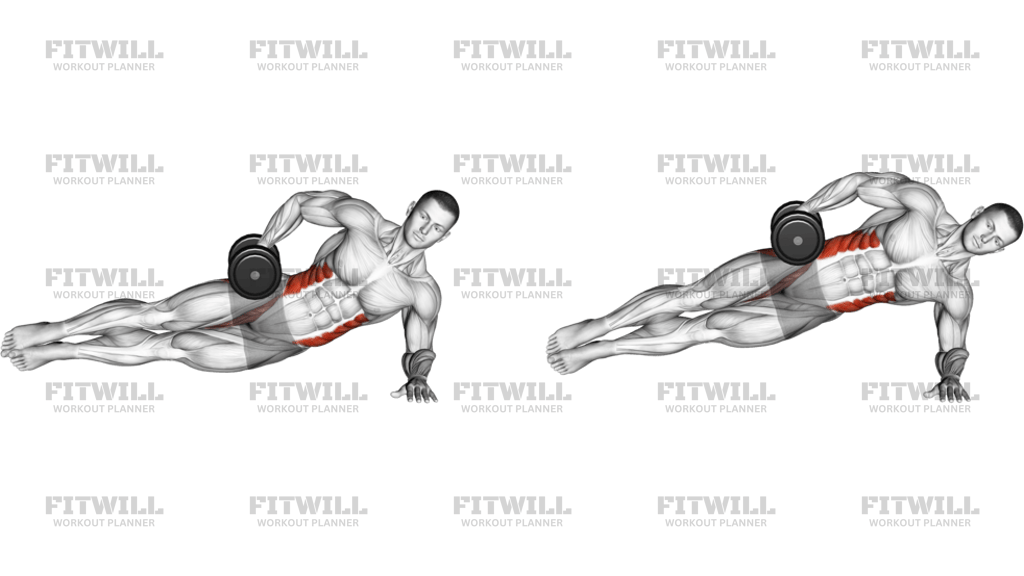
Instructions
- Lie on one side with your bottom hand on the floor under your shoulder and your legs straight, stacked, or with the top foot slightly forward for balance.
- Place the dumbbell on the upper hip/waist of the side facing up and steady it with the top hand if needed before you lift.
- Brace your midsection, tuck the ribs slightly, and press the floor away through the supporting hand.
- Lift the hips until your body makes a straight line from head to ankles without rolling the torso forward or backward.
- Keep the top hip from drifting behind you and keep the dumbbell centered over the side of the pelvis.
- Hold the top position while breathing in short, controlled breaths through the brace.
- Lower the hips slowly until they nearly touch the floor, keeping the dumbbell from sliding or bouncing.
- Reset your shoulder and foot position before the next hold or repetition.
Tips & Tricks
- Pick a dumbbell that stays planted on the hip without forcing you to clamp your whole body to keep it in place.
- If your shoulder feels crowded, move the supporting hand a little farther under the shoulder so the joint stays stacked instead of reaching forward.
- A staggered top foot usually makes the hold steadier than perfectly stacked feet when the load is heavy or your balance is limited.
- Keep the bottom side of the waist from collapsing toward the floor; that dip usually means the obliques are losing tension.
- Do not let the top ribs flare up toward the ceiling, or the hold turns into a back-extension compensation instead of a side-core exercise.
- Short, quiet exhales help you stay braced without losing position under the dumbbell.
- If the weight starts rolling toward the stomach or thigh, shorten the hold and reset the placement before the next rep.
- Stop the set when the supporting shoulder shrugs or the pelvis starts to rotate, because those are the first signs the side bridge is breaking down.
Frequently Asked Questions
What muscle does Dumbbell Side Bridge target most?
The obliques do most of the work, especially the external obliques on the side facing the floor. The shoulder and hip on the supporting side help keep the body stacked.
Where should the dumbbell sit during the side bridge?
It should rest on the upper hip or waist of the top side, not on the abdomen or thigh. The goal is to keep it centered so it adds load without sliding.
Should my supporting arm be straight or bent?
Use the arm position shown in the image and keep the shoulder stacked over the hand. The key is a strong support point, not a specific elbow angle.
How do I know if I am holding the side plank correctly?
Your body should look like one straight line from head to ankles, with the hips lifted and the ribs controlled. If the pelvis twists or sinks, the hold is too hard.
Is this more of a hold or a repetition exercise?
It can be programmed either way. Most people use timed holds, but you can also perform controlled lift-and-lower reps if your coach programs it that way.
Why use a dumbbell instead of a regular side bridge?
The dumbbell adds direct load to the hip/waist line, which increases the demand on the side core without changing the basic side-plank position.
What are the most common mistakes with this exercise?
Letting the shoulder shrug, letting the hips sag, rotating the torso forward, or allowing the dumbbell to slide are the biggest form leaks.
Can beginners do Dumbbell Side Bridge?
Yes, but start with a short hold and a light dumbbell, or even no load, until you can keep the body stacked without wobble.
What should I do if the dumbbell keeps slipping?
Use a lighter load, shorten the hold, and reset the dumbbell on the upper hip before each rep. A thicker mat can also make the setup more stable.
What should I feel if the form is right?
You should feel a strong side-core effort through the waist and a steady support effort in the shoulder and hip, without sharp pain in the lower back.