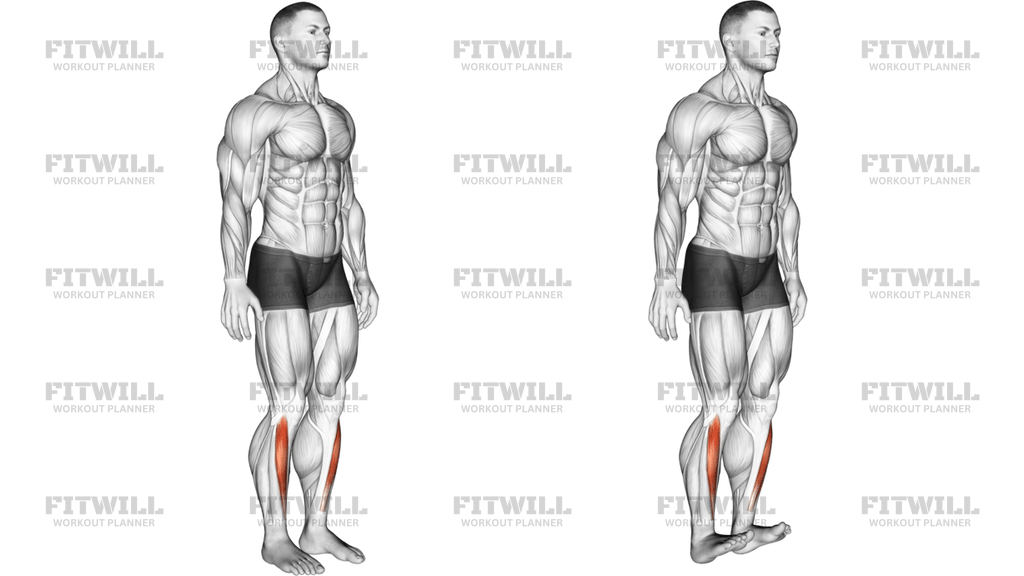
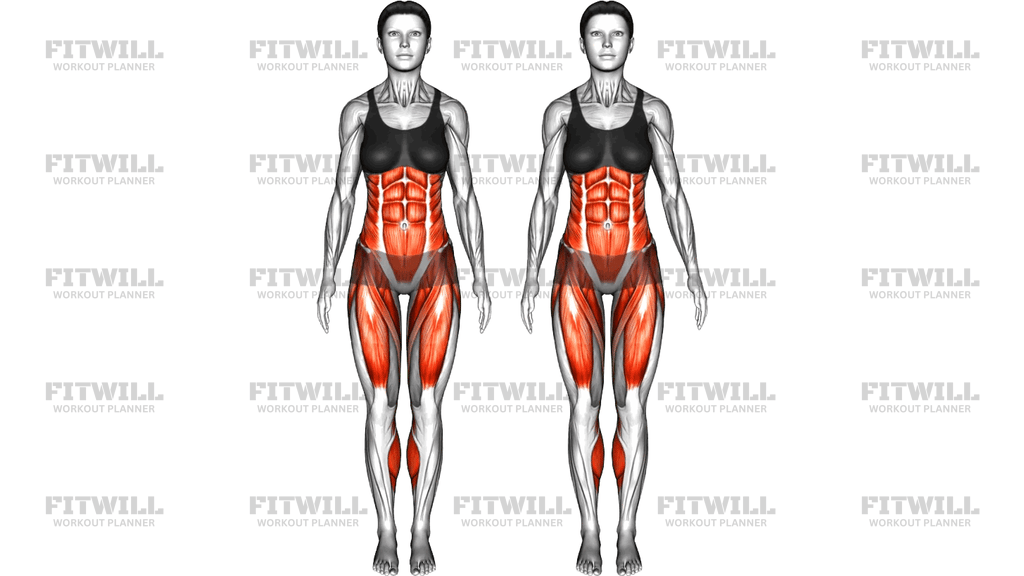
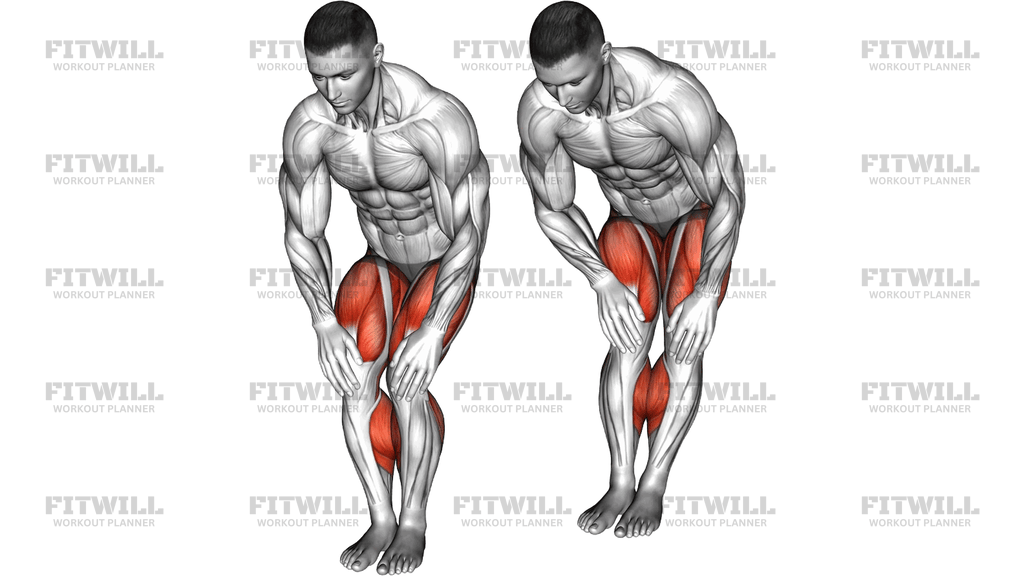
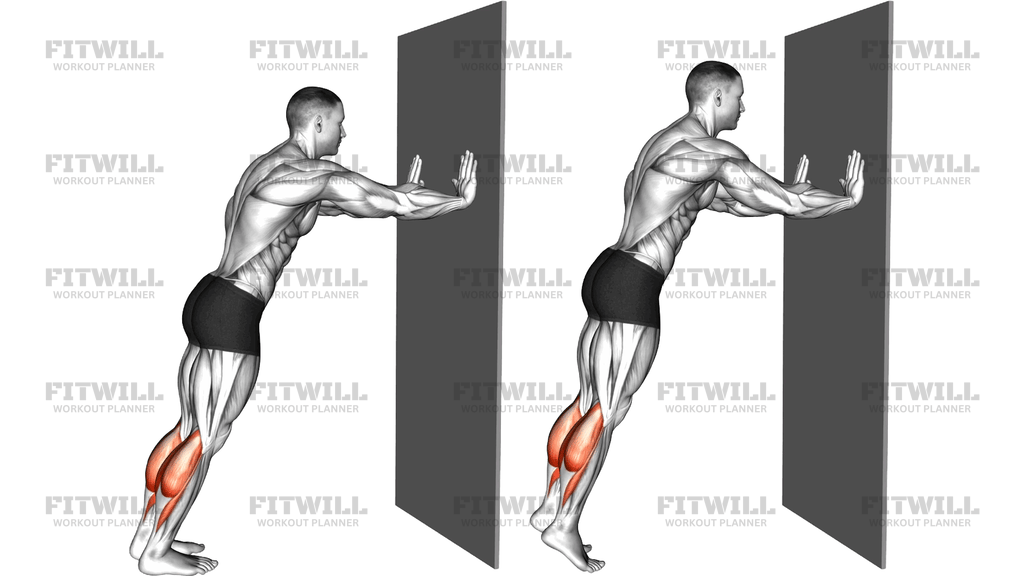
Deficit Calf Raise With Chair Supported
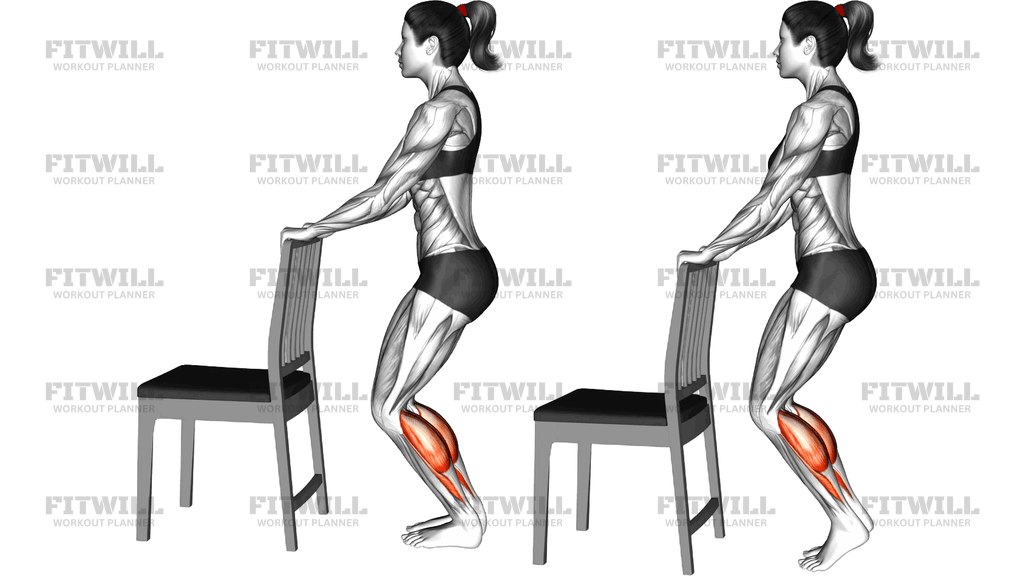
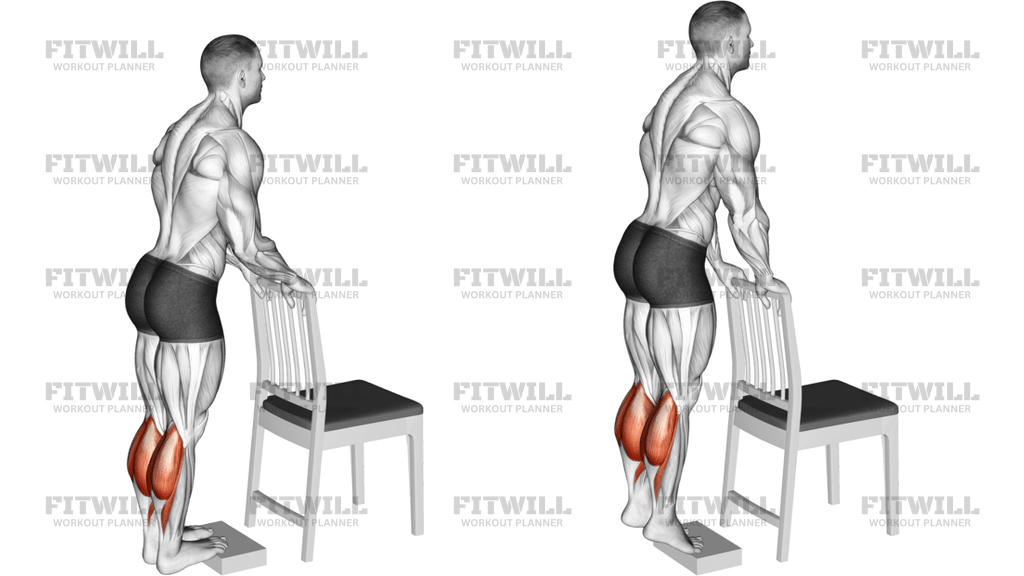
Deficit Calf Raise With Chair Supported is a standing bodyweight calf exercise performed with the forefeet on a small raised step and the hands resting lightly on a chair for balance. The deficit lets the heels drop below floor level, which increases the stretch on the calves at the bottom of each rep and makes the top contraction feel more deliberate. This is a simple setup, but the quality of the repetition depends on keeping the movement strictly at the ankle instead of turning it into a bounce or a hip hinge.
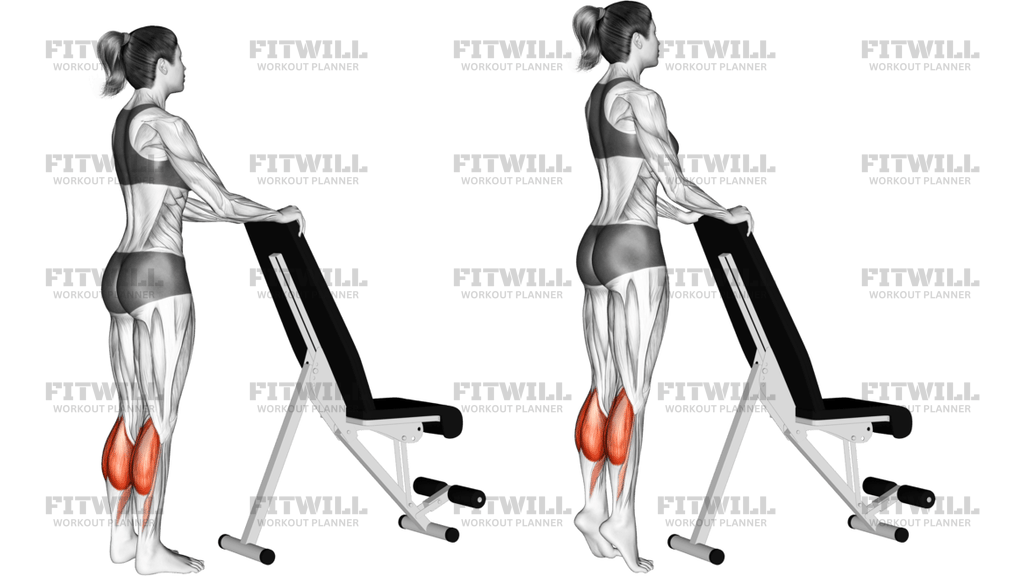
The main muscles trained here are the calves, especially the gastrocnemius and soleus, with the chair acting only as a support point for balance. Because the movement is done standing, the feet, ankles, and lower legs also have to stabilize the body through the full range. That makes this a useful option when you want direct calf work without loading a machine or barbell.
The setup matters. Stand on the edge of the step with the balls of both feet planted and the heels free to move up and down. Hold the chair just enough to stay steady, keep the ribs stacked over the pelvis, and let the ankles start from a long stretched position before each lift. If the chair carries too much of your bodyweight, or if your knees bend and straighten to fake the rep, the calves lose tension and the deficit stops doing its job.
On the way up, drive through the forefeet and lift the heels as high as you can without leaning forward or twisting the torso. At the top, squeeze the calves briefly and keep the ankles stacked rather than rolling outward. On the way down, lower slowly until the heels sink below the step and the calf stretch is clear but still controlled. That long eccentric and bottom stretch are the main reasons to use this version.
Use this exercise as accessory calf work, as part of a lower-body session, or during a warm-up when you want to wake up the ankle complex before squats, jumps, or running. It can be made harder with a slower tempo, a longer pause at the top, or one leg at a time once the basic bilateral version is solid. Keep the motion smooth, keep the chair light, and stop the set if you start using momentum from the hips or bouncing through the bottom.
[ Workout Log & Planner ]
Put your next workout in Fitwill
Keep your plan and training log ready when you are.


Instructions
- Stand on the edge of a small step or plate with the balls of both feet planted and the heels hanging free off the back.
- Place a chair or sturdy support in front of you and hold the top lightly for balance, not to pull yourself up.
- Keep your feet about hip-width apart, knees soft, and torso tall with the ribs stacked over the pelvis.
- Let your heels sink below the edge until you feel a clear calf stretch without losing balance.
- Press through the balls of your feet and raise both heels as high as possible.
- Pause briefly at the top and squeeze the calves without leaning forward or bouncing.
- Lower slowly back into the deficit until the heels are below the step again.
- Keep the movement smooth for the full set and stop if you start pushing off the chair or shifting your weight side to side.
Tips & Tricks
- Use the chair only as a balance point; if your hands are doing the work, the calves are no longer the limiter.
- Keep the pressure on the big toe, little toe, and heel line of the forefoot so the ankles do not roll outward at the top.
- A slower lowering phase increases the stretch on the calves and makes the deficit more productive.
- Do not bend the knees deeply to shorten the range; this version is meant to stay mostly straight-legged.
- If the step is too high, the bottom stretch can turn into ankle pinching, so choose a height you can control.
- Stay tall through the chest instead of leaning into the chair, or the rep will drift away from pure calf work.
- Pause for a second at the top when the heels are high to avoid using a bouncing rhythm.
- When fatigue starts, the first thing to clean up is the descent, because sloppy lowering usually shows up before the lift does.
Frequently Asked Questions
What muscles does a deficit calf raise with chair support work most?
It primarily trains the calves, especially the gastrocnemius and soleus, with the ankles and foot muscles helping stabilize the movement.
Why use a deficit instead of standing flat on the floor?
The raised edge lets the heels drop lower, which increases the stretch at the bottom and gives the calves a bigger range to work through.
How much should I hold onto the chair?
Just enough to stay balanced. If you are pushing or pulling hard on the chair, the exercise stops being a true bodyweight calf raise.
Should my knees stay straight on this movement?
Keep them mostly straight with only a soft bend. Too much knee bend shifts the load away from the calf emphasis shown in the setup.
What is the most common mistake with the step?
Using a step that is too high or bouncing out of the bottom stretch. The heels should lower under control, not drop and rebound.
Can beginners do this exercise?
Yes. Beginners should use a low step, a light chair touch, and a slower pace until they can keep the ankles moving smoothly.
Where should I feel the working rep?
You should feel it mainly in the calves, with a strong stretch near the bottom and a hard squeeze when the heels rise at the top.
How can I make it harder without adding weight?
Slow the lowering phase, pause at the top, or progress to single-leg work once the two-leg version is clean and stable.