Forward Lunge
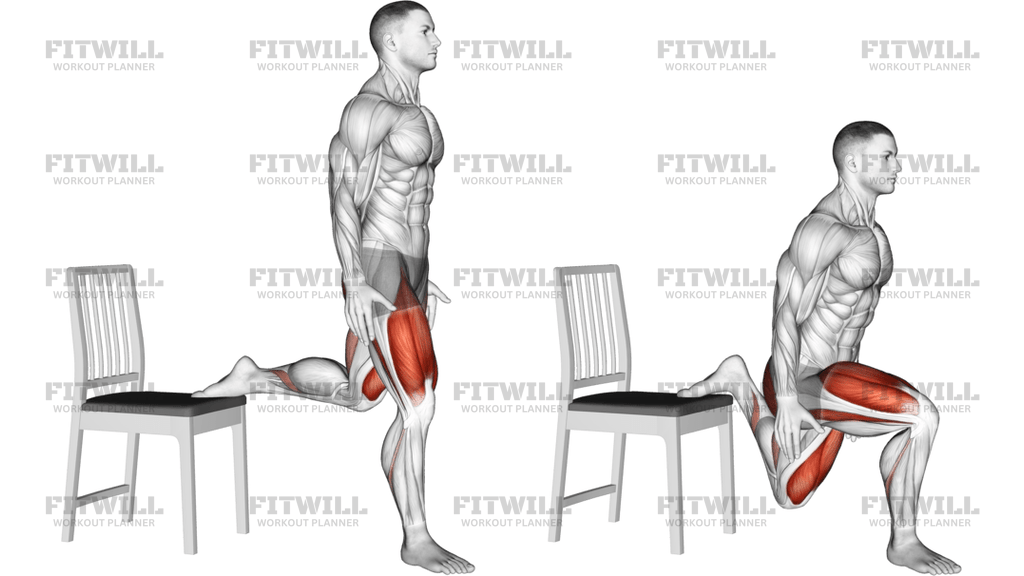
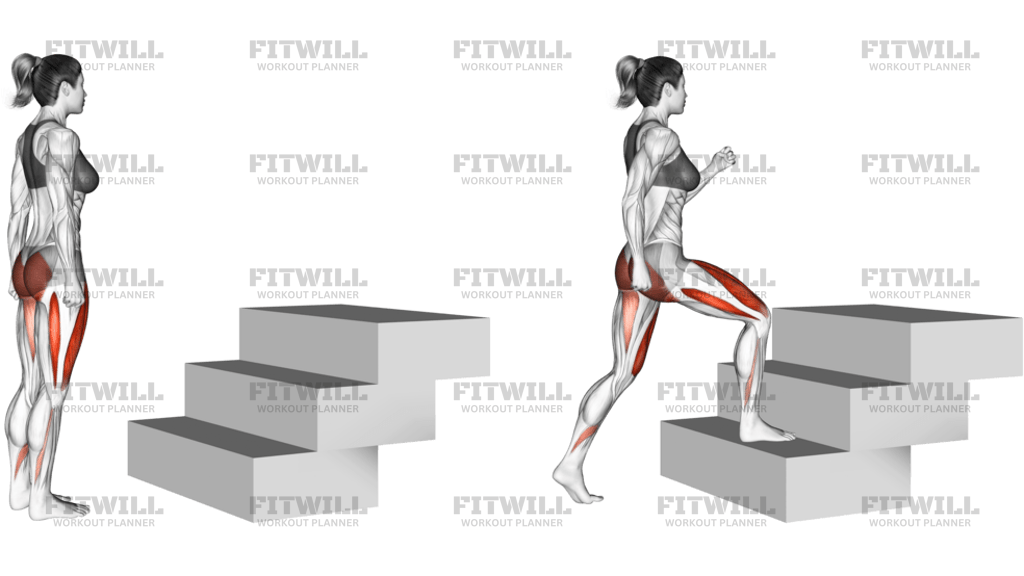
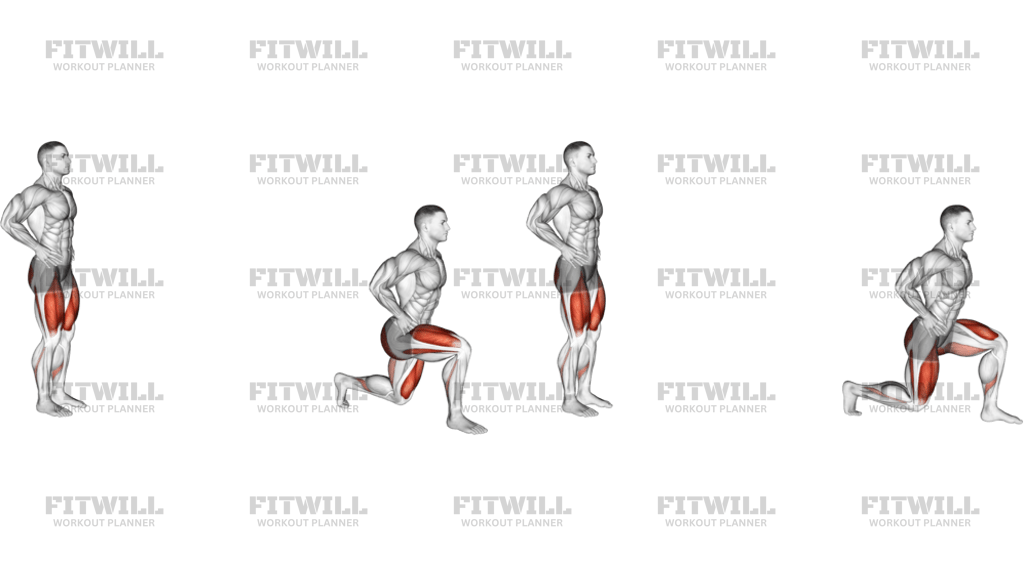
Forward Lunge is a bodyweight lower-body exercise built around a deliberate step forward, a controlled drop, and a strong drive back to standing. The image shows the classic standing-to-lunge pattern with hands on the hips, which keeps the focus on leg drive, pelvic control, and balance rather than arm swing. It is most often used to train the glutes and thighs together, with the back leg and trunk helping stabilize every rep.
The setup matters because the lunge is won or lost before you ever bend the knees. A clean forward lunge starts from a tall stance, feet under control, pelvis level, and the working foot landing far enough ahead that the front heel stays down and the torso does not fold. If the step is too short, the front knee shoots too far forward and the set becomes quad-dominant and unstable. If the step is too long, you lose the ability to drive smoothly back out of the bottom.
On the way down, lower straight toward the floor instead of collapsing forward. The front knee should track over the middle toes, the back knee should travel toward the floor, and the front foot should stay rooted through heel, big toe, and little toe. At the bottom, pause only long enough to prove control, then press through the front heel and midfoot to return to standing. Keep the torso tall, the ribcage stacked over the pelvis, and the breath steady so each rep looks the same.
Forward Lunge works well as a warm-up pattern, a bodyweight strength drill, or a regression before loaded split-stance work. It is also useful when you want unilateral leg training without a machine or bench. Use it early in the session when balance is fresh, or place it in a lower-body circuit if you want a simpler movement that still demands coordination. If the knees or hips feel irritated, shorten the range, slow the descent, or switch to a split squat until the motion is clean and pain-free.
Fitwill
Log Workouts, Track Progress & Build Strength.
Achieve more with Fitwill: explore over 9600 exercises with images and videos, access built-in and custom workouts, perfect for both gym and home sessions, and see real results.
Start your journey. Download today!




Instructions
- Stand tall with your feet about hip-width apart and your hands on your hips or hanging naturally at your sides.
- Step one foot forward in a long, controlled stride and land with the heel first, then the forefoot.
- Keep your torso tall as you lower, allowing both knees to bend while your front knee tracks over the middle toes.
- Drop the back knee straight toward the floor until it is just above the ground or until your range of motion starts to change.
- Keep the front heel planted and your weight centered over the front foot instead of drifting onto the toes.
- Pause briefly at the bottom without bouncing or shifting side to side.
- Press through the front heel and midfoot to stand back up, squeezing the front glute as you return.
- Bring the front foot back to the start, reset your posture, and alternate sides for the planned reps.
- Inhale as you lower and exhale as you drive back to standing.
Tips & Tricks
- Use a stride length that lets the front shin stay controlled; too short turns the movement into a forward knee shove.
- Keep both hip points facing forward so the pelvis does not twist toward the stepping leg.
- Let the back knee travel down, not back, so you keep tension in the legs instead of leaning into the lower back.
- Think about pushing the floor away with the front heel and big toe when you stand up.
- If balance is the weak link, touch a rack or wall lightly for feedback without turning the rep into a support drill.
- A small forward torso lean from the hips is fine, but rounding through the low back is not.
- Stop each rep before the front heel lifts; if it comes up, shorten the step or reduce depth.
- Use a slower lowering phase than the drive up so the glutes and thighs control the bottom position.
Frequently Asked Questions
What muscles work most during a Forward Lunge?
The main work goes to the glutes and thighs, with the hamstrings, calves, and core helping stabilize the step and the return to standing.
Is Forward Lunge different from a walking lunge?
Yes. In a forward lunge, you step out and usually return to the start before the next rep. A walking lunge keeps moving forward from rep to rep.
How far should I step forward?
Step far enough that the front heel stays down and the torso stays tall. If the front knee shoots too far past the toes, the stride is probably too short.
Where should my front knee track?
Let it travel in line with the middle toes, not collapsing inward or drifting far outside the foot.
How low should the back knee go?
Lower it until it is just above the floor or until your pelvis and torso start to lose position. The depth should stay smooth and controlled.
Can beginners use this exercise?
Yes. Beginners usually do best with bodyweight only, a shorter range at first, and a stable floor so they can learn the step and balance pattern.
Why do I feel this in my front thigh more than my glutes?
That usually means the step is too short or the torso is too upright for your current mechanics. A slightly longer stride and a cleaner push through the heel usually shift more work to the glute.
Can I make Forward Lunge harder later?
Yes. Once the bodyweight version is stable, you can hold dumbbells, slow the lowering phase, or add a brief pause at the bottom.