Lying Leg Tuck Hip Twist To Left Stretch
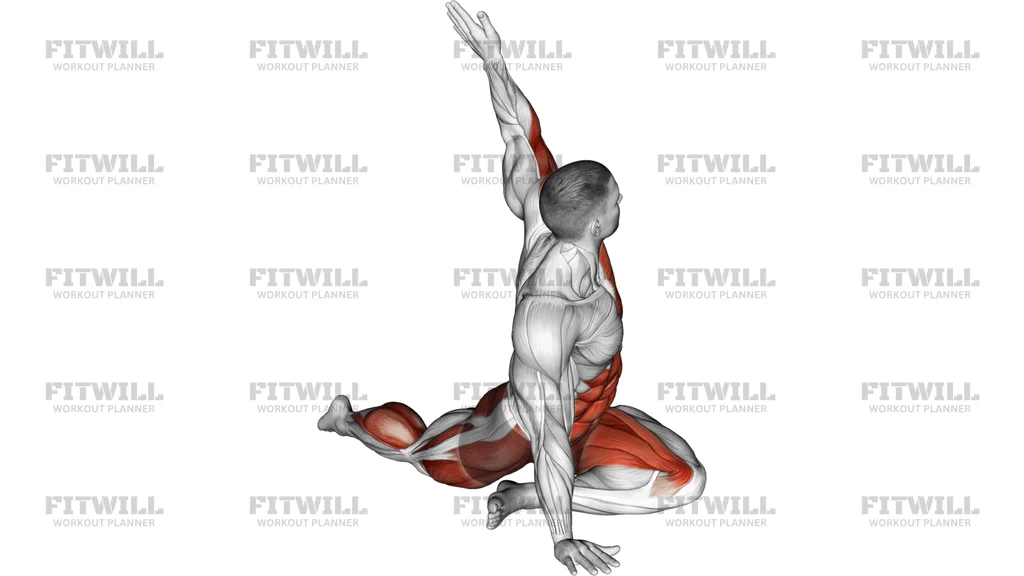
Lying Leg Tuck Hip Twist To Left Stretch is a floor-based hip mobility drill that combines a tucked-leg position with a controlled leftward torso rotation. The goal is to open the outer hip, glute, and deep hip rotators on the left side while keeping the pelvis settled and the spine long. It is not a speed drill or a power movement; the value comes from how cleanly you can hold the position, breathe, and rotate without letting the knees or low back take over.
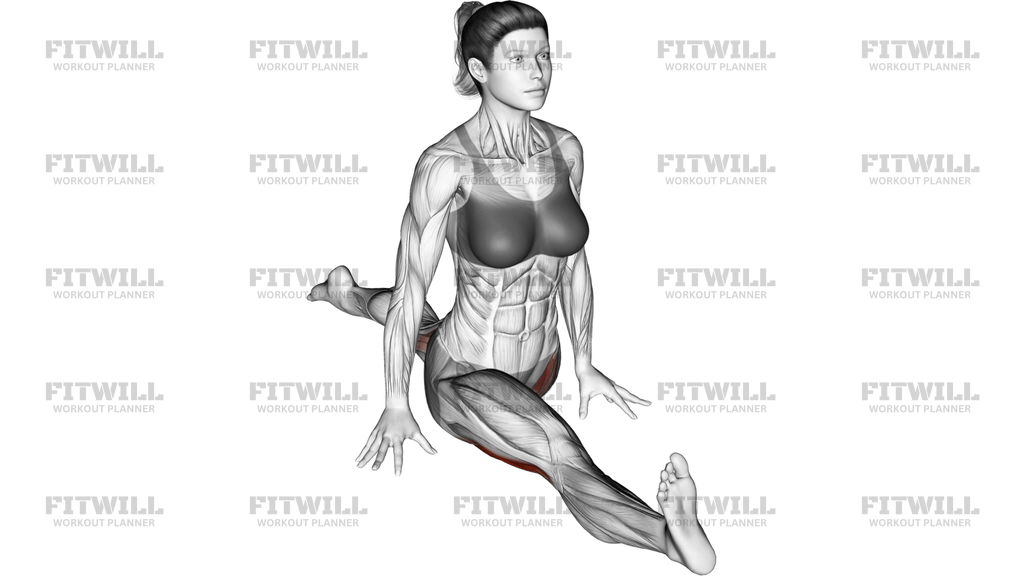
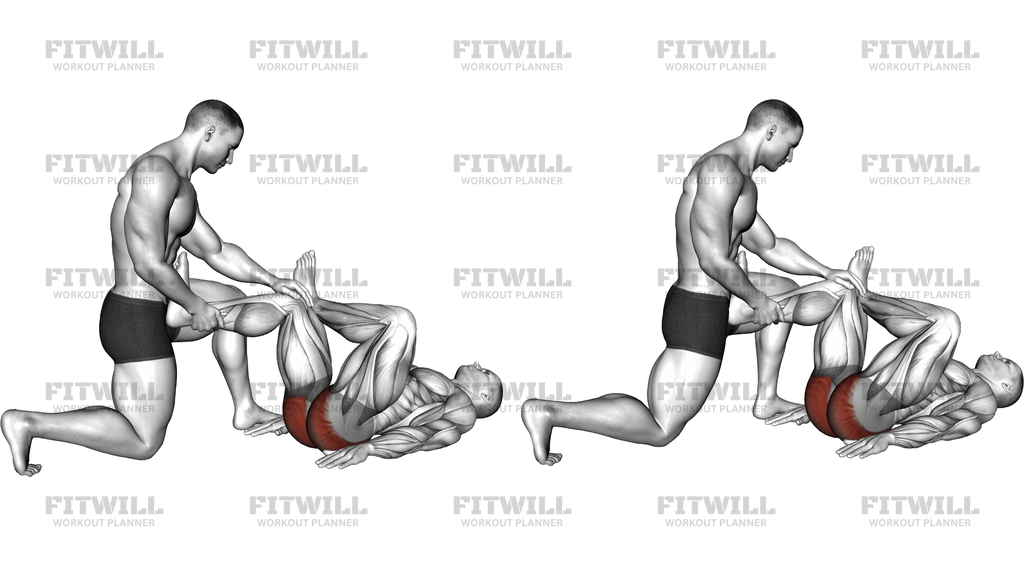
The setup matters because the leg position fixes the pelvis and creates the stretch line. Arrange the front leg and back leg on the mat as shown in the image, then use the support hand to stay upright while the chest turns to the left. The stretch should feel broad through the hip and side body, with only light support pressure through the hand. If the body collapses or the pelvis rolls hard, the position is too deep and the twist stops being useful.
A good repetition starts by stacking the torso before moving. Exhale, then rotate the rib cage left while keeping both hips heavy and the knees relaxed. The free arm can reach upward to lengthen the side of the body, but it should not be used to yank you farther into range. The strongest version of this stretch feels steady and deliberate: the pelvis stays grounded, the spine stays long, and the rotation comes from the trunk and hip rather than a sharp crank through the lumbar spine.
This movement is useful after lower-body training, long periods of sitting, running, or any session where the hips feel tight and compressed. It can also be used before training if the hold stays brief and the range remains comfortable. Because the exercise is position-based, the focus is on quality of alignment rather than how far you can force the twist. A controlled left-side hold often leaves the hip feeling open, the torso more organized, and the next set or workout position easier to maintain.
To finish, unwind the torso first, then release the arm and legs with control before resetting. If the inner knee, groin, or low back is the first place you feel strain, shorten the range and recheck the leg angle instead of pushing harder. The best result is a repeatable left hip stretch that reduces stiffness without creating tension in the wrong places.
Fitwill
Log Workouts, Track Progress & Build Strength.
Achieve more with Fitwill: explore over 9600 exercises with images and videos, access built-in and custom workouts, perfect for both gym and home sessions, and see real results.
Start your journey. Download today!




Instructions
- Set up on a mat in the tucked front-leg position shown, with the back leg folded behind you and the hips close to the floor.
- Place the supporting hand on the mat beside your hip so you can stay tall without dumping weight into the shoulder.
- Stack your ribs over your pelvis before you twist; do not start the stretch by collapsing sideways.
- Exhale and rotate your chest to the left while keeping both hips heavy on the mat.
- Reach the free arm upward or slightly back to lengthen the side body without pulling yourself out of position.
- Keep the front shin and back knee relaxed, and stop the turn before the knee feels torqued or the low back arches.
- Hold the left-side stretch for a slow breath or two and let the outer hip and glute soften into the floor.
- Return the torso to center first, then release the arm and legs with control before resetting.
Tips & Tricks
- Keep both hips heavy so the stretch stays in the left hip instead of turning into a sloppy side lean.
- Let the exhale deepen the twist; forcing the arm farther usually just tightens the neck and shoulder.
- If the front hip pinches, sit a little taller and reduce the angle of the tucked leg.
- The support hand should feel like a balance point, not a pressing arm that carries your body weight.
- Rotate from the rib cage and upper back instead of wrenching the knee or ankle.
- Keep your gaze calm and your neck long so the upper body turns as one piece.
- A smaller, quieter hold is better than chasing a bigger range that changes the shape of the position.
- Stop if you feel sharp pain, numbness, or a twisting sensation in the knee.
Frequently Asked Questions
What does Lying Leg Tuck Hip Twist To Left Stretch work?
It mainly targets the left outer hip, glutes, deep hip rotators, and some side-body rotation.
Why does the image show one arm reaching upward?
The arm reach helps lengthen the rib cage and makes the torso rotation feel cleaner without forcing the hip.
Should my hips stay on the floor the whole time?
As much as possible, yes. The more the pelvis stays grounded, the more the stretch stays in the hip instead of the low back.
Can beginners do this stretch?
Yes, but they should use a smaller twist and more support from the hand on the floor.
Should I feel this in my knee?
No. The stretch should come from the hip and glute, not from twisting the knee.
How long should I hold the left-side position?
A controlled 20 to 40 second hold is usually enough, especially after training.
Is this better before or after a workout?
It is usually better after training or during cooldowns, because the position is deeper than a simple warm-up stretch.
What should I change if the stretch feels too intense?
Sit taller, shorten the leg angle, and reduce the left rotation until the position feels comfortable and stable.